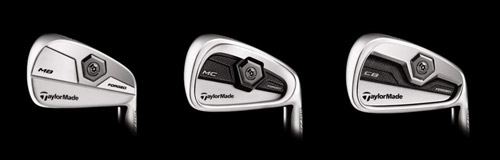
 TaylorMade Golf has re-imagined and redefined the forged iron with the introduction of three new and distinctly different models: TPMB (Tour Preferred® Muscleback), TPMC (Tour Preferred Muscle Cavity) and TPCB (Tour Preferred Cavityback).
The sophisticated design of each of the three new models incorporates specific features and technologies developed to promote improved superior performance. Created with major input from tour pros, each new iron is an exquisitely designed instrument that blends classic forged iron features with modern performance elements. The TPMB and TPMC are both created using a state-of-the-art shaping process and modern, 6-step forging procedure that results in pure feel. The TPCB employs a multi-material construction comprised of a forged face and cast body.
“Forged irons are typically devoid of performance technologies,” said Bret Wahl, senior director of iron, wedge and putter development. “Their compact and solid construction, with thin sole, thin topline, high CG location and little to no offset, forces a very specific type of impact parameters to hit a good shot, with virtually no margin for error. The reward for that sacrifice is unparalleled feel and workability. We took a long, close look into the makeup of forged irons to determine if we could advance the performance with the use of technology, and we found that we could.”
<
p style=”text-align: center;”>
TPMB: Innovation in a Forged Muscleback
The Tour Preferred MB is a finely wrought muscleback blade expressly designed for the purist. With clear lines, a compact player’s shape and minimal offset, the TPMB delivers the pure feel, feedback and workability coveted by blade fans.
“This is the iron that many of our Tour Staff pros been waiting for,” said Keith Sbarbaro, TaylorMade’s vice president of tour operations. “The lines are clear and clean from every angle, and the pure feel of the ball on the forged face at impact is as good as it gets.”
The exclusive, 6-step forging process employed produces a more precisely shaped and finished head that looks and performs like a work of art. A thin topline, thin sole, straight leading edge, minimal offset and tapered hosel work in conjunction to promote the kind of pure face-to-ball connection sought after by skilled players.
In addition, the TPMB incorporates TaylorMade’s innovative new precision-weighting port in the back of the clubhead to solve an age-old problem. In the past, clubmakers have installed cartridges of varying weight in the hosel to assure that each iron in the set is of uniform swingweight. Doing so, however, affects the location of the CG in terms of its position between the toe and heel. The TPMB’s precision-weighting port guarantees precise swingweights while ensuring optimal and consistent CG location in every clubhead.
“The precision-weighting port proves that it is, in fact, possible to innovate and improve the performance of a true, forged blade,” said Brian Bazzel, manager of iron and wedge creation.
The TPMB also incorporates an advanced, USGA-conforming groove design to promote more spin and control from the rough, a crucial advancement in making it the ultimate player’s performance iron. The standard shaft and grip properties were chosen with input from TaylorMade Tour Staff professionals, and include True Temper Dynamic Gold shaft —the most widely played on tour—and Tour Velvet grips, a combination deemed optimal for promoting consistent and responsive performance.
TPMC: The Ideal Forged Players Cavityback
TPMC irons are designed with a clean, classic and maneuverable player’s shape that offers the optimum blend of feel, workability, and forgiveness. By incorporating a compact, shallow cavity, the irons deliver the feel and workability of a forging plus a degree of added stability.
“We worked obsessively with our Tour Staff to shape the TPMC irons into something that looks perfect to the better player’s eye, while at the same time incorporating feel, workability and stability,” said Bazzel.
The end result is a sexy, workable player’s shape with a thin topline, straighter leading edge and less-cambered sole. Like the TPMB, the creation of the TPMC starts with an exclusive 6-step forging process, which produces a more precisely shaped and finished head that looks and performs beautifully. The sole is moderate to narrow in thickness and less cambered, preventing deep digging. The leading edge features minimal heel-to-toe radius with the ideal amount of camber to cut cleanly and precisely into the turf with little to no resistance.
Additionally, the advanced groove design promotes more spin and control from the rough.
TaylorMade’s precision-weighting port is incorporated into the TPMC, guaranteeing precise swingweights while ensuring optimal and consistent CG location in every clubhead to promote optimized ball flight in the long-, middle- and short-irons.
Equipped with True Temper Dynamic Gold shafts and Tour Velvet grips.
TPCB
The Tour Preferred CB is a multi-material forged cavityback that’s beautiful, powerful and playable. Designed with a two-piece head, the TPCB’s advanced construction melds a forged face with a cast body that incorporates an undercut cavity to deliver the pure feel of a forged iron and the forgiveness of a deep cavityback.
“Uniting a forged face with a cast cavity allows us to deliver the best of both worlds: the soft feel of a forging with the stability and forgiveness of a deep undercut cavity,” said Wahl.
The TPCB boasts the highest MOI of the three new irons. That, combined with its Inverted Cone Technology (the only iron of the three with ICT), which promotes faster ball speed on off-center hits, helps make the TPCB extremely forgiving for consistent distance from shot to shot.
The TPCB also features a precision-weighting port that guarantees consistent swingweight throughout the set while ensuring optimal CG location in every clubhead to promote optimal ball flight every iron.
Additionally, the TPCB features the same new, advanced groove design to promote more spin and control from the rough.
The TPCB irons is the only model of the three being offered in both steel and graphite shafts. The steel is a new, 110-gram, mid-flight True Temper Dynamic Golf XP, which is lighter and promotes higher flight compared to the standard Dynamic Gold steel shaft. The graphite shaft options, developed by Fujikura, are offered in 90-gram stiff flex and 80-gram regular flex. Tour Velvet grips are also standard.
<
p style=”text-align: center;”>
Set Makeup, Pricing and Availability
All three of the new TP forged irons are offered in three shaft flexes – X, S, R. The TPMB and TPMC are available in the 2-iron through pitching wedge in steel shafts only. The TPCB, offered in both steel and graphite shafts, will be available in 3-iron through attack wedge. The standard TP set includes eight irons—custom sets will allow combination of any eight irons offered in each models—at a street price of $899. The street price for the TPCB irons with graphite shaft is $1099. The TPMB, TPMC and TPCB irons become available at retail starting in March 2011.




 The Tiger Woods story just won’t die. I suppose we should all have seen this coming when he (allegedly) paid
 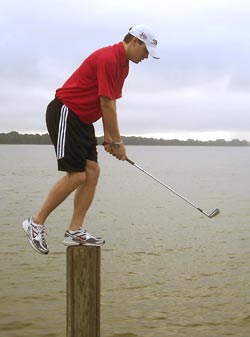 Without a doubt, golf and fitness have been inextricably connected. The benefits of working out specifically for golf have been highlighted time and again by the top professional golfers in the world. While there are many different types of golf swing philosophies, there is still a common basic level of physical ability necessary to perform the full golf swing. Amateur and recreational golfers now understand the simple fact that physical limitations such as poor flexibility and a weak core can affect their ability to perform an efficient, consistent golf swing no matter which swing model they are learning. I recently became more aware of this reality when I got a new middle aged client that had NEVER played golf before and wanted to learn. Realizing how important his body was to playing the game, he signed up for 6 weeks of golf fitness training with me at the same time as he signed up for 6 weeks of golf swing lessons from a
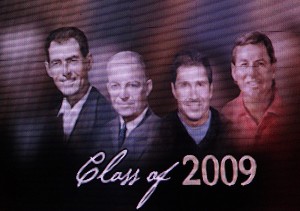
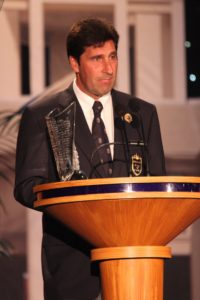 Born in Fuenterrabia, Spain on Feb 5, 1966, Jose Maria Olazabal was the son of a farmer. Growing up, he started playing cross handed, and even though he eventually made the switch, it was difficult for him at first. It’s a good thing for us that he did. At 17 years old, with the unwavering support of his family, he turned pro, and as he stated in his induction speech “the rest is history”. Jose Maria had seven wins as an amateur, 21 European Tour wins, two victories on the Japanese Tour and six PGA Tour wins, including of course, two Masters Tournaments. His Ryder Cup record is just as good, with 18 wins, five halfs and eight losses. Many of his victories came while partnered with his mentor and great friend Seve Ballesteros. Before his pre-induction press conference, Arnold Palmer was coming off the stage and met Jose Maria to congratulate him. Mr. Palmer asked him “How do you feel today Jose?” Jose replied in his signature Spanish accent, “I’m shaking like a leaf!” His induction speech was delivered with the same passion and emotion with which he played golf. He told a story of a young boy who grew up to become a major champion, and finished his delivery with an emotional tribute to his parents, who were sitting in the front row, in Spanish.
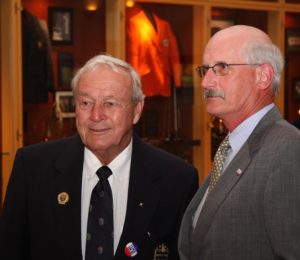
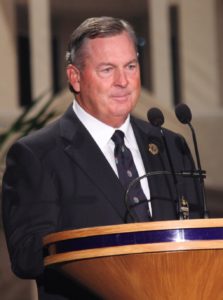 Lanny Wadkins was the final inductee into the Hall of Fame for 2009, and he was presented for induction by his friend and CBS Sports golf anchor Jim Nantz. Nantz delivered an eloquent and vibrant speech, telling a few stories and engaging the crowd. He even pointed out the match Wadkins played with Arnold Palmer as a young man, beating Palmer that day. Of course, that drew a smile from the King, sitting in the front row. Nantz also listed Lanny’s accomplishments, which included 21 PGA Tour wins, including the 1977 PGA Championship. Lanny was a great amateur player in the 70s. He attended Wake Forest University on the Arnold Palmer scholarship, and played on the 1969 and 1971 Walker Cup teams and the World Amateur Team in 1970. Along with his PGA win in 1977, he had 7 other top three finishes in majors from 1982 to 1993. He also played on eight Ryder Cup teams which is a record he shares with Billy Casper and Ray Floyd. His overall record of 20-11-3 is one of the best of all time.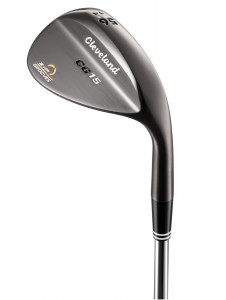
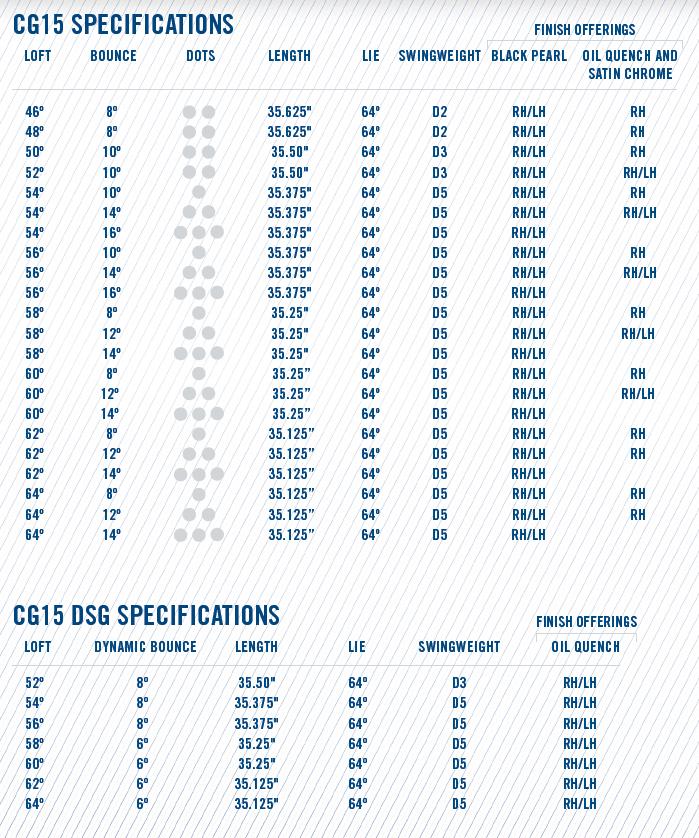
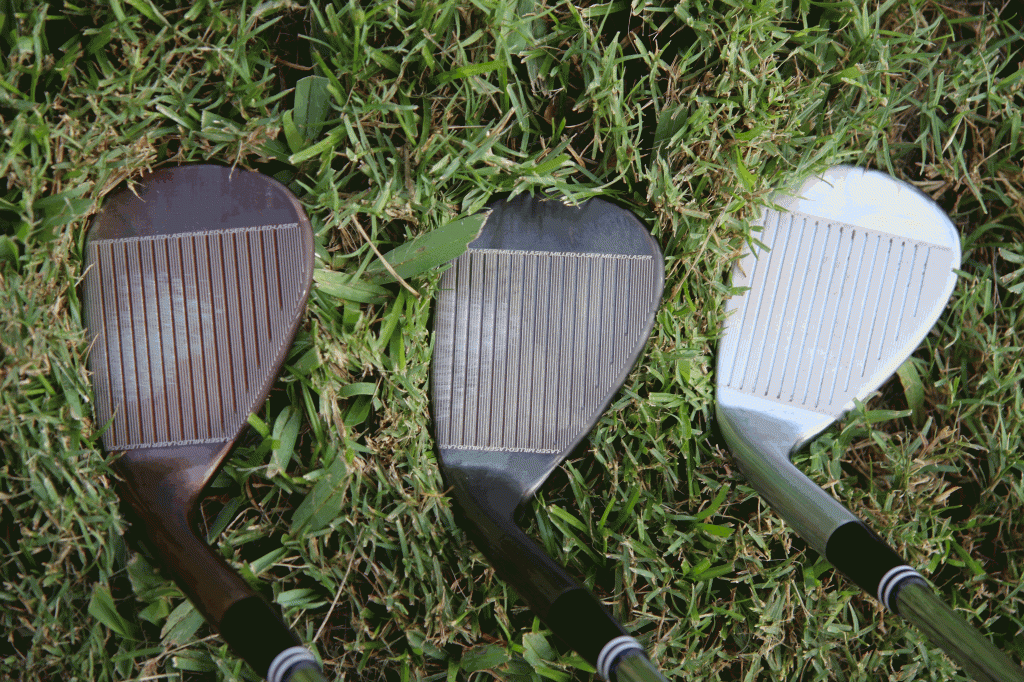
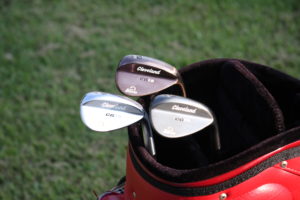 Cleveland's new CG15 Wedges are offered in 3 distinct finishes - Chrome, Oil Quenched and Black Pearl. The chrome finish is the classic treatment that we are all used to seeing in a wedge or forged iron. The Black Pearl finish is a dark matte finish similar to Cleveland's gunmetal finish. This dark finish has become familiar to Cleveland fans. The other finish being offered with the CG15 wedges is called Oil Quenched. This finish has a beautiful reddish brown tint to it, and like other non-chromed clubs, it will rust over time. Many players have come to prefer a rusty style wedge, one for the glare resistance, and two because many players believe a lack of polish makes the clubs softer. Either way, a choice of three finishes certainly is more than most companies can offer.
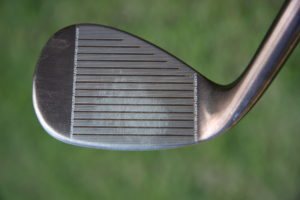 Cleveland's Zip Grooves have been augmented with a new feature called Laser Etched grooves, introduced for the CG15 wedge. Using a laser, 4 texture lines are milled between each groove exactly to the conforming roughness limit. This roughness application optimizes ball-to-face friction and maximizes spin under the rules of golf. In my experience, the ability to produce spin depends less on the club or grooves, and more on the golfer's ability and the golf ball used. Having said that, these wedges can put some serious spin on the ball. From a fairway lie the spin produced is similar to most other wedges. On chip shots executed with proper technique, the ball skids and grabs hard, trickling the rest of the way to the hole. From the rough is where the modern box grooves really shine. Because of the increased groove volume and shape, more grass and dirt is trapped by the grooves and balls hit from the rough spin much more than when hit with wedges with more traditional V grooves. I had no problem stopping the ball reasonably quickly from lies in all but the thickest rough.
I found that the initial finish on the face of the Black Pearl and Oil Quenched wedges wears quickly, but this is normal and unavoidable, just as with any other wedges. The face of the chrome wedges also wears just as fast, but because of the finish its not as noticeable. The grooves and even the laser etched grooves micro grooves held up well in my 4 days of testing, and I predict they will wear well for at least a season for most golfers. It remains to be seen how long the laser etched grooves last under normal use. I always recommend new wedges every year for serious golfers. These wedges are very well balanced, and in the hands of a skilled golfer they become deadly scoring weapons. I was able to hit low spinning shots and high flops alike with ease. The multiple bounce and loft options ensure that they have a wedge for everyone's needs or wants. Another option that has been in Cleveland's arsenal for a few years is the DSG wedge, which stands for "Dynamic Sole Grind". These wedges have a sole that is beveled to allow the leading edge to sit closer to the ground when the face is opened. This allows for more versatility for a variety of lies and turf conditions.
Cleveland's Zip Grooves have been augmented with a new feature called Laser Etched grooves, introduced for the CG15 wedge. Using a laser, 4 texture lines are milled between each groove exactly to the conforming roughness limit. This roughness application optimizes ball-to-face friction and maximizes spin under the rules of golf. In my experience, the ability to produce spin depends less on the club or grooves, and more on the golfer's ability and the golf ball used. Having said that, these wedges can put some serious spin on the ball. From a fairway lie the spin produced is similar to most other wedges. On chip shots executed with proper technique, the ball skids and grabs hard, trickling the rest of the way to the hole. From the rough is where the modern box grooves really shine. Because of the increased groove volume and shape, more grass and dirt is trapped by the grooves and balls hit from the rough spin much more than when hit with wedges with more traditional V grooves. I had no problem stopping the ball reasonably quickly from lies in all but the thickest rough.
I found that the initial finish on the face of the Black Pearl and Oil Quenched wedges wears quickly, but this is normal and unavoidable, just as with any other wedges. The face of the chrome wedges also wears just as fast, but because of the finish its not as noticeable. The grooves and even the laser etched grooves micro grooves held up well in my 4 days of testing, and I predict they will wear well for at least a season for most golfers. It remains to be seen how long the laser etched grooves last under normal use. I always recommend new wedges every year for serious golfers. These wedges are very well balanced, and in the hands of a skilled golfer they become deadly scoring weapons. I was able to hit low spinning shots and high flops alike with ease. The multiple bounce and loft options ensure that they have a wedge for everyone's needs or wants. Another option that has been in Cleveland's arsenal for a few years is the DSG wedge, which stands for "Dynamic Sole Grind". These wedges have a sole that is beveled to allow the leading edge to sit closer to the ground when the face is opened. This allows for more versatility for a variety of lies and turf conditions.