Tag: golf

  • Powerbilt Air Force One DFX Driver

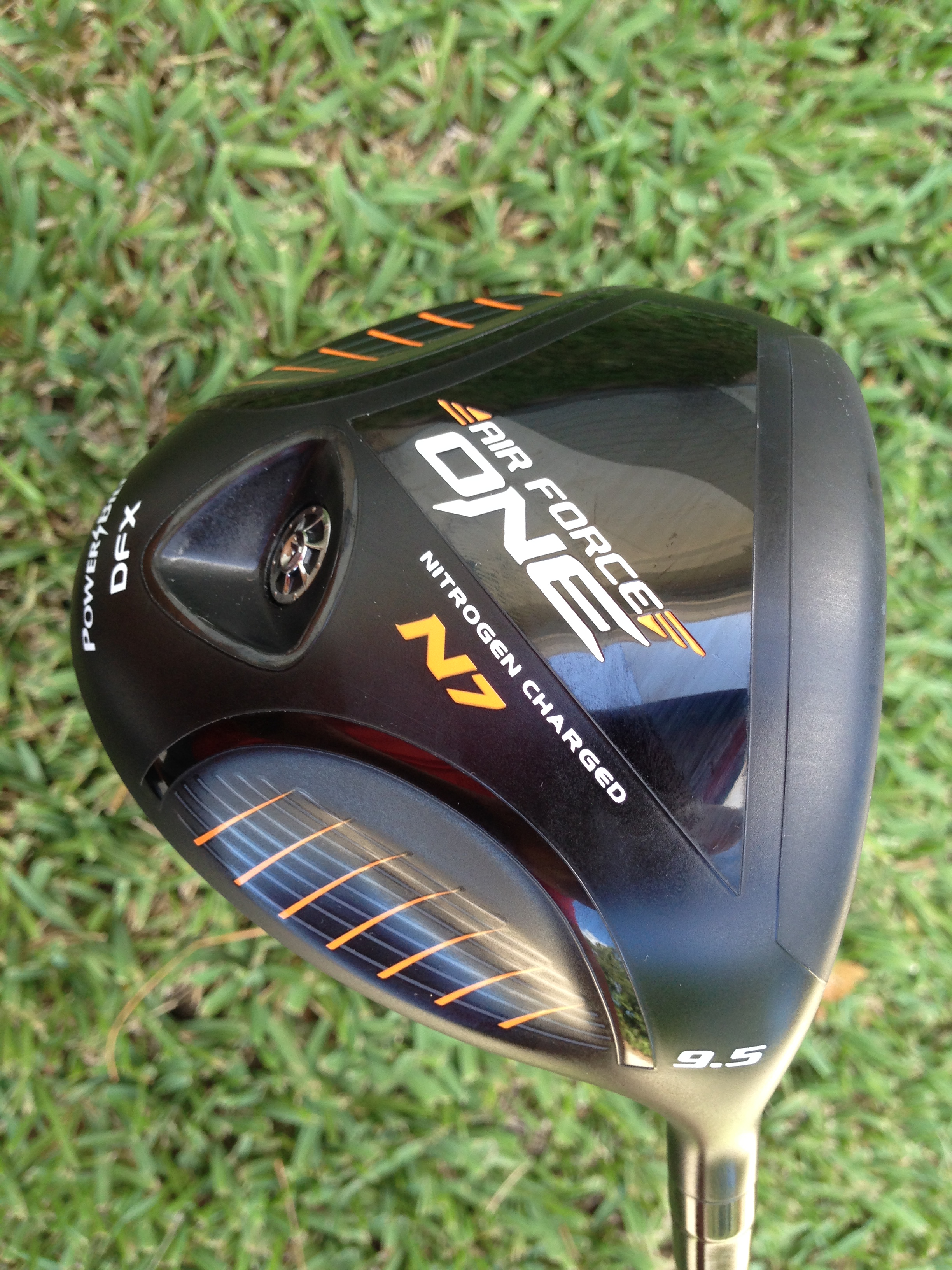
    Powerbilt AFO DFX Tour DriverWhen I was a young man in the early 90s and started taking golf seriously, wooden headed drivers and fairway woods were already on the way out. I remember talking to a few holdouts that swore they would never let go of their beloved Ping Eye2 woods, and one friend in particular would not let go of his Powerbilt persimmon driver, but for the most part metal heads were taking over.

    Back in the day, Powerbilt was one of the biggest brands in golf. Times change and name brands come and go, but Powerbilt has endured and is still making quality golf clubs. I recently had a chance to spend some time playing the Powerbilt Air Force One DFX driver, and came away impressed.

    The Air Force One (AFO) series drivers have been on the market for a few years now, and the DFX driver is new for 2014. The main feature that sets Powerbilt apart from the rest is their patented N7 – Nitrogen Charging method, where they fill the clubhead with pressurized nitrogen to reinforce the face of the club without adding any weight. Powerbilt claims the nitrogen charged DFX driver offers the fastest ball speeds and tightest dispersion possible.

    The club is made of forged titanium with a titanium cup face. It has a classic shape with some aerodynamic features and deep face to reduce spin and give it a more classic look. The matte black paint job is very sharp, sporting a very clean look without glare and a simple alignment marker on top. Nothing to drastic or busy here. My driver (DFX Tour model) came fitted with the Fujikura Fuel 60x shaft, but Powerbilt makes several other shafts available as stock options and a few more as upgrades. The shaft is the engine of any club, so it’s nice to have some top quality stock shaft options available to fit every golfer. The DFX MOI driver comes only with proprietary Fujikura shaft and costs $50 less.
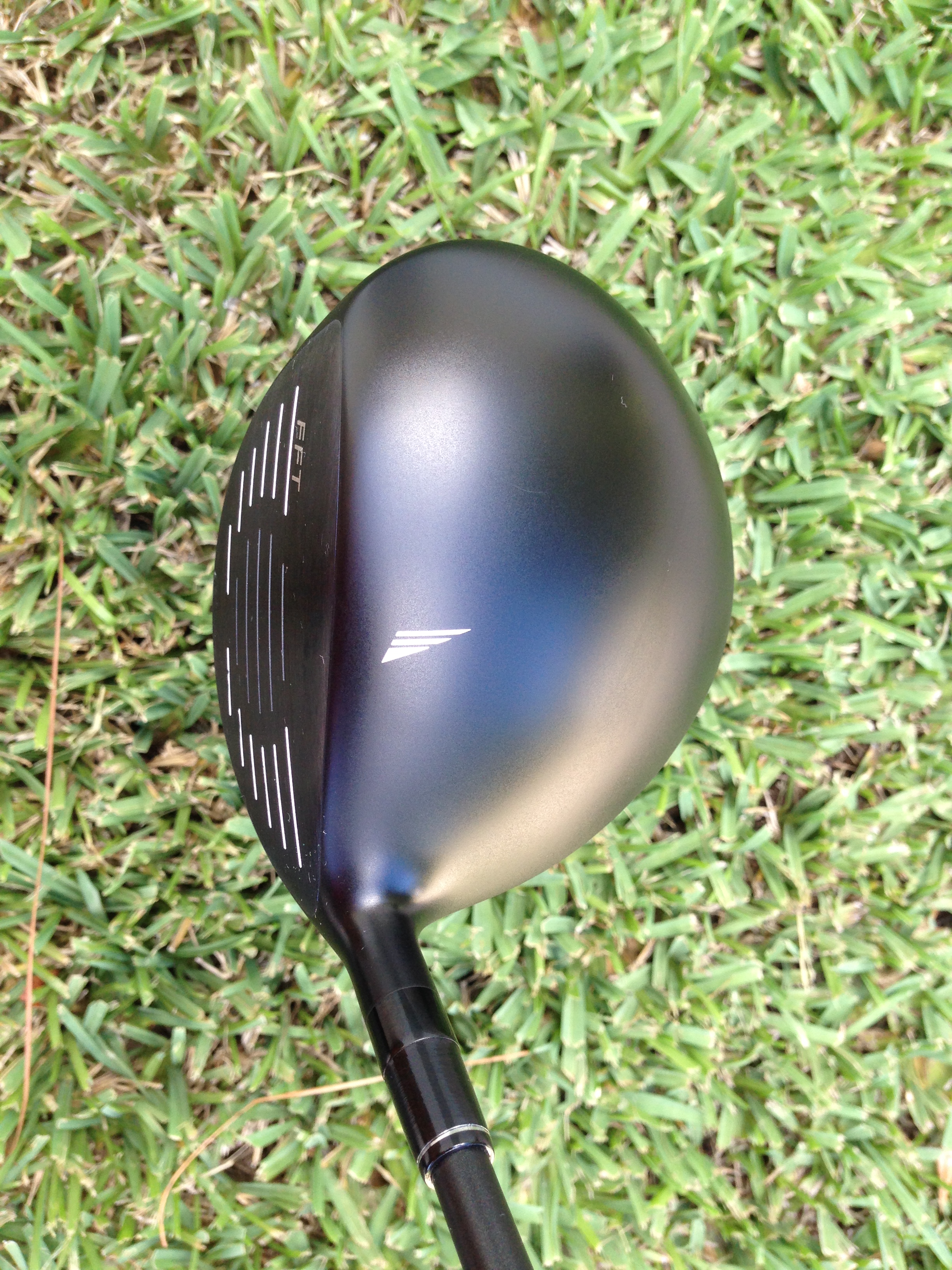
    Powerbilt AFO DFX Tour DriverI spent some time at the range and played 36 holes with the Powerbilt AFO DFX Tour driver. The DFX MOI driver is also available, with a larger head and more forgiveness. The deep face and classic shape makes the driver appear smaller than the standard 460cc drivers on the market, and that’s because they are. Both drivers are actually 440cc. I was expecting the “nitrogen charged” design to produce an obnoxious noise, but thankfully it didn’t sound much different than other drivers. Solid hits flew on a mid-high trajectory and seemed to roll quite a bit, so without any launch monitor data I would estimate this is a quite low spin driver as configured with the Fujikura shaft. Ball flight with this 9.5 degree driver was on par with my current 8.5 degree club, so be sure to try them out or get a bit more loft.

    I was able to work the ball both ways with the DFX driver, but it seemed easier to draw the ball in most cases. As far as distance is concerned, the driver seemed to keep pace with my current gamer (Adams Super LS). The only negative I found with this club is forgiveness. Off-center hits flew considerably lower than solid shots, and distance suffered as a result. However, the DFX MOI driver would undoubtedly offer more forgiveness than the Tour model I had, which is geared towards the lower handicap golfers. I’m not sure if the pressurized nitrogen has any effect, mostly because USGA rules limit the COR of a golf club to 0.830, but it’s a cool marketing gimmick!

    Overall Powerbilt has a pretty good club on their hands, and for the price it’s tough to beat. The DFX MOI driver sells for $249 direct from Powerbilt’s web store, and the DFX Tour model starts at $299 and offers more loft and shaft options. For more information, visit their website at Powerbilt Golf
  • SuperStroke Flatso Putter Grips

    SuperStroke Flatso Putter GripsBack in 2007 while struggling with my putting I decided to take drastic measures and install a huge, weird-looking new putter grip called SuperStroke. It felt about as fat as a baseball bat, had a reverse taper design and it attached to the shaft of my putter using set screws, a couple of tap screws and some epoxy to make it a “permanent” install and allowable under USGA rules. Using this funny looking grip all summer, I went on to win 7 of 10 tournaments on the fledgling Golf Channel Amateur Tour in Orlando, earning Player of the Year honors in the Championship Flight.

    The SuperStroke brand has come a long way since the early days of the screw-on grip that destroyed your putter shaft. They have a complete line of putter grips for all kinds of putters in many different sizes. All of their grips are now installed using the more conventional method of grip tape and solvent, and they are widely used on the professional tours all over the world. The television exposure SuperStroke gets with players like Jason Dufner and Jordan Speith has helped the company grow fast.

    I have about 6 or 7 putters fitted with SuperStroke grips, and often when I get a new putter the first thing I do is rip off the stock grip and replace it with a SuperStroke Ultra Slim – my model of choice. But there is a new sheriff in town. It’s called the Flatso. Some people prefer a grip that has a more pronounced flat part on top, and it seems SuperStroke heard these people and created the Flatso line.

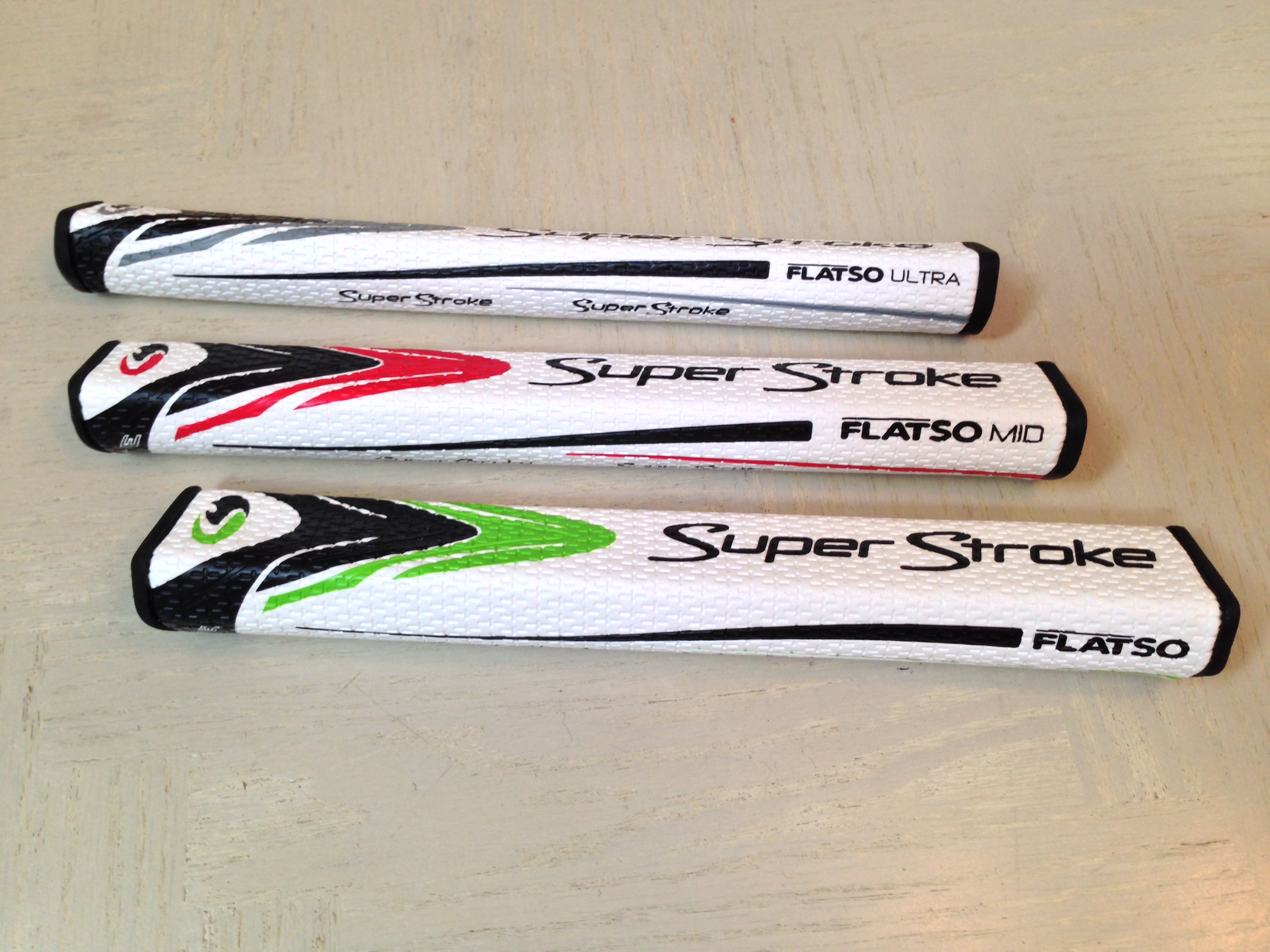
    The SuperStroke Flatso grips feature a unique pentagonal shape with a distinct flat top. They have three different models, including the Flatso 1.7, Flatso Mid 1.4 and the Flatso Ultra 1.1. The numbers indicate the grip width in inches. The grips weight 100, 60 & 85 grams, respectively. All three models share the same soft, tacky feel and solid construction of all SuperStroke grips, and they are sure to be a big hit for players that like a less rounded shape and prefer the feel of an enlarged flat section on top. I think the Flatso Mid 1.4 will be the best option for most golfers, as it seems to be just the right size for most hands and is also the lightest.

    The SuperStroke Flatso grips are sold individually at many golf retailers and cost around $25. Some OEMs have also started offering their putters with various SuperStroke grips pre-installed. I know Odyssey Golf has done well with SuperStroke grips on the Versa models. My current “gamer” is an Odyssey Versa Black #9 with a SuperStroke Ultraslim 1.0, but the Flatso 1.1 may soon be going on it!

  • Voice Caddie VC300

    Voice Caddie VC300

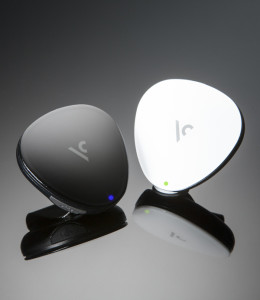
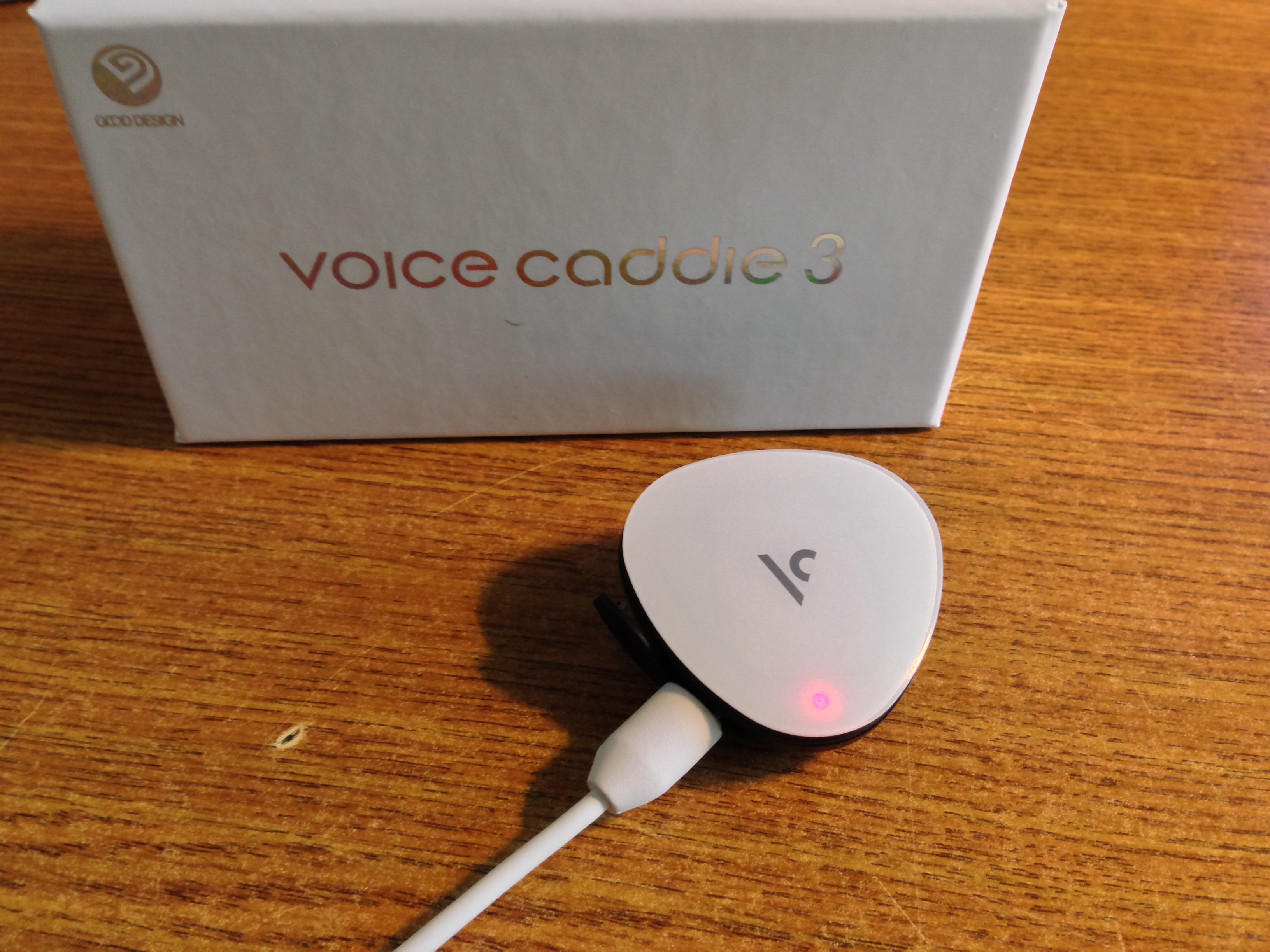
    Voice Caddy VC300When I saw the original concept for the Voice Caddy a few years ago at the PGA Merchandise Show in Orlando, my first thought was “The world doesn’t need another golf GPS device,” but I was wrong. Several years have gone by and UComm Technology, the Korean company behind the Voice Caddy VC300 has improved greatly on their design and I believe this little gem is ready for prime time.

    Simplicity

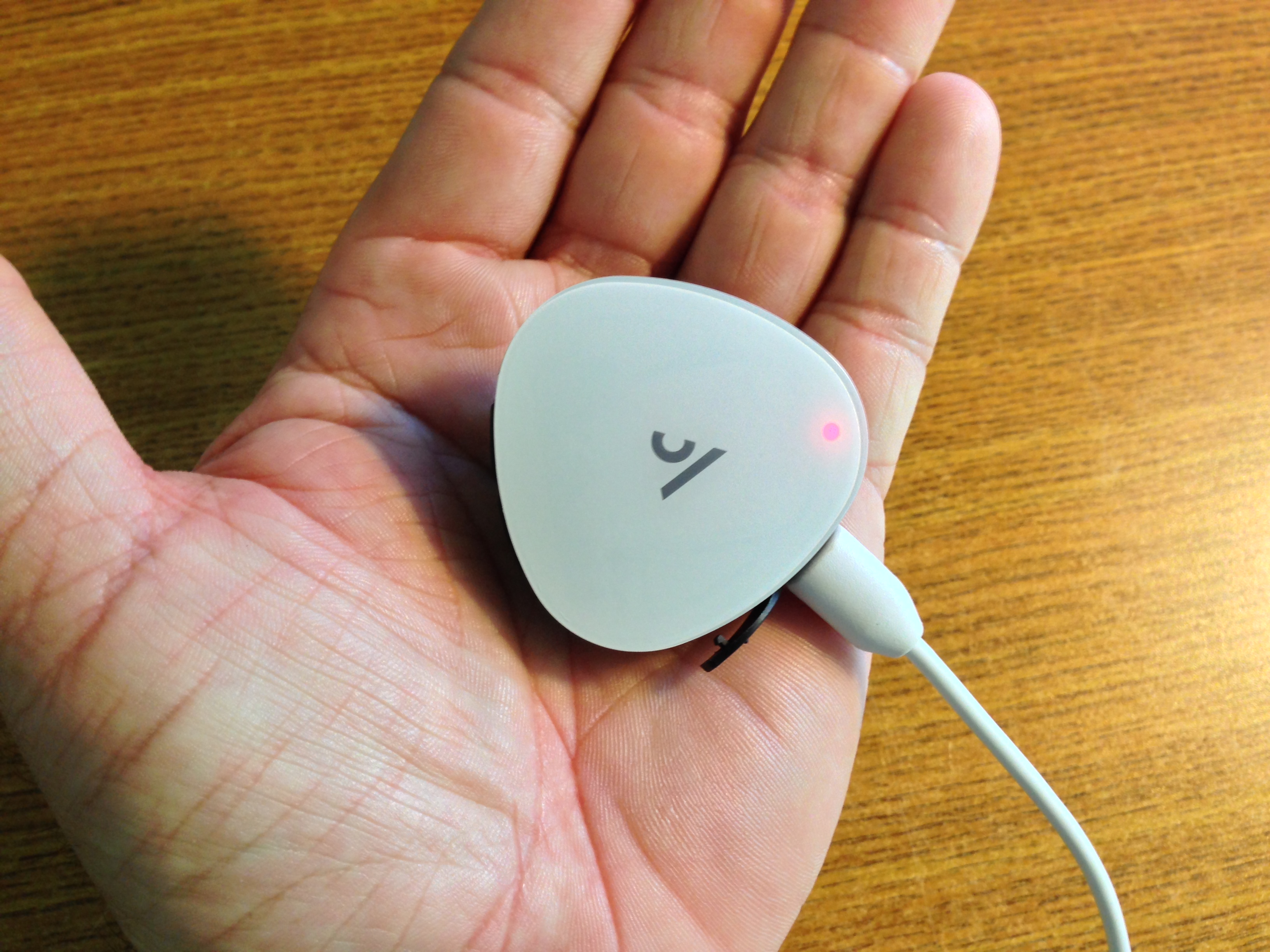
    As more and more golf GPS devices hit the market, they keep adding features that make them more complicated and hard to use. Voice Caddy has gone the other direction with the VC300. They decided to do one thing, and do it well. The Voice Caddy VC300 simply gives you distances to the front, middle and back of the green, along with the ability to measure any shot distance from point A to point B. That’s it. No hard to read maps, useless scorecard features or complicated stat tracking features. The VC300 only weighs 24 grams and easily fits in the palm of your hand, measuring 45 x 45 x 12 mm. (see image below)

    Design

    The VC300 has a very “Apple” feel to it. The packaging and design are very similar to the way Apple presents their electronics and this philosophy appears to be deliberate. The design is slick, smooth and free of clutter. The device has three buttons – power, volume +/- and the main button that makes up the entire face of the device. It is also gesture-enabled like a smartphone. Despite the unit being so small and light, the VC300’s distinguishing feature is instead of showing you yardages on an LCD screen, it tells you the distance audibly, speaking out the yardage when called upon.

    Voice Caddy VC300Function

    Because the VC300 is so simple, operation is easy and straightforward. Turn the unit on and it speaks a welcome message and tells you the battery charge level. From there, in a few moments the unit will find the golf course automatically from a database of over 30,000 courses built in to the device. That course database is also user upgradable through the VC Manager software available on their website, and everything is free. There are no hidden costs, no subscription fees. The unit clips to the brim of your hat or your belt and detects which hole you are on, announcing it when you arrive at the tee box.

    To get yardages one simply pushes the main button, and Voice Caddy will speak the hole and yardage to the middle of the green. “Hole number 6, center, 120 yards.” Swipe your finger towards the front of the unit and you get yardage to the back of the green. Swipe the VC300’s face from front to back and you get the yardage to the front of the green. Double-tap the main button to get distance to the front and back of the green. You can measure the distance between any two points by holding the main button for a few seconds at the starting point, then holding the main button a few seconds at the finish, and Voice Caddy will tell you how far the distance traveled is. This is great for measuring your booming tee shots, or not great, depending how far you actually hit it!

    Details

    The Voice Caddy VC300 is available in three colors: Black, White and Pink. It is also available in seven languages: English, French, Spanish, German, Chinese, Japanese and Korean. The little device charges in only 2 hours and they claim the charge is good for 8 hours. When the VC300 arrived for testing it had a 28% charge out of the box. I managed to play 18 holes with it anyway. In fact, the battery died just as I pulled up to the 18th green, so that 8 hour life is probably a little understated. I bet you could squeeze 36 holes of play out of this thing.

    Shortcomings

    There are a few little issues that I noticed with the Voice Caddy VC300 during my testing. First, the distance measuring feature didn’t work every time I tried. A few times when I arrived at my drive and pushed the button for several seconds, nothing happened. It’s as if the unit forgot about it. Oops. Another small annoyance is the placement and sensitivity of the volume buttons. When installing or taking the VC300 off my hat brim, I instinctually grab it by the bottom for leverage, but that is where the volume buttons are and I always push them by mistake. Not a flaw, but perhaps the next version could move the volume controls to a less obvious place. Finally, on one particular course when arriving at the tee, it announced each hole as a par 4 when they sometimes were par 3s and 5s. Not a big deal because that info is largely irrelevant, but perhaps their course databases are off. Either way, none of these issues affect the accuracy of the yardages, which were always within a yard or two, confirmed by a Bushnell Tour Z6 Jolt laser rangefinder in my testing.

    Voice Caddy VC300Conclusions

    For $149, you get the smallest, lightest golf GPS device on the market that I am aware of. It measures distance, and doesn’t do anything else that golfers aren’t interested in like keep score, show you bad pictures and take up space. I’ve always preferred laser rangefinders over GPS devices because of accuracy and the ability to get a distance from any landmark or tree, whereas a GPS like this only gives you front, middle and back of the green. But what I found when using the Voice Caddy VC300 is that it is so simple and unobtrusive that I enjoyed using it. Because it’s clipped to my hat, I never have to think about it and I know I won’t leave it in the grass somewhere.

    As a blogger I always show up to play golf with new clubs and gadgets to try out, and I can get a good idea of how well they will do by the reactions and interest level of my playing partners. After all, they are my focus group. Plus, they all happen to fall within the target demographic of most golf companies. When I brought out the VC300 for several games, nearly everyone liked the concept and said they would be interested in having one. Considering the large price tags of laser rangefinders and more elaborate GPS devices, the Voice Caddy VC300’s $149 price tag, sleek design and simplicity of use makes it an instant winner.

  • Dick’s Fires 500 PGA Professionals

    Dick's Sporting Goods Fires 500 PGA ProsLast week Dick’s Sporting Goods,  the nation’s largest retailer of Callaway and Taylor Made golf equipment, fired all of the PGA Professionals they employed in the golf department at over 560 stores across the nation. Dick’s tried to differentiate themselves from other retailers by employing a PGA professional in each store to improve the customer experience and deliver a higher level of service, but due to the continued decline in golf equipment sales and participation, they were forced to put over 500 pros on the street. They were the largest employer of PGA Professionals after the PGA itself.

    Back in May, Dick’s CEO Ed Stack said the company’s overall golf business missed its first quarter sales by $34 million and he expected the downward trend to continue. “We are selling drivers in our stores this spring for $99 that were approximately $299 20 months ago,” said Stack. The golf business accounts for about 15 percent of Dick’s overall revenues.

    The way I see it, TaylorMade adidas Golf (TMAG) is at least partly to blame for the layoffs. While driver sales in the first quarter were only down 2 percent from 2013, the average price of drivers was down 16 percent. As TaylorMade’s largest retailer, Dick’s is hit hard every time TMAG releases a new driver model, because it forces Dick’s and other retailers to sell the older models at a clearance price which cuts into profit margins. Small retailers are sometimes forced to take a loss to stay competitive.

    TaylorMade released four different driver models last year, and the glut of new products continues, flooding the market with clubs consumers don’t want to buy. Walk into your local Dick’s Sporting Goods and you’ll probably see older model clubs from TaylorMade and others for closeout prices between $99 and $199, far below the suggested retail price. This is all part of TMAG’s sales strategy to put their clubs in as many golf bags as possible, but the industry is now starting to pay the price and the hangover from this glut will have an impact for years.

    The great irony of this is none other than TaylorMade’s former CEO Mark King has been the primary spokesman for Hack Golf – an initiative to grow golf by thinking outside the box for ways to infuse the game with exciting changes and attract new players. King recently left TaylorMade to become the president of adidas North America, and speaking to HBO’s Bryant Gumbel for an segment on “Real Sports”, he said “Young people entering the game after high school, 18 to 30-year olds are down 35 percent in the last 10 years. So I don’t like where the game looks like it’s going.”

    He’s right. According to the National Golf Foundation, about 400,000 people left the game in the past year, and now over 500 PGA professionals are also looking for work. It appears the PGA of America, Mr. King and his Hack Golf initiative and other industry leaders have their work cut out for them.

  • 8 Golf Products You Can’t Live Without

    8 Golf Products You Can’t Live Without

    Drink_CaddyThe golf industry is no different than any other industry in that there is no shortage of copy-cats, corner cutters and imitators out there. Every major golf equipment manufacturer has had their products cloned, and anyone with a good idea better cash in fast because you can bet someone out there will try to copy it at some point. I’ve seen hundreds and hundreds of new products introduced over the years with varying levels of success. Some are upgrades of existing products or ideas, and others are totally new concepts. Here are eight cool products that I have come across lately that deserve your attention!

    Drink Caddy

    The Drink Caddy (seen above) is part novelty item, part useful gadget. Many golfers like to have a drink or three when they play golf. This wouldn’t be much of an issue, other than the policy many courses have that don’t allow outside food or beverages on the course. They want to sell you their $3 Gatorades and $5 beers. Instead of stuffing beer cans in your bag, the Drink Caddy helps by disguising a drink dispenser as just another club in your bag. There is a pretty large 52oz (1.5 liters) reservoir that hides away in your bag, attached to the dispenser that pumps the liquid of your choice on demand. It works great and is easy to clean and use. You can’t use it with carbonated drinks, but other than that it is a great option for those hit-and-giggle scramble events to carry rum, vodka, wine or boring old water. You decide!

    NexbeltNexbelt – The Belt With No Holes

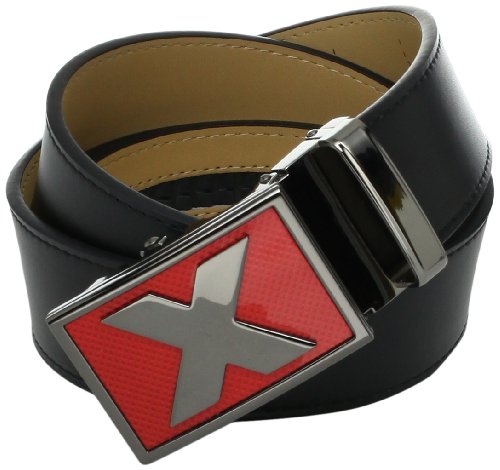
    My new favorite apparel accessory is Nexbelt belts. Just like the tagline says, they have no holes. Instead, Nexbelt has designed a belt that uses a kind of ratchet system to size the belt. This system helps in a couple of ways. First, it allows a more precise fit than the old fashioned holes, and can be easily adjusted without drawing attention to your crotch. The other bonus of this design is that it allows them to make one belt for everyone up to 50″. You buy the belt, size yourself and then cut the extra length off yourself. They have dozens of styles and colors for men and women, work, casual and golf. Give them a look and access the online shop here.

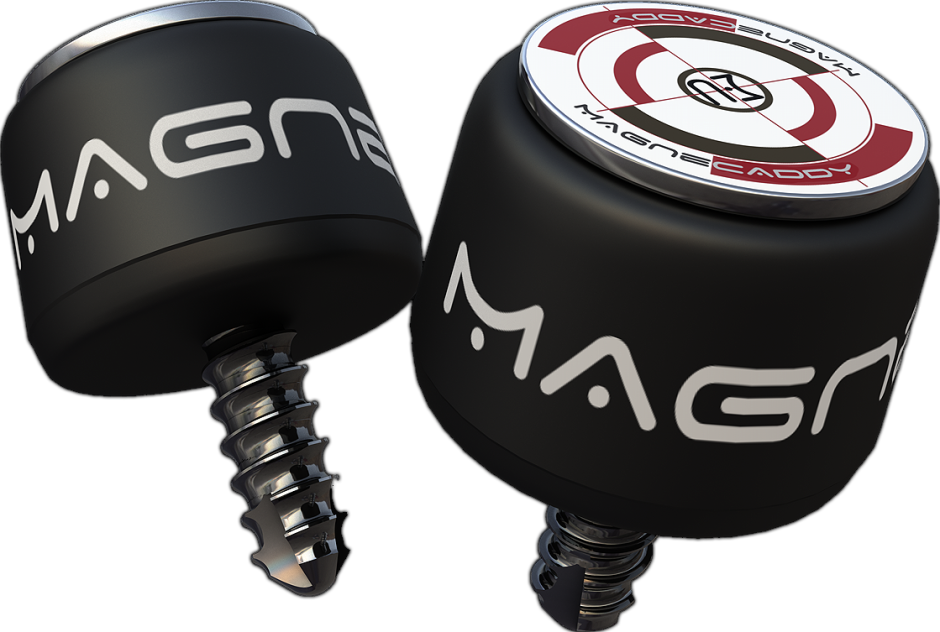
    magnecaddyMagneCaddy

    This is as simple as you can get for a golf accessory. Have a bad back? Hurts to bend down and pick up your clubs around the green? Just install the MagneCaddy on the end of your putter and pick up those wedges with ease. The device screws into the little hole on the butt end of your grips and uses a powerful magnet to pick up anything metallic. When I say powerful, I mean it. I picked up a sand wedge with it and shook it in the air, but the MagneCaddy held it strong. The only problem with a magnet this strong is that it will cling to anything made of metal, including your car, the golf cart, other clubs in the bag, etc.

    polara golf ballsPolara Self-Correcting Golf Balls

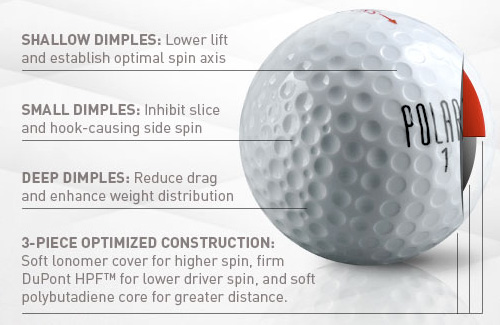
    “Dammit, that golf ball flies too straight!” Ever hear anyone say that on the golf course? Yeah, me neither. The average golfer still hits the ball all over the place, despite all the wonderful technology in those $400 drivers that promise we won’t. Polara Golf is the only company that can back up those claims. They make a golf ball that flies so straight it’s illegal. The Polara golf ball has dimples of different sizes and depth arranged in a specific way as to self-correct in flight. As a result, when properly aligned to the target these golf balls fly on a flatter, knuckleball-like trajectory and they go very, very straight. The shallow dimples around the center of the ball are what help them fly straight, but they also reduce lift, meaning they will fly lower and carry less than regular golf balls. However, the lower spin also means they will roll more after landing. Overall I noticed a small difference in distance over a normal golf ball. Use a high lofted driver to counteract the lower ball flight and spin and these balls are awesome. They even make their own (illegal) driver to use with them that helps even more. Obviously you can’t use them in any USGA sanctioned events, but for the casual golfer they can certainly help make the game more fun!

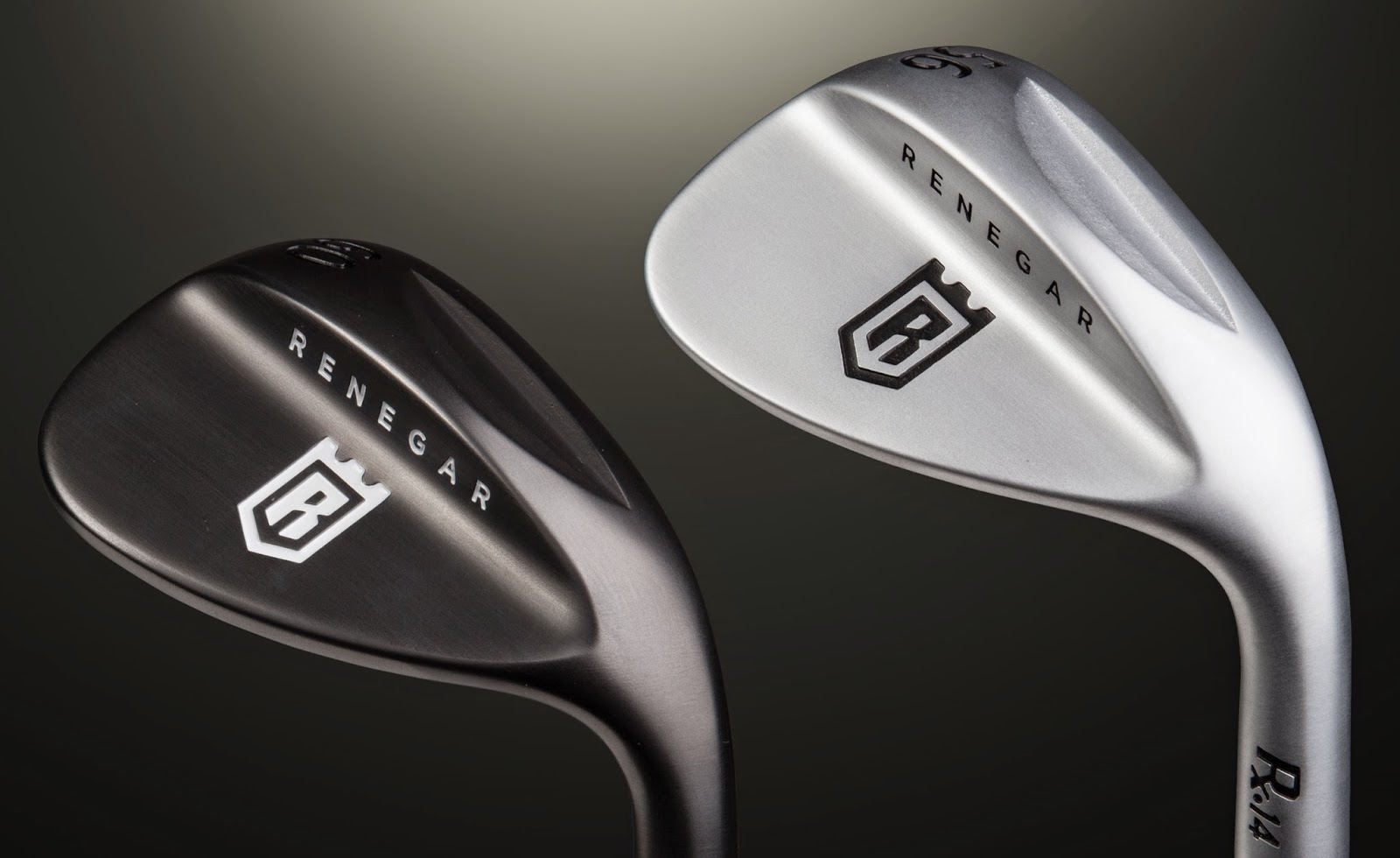
    Renegar Golf WedgesRenegar Wedges

    Bob Renegar has been around for a while, but you may never have heard of him. He first designed his unique wedges under a different name, but he’s now selling his scoring clubs under the Renegar Golf brand. The Renegar wedge has a sole grind that is unlike any other on the market. According to Renegar, it allows the golfer to produce virtually any kind of shot around the greens, from any lie. The grind allowed them to lower the leading edge of the club without losing bounce. This permits the club to perform well from a variety of lies and circumstances around the green. This versatility is key for a good short game. I’ve used a similar sole grind for years, even if it isn’t exactly like his. In early testing, Renegar wedges are a joy to chip with and can handle closely mown collars, deep bermuda rough and sand with ease. Look for a complete play test and review of these cool wedges soon!

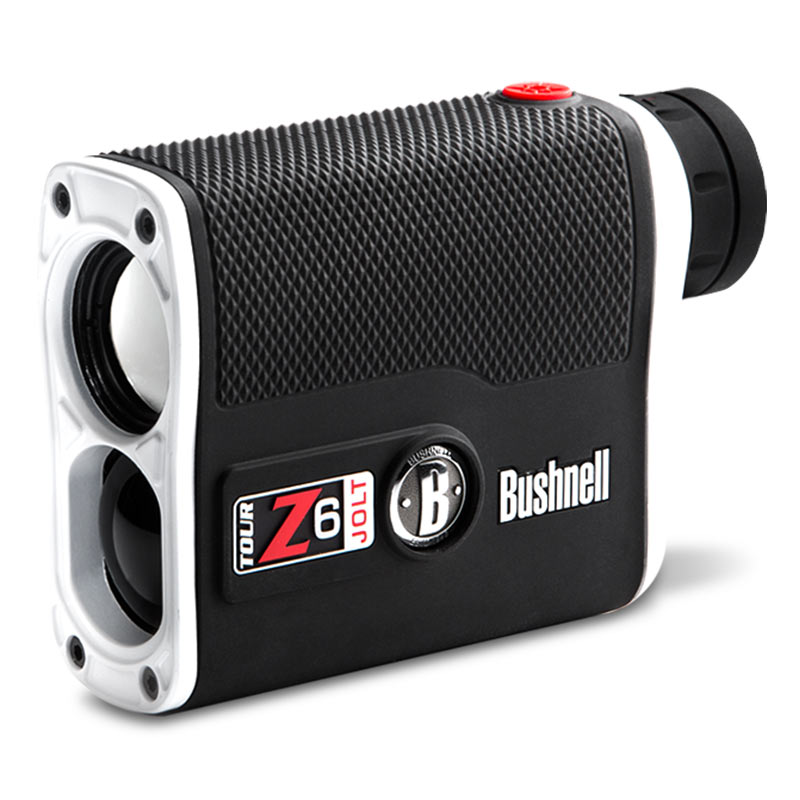
    Bushnell Tour Z6 JoltBushnell Tour Z6 Jolt

    I have become attached to my rangefinder in much the same way that many people are to their smartphones. I’m so dependent on it that I can remember the exact date and course that I last played without one. Over the years they have greatly improved on the technology that was originally borrowed from range finders designed for hunting. Now, most models from all the major brands have some sort of flag-lock feature to be sure you are hitting the flag, not the trees behind the green when shooting a yardage. The Bushnell Tour Z6 Jolt is one of the best. Not only does Bushnell’s Pinseeker technology work well, but the unit also vibrates when lock is established so you can be sure. The Z6 Jolt is also light and the display is very bright, so you can use it in all conditions. A review on this one is also coming soon!

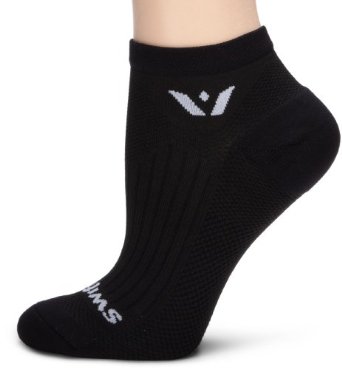
    Swiftwick SocksSwiftwick Socks

    Socks are socks, right? Except when they aren’t. Swiftwick makes compression socks for all sports including golf. No matter what sport you play, you want your feet to be comfy. Swiftwick socks fit like new every time you put them on, and provide support and moisture wicking for your feet. Not only that, but they look cool, come in many different sizes, colors and styles and they are made in the USA. What more do you need? Try them out!

    Personal Golf TotePersonal Golf Tote

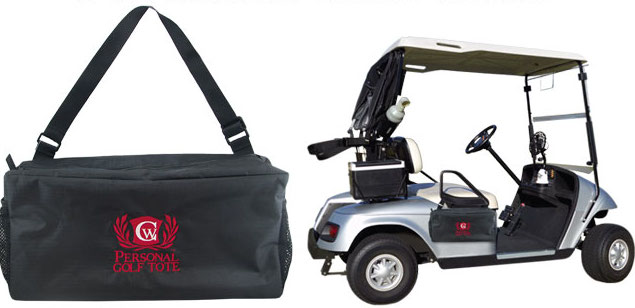
    From the “Why didn’t I think of that” department comes the simple but very handy Personal Golf Tote from Cynwark. We’ve all had to share a golf cart with a basket hog at one time or another. You know the type – they throw all their stuff in the basket behind the seats, leaving you no room to toss your empty beer cans and head covers. The nerve of some people. So you do what we all do, throw your stuff in the front storage compartments and end up leaving your sunglasses and keys behind. Well, now you don’t have to fight over the basket or forget stuff in the cart. Simply hang the Personal Golf Tote over the side of the cart from the seat handle and put your keys, wallet, snacks, golf balls, tees, your range finder, sunscreen and whatever else in it for safe keeping. At first I was afraid of the guys making fun of it, but they all thought it was a neat idea, and the ladies absolutely love it. Simple but thoughtful. It’s the perfect golf gadget!

  • Bridgestone True Balance Putters

    Bridgestone True Balance PutterBridgestone Golf is one of the more conservative companies in golf.  They seem to know what they are good at, and they stick with it. By and large they release solid products, but don’t make waves around the golf world. Their most recent irons came out a few years ago without much fanfare. The J40 Cavity Back and J40 Dual Pocket Cavity irons combine classic lines with modern cavity back technology to result in one of the best irons on the market, in my opinion. But Bridgestone is a golf ball company. That’s their sweet spot. The B330 and E series golf balls are some of the more popular in golf. I think the E6 is probably the best overall golf ball for “average Joe” golfers out there, and the new B330 is every bit as good as some of its competitors like the Titleist Pro V1 and Srixon Z-Star. When we showed up at the PGA Demo Day last January in Orlando, the last thing we expected from this quiet, conservative company is a radical new putter.

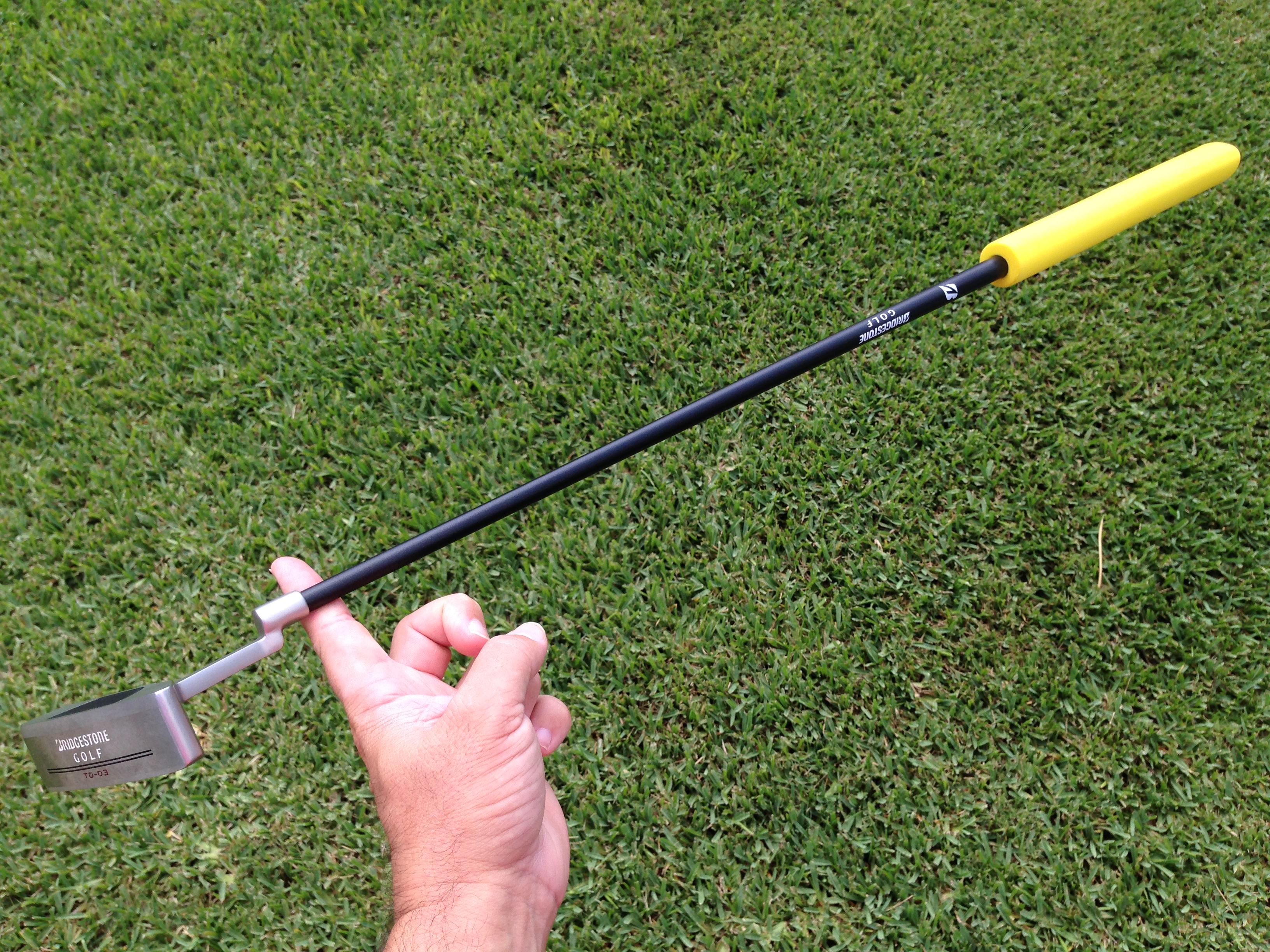
    The Bridgestone True Balance putters are something unique, and an unexpected move for Bridgestone. With the current industry trend moving away from belly and long putters into a counter-balanced design, the Bridgestone True Balance putter goes in the other direction altogether, looking at the competition and saying “Talk to the hand!” Where many manufacturers are adding weight to the grip end of putters to counter-balance them, Bridgestone took as much weight away from the grip and shaft as they could to come up with a very interesting flat stick.

    They achieved the weight savings by using an extremely light 35 gram graphite shaft and using a grip made of 100% EVA (Ethylene Vinyl Acetate) which is a chemist’s fancy way of saying “waterproof foam”. The standard size grip weights only 10 grams and the oversize version goes up to 20 grams. Compared to a standard rubber grip that weighs about 80-85 grams and steel putter shafts that weight over 100 grams, this putter has lost a lot of weight. Mated with a putter head that is 360 grams, the extremely head-heavy design leads to a balance point that is less than five inches from the sole.

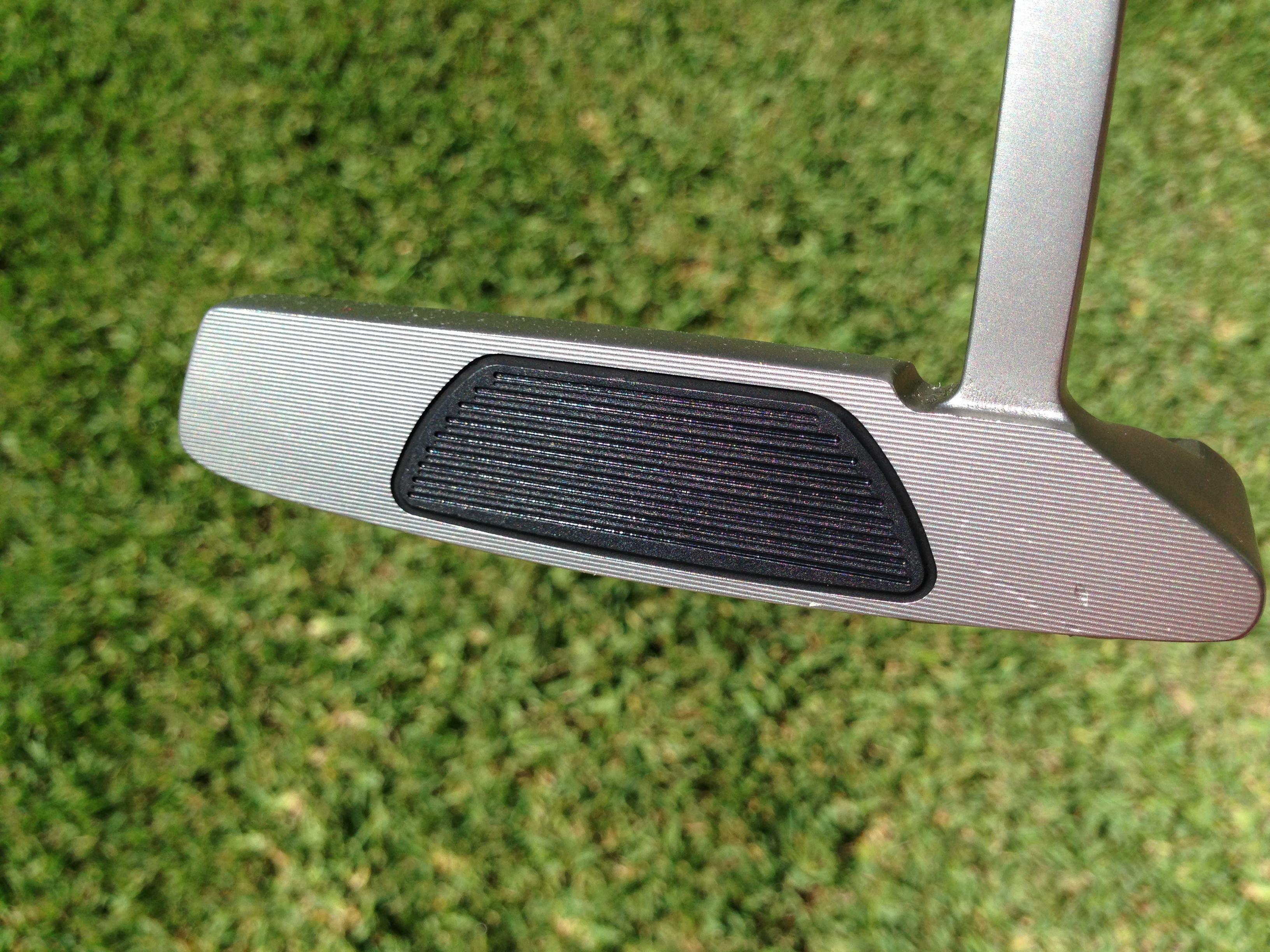
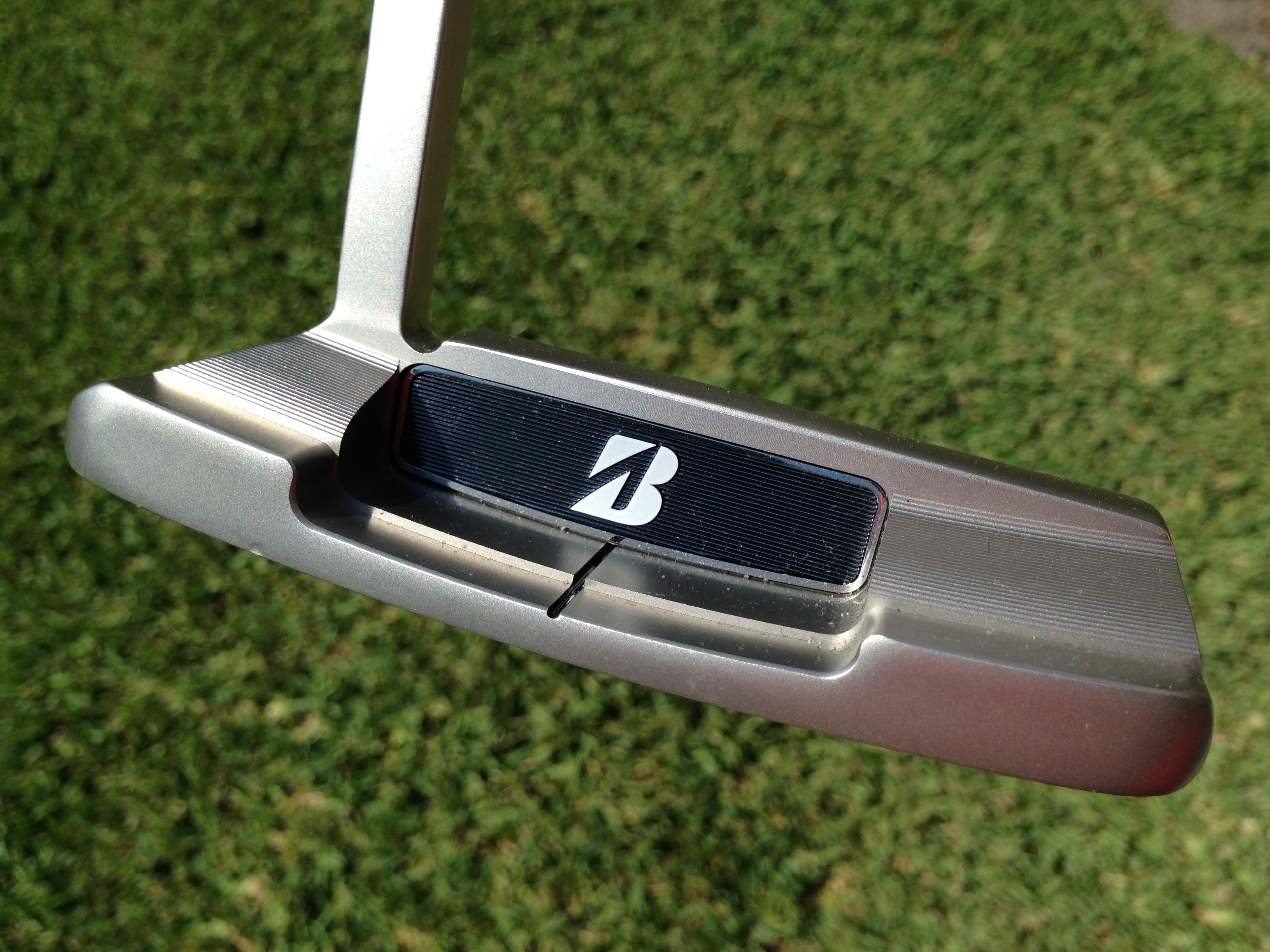
    2014-06-05 10.37.23With such a low balance point, the feel of the putter changes dramatically. You immediately get a better sense of the putter swinging like a pendulum as you stroke a putt. A grooved insert provides better feel and a true roll off the face, and the ball pops off the face with a solid clicking sound. This is a stainless steel putter, so the fell will be firmer than more expensive carbon steel putters, but the insert does a good job at dampening impact and the important thing here is that the ball comes off the face consistently and predictably every time. The other nice thing about this putter is because all the weight is at the bottom of the swing arc, it seems to want to square itself up at impact with greater ease than a standard putter.

    My testing model was the TD-03 model, which is the classic heel-toe cavity back model. The putter resembles the classic Ping Anser and Scotty Cameron Newport designs that have become the standard for modern putters. The TD-01 model is a half-mallet design with a long neck to achieve a face-balanced putter. As mentioned above, there are two sizes of grip available. The standard grip is a 3cm x 2cm taper, and the oversize grip is 4cm x 3cm taper design. My tester had the oversize grip, but I prefer the standard size personally. Standard length is 34 inches, but it can be ordered anywhere from 32 to 36 inches online. Street price is $199.

    2014-06-05 10.37.29I own a lot of putters, but very few have earned a regular spot in my bag. Many end up collecting dust in the garage, and some are given away to friends in need. I like this putter a lot, but there are a few things that can be improved upon to make this putter worthy of a spot in my bag on a regular basis. First is the price. I can understand someone paying $300+ for a limited run carbon steel putter from a boutique manufacturer like Bettinardi, Bobby Grace or Piretti, but $199 for a mass-produced stainless steel putter from a large company is a hard sell in my opinion. I predict we’ll see this putter do best in the $139-$159 range, but we’ll see.

    The second minor complaint I have with the Bridgestone True Balance putters is the grip. While it certainly is very light, it isn’t very tacky. The oversize grip especially could be a little tougher to hold secure in smaller hands. I could see people using a tennis wrap over the EVA grip for a tackier feel without adding too much weight. You don’t want to regrip this putter with a rubber grip, as this would defeat the purpose. Even a tennis overwrap would dramatically alter the balance point, so beware. I think for most hands the standard size grip is much better.

    Overall, the Bridgestone True Balance putter is a winner. Fitted with a standard size grip and a slightly longer 34.5” length, this putter will certainly find a spot in my putter rotation. I’m that guy that likes to tinker with clubs (especially putters), so it’s not uncommon for my regular playing partners to ask, “So, what putter are you using today?” I have two or three putters that I rotate into play, based on course conditions and (more importantly) my mental condition. The Bridgestone True Balance putter has now further complicated my decision…

  • TaylorMade SLDR Mini Driver

    TaylorMade SLDR Mini Driver

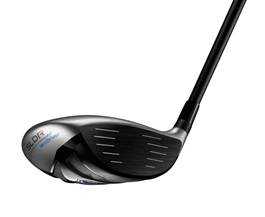
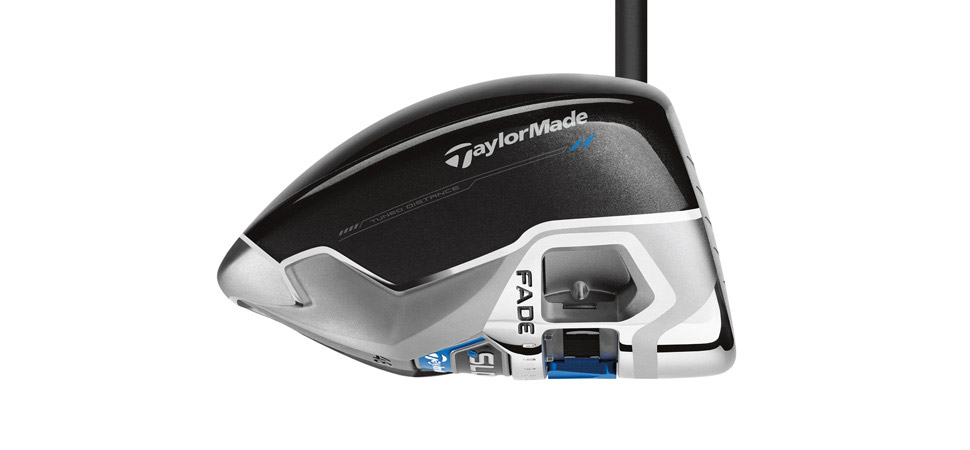
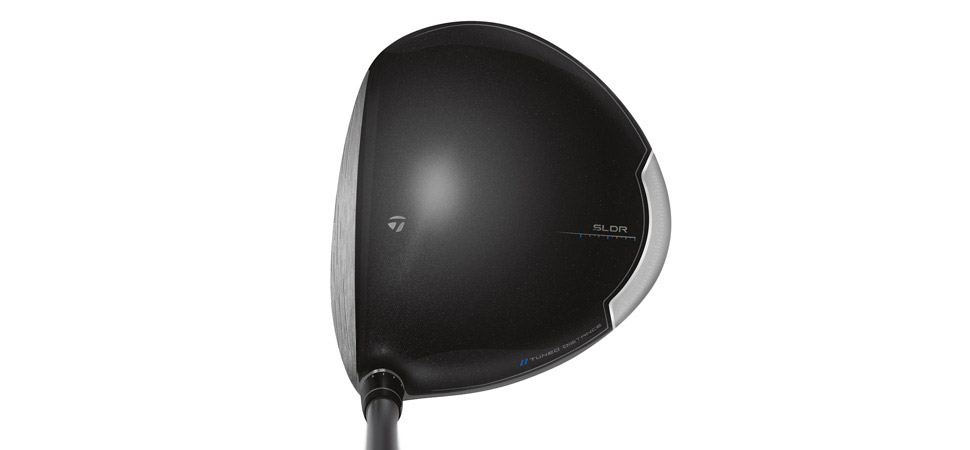
    Taylor Made adidas Golf (TMAG) has done it again. We’re used to seeing new clubs hit the market at several times during the year, but this time they’ve gone way beyond designing a new club – they’re invented a time machine! TMAG’s new time machine (aka – SLDR Mini Driver) takes us way back to the 1990s when shafts were shorter, heads were smaller and the center of gravity was close to the club face.  Naturally this new SLDR Mini Driver has modern shaft options, but the design concept is similar to the older clubs of the 90s to me. Based on the premise that many players struggle with the driver, they’ve built a 3 wood that is made to hit the ball off the tee for driver-like distance. So, if I understand correctly – It’s for people that want to hit their 3 wood almost as far as a driver, but not as far as a regular driver, but straighter than a regular driver, but not quite as straight as a 3 wood. Yeah. Tell you what – I’ll let TMAG explain it to you with their official press release below:

    Carlsbad, Calif. (April 7, 2014) – TaylorMade Golf Company, makers of the No. 1 played driver in golf, today announced the launch of the SLDR Mini Driver, a 260cc metalwood equipped with a 43.5” shaft, designed to promote distance and accuracy off the tee for players who frequently drive with their 3-wood. 

    TaylorMade research indicates that a high percentage of golfers, regardless of skill level, hit 3-wood off the tee more often than from the fairway. However, the 3-wood is designed to hit the ball off turf, not a peg. That void between product design and product use led to the development of the SLDR Mini Driver, which is engineered to be longer off the tee than a 3-woood and incredibly accurate.

    “Tour pros and betters amateurs often hit their 3-wood off the tee more often than from the fairway,” said Brian Bazzel, TaylorMade’s Senior Director of Metalwood Creation. “We embraced that fact to create a metalwood that’s sized between a 3-wood and driver and is designed to be easy to hit off a tee.”

    Like the SLDR driver – the No. 1 driver on the PGA Tour – the SLDR Mini Driver features a low-forward center of gravity (CG) location that reduces spin. From there, most players benefit from playing a higher loft (what TaylorMade calls “lofting up”) by combining a low spin-rate with a high launch angle, which are the launch conditions that promote maximum distance.

    The SLDR Mini Driver also incorporates TaylorMade’s Speed Pocket technology, which promotes lower spin on impacts low on the clubface, where the majority of driver mis-hits occur.

    And though it’s engineered to be easier to tee off with than a 3-wood, the SLDR Mini Driver is also easy to launch the ball off the turf with, thanks to its smooth sole that’s smaller and offers less resistance than a driver’s.

    Aesthetically, the SLDR Mini Driver’s sleek shape and smooth matte silver crown, black clubface and black button-back gives the club an attractive appearance from all angles, especially at address. The contrasting colors also facilitate easy and accurate face alignment.

    The first Tour pro to put the SLDR Mini Driver in play was Troy Matteson, who put not one but two in his bag at the Valero Texas Open: one to use off the tee and one to use from the fairway.

    “The SLDR Mini Driver is intended to appeal to a wide audience,” added Bazzel. “For the Tour pro or top amateur who places a premium on distance control and accuracy, this club is a fantastic option. It’s also a great choice for those amateurs who struggle with 460cc drivers.”

    Two SLDR Mini Driver models are available, standard and TP. The standard model retails for $279 and is equipped with a Fujikura 57 shaft. It is the same shaft used in the SLDR driver, but at 43.5 inches (two inches shorter than the SLDR driver) it promotes tighter dispersion for increased accuracy. The TP model retails for $379 and is equipped with Fujikura’s Motore Speeder 7.3 shaft and is built to a heavier, D5 swingweight for improved control. Lofts in both models range from 12°, 14° and 16°.

    Both SLDR Mini Driver models will be available at retail starting on 5/2. Visit TaylorMadeGolf.com for more information.

  • Leupold GX-4i2 Rangefinder

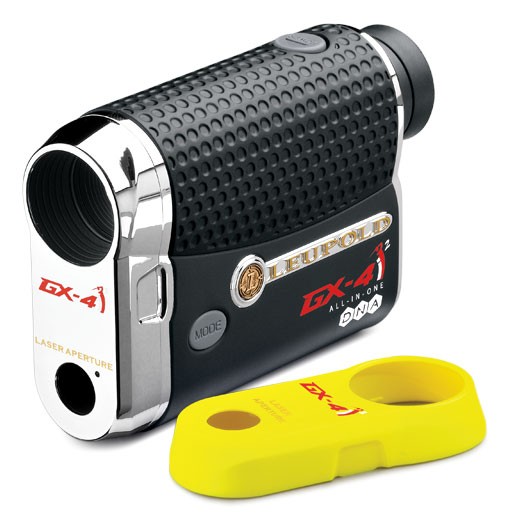
    Leupold GX-4i2 RangefinderWhat do guns and golf have in common? The technology in many of the best rangefinders used on the golf course comes from rifle scopes and range finders made for hunting and military use. The latest offering from optics company Leupold has taken golf rangefinder technology to the limit with its new model – The GX-4i2 Rangefinder.

    The GX-4i2 Rangefinder is light, compact and well made. Leopold’s Smart Key technology now conforms to USGA Rule 14-3 concerning distance measuring devices. It also features an improved PinHunter 2 Laser and a bright, vivid OLED display. Add to that some proprietary features such as True Golf Range (TGR) and Club Selector and you have a virtual caddy in your pocket.

    The GX-4i2 can be tailored to your own personal ball-striking abilities, or used for tournament play when permitted by local rules simply by switching out the smart key plate. The silver chrome faceplate disables the TGR and slope features to make it simply measure distance, making it legal for tournament play according to USGA and R&A rules.

    However, the real fun starts when you install the yellow plastic smart key. The mini-USB key enables all the cool wiz-bang features for use in casual golf or tournament practice rounds. True Golf Range is a set of algorithms that help the user select the correct club for each shot. To use it, you input the current temperature, altitude you are at and how far you typically hit your 4, 6 and 8 irons. Once your data has been entered, the GX-4i2 measures distance and slope, then recommends the right club to hit. So far in my testing, the GX-4i2 has been very accurate in selecting the proper club. Of course there are variables it can’t take into account that affect distance – like wind, course conditions and other intangibles such as player confidence and adrenaline, but for the most part it has been very accurate on the relatively flat courses here in Florida. I would love to test it further in the mountains where courses have more slope and altitude is a factor. I would send it over to my friend Tony from Hooked on Golf Blog in Utah for some high altitude testing, but I’m afraid I wouldn’t get it back!

    The Leupold GX-4i2 isn’t cheap at an MSRP of $599, but you get a very high quality rangefinder that can be used for tournament play or casual golf with the TGR feature enabled. It measures distance in yards or meters, works even in foggy conditions and is waterproof in case it rains. The optics are top notch, very clear and red OLED display is very bright and easy to read in all lighting conditions. The device is very light and compact, making it very simple to use. Leopold crafted the GX-4i2 from aircraft grade aluminum to ensure that it will last. The only concern came from some of my older friends that had trouble keeping it steady enough to capture the pin. If the flag stick has a reflective prism installed, the GX-4i2 will lock in on it very quick. Without a prism it may take a few shots to get it right. In terms of accuracy, the GX-4i2 is probably the best on the market. Leopold claims accuracy down to 6 inches at up to 800 yards off a reflective surface, and 450 yards off a pin.

    If you are willing to shell out 600 bucks for premium quality optics, precision laser accuracy and class leading technology all wrapped in a solid, compact package, the Leopold GX-412 is the model for you. Simply put, it’s the best golf rangefinder I’ve ever used.

    )


  • 5 Golf Companies to Watch in 2014

    GolfboardWhile the golf industry as a whole isn’t doing as well as in years past, 2014 is shaping up to be a decent year for new golf products. While many were underwhelmed with the new product launches at the PGA Show, that doesn’t mean there is nothing worth watching in the coming months. Here are 5 companies we are keeping an eye on, as we expect them to have an impact on the market in the next twelve months…

    5 Golf Companies to Watch in 2014

    1. Hopkins Golf – Greg Hopkins knows all about wedges. After all, he was CEO of Cleveland Golf for 16 years. With his new company Hopkins Golf, he’s combining his knowledge of the golf industry with fresh ideas to market high quality, custom made wedges direct to the consumer. Cutting out the middle man allows Hopkins to charge less than his competitors. There are seven different grinds to choose from, and all kinds of shafts, grips and custom stamping options to help you design a true one-of-a-kind wedge. I’ve bought a Hopkins 60 degree “channel” grind wedge and put it in the bag almost immediately. They are that good. Plus, we’ve struck a deal with Hopkins to get readers a free custom grind on their next order by using promo code ITG20! Check them out, they will be the fastest growing wedge in golf this year.
    2. Wolsey – Wolsey is a British apparel company that has been around since 1755. Once a very popular golf brand in the U.K. with stars like Peter Alliss and Tony Jacklin, Wolsey is relaunching their golf line and coming to the US. The era of bright colors and flashy patterns in golf fashion isn’t for everyone. For those who aren’t fans of that style, Wolsey is a perfect fit. I’m starting to see a shift from golf specific fashion to more of a “wear every day” style that works both on and off the golf course. Wolsey’s entire line is representative of that philosophy. You’ll feel just as comfortable on the course or in the office wearing Wolsey’s classic designs while taking advantage of modern technical fabrics and performance. I predict that Wolsey will be one of the fastest growing apparel brands in 2014.
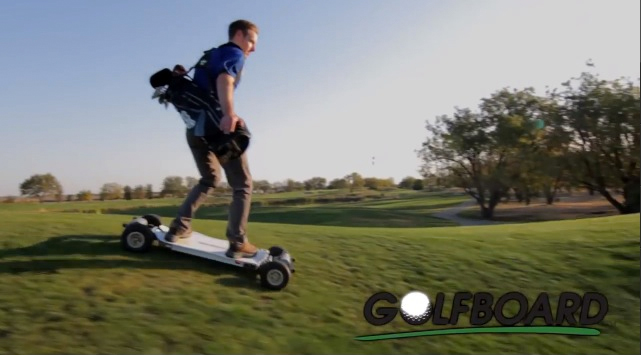
    3. Golfboard – “Surf the Earth” is the best way to describe the hottest new product at the 2014 PGA Show. Golfboard is basically a cross between a golf cart and a surfboard. The Golfboard allows a rider to “surf” along the golf course while having less impact on the turf than a golf cart. The golfboard weights 600 pounds less than a golf cart and uses the same tires as most common mowing equipment. The four wheel drive golfboard can handle 18 holes on any course while giving the rider two options for riding. You can get one with a bag stand for stability or free ride with the bag on your back. While the $4000 price tag may not be right for you, Golfboard is hoping that many progressive golf course operators will soon offer these for rent instead of a traditional golf cart. I for one, can’t wait!
    4. Ernest Sports – Until recently, expensive doppler radar launch monitors have been reserved for high-end club fitters and tour pros because of their huge price tags. Those same systems also required a laptop, special cabling and AC power, making them inconvenient for quick sessions on the run. Of all the technology in golf these days, launch monitors and swing analyzers have made the biggest leap forward. While the typical setup for a Trackman costs about $20,000, Ernest sports is launching their new ES14 launch monitor for under $500. It’s also portable (1.5 lbs), uses AC or battery power and connects wirelessly to your phone or tablet with a custom app to display all the data. The much more expensive Trackman is able to track more info and the ES14 derives some values (like spin rate) rather than measuring them like the Trackman, but for the price difference that is understandable. The Ernest Sports ES14 can show the golfer their club speed, launch angle, ball speed, smash factor, spin rate and carry distance, which is more than enough for most people wanting to get fit for new clubs or help them improve their game. The price point makes it affordable and the compact size make it practical to carry in your bag every day.
    5. Hack Golf – Hack Golf is not a company, but a movement led my industry leaders to make the game more fun, affordable and accessible, Hack Golf was introduced at the 2014 PGA Merchandise Show by TaylorMade CEO Mark King. We’ve seen many of these so-called growth initiatives in the past and none of them had much impact, so our skepticism is only natural. Nevertheless, Hack Golf has potential to make a real impact by crowdsourcing the movement and with ideas to grow the game like tournaments with 15″ diameter holes and non-conforming oversize clubs and balls for beginners to learn the game. I recently wrote about the state of the game and presented some of my ideas on how to make the game more fun. Hack Golf shares some of these ideas and invites people to make their voices heard, which I applaud. Head on over to Hackgolf.org and join in the movement!
  • TaylorMade Introduces Tour Preferred Golf Balls

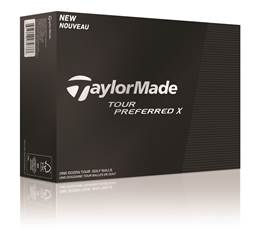
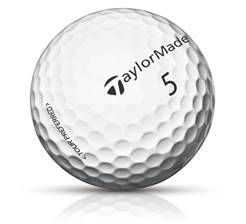
    TaylorMade Tour Preferred X Golf BallTaylorMade is making waves in the golf equipment market with their “Loft Up” message that relates to the popular SLDR driver. They also recently announced the new line of Tour Preferred irons, which should be very popular. Next up are the new Tour Preferred golf balls! The last two performance golf balls TaylorMade had to offer were good, but not really my cup of tea. The Penta TP5 spun too much and launched too high for my tastes, and the Lethal didn’t really register on the “must try” scale. The new Tour Preferred and Tour Preferred X golf balls however will be on my test list. Below is the official press announcement from TaylorMade:

    Softer and more durable cover makes new line-up the best performing
    golf balls in company history

    CARLSBAD, Calif. (January 30, 2014) – TaylorMade Golf Company, the No. 2 golf ball brand on the PGA TOUR, is proud to announce the release of Tour Preferred and Tour Preferred X: two tour-caliber golf balls that provide complete tee-to-green performance.

    After a decade of prototyping and testing with the world’s best players, the company believes the new Tour Preferred franchise is the best performing ball the company has released to date.

    “Golf ball innovation doesn’t just happen overnight. Rather, it is a series of ongoing conversation with our Tour players,” said Dean Snell, vice president of golf ball R&D. “These conversations have led to the introduction of breakthrough technologies including low drag aerodynamics for ultimate wind resistance, a five-layer construction for superior control throughout the club set and now our softest and most durable cover.”

    TaylorMade Tour Preferred Golf Ball

    Key to the performance of the Tour Preferred and Tour Preferred X golf ball line is TaylorMade’s patented and proven technologies, including:

    • REACT™ Core for greater ball speed on all shots for increased distance.
    • Spin Mantle™ designed to deliver precise and consistent spin rates on given shots throughout the bag.
    • Low-Drag Performance Aerodynamics (LDP™) A 322-dimple pattern designed to minimize distance loss on low spin shots and also maintain a penetrating ball flight into the wind.

    A new technology featured in the golf balls is Soft Tech™, TaylorMade’s softest and most durable cover to date. Made of a cast urethane, the new cover provides an even softer feel around the greens than previous TaylorMade offerings.  The Soft Tech cover will also provide higher resistance to shearing and will last longer.

    Click image to see Sergio test the new Tour Preferred X around the green

    What separates Tour Preferred and the Tour Preferred X from each other is spin. The Tour Preferred is designed for players who desire more spin in the mid-to-long iron shots. The additional spin will also promote a higher trajectory on approach shots.

    Tour Preferred X maintains the same spin and trajectory into the green as its predecessor Lethal. Unlike Lethal, Tour Preferred X promotes better green side control because of its new Soft Tech cover.

    TaylorMade anticipates that more than 80% of its tour players will gravitate to this model as they are seeking controlled iron spin, for a more penetrating ball flight.

    Click image to watch Dustin test Tour Preferred X from 150 yards

    Since their introduction on Tour earlier this year, tour players have quickly made the switch to both models including Sergio Garcia who has already won twice with the Tour Preferred X (Thailand Golf Championship in December and Qatar Masters in January). Emerging LPGA star Jessica Korda also played the Tour Preferred X in her season-opening win at the Pure Silk Classic.

    Tour Preferred and Tour Preferred X will be available at retail on March 1st at $45.99 per dozen. For more information, please visit www.taylormadegolf.com

  • Golfisms – A Comprehensive List

    Golfisms – A Comprehensive List

    danger-golf-signWe’ve all used them at one time or another to describe a golf shot, situation or event. Golfisms are sometimes raunchy and tasteless, but they usually bring a little humor to the game that we all can use, especially after hitting one of the unfortunate shots that precede them. We’ve scoured the internet, asked our Facebook and Twitter followers and been to golf course 19th holes around the nation in an effort to compile the most comprehensive list of golfisms we could find. Here’s what we came up with. WARNING: Many of these jokes are not politically correct! You’ve been warned.

    Popular Golfisms

    • Jimmy Hoffa – A ball so far offline that it will never be seen again.
    • Jack Kevorkian – Going for an impossible shot: “That shot is suicide!”
    • Joe Lieberman – Having a partner that doesn’t help much.
    • Lorena Bobbit – A nasty slice.
    • Marv Albert – An approach shot that has a lot of bite.
    • Pete Rose – When someone lies about their score, you know they are lying, and they know you know they are lying.
    • Walmart – “Those two drives are so far apart they’re building a Walmart between them.”
    • Lloyd Bridges – Drove it into the water.
    • Linda Ronstadt – “Nice drive, but I just blew by you!” (Blue Bayou)
    • Princess Diana – Shouldn’t have used a driver.
    • Saddam Hussein – When you hit a shot that goes from bunker to bunker.
    • Cuban – A putt left short. “It needed one more revolution.”
    • Sonny Bono – A shot that goes straight into the trees.
    • Thurman Munson – A pulled shot. “That’s a dead yank…”
    • Otis – (As in, Otis Elevators) Getting “up and down” for a par.
    • OJ Simpson – “It wasn’t a great shot, but I got away with it.”
    • Rock Hudson – A putt that looks straight, but isn’t.
    • Yasser Arafat – A shot that is ugly and in the sand.
    • Danny Devito – A shot that is short and fat.
    • Paris Hilton – Losing a large bet. “That was an expensive hole.”
    • Glenn Miller or John Kennedy Jr. – A shot that didn’t make it over the water.
    • Adolf Hitler – A shot that doesn’t make it out of the bunker, or two shots in a bunker.
    • Oral Roberts – A little heeler (healer).
    • Rodney King – When you hit the ball over the green. You “over-clubbed”.
    • Bin Laden – A shot so far offline it will be very tough to find.
    • Rush Limbaugh – A shot that goes foo far to the right.
    • Nancy Pelosi – A shot that goes to far to the left.
    • Hockey Stick – When you make a 7 on a hole.
    • Bud Light – When your shot ends up “close to water.”
    • Bo Derek – Hitting a perfect shot, or can be when you make a 10.
    • Fabio – “F*@$ing awful, but it’s OK.”
    • Barbara Streisand – A shot that isn’t pretty, but it still works.
    • Captain Kirk – A shot that goes where no man has gone before.
    • Crop Duster – A shot hit head high.
    • Direct Deposit – A full shot or chip that goes in the hole.

    I know there are some other good ones out there, so please leave us a note and add to the list!

  • 5 Cyber Monday Golf Deals

    Cyber Monday Golf DealsCyber Monday Golf Deals

    The Christmas shopping season seems to start earlier every year, doesn’t it? Here in the US, Black Friday kicks off the holiday mess on the day after Thanksgiving, and Cyber Monday follows on the Monday after Thanksgiving for online retailers looking to get in on the action. While the golf season may be over for much of the country, there are still lots of reasons to be on the lookout for some cyber Monday golf deals. If you are a true golf nut like myself, you don’t need a good reason to be looking for new gear!

    We took a look back at all the product launches this season and seasons past and think these five are some of the better cyber monday golf deals out there.

    1. Hopkins Golf Wedges – Greg Hopkins knows a little something about making wedges. He was the President & CEO of Cleveland Golf for 16 years. Now he’s formed his own company to make wedges a bit more personal. Just about everything about Hopkins Golf wedges is customizable, and their manufacture in small batches ensures they’ll be high quality and very playable. Click here to get started building your own custom wedges, and use the promo code ITG20 to get a free custom grind!

    2. Eyeline Golf Training Aids – Eyeline Golf makes a dizzying array of training aids, and their signature putting mirrors are a great way to sharpen your putting by getting your eyes directly over the ball and give you good feedback on your stroke. I’ve used one for a while and I’m a great putter getting better. But don’t take my word for it, just ask any of the dozens of touring pros that use their aids every day. Combine their Speed Trap swing trainer with the ProAdvanced net (see below) for a complete swing improvement station in your house.

    3. Sheex Performance Sheets – Sheex makes the best sheets money can buy. That’s my opinion of course, but I’ve been sleeping on them for several years now and I’ll never go back to cotton sheets. What do these have to do with golf? Nothing, other than helping you get a good night’s sleep so you can play your best. Sheex are made of the same material as the light, moisture wicking athletic apparel everyone wears these days, but thicker and softer. I’ve sent Sheex to several friends as gifts and they are all converts. Try them now and save 10%. Just click on the link above or go here: I promise, you’ll love them.

    4. ProAdvanced Practice Nets – If you are stuck in a part of the world that is covered in snow during the winter, you still have a few options to practice your golf swing. Get a net! ProAdvanced Sports makes nets that set up in seconds, are easy to use and even return the ball to you. They make a full size net called ProReturn for full swings or a smaller version called ProApproach for short game practice. Get one, throw it up in the basement or living room and keep your swing sharp and ready for spring!

    5. Kikkor Golf Shoes & Apparel – There are lots of choices out there for golf shoes, but only Kikkor makes shoes that literally make you cooler. Just kidding, but One thing is for sure, Kikkor Golf makes some cool shoes. Crossing the line between golf and the skate/surf culture, these shoes will help you stand out against the crowd. Use our exclusive link and you’ll get an additional 10% off your entire order, and don’t forget to drop them a line and tell them intothegrain sent you. Company founder and Big Break star James Lepp will be happy.

  • TaylorMade SLDR Driver

    TaylorMade SLDR DriverIf I could only use one word to describe TaylorMade Golf for the past 3 or 4 years, I think it would be: Prolific.

    pro·lif·ic (prəˈlifik) adjective: present in large numbers or quantities; plentiful.

    TaylorMade is everywhere. Go to any major sporting goods retailer, golf store or green grass pro shop and you are likely to see TaylorMade clubs, balls, hats, bags and more. This is deliberate of course. In the marketing war to win over customers, more is better. The more you see their name on TV, in pro shops or on the course, the more likely you will become a TaylorMade customer yourself.
    For this strategy to work however, you need a good product and money, and TaylorMade has both. Now backed by the adidas Sports Group, TaylorMade adidas Golf (TMAG) has a long history of industry changing products. It all started in the 70s when Barney Adams created the original “Pittsburgh Persimmon” cast metal driver. Once he got a few PGA Tour pros to try it and they started winning with it, the metalwood era had begun. By the mid 90s, wooden headed clubs were gone. In 1995, they introduced the Burner Bubble driver with a painted (imagine that) copper head and the innovative bubble shaft, and it took the market by storm. By 2004 when the R7 adjustable driver came out, TaylorMade had already established itself as an industry leader. Last year we had the famous (or infamous) white drivers and fairways, and while one TMAG staffer once told me “We’re all in on white”, they have returned to a more neutral color scheme with their most recent clubs, the SLDR Driver and the newly introduced JetSpeed Driver and Fairways.

    TaylorMade SLDR Driver

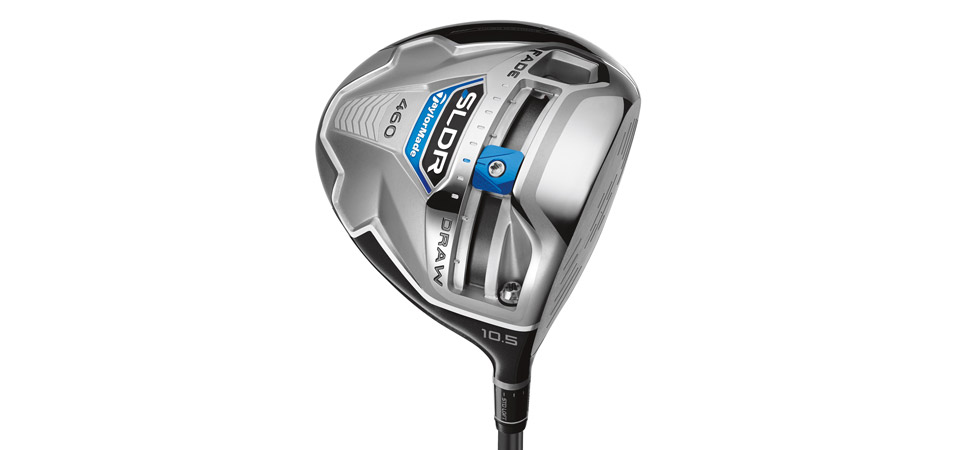
    TaylorMade SLDR DriverThe TaylorMade SLDR driver is almost old hat at this point, having come out earlier this summer. TaylorMade loves to introduce new products at several points in the year, making it seem like there is a constant stream of new goodies coming from the R&D folks in Carlsbad, California. They say what makes this driver long is the placement of the CG (center of gravity) low and forward in the club to reduce ball spin. When combined with greater loft at impact, balls are launching higher with less spin, and according to the magical club testing robots and launch monitors, it is their longest driver ever.
    We’ve all heard this before of course. Longer, straighter, more forgiving – these words are attached to every company’s new product launch press releases nowadays. Will the TaylorMade SLDR driver deliver on this promise? In a word, maybe. Every golfer will get different results, and obviously a proper fitting makes a huge difference. I compared the SLDR driver side by side with two current “gamer” drivers. The Adams Super LS and a Cleveland Classic that is now my backup.

    Performance

    TaylorMade SLDR DriverHaving such a low and forward center of gravity (CG), the TaylorMade SLDR will perform better if you add some loft. If you normally play a 9.5 degree driver, try the SLDR with 10.5 degrees. The forward CG lowers ball spin to the point that too little loft will leave you unable to carry the ball very far. I had the 10.5 lofted TaylorMade SLDR TP, which is the “tour” model with an upgraded shaft. I usually play 7.5 (Cleveland Classic) to 8.5 (Adams Super LS) degrees of loft, so going to the 10.5 head was a big change. Naturally I launched the ball very high with the SLDR driver. Since I was basically comparing apples and oranges, I didn’t notice a gain or loss in distance with the SLDR driver. The SLDR driver carried a bit further than the Cleveland Classic and Adams Super LS, but because the conditions are usually soft and wet in my area I wasn’t able to see how much roll I would get. It seems that every year my swing speed goes down, but I don’t lose distance. Advancements in club and ball technology are the main reasons for that. In practical terms, distance depends largely on one’s golf swing and playing conditions. It is too hard for me to judge if this driver is really longer than my “gamers” in real world testing. One thing is for certain, this driver is as hot as any current driver, so if you have a club that is a year or two old, you will most certainly see a gain in distance with the TaylorMade SLDR driver if properly fitted.
    I generally don’t mess with adjustable drivers much, because I like to work the ball both ways off the tee and prefer a neutral setup that allows me to shape shots without too much extra effort. The SLDR driver’s sliding weight allows a person to dial in up to 30 yards of side to side ball flight, according to TaylorMade. Out of the box I found the TaylorMade SLDR wanted to draw the ball, so I set it a few clicks towards to toe and found a setting that worked pretty well. Had the shaft been a little stiffer I think the default setting may have worked. Either way, this adjustment is simpler and easier to adjust than the removable weights and confusing sole plate of the R1 driver, and a welcome change.

    Aesthetics

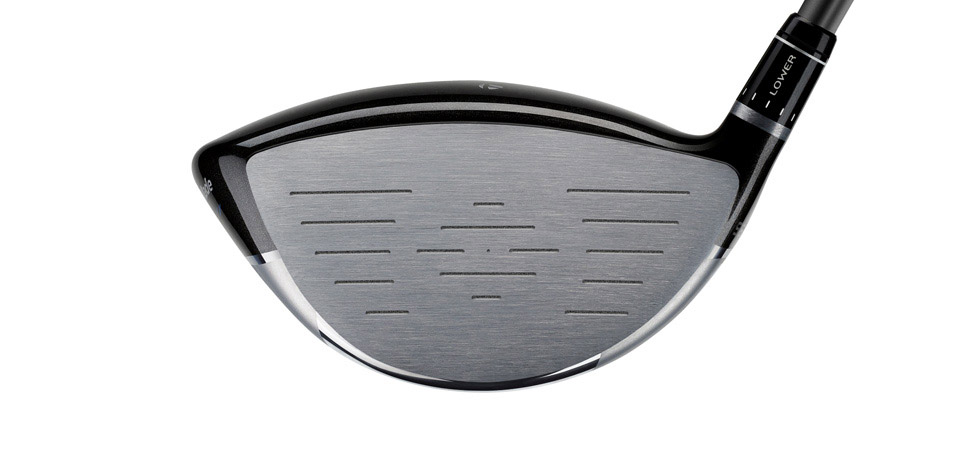
    TaylorMade SLDR DriverIs the era of the white drivers over? I’m not sure, but for the moment it is on hiatus for the TaylorMade SLDR driver. This one is painted a nice charcoal-gray color, which is more traditional and looks great. The chrome accent at the rear of the crown and busy graphics let you know this is still a TaylorMade driver, however. The busy design on the sole is classic TaylorMade, as the MWT (moveable weight technology) has evolved to become a single weight sliding along a track for adjustments in draw or fade bias. The adjustable hosel is still there to allow the golfer to adjust dynamic loft by opening or closing the club face. Compared to some of the more recent offerings, the TaylorMade SLDR is a pretty good looking club.

    Conclusions

    The SLDR driver is a solid, low spinning club that strikes a decent balance between new technology and classic looks. If properly fit, I’m confident that most golfers will see an increase in distance, but depending on what kind of driver you are upgrading from, that gain may be negligible in the real world. To get the most out of this driver, I highly recommend adding loft. Even the 10.5 that I was hitting wasn’t producing a ball flight that was too high for me. Everyone differs of course, so go out and hit one and see for yourself. If you are looking for a good upgrade from a driver that is a few years old, the TaylorMade SLDR is a worthy choice.

  • Myrtle Beach Golf The Mystical Way

    myrtle beach golfAs far as golf destinations go, Myrtle Beach, South Carolina has been one of the most well known places to go in the United States for decades. This beach community on the east coast has evolved over the years to become a top notch location for golf fanatics and family vacations. While someone looking for a high-end experience can certainly find everything they want, I think Myrtle Beach’s sweet-spot lies somewhere between the mid range guys trip to low cost family vacation. My focus here is on the mid-range golf getaway, and nobody does it better in Myrtle Beach than Mystical Golf.

    Myrtle Beach Golf – The Mystical Way

    Claude Pardue, President and CEO of Mystical Golf has given golfers three very unique and totally different golf courses to choose from, and combined with accommodations at the Sea Mist Oceanfront Resort, they have created maybe the best Myrtle Beach golf package available. More on that later. I took a trip recently to play the courses and see what the Myrtle Beach golf experience was all about. It was my first trip to the area, but I know it won’t be my last.

    The Witch

    The witch golf - myrtle beach golfThe Witch Golf Club was our first stop, and it made an immediate impression. The interesting thing about the three courses of Mystical Golf is that each one has its own theme that set it apart from every other golf experience in Myrtle Beach. Designed by Dan Maples, The Witch golf course is set in a swamp, and the holes are spread out over 500 acres with 4000 feet of bridges connecting the holes together. Playing this tricky and visually overwhelming course takes you through deep cypress swamps and dense forests, and you are likely to see plenty of wildlife along the way, including alligators, snakes, deer, black bears and even a bald eagle if you are lucky. The clubhouse looks like a creaky old haunted house, and sits at the high point of the property, right where you would expect a witch to reside. TIP: Buy a yardage book and play the course twice. This course is easier to negotiate once you have seen it once due to some of the doglegs and semi-blind shots you’ll face.

    The Wizard

    The Wizard Golf - myrtle beach golfThe second Mystical Golf offering is The Wizard. Another Dan Maples design, (Maples designed all three courses) The Wizard transports you to Ireland with a links style course with pot bunkers, huge mounds and gently rolling terrain. The clubhouse resembles a castle ruin and helps set the mood as soon as you walk in the huge, heavy wooden front doors. The wizard’s castle clubhouse is the kind of structure I would have expected to see at Disneyworld, not in South Carolina, but the idea is brilliant and fun. The Wizard greets you with wide fairways and large bent grass greens that roll fast and true. Every hole presents you with a distinct line of play, and if you deviate from that line you are very likely to encounter deep rough, deep bunkers and huge grassy mounds that make your task much harder. This wide open links course doesn’t offer much shelter if the wind blows, and it often does. This course was a blast to play and turned out to be my favorite of the three. TIP: Stay out of the sand on this course and you’ll have a good day. Check the weather forecast and try to visit The Wizard on a calm day, as the wind can turn this track into a beast.

    The Man -O-War

    Man-O-War Golf - myrtle beach golfContinuing with the themes for each course, the Man-O-War course uses a nautical theme, with the clubhouse set on stilts over the lake like a wooden boat house. Even the tee markers are metal tie down cleats like you would find on the docks. Located across the 100 acre lake from The Wizard, the Man-O-War course is pretty flat, with large bent grass greens. Having a nautical theme of course means that you’ll find water on every hole, as the 100 acre lake winds in and out and between holes. Mercifully the water isn’t in play on many of the holes unless you hit a shot way off line, but on certain holes (like #9 and #18) you can’t bail out because the water is everywhere. With a slope rating of 141 from the back tees, there is nowhere to hide. Fortunately, Dan Maples gave you some chances for birdies with short par fours and a few reachable par fives. The Man-O-War was the perfect course to finish my trip on. TIP: Play conservative, keep it dry and you’ll have a good day. Most golfers play their best later in a trip, so if that is the case for you, play this course last as it is the most challenging of the three.

    Pro Play II Package

    Sea Mist Resort - myrtle beach golfSo, how much will it cost you to visit these courses for yourself? Much less than you might imagine. Called the Pro Play II package, rates start at only $264/person for three nights and three rounds of golf. That’s not a typo! You can play all three courses and stay three nights at the Sea Mist Oceanfront Resort from $264 up to $416 per person, double occupancy, depending on the time of year you go. I challenge you to find a better deal anywhere on the stretch of coastline the locals like to call the “Grand Strand”

    Available through June 1, 2014, the package includes three nights’ accommodations at the Sea Mist as well as:

    • Welcome cocktail at the Sea Mist Tavern
    • Traditional Low-country Oyster Roast (Wednesday only)
    • $10 dinner voucher at Sea Mist’s Grille and Tavern
    • Daily breakfast at the Sea Mist’s famous buffet
    • Sea Mist golf hat
    • Complimentary lunch, range balls and two beers at the course each day
    • $15 gift card toward a golf shirt at any Mystical Golf clubhouse
    • Instant replay round for cart fee only

    Sitting on 15 acres of seaside property with easy access from Myrtle Beach International Airport, the Sea Mist features oceanfront and ocean view efficiency condos, hotel rooms, suites, bungalows and cottages. Highlight amenities are nine pools (one indoor), two huge outdoor Jacuzzis, two indoor Jacuzzis, a movie theatre, superb dining and more.

    Why it Works

    The great thing about this trio of courses from Mystical Golf is that it is a pure golf experience, and golf is the only focus. There are no banquet hall, meeting facilities, hotels, condos or homes on any of the golf courses. There are no PGA pros giving lessons and holding clinics even. The spartan clubhouses for each course go along with the theme of the course and have an intimate and purpose-built feel. Each clubhouse has a pro shop with plenty of logo golf apparel, snack bar, eating area and locker rooms. That’s it. You can eat anything you want at the snack bar, as long as it’s a hot dog, cheeseburger or sandwich. If you want grilled salmon or lobster tail, there are plenty of restaurants around town. This philosophy ensures that the focus remains on a great golf experience and keeps costs down by not offering those extra services that people really don’t want.

    Mystical Golf got it right with their three unique golf courses. They are lots of fun to play and give you more variety from course to course than just about any place in the USA. people coming to Myrtle Beach to play golf can look at these courses as the model for a pure golf trip.No fluff, just good golf.

    If you are looking for a cheap golf trip that doesn’t sacrifice on quality, the Pro Play II package is hard to beat. For more information about Mystical Golf and these three fantastic Myrtle Beach golf courses, visit www.mysticalgolf.com and for more info on the Pro Play II Golf Package, visit the Sea Mist Oceanfront Resort website.


  • Interview with Ron Garl – Golf Course Architect

    Ron GarlEvery winter, the PGA Merchandise Show in Orlando, FL brings together thousands of people from all facets of the golf industry. I’ve been fortunate to meet PGA and LPGA legends and superstars, golf equipment gurus, company presidents, prominent media members, world class instructors and many more colorful and interesting people. Of all the people I’ve met and befriended over the years, the most captivating to me are golf course architects. I’ve always had a huge interest in golf course design, and it has always been a dream of mine to help design a golf course.

    One of my favorite golf course architects is Ron Garl. Holding a degree from the University of Florida with a specialization in turf grass management, he has designed over 250 golf courses world wide, and had put his signature on close to 100 facilities in Florida alone. His designs are special because they will challenge the golfer to use every club in the bag, and he has a great talent for routing a course to best take advantage of the host site’s natural topology.

    One of my personal favorite golf facilities is a Garl design called Golden Ocala Golf & Equestrian Club. When it opened, it was the first replica course in the world. The 8 replica holes are recreations of famous holes from Troon (Postage Stamp), Muirfield (#9), Augusta National (#12 and #13 of Amen Corner), Baltusrol and St. Andrews (Road hole, #1). While the replica holes get most of the attention, the rest of the course is even better, and the practice facility at this private club is second to none, with a large driving range, three practice holes and several spaced out short game practice greens.

    I ran into Ron at the PGA Demo Day this past January and struck up a conversation. After discussing a few of his designs in central florida that I am very familiar with, he agreed to take some time to answer some questions for us.

    Crown Colony - Fort Myers, FL - golf course architecture
    Crown Colony – Fort Myers, FL

    ITG: How long have you been involved in golf course architecture?
    RG: 42 years. 250 golf courses later, many lessons learned and a lot of great friends made along the way!

    ITG: How & why did you get started as a golf course architect?
    RG: As a kid, raking bunkers on a maintenance crew and I dreamed of moving and reshaping the bunker.  I would design courses in my head that people would love to play.

    ITG: Who would you cite as your biggest design influences?
    RG: Joe Lee, Robert Trent Jones (both of whom I worked for in my early years) and Allister Mackenzie.

    ITG: How has golf course architecture changed over the years?
    RG: Originally golf course architecture was more art than science. Today it has become more technical, but art of the layout is still most important to golfer!

    #8 Nine Dragons - Shanghai, China - golf course architecture
    #8 Nine Dragons – Shanghai, China

    ITG: Do you think lengthening courses or “Tiger-proofing” is hurting the game?
    RG: Yes, there is a huge difference between length of tour players and amateurs. Barney Adams, of Adams Golf, did an analysis of the length of tour players vs. the average male amateur for them to use the same irons on their approach shot to the green as the tour player would use. For the average male amateur playing a course at 6,700 yards, the pros would have to play the course at 8,100 yards.

    ITG: Conversely, what do you think of the USGA’s Tee It Forward campaign?
    RG: Great idea – people enjoy the game and will play more!

    ITG: In what other ways can a designer make courses tough for the Pros without simply adding length?
    RG: By adding options and strategy off tees so that you create a risk reward.

    ITG: How is the design community making courses more environmentally friendly?
    RG: Making more waste areas and bunkers that do not have to be watered. Using more native grasses.

    ITG: Do you have a specific approach in mind for each course you design, or do you let the natural topology and features determine the design?
    RG: It is always our goal to design a course to lay softly on the land and enhance the natural features which mother nature gave us to work with.

    ITG: What are the hottest and coldest places for new golf courses right now?
    RG: Coldest: U.S. Hottest: Everywhere but the U.S. – U.S. is too expensive!

    Fiddlesticks #9 &#18 - Fort Myers, FL - golf course architecture
    Fiddlesticks #9 &#18 – Fort Myers, FL

    ITG: Where do you currently have projects on the books?
    RG: We are currently working in 12 countries from China to Africa.

    ITG: What is your basic course design philosophy?
    RG: Simple. To make courses Enjoyable, Traditional, Challenging & Memorable

    ITG: Do you have any advice for would-be golf course architects out there?
    RG: It is a difficult time to get into the golf course architect business.

    ITG: What are the challenges presented to a designer to make a course challenging but playable for a wide array of abilities?
    RG: The use of multiple tees that not only make the hole play shorter, but change the angle of attack.

    ITG: What is the future of golf course design? Where do you see the industry going in the next 20 years?
    RG: Renovation and sustainability, most of the growth being outside the U.S.

    ITG: What is your favorite golf course, and what is your favorite course that you designed?
    RG: My favorites, broken into categories:

    Oceanfront: Nine Dragons (Shanghai, China) – Holes in the ocean, holes on cliffs
    Inland: Fiddlesticks (Fort Myers, Florida) – Twin island finishing greens
    Mountain: Alpine Chiangmai (Chiangmai, Thailand) – Peaceful, natural setting in the mountains, tranquil

    ITG: Golden Ocala is a personal favorite of mine. What kind of challenges do replica holes present to a designer?
    RG: Golden Ocala, which I dreamed up and designed, was the 1st replica golf course in the world. The real challenge is to capture the feeling of a hole!

    Alpine Golf & Sports Club - Bangkok, Thailand - golf course architecture
    Alpine Golf & Sports Club – Bangkok, Thailand

    ITG: Have golf equipment technology advances changed how you design courses?
    RG: Yes. The option instead of adding length is to create more target specific zones within the landing areas, therefore if you are going to hit the long ball you have to be more accurate with it to be rewarded with the best approach into the green.

    ITG: Anchored putters – Ban or allow?
    RG: Allow! Putting is very frustrating to most amateurs. Most players don’t have the time (hours & hours) to practice putting and no desire to. It gets back to enjoyment. If they enjoy it more they will stay with the game and play more. Let amateurs use anchored putters! Loss of players is game’s biggest problem the game has. Listen up USGA!

    ITG: What are your interests outside of golf course design?
    RG: Flying/piloting your own plane, i.e. soar with the eagles, Antique Scooters & Fishing

    ITG: How can readers find out more about your golf course designs?
    RG: Our web site: www.rongarl.com

  • Cold Weather Golf – 10 Tips

    cold weather golfFor those of us fortunate enough to live in warm weather states like California, Texas, Arizona and Florida, we get to play golf year round. Lately however, a cold snap has struck in the US and virtually every spot in the nation has seen freezing temperatures. I was born and raised in Canada and the Northeastern US, so I’m no stranger to cold weather golf. Although I now call Florida home, even we aren’t totally immune to the cold. In fact, I remember one morning a few years ago in Orlando when it was actually colder than Juneau, Alaska! With the high humidity in the air down here, 40 degrees feels more like 20. Being from Canada (and also being slightly crazy), I’ve played plenty of golf in cold, miserable conditions. My friends here in Florida usually stay inside when it drops below 60, but sometimes they venture out for a round, and their lack of preparation leads to a crappy day, and crappy scores! So without further ado, here are my tips for playing your best cold weather golf!

    10 Tips for Cold Weather Golf

    Tip #1 – Be realistic! Understand that the ball isn’t going to go as far or spin as much in the cold. You also have to be prepared for the fact that you can’t go out there with the same strategy as a normal day. Be prepared for a tough day and stay mentally tough.

    Tip #2 – Keep your hands warm! This is the single most important tip for cold weather golf! Your hands are your only link to the club, and you need feel to play good golf. If your hands are frozen, you lose all your feel and your game will suffer, especially around the greens. Get yourself a nice pair of mittens and/or some hand warmers for your pockets. Wear the mitts whenever you aren’t hitting a shot, and take them off prior to hitting.

    Tip #3 – Cover your head and ears! Some say that between 7 to 55 percent of your body heat can be lost through your head. Whatever the science is behind it, it’s smart to cover your head and ears with a wool hat or ear warmers. You’ll be more comfortable. Get yourself a nice ski tuque like mine, and at the very least it will be a great conversation piece!

    Tip #4 – Play a softer ball. Golf balls don’t have compression ratings any more since wound balls went away, but some balls are softer and in cold weather you’ll want a ball that is easier to compress. A hard rock ball like a Top Flite XL will feel like a steel ball bearing on a cold day, so opt for a softer option, like the new Srixon Q-Star.

    Tip #5 – Use more club! Check the ego at the pro shop bruiser, the ball doesn’t go as far in the cold. You might have to take one for the team and hit 2 more clubs on every approach shot, but at least you’ll be sure to get to the hole. Because the ball doesn’t go as far, also consider playing one tee up from your normal length. There’s nothing that will ruin a day faster than having to hit three wood into every par three and four.

    Tip #6 – Channel your inner Scotsman and play the ground game. If it’s bitter cold outside, it’s likely the ground will be hard too. So use that to your advantage and play some run up shots and bump and runs. Forget the flop shot in the cold, as the ball won’t spin, the greens are harder and if you aren’t wearing mitts, your hands will feel like steel pliers on that lob wedge.

    Tip #7 – Dress in layers. It might keep you warm, but wearing your ski parka will turn your golf swing into a slap shot. You simply can’t make a full turn in a jacket. Instead, wear a turtle neck or insulating layer followed by a shirt and thin sweater or wind shell. This layered approach will keep you warm and still allow you to make a full golf swing. You can always wear that jacket between shots if it’s really cold, but take it off when you hit.

    Tip #8 – Don’t stop drinking fluids! Many people will substitute water and Gatorade with coffee and hot cocoa when it gets cold, and their game suffers. Your body still needs nutrients and hydration even when it’s cold, and coffee just doesn’t cut it. So, have your hot cocoa, but don’t forget to take a few sips of that sports drink every hole to stay properly hydrated.

    Tip #9 – Hit it solid! That should be a no-brainer and it’s not really a tip, since the goal of every golf shot should be solid contact. But seriously, you’ll know what I’m talking about the first time you take a mighty lash with a 3 iron and hit it a few grooves too low. Ouch!

    Tip #10 – Relish the challenge. Tom Watson got it. He loved playing in adverse conditions. You see, he knew that half the field was virtually eliminated before they even started because they dreaded being cold or getting wet and didn’t really want to be there. I love playing in harsh conditions for the same reason. If my opponent is hating life out there, I have the advantage because I’m much less likely to get rattled by the conditions. So relish the challenge of cold weather golf and take solace in the fact that most everyone out there with you is miserable! At the very least, it will make you feel better.

    Don’t forget to check in with our Facebook fan page and get involved by leaving us comments on what you think!

  • Resort Reboot – PGA Village

    PGA-Village

    There is a ton of competition out there for golf resorts in Florida. In order to separate yourself from the competition, you need to offer quality, value and a unique experience. While many resorts claim it, few can deliver. Many can offer the traveling golfer quality and a unique experience, but at a price. Many can offer great value, but the playing conditions are usually disappointing.

    PGA Village in Port St. Lucie, Florida is one of those few resorts that can deliver value without compromising on quality. Owned by the PGA of America, PGA Village is ranked  as one of Golf Digest’s “75 Best Golf Resorts”. With 54 holes of golf designed by Tom Fazio and Pete Dye, superb playing conditions, a state of the art 35 acre practice facility and the PGA Museum of Golf, PGA Village fulfills the previously mentioned “unique experience” criteria.

    I moved to Florida in 1997, just after Tom Fazio had completed the original North and South courses at PGA Village. A few years later, Pete Dye added the third course. In 2006 all three courses underwent a redesign, and the North and South courses were renamed Ryder and Wanamaker. The Ryder course is named after Samuel Ryder, who founded the Ryder Cup matches. Rodman Wanamaker organized the first group of golf professionals that led to the formation of the PGA in 1916.

    5th green - wanamaker course
    Click to Zoom

    Despite having lived in Florida for over 15 years, I had never been to PGA Village until this past October. I drove past it many times while heading south on I95, and this is a pattern that I came to learn was all too common for golfers. PGA Village was simply overlooked by many when searching for golf resorts in Florida. As a result, the facility suffered from declining morale and sub-standard playing conditions. Late in 2012 the PGA took a hard look at the property and decided to make some changes. A new management team was brought in, along with a new attitude, and they have turned the place around in a dramatic way.

    My visit to PGA Village included rounds on the Ryder and Wanamaker courses, along with a practice session at the PGA Center for Learning and some time on the amazing SAM Putt Lab with PGA Golf Technology Specialist Mark Drenga. After breakfast with GM Jimmy Terry and Head Superintendant Dick Gray to get more familiar with the property, my buddy Dave and I went out on the Ryder course. Fazio designed this course to be generous off the tee, while still being challenging for all abilities. The greens are fast and smooth with just enough slope to keep you on your toes.

    The Wanamaker course continues where the Ryder course leaves off by adding length, making the fairways a bit tighter and punishing stray shots in deeper and larger bunkers. This course is consistently ranked in the top 25 public courses in the state. It is a classic Florida layout with wetlands and vegetation coming into play more frequently than the Ryder course. Again, the playing conditions were ideal with fast, smooth rolling greens and dramatic white sand bunkers that test your courage on almost every shot.

    BRIAN OAR - FAIRWAYS PHOTOGRAPHY
    Click to Zoom

    I didn’t get to play the Pete Dye course, but I was able to ride around several holes and get a good feel for the layout. It is a classic Dye design with dramatic mounds, steep face bunkers and plenty of nasty surprises for errant shots. More of a link style course, the greens are in great shape and roll true like the other courses. As with most Pete Dye courses, don’t miss on the short side! While there is plenty of water and waste areas around the course, Dye always gives you a bail out area. If I was to recommend an order in which to play the three courses during your stay, I would go with the Ryder, Dye then Wanamaker.

    In the afternoon we stopped by the 35 acre PGA Center for Learning. This amazing practice and teaching facility has a huge circular practice range with chipping and putting greens scattered all over the place, different types of practice bunkers, a three hole discovery course for new players and a staff of PGA Professionals. The learning center boasts one of the most technologically advanced facilities in the nation. They have a ForeGolf Sirgul 180 Simulator, TrackMan Launch Monitor, Sam Putt Lab, Dynamic Balance System, V1 Pro, LinxTracker and more to assist the pros. There is also a world class golf fitness and performance center and a fully stocked club fitting and repair center.


    BRIAN OAR - FAIRWAYS PHOTOGRAPHY
    Click to Zoom

    To round out the experience at PGA Village is the 8000 square foot PGA Professional Hall of Fame and PGA Museum of Golf that houses one of the most complete and diverse golf libraries in existence. Be sure to make some time on your trip to check it out. In fact, to get your trip started I would suggest everyone spend a half day at the museum and library, then head over to the practice facility and work off the rust or get a quick lesson and play the 6 hole PGA Short Course. The next two or three days can be spent playing the big courses. I believe this itinerary will give golfers more than just a resort golf experience, but some historical perspective as well and a way to easy into the trip in a more relaxing way.


    Located two hours down the turnpike from Orlando and only 45 minutes from West Palm Beach, PGA Village is perfectly located for both north and south Florida golfers seeking a place to get away. There are plenty of amenities and restaurants in the area, and choices for accommodations are also diverse. Stay and play packages can be booked right on their website. With a central location, great playing conditions, wonderful facilities, courses from two legendary designers and unique attractions like the PGA Museum and Learning Center, PGA Village should be on everyone’s Florida golf resort short list.

  • Cleveland Smart Square Putter

    Cleveland Smart Square PutterCleveland Golf is taking a shot at one of the most popular putters in history with a new spin on the tour proven design. Odyssey’s legendary Two-Ball putter is still in use by many, but they say that they have come up with something better in the new Cleveland Smart Square putter. We took a close look at it before it is released to the public on November 15, 2013.

    The first thing I noticed was the obvious square design on the top of the putter. By using squares instead of circles, Cleveland claims that players aim the Smart Square putter 23% more accurately than the two ball design. The second thing you’ll notice is the color. It is a matte black with white paint fill that stands in sharp contrast with my white (or sometimes yellow) golf balls. It has a pretty standard looking mallet style head and double bend shaft to make it face balanced. This balance encourages a full release of the putter during the stroke and helps keep the face square through impact. The grip is a common Winn type with a soft and tacky feel.

    Most new putters I get start out by rolling balls on my putting green at home, aka my office carpet which stimps at about 11. I then take them out to the course for a few rounds and some putting green sessions. My takeaway is that the Copolymer face insert gives the putter a nice feel, with the impact feeling firm but muted with a nice sound and low vibration. The insert is similar to competing putters on the market, but feels slightly firmer and the ball doesn’t spring off the face like some other inserts. It’s just right in my opinion.

    Cleveland Smart Square PutterAiming properly is this putter’s raison d’etre, and the key for Cleveland is the Dual Axis Alignment feature. The two squares provide parallel lines the frame the ball at address, and the perpendicular lines help to show if the putter face is misaligned at address. As mentioned before, Cleveland Golf testing shows players aligned the Smart Square  23% more accurately than the Odyssey Two Ball Putter. Although they don’t mention it by name, we know that’s the putter they are talking about.

    The Cleveland Smart Square putter will be available in three different variations. The standard heel shafted model and center shafted models will be available in lengths from 33″ to 35″, and there will also be a 39″ model with a heavier 400 gram head and heavy grip for a counter balanced feel. In my experience, the counter balanced design is worth trying out. I really like the way a counterbalanced putter swings.

    The Cleveland Smart Square putter is a simple idea that makes plenty of sense. The putter rolls the ball very well and should be easy to align. The matte black paint job will not be distracting in the sun and should hold up to regular use. MAP (Minimum Advertised Price) for the standard models is $139.99 and $179.99 for the 39″ model, but street pricing may be a bit lower than that. The Smart Square putter hits stores on November 15, 2013. For more info, visit http://www.clevelandgolf.com/smartsquareputter/ and check out the video below.

  • Ecco Tour Hybrid Wingtip Shoes

    ECCO Golf Collection - Men's Tour Hybrid Wingtip Lion_BurntOchreIt’s no secret among my friends and peers that I’m a big fan of Ecco shoes. After all, I have 6 pairs! They have just about everything one could want in a shoe. They are durable, fit well, comfortable and stylish. The one complaint I hear all the time is that they cost too much. Personally I don’t see this as a valid complaint because like any premium product in any category, if you want quality you’ll have to pay a bit more for it.

    Such is the case with Ecco’s newest golf shoe – the Tour Hybrid Wingtip. Retailing at about $190, you can certainly get a cheaper shoe, but I doubt you can find one so well constructed for the money. By combining the classic styling of a traditional wingtip dress shoe and the modern materials and traction of their popular TPU nubby outsole that Fred Couples made famous, they have created a great looking, functional golf shoe that you can wear all over. In fact, I probably wear my Hybrid Wingtips to work more often than on the golf course.

    While these shoes can be worn anywhere, make no mistake – this is a golf shoe first and foremost. The patented outsole configuration of approximately 100 molded traction bars and 800-plus traction angles provides plenty of grip. The TPU material is much more durable than rubber and is said to last the life of the shoe. The GORE-TEX liner makes them waterproof while still allowing your foot to breathe, and the fit is more precise than most other shoes on the market.

    ECCO Golf Collection - Men's Tour Hybrid WingtipEcco shoes seem to fit my foot perfectly, and the deep heel pocket keeps my foot securely in place. Everyone’s feet are different of course, and the Euro sizing makes them a little different for fitting. It goes without saying, but because many people order online these days I would recommend trying them on in store first to get the right sizing. Pair them with a nice pair of Kentwool socks and your feet will be happy.

    Spending $190 for the Ecco Tour Hybrid Wingtip is a bargain, and here’s why: Considering that a decent pair of business casual work shoes and a nice pair of golf shoes will cost well over $200 together, these can perform both duties for less moolah. Not only that, but the Eccos will probably outlast the other two pairs anyway!

    In summary – I love everything about this shoe. I can wear them right out of the house to work, then simply walk on the golf course in the afternoon with no discomfort at all. They provide plenty of traction and stability while keeping my feet dry, and they look fantastic. The Ecco Tour Hybrid Wingtip isn’t just my favorite golf shoe, they are my favorite shoes.

  • Glenmorangie Searches For The Greatest Course In The World

    GlenmorangieScotchWhiskeySummer is almost here, and the Open Championship is drawing near. In the spirit of The Open, The people that make Glenmorangie single malt scotch whiskey are searching for the world’s greatest golf courses. Courses, which like Glenmorangie whisky are “Unnecessarily Well Made”.

    Glenmorangie ambassadors Sir Nick Faldo, David Cannon, Tony Jacklin and Robert Trent Jones, Jr. will be nominating their favorite golf courses, and the public is also welcome to vote for theirs. While the voting is going on, they are offering an exclusive trip to the 2014 Open Championship at Royal Liverpool for one lucky winner, along with additional monthly prize giveaways.

    For more information you can visit http://golf.glenmorangie.com/ and take a look at their YouTube channel: http://www.youtube.com/user/glenmorangie

    Be sure to go online and vote for your favorite courses, and enter to win a trip to the Open Championship while you are at it!