
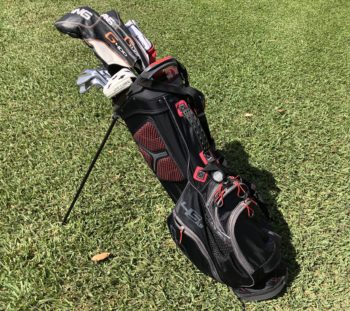
It has been almost two years since my last “What’s in the Bag” post, so I thought I would update things with a new post since there have been several big changes in my bag for 2019. The golf industry changes fast, and there is always something new and exciting coming out. It’s tempting to want to get the latest and greatest driver, putter or wedges. Those are the clubs most golfers change out the most.
What’s In The Bag?
I’m an endless tinkerer and like to change things up if I think it’ll help me gain an edge or snap me out of a funk. However, sometimes frequent club changes can be a detriment and lead to inconsistency. One of the clubs that used to change most often in my bag was the putter, but since October 2017 that hasn’t been the case. In fact, only 4 clubs are still in my bag since the last WITB in June of 2017.
Driver – PING G410 Plus
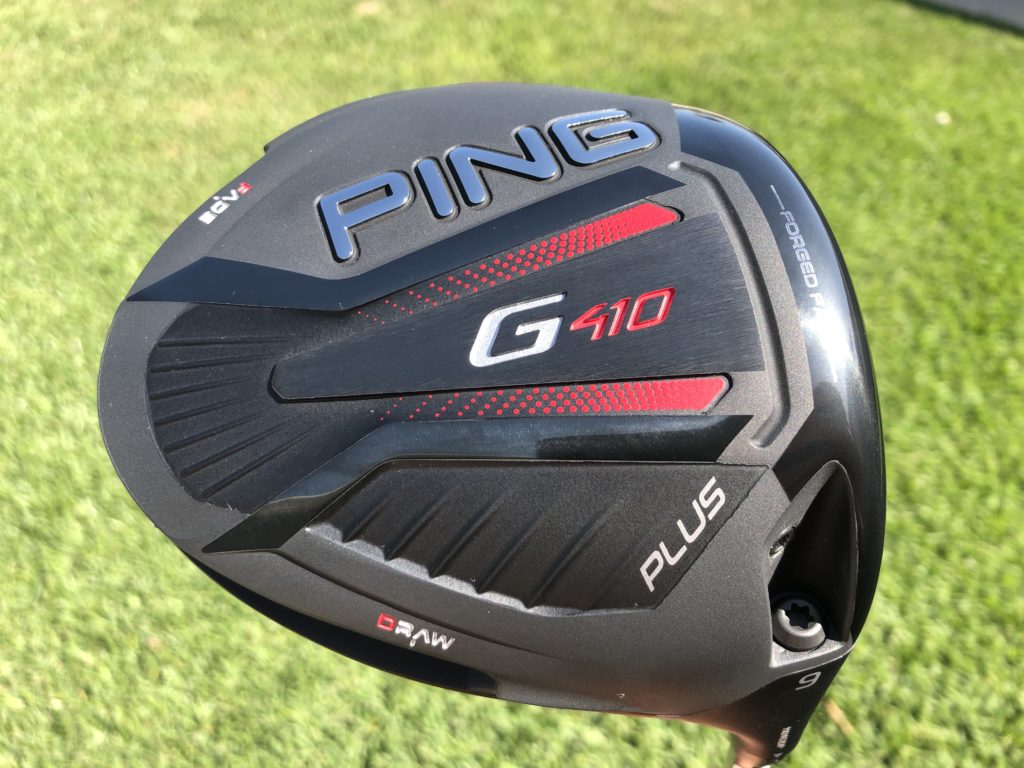
I’ve been playing PING drivers exclusively since 2014 and have upgraded to every new model that has come out since then. I just replaced the awesome G400 LST driver with the new PING G410 Plus. This is a minor upgrade as I only switched out the club head. I continue to use the PING Tour 80x shaft that I got with the G driver in 2016 and used with the G400 also. The shaft is heavy, stable and consistent. I’m actively searching for an after-market shaft that is 15-20 grams lighter to see if I can pick up some distance.
With the G410 Plus driver, I’m back to my standard 9-degree loft after experimenting for two seasons with the 10-degree head in the G400 that produced more spin, higher ball flight, and more carry. I gave up about 6 to 8 yards of distance but probably gained a bit of accuracy with the 10-degree lofted driver.
3-Wood – PING G400
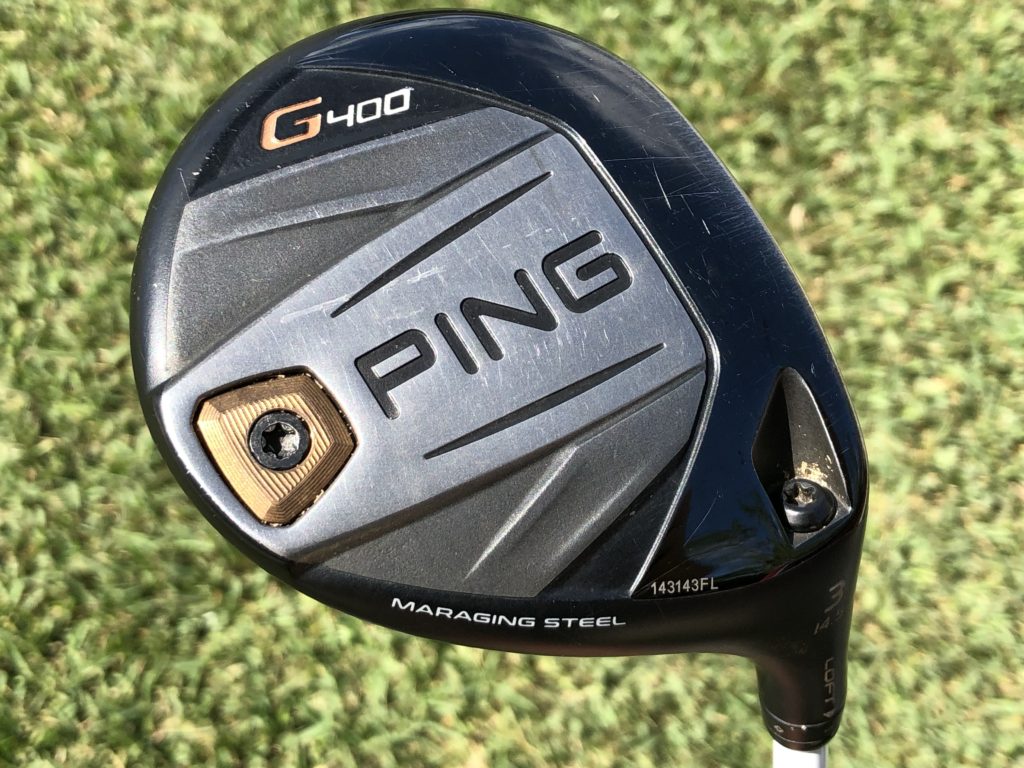
In February of 2018, I went down to Trump National Golf Club in Jupiter, Florida for a fitting with the mad scientists from True Spec Golf. My mission was a difficult one for me, as I had been searching for years: Find the perfect 3-wood. Under the watchful eye of an expert club fitting specialist and a Trackman launch monitor, I hit fairways from almost a dozen manufacturers. Once we settled on the right club, we started testing shafts to arrive at a head & shaft combo that performed the best. The winner was a PING G400 3-wood (14.5 degrees turned down to 13.9) fitted with a Fujikura ATMOS Tour Spec 80x shaft. Finally, I found a new fairway wood that totally was dialed in for me. With the new 3-wood, my spin rates went down, launch angles went up and I gained over 10 yards! #ClubFittingMatters
Hybrid & Long Irons
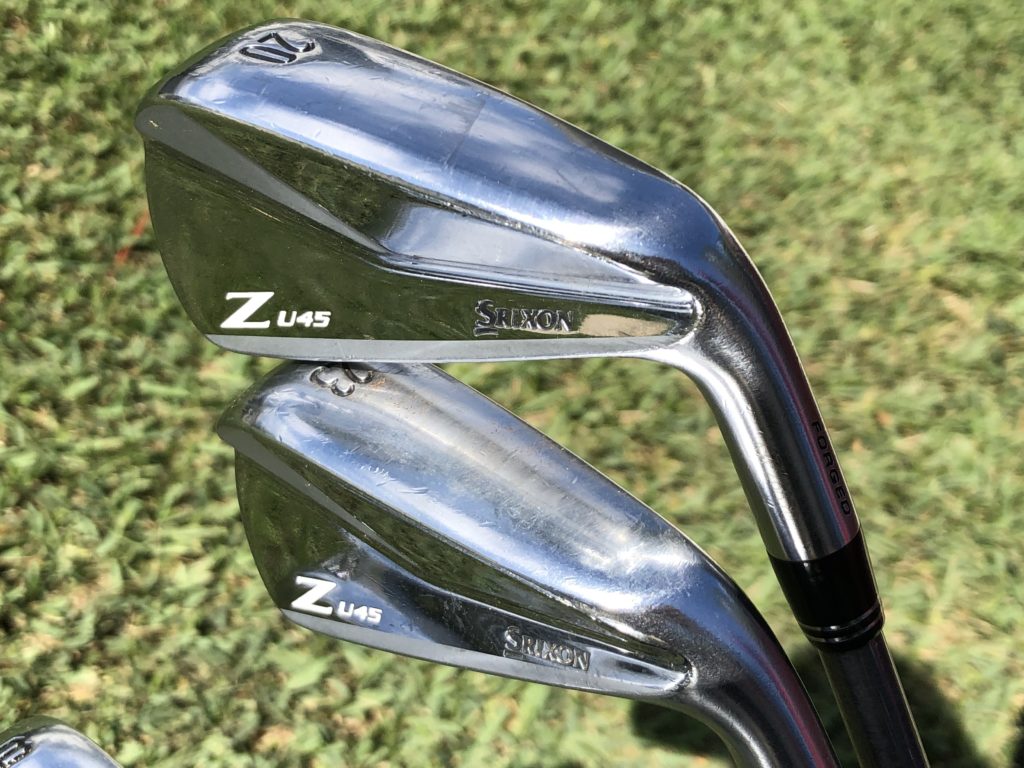
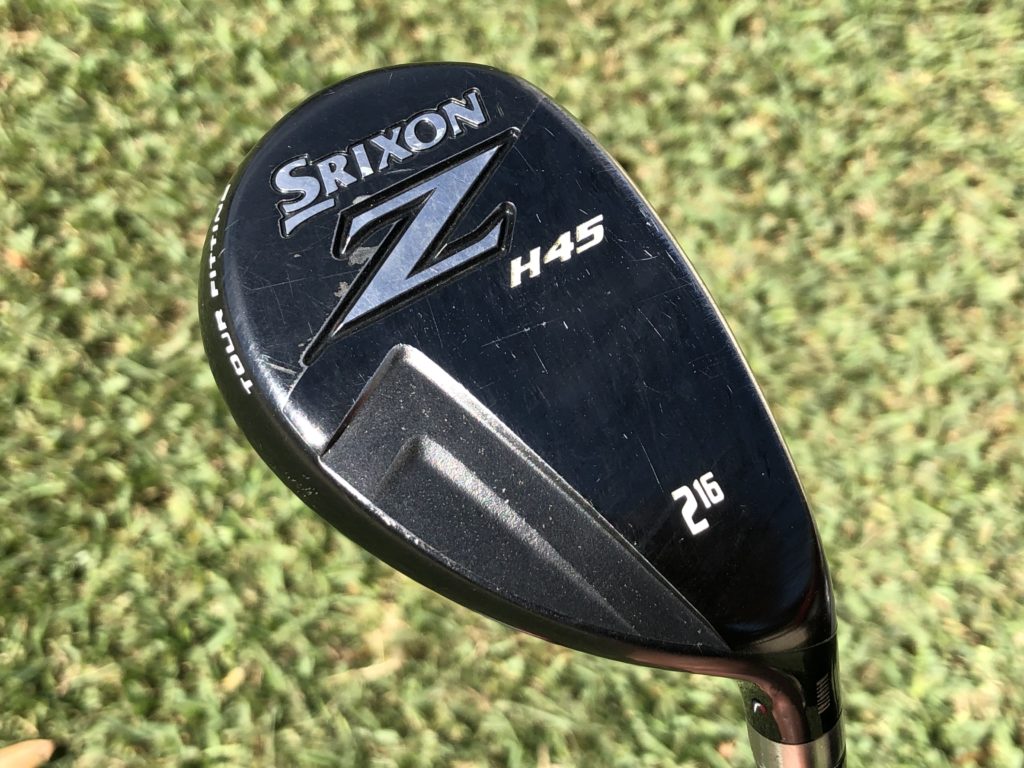
No changes here – I’m still gaming the awesome Srixon Z H45 2-hybrid and Srixon Z U45 3-utility (20) and 4-utility (23) from late 2014. All are fitted with Aerotech shafts; the 2-hybrid has the Aerotech HLS880 and the long irons have the Aerotech Steelfiber i110cw shafts. Because I carry four wedges, bagging all three of these clubs usually puts me over the 14 club limit so the odd man out is usually the Srixon Z H45 2-hybrid, but that may vary depending on the course and conditions. For casual rounds on weekends or tournament practice rounds, I’ll often carry all three.
Irons (5-PW)
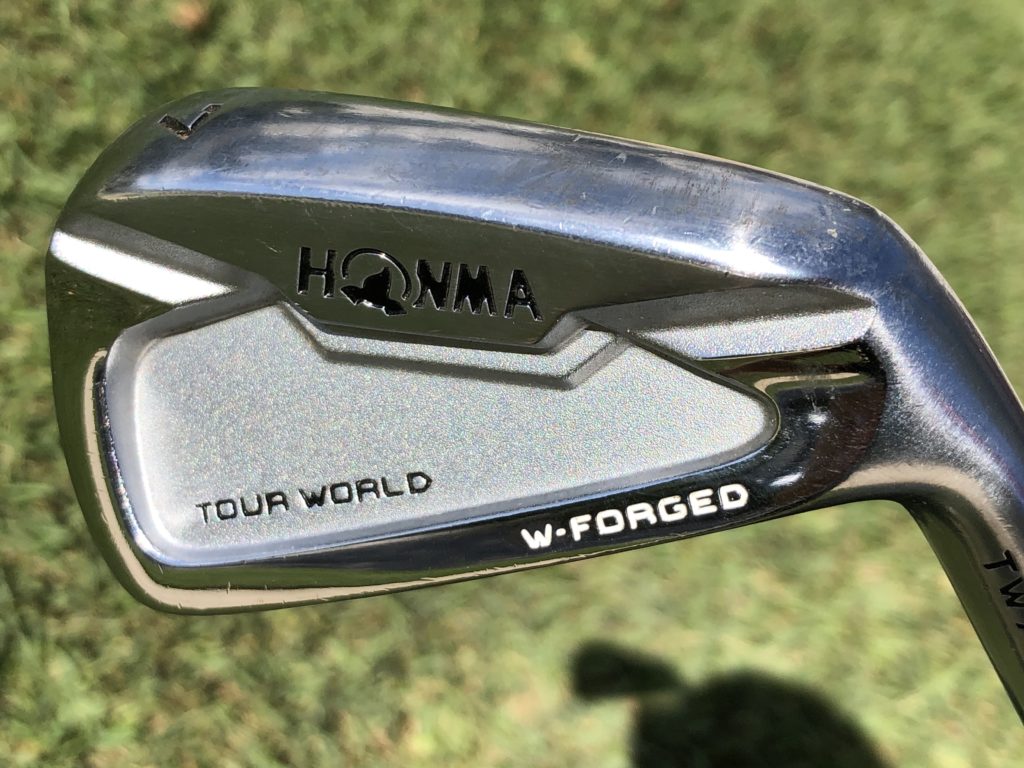
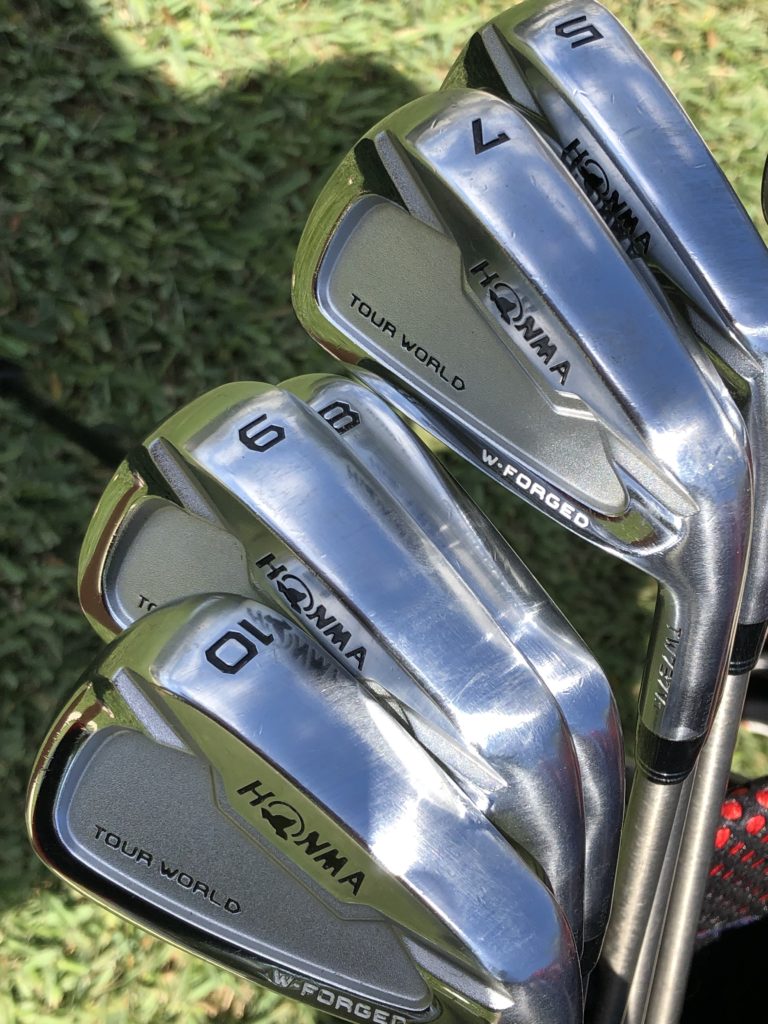
There aren’t many clubs on the market that look as good and perform as well as the Srixon Z745 forged cavity back irons I got back in 2015. After three years in the bag, I was still very happy with them, so it would take something special to replace them. As it turns out, something special came along in the form of the gorgeous Honma Tour World 737vn irons. They sat in the garage for almost 6 months before I finally made the decision to reshaft them with my preferred shaft – Aerotech Steelfiber i95cw shafts. Once I did, there was no way I wasn’t going to game these amazing Japanese forged irons. So far so good.
Wedges
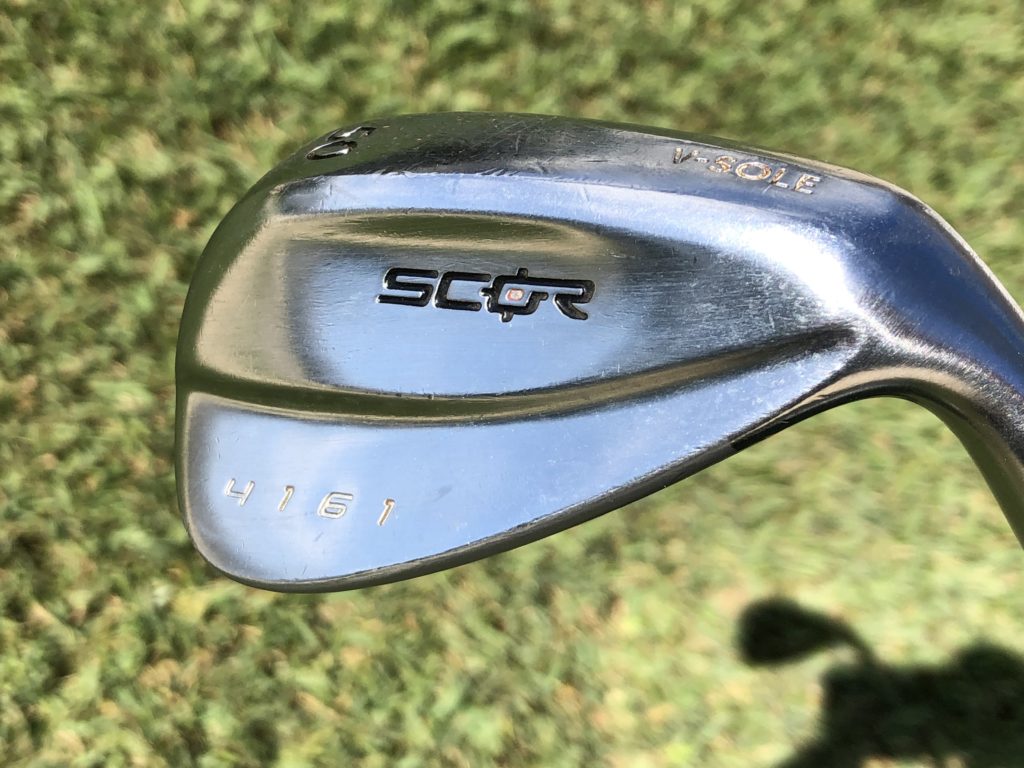
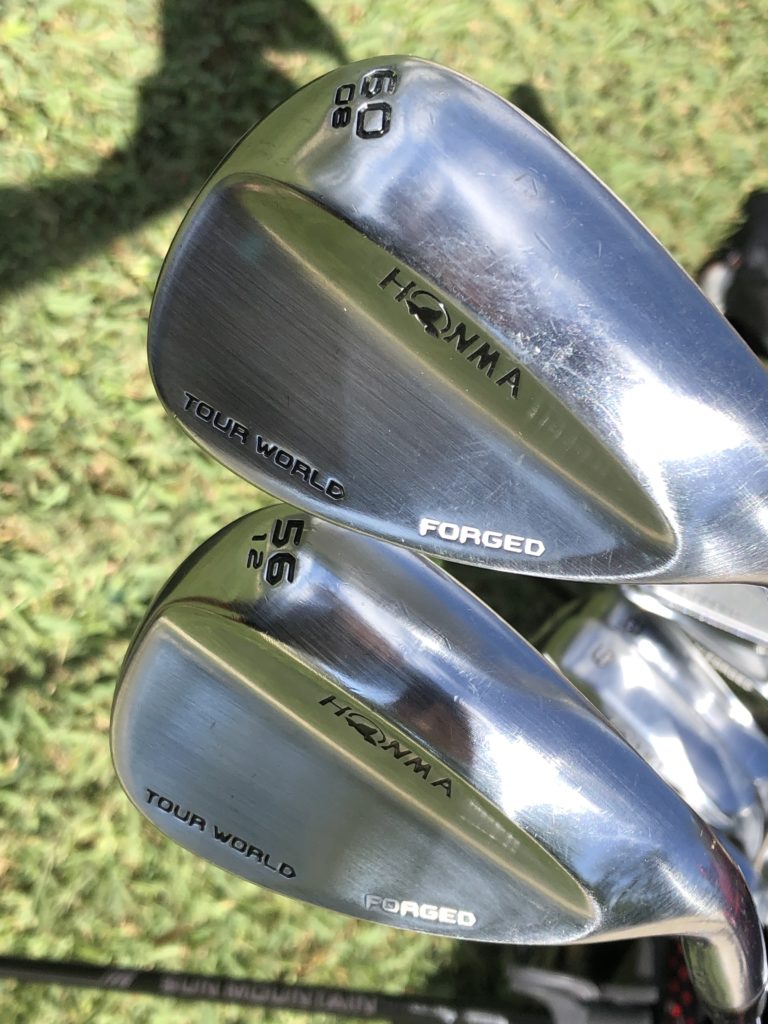
My trusty but aging SCOR 50-degree gap wedge I got back in 2012 (part of a 5-club set) is probably the best club in my bag. That gap wedge is almost solely responsible for my 2017 WAGC National Championship win. I used it on the last three holes of the 54-hole tournament by getting up and down for par from 125 on #16, chipping to 2.5 feet for birdie on #17 and hitting it to 8 feet from 118 yards to birdie the final hole and win by a shot. Most recently I used it to play the final 3 holes in 3-under to win the North Florida regional qualifier for the Tour by Under Armor.
It has only been a few months, but I replaced the very reliable Hopkins 54 and 60-degree wedges I had for several years recently with Honma TW-W forged wedges in 56 (bent to 55) and 60-degree lofts. The 60-degree Honma wedge, in particular, is fantastic for almost every shot inside 95 yards. The aggressive toe and heel relief allows me to open it up and play flop shots with ease, hit the “crowd pleaser” pitch shots that spin hard or land it soft with good distance control from 50-95 yards.
However – I’m really struggling on bunker shots with the Honma wedges. My previous Hopkins 60-degree wedge had a channel sole grind with tons of bounce on open-faced shots, making it perfect for the deep Bermuda rough and soft sand bunkers we have down here in Florida. The new Honma 60-degree wedge has very little bounce by comparison, and that is making my bunker shots dig into the sand. I’ll have to practice a little with it and shallow out my bunker swing to make it work.
Putter – Scotty Cameron Futura 5W
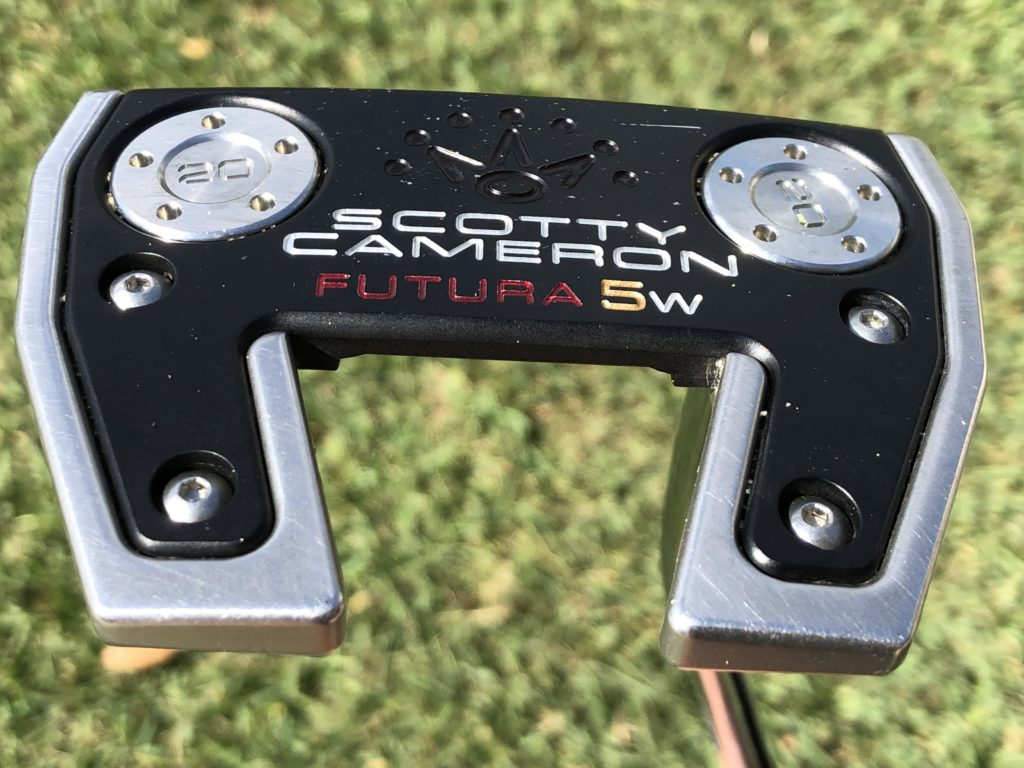
The Scotty Cameron Select Newport 2 Notchback Dual Balance putter I had in the bag for most of 2017 is gone. It never made the trip back from the 2017 World Amateur Golfers Championship in Kuala Lumpur, Malaysia. When you putt as poorly as I did during that tournament, you have to take it out on the putter, so I did. It now resides at the bottom of a lake at the Mines Resort & Club that used to be the largest open cast tin mine in the world.
My new flat stick is the putter I should have bought in the first place instead of that Newport Notchback that doesn’t float. It’s the Scotty Cameron Futura 5W. This mallet has been my gamer since December 2017 and was made even better with an upgrade to the innovative Stability Shaft from Breakthrough Golf Technologies in October of 2018. This specialized graphite shaft improves feel, launches the ball lower (yes, that matters in putting also) and rolls the ball more consistently. It’s fitted with the ubiquitous Super Stroke Mid-Slim 2.0 grip.
Golf Ball
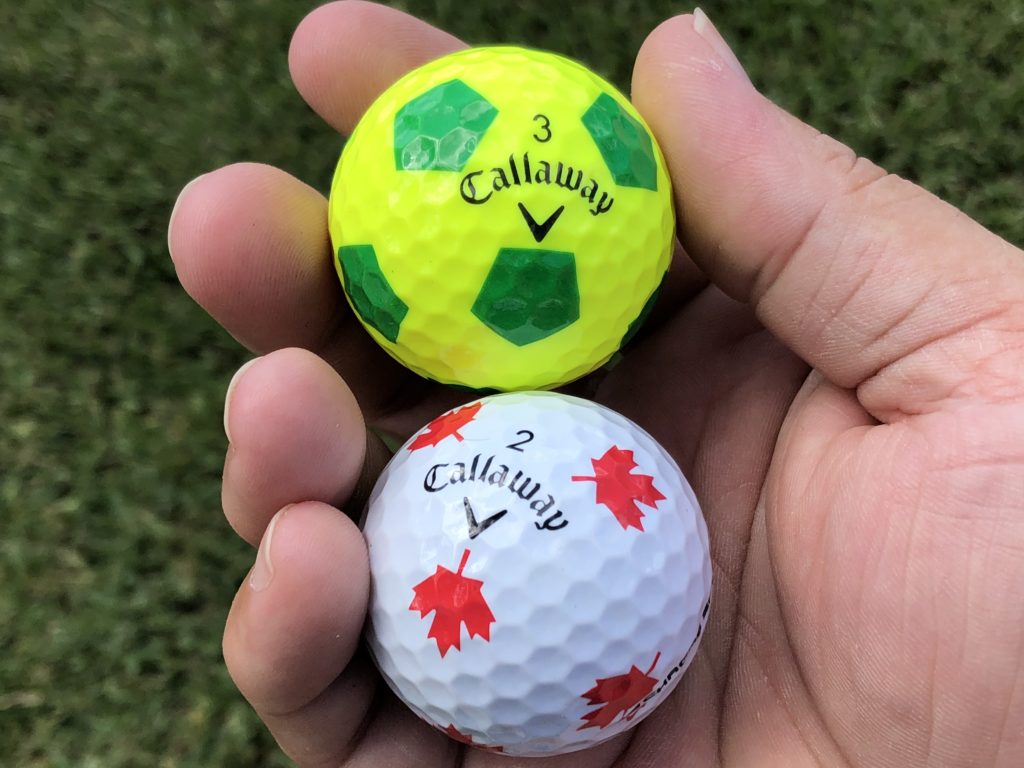
A few years ago when I published my last WITB, I had just received a shipment of 28 dozen Bridgestone B330 golf balls. After giving away several dozen to friends and playing the ball for over two years, I finally ran out a few months after the new Bridgestone Tour B golf balls were released. I was fitted for the new Bridgestone Tour B X golf ball but wanted to try something softer, so I switched to the Taylor Made TP5 for a while, then fell in love with the Callaway Chrome Soft. It feels fantastic from tee to green, performs well in windy conditions, and the variety of crazy colors and unique patterns available is awesome. However, the Chrome Soft may not be ideally matched for my game. On full swings, I may tend to overcompress it a bit and lose distance over the higher compression Bridgestone Tour B X. Plus, every now and then I’ll nip a wedge shot just right and spin the ball back 20 feet on the green. Most of the time that means watching as a good shot spins further away from the hole. Too much spin on wedge shots is not ideal.
Distance Measuring Devices
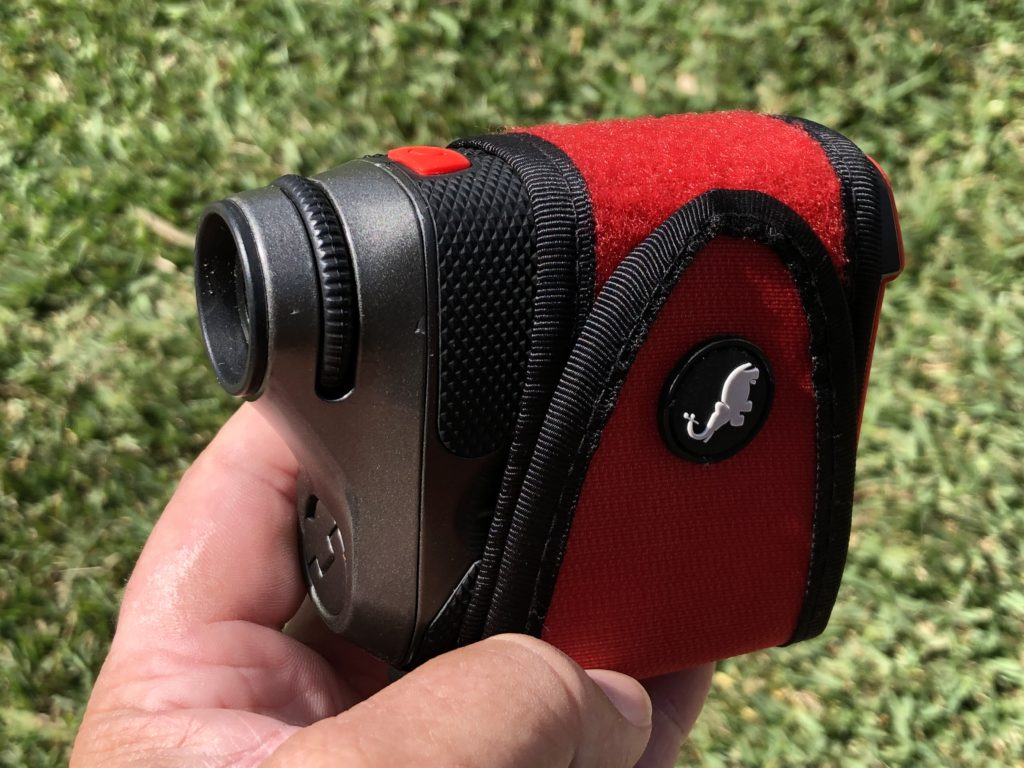
My current laser rangefinder of choice is the excellent Bushnell Pro X2 that was the flagship model from Bushnell until the new Pro XE was released a few months ago. It has a bright red display, acquires targets fast, measures accurately and the battery life is excellent. You can turn on or off the non-USGA conforming slope function with a simple switch on the side of the unit. I have mine wrapped with a magnetic strap from Monument Golf.
When playing tournament golf or a course I’m unfamiliar with I like to supplement a laser rangefinder with a GPS device to measure distances to bunkers, fairways that run out and doglegs. I also like to have not only the distance to the pin but to the front or back of the green depending on the pin location. For several years I’ve used the Sky Caddie TOUCH and it works flawlessly. It’s lightweight and provides plenty of information. Sky Golf maps out courses themselves and in many cases, they give you much more information than other golf GPS devices.
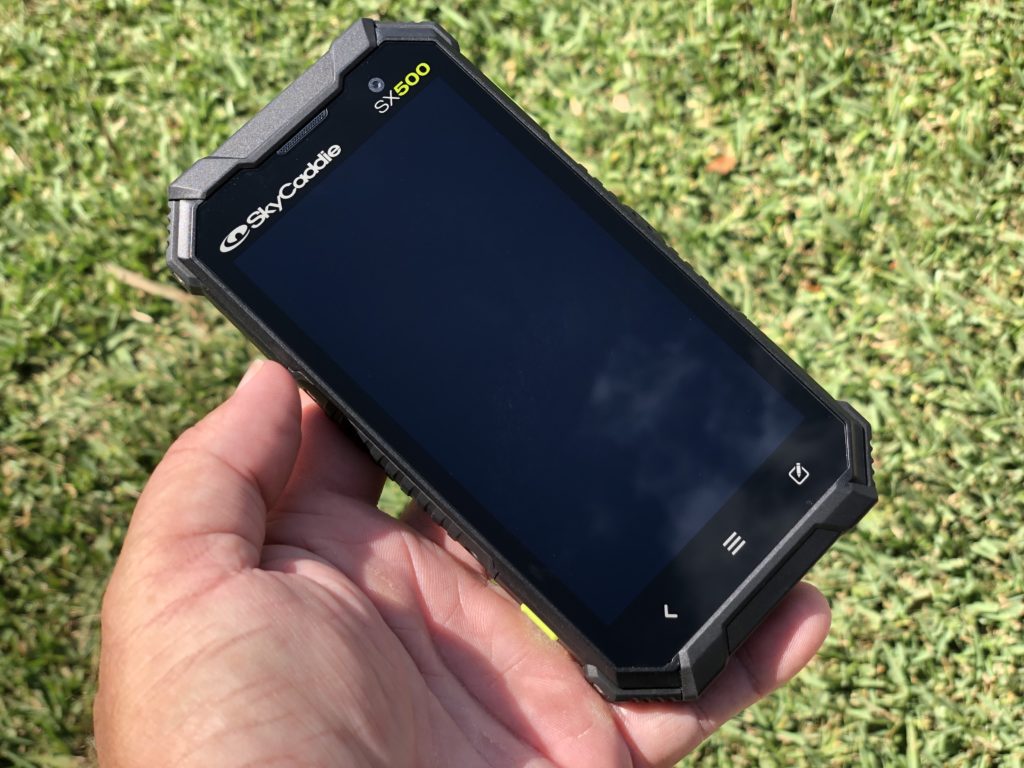
This year I have replaced the trusty Sky Caddie TOUCH with their new flagship model – The Sky Caddie SX500. This thing is about the same size as a large smartphone with a big, bright and responsive touchscreen. While the size annoyingly prevents it from fitting in many golf cart cup holders, the large screen makes it easy to see the hole maps and the screen is easy to manipulate with changing modes or moving the cursor around to measure different targets. Battery life is amazing too. I used it recently after fully charging it overnight, and the battery was still at 89% after 18 holes and over 4 hours. Simply put – The Sky Caddie SX500 is my new go-to golf GPS.
Must-Have Accessories
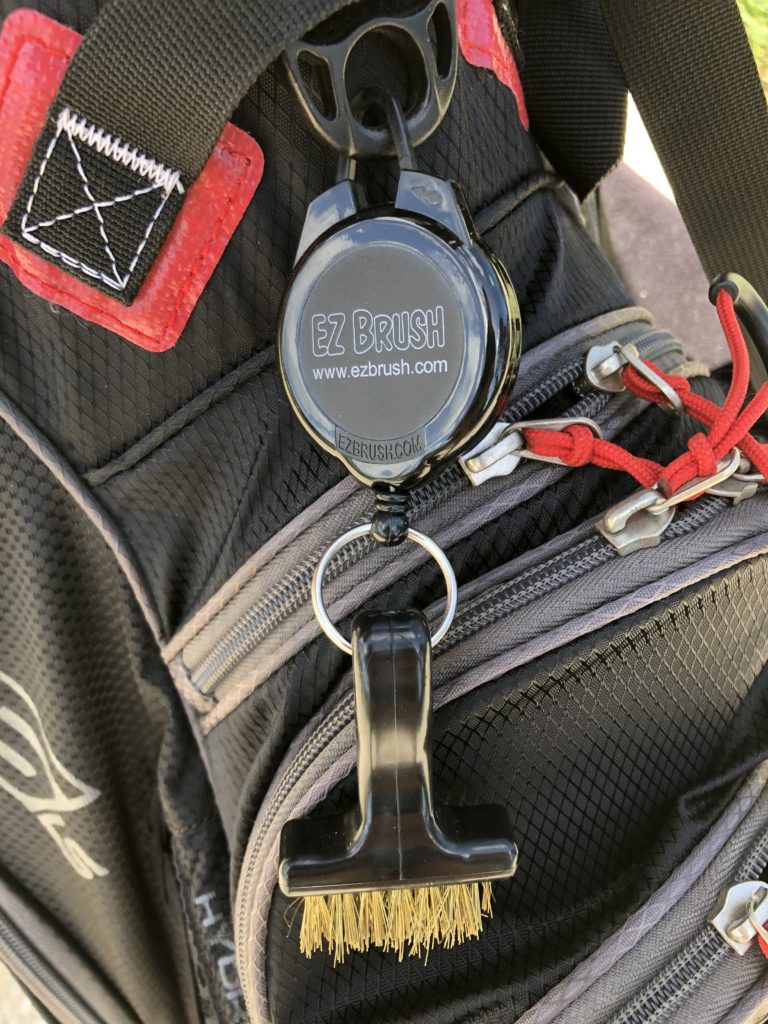
There are a few oft-overlooked items that I can’t live without, like the little EZ Brush to clean my clubs. This small wire brush is conveniently spring loaded on a retractable cable and extends up to 30 inches. It simply gets the job done without being a nuisance and keeps my clubs clean.
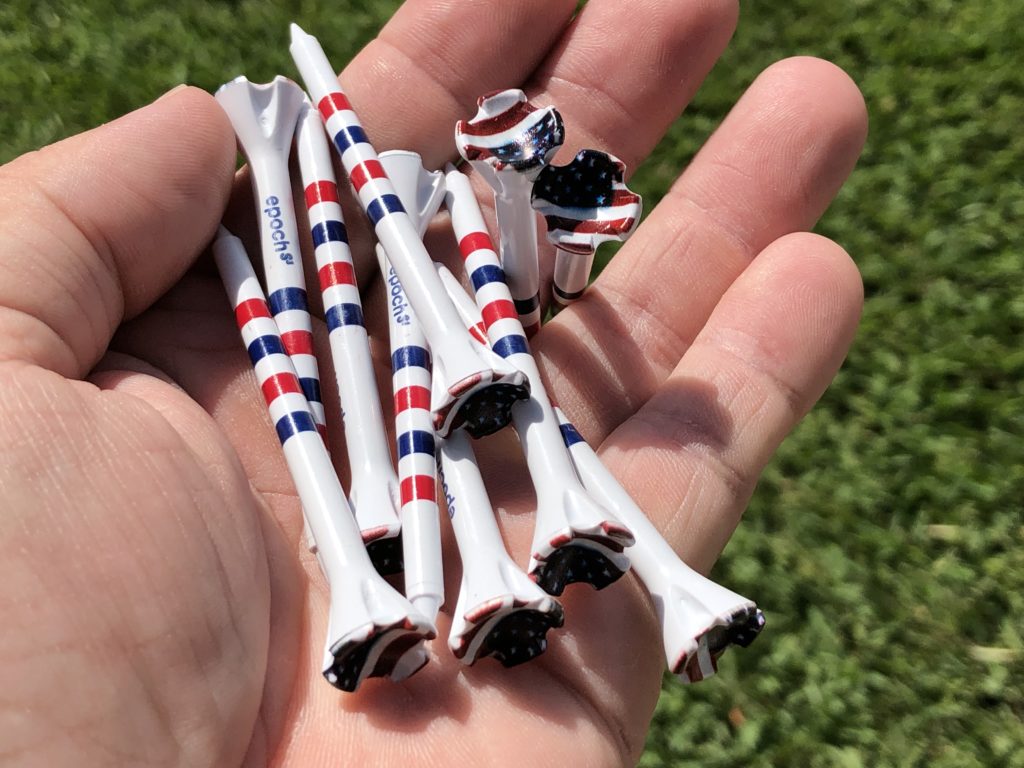
I’m also kind of a snob when it comes to tees. I love the Epoch tees from Evolve Golf and I got a 300-count bag of their special USA themed tees before going over to Malaysia in 2017 to compete in the World Amateur Golfers Championship for Team USA. They also made a great gift for players from other countries that gladly snatched them up.
Finally, what would a good WITB post be without the bag itself? Every now and then I use my huge Burton USA Staff Bag from the WAGC, but for the most part, I stick with my trusty Sun Mountain 4.5LS stand bag. It’s on the large end for a carry bag, but is still pretty light and holds everything I need and more. Since I’m riding a golf cart 95% of the time, weight isn’t much of an issue for me. The 4.5LS also had features that make it perfect for golf carts like a flat bottom, lockable legs and a cart strap pass through.
What’s Next?
There will be a few changes coming in the next few months as I get ready for my next big event – The Tour sponsored by Under Armor’s National Championship in Ocean City, Maryland in June.
The first change may be my golf ball. As I mentioned before, while I love the Callaway Chrome Soft’s great feel, wild patterns, and bright colors, it is not perfect for my game. It spins a bit too much on wedge shots and flies shorter off the tee than the ball I was fitted for – The Bridgestone Tour B X. I’ll be considering a switch back to Bridgestone in the near future.
The guys at MyGolfSpy.com recently confirmed my suspicions with some interesting ball testing results. According to their robot testing with a driver at 115mph, on average the Chrome Soft flies 12 yards less than the Tour B X. I would be giving up some feel around the greens and going back to a boring white golf ball, but I could be hitting one less club into the greens and that can make a big difference over the course of 18 holes.
As far as club upgrades, my wish list includes a new hybrid from the Tour Edge Exotics CBX line. The latest model is the CBX 119 and they are very hot on the PGA Tour Champions right now. I haven’t decided what loft to go for yet since they make every loft from 16 to 20 and a 22.
My wedges are in a constant state of flux these days. I love the new Honma wedges that are currently in the bag, but the lob wedge and I aren’t getting along in the bunkers so I may switch back to the Hopkins 60-degree. Heck, I may even get nostalgic and put the old SCOR 54 and 58-degree wedges back in the back to accompany the SCOR 50-degree gap wedge. Time will tell!
 2016 was an interesting year in golf. As it does almost every year, the golf world started the year with great optimism and enthusiasm at the PGA Merchandise Show in Orlando. However, it wasn’t all good news for the game of golf in 2016. Let’s take a look back at the highs and lows of the year in golf.
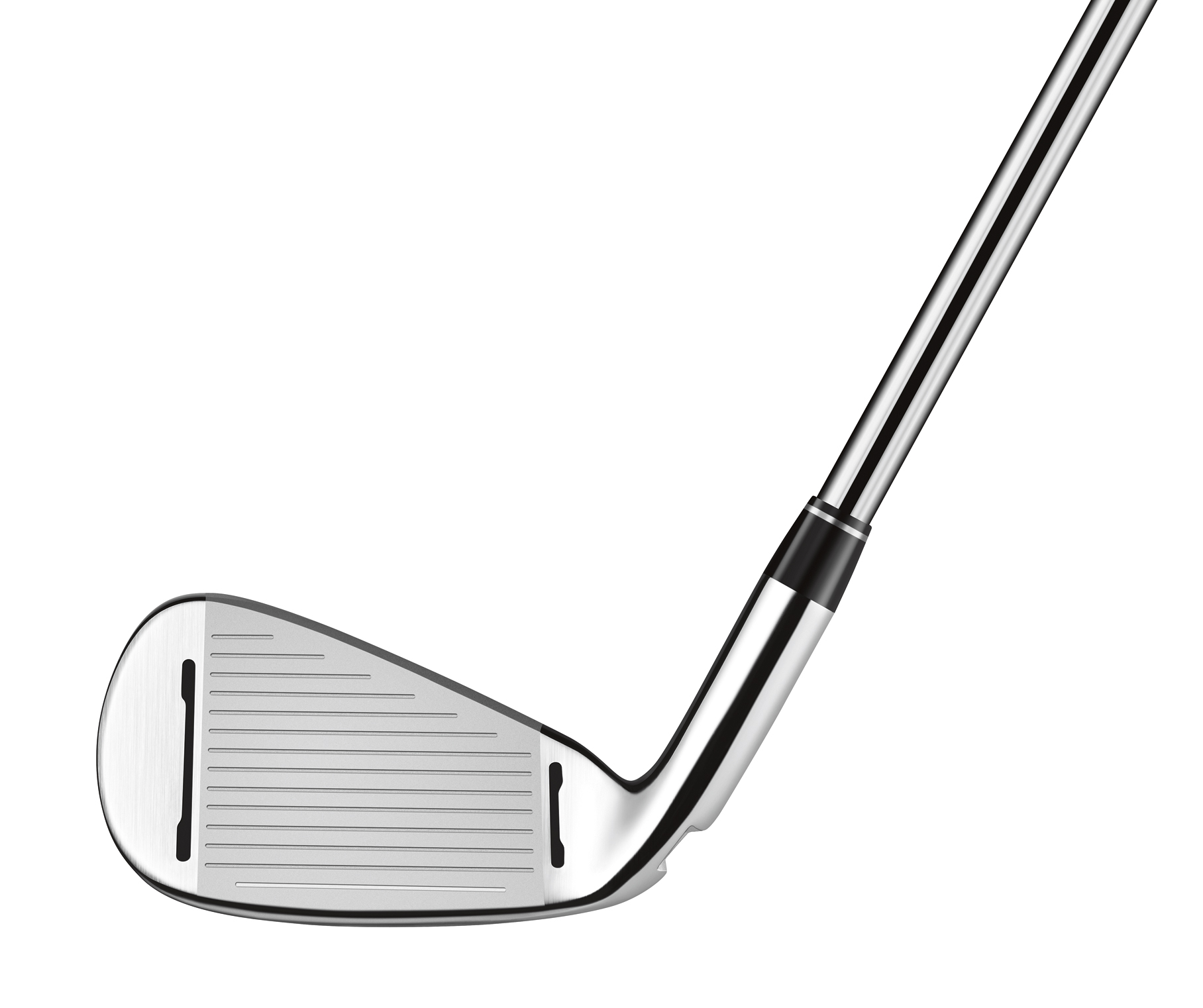
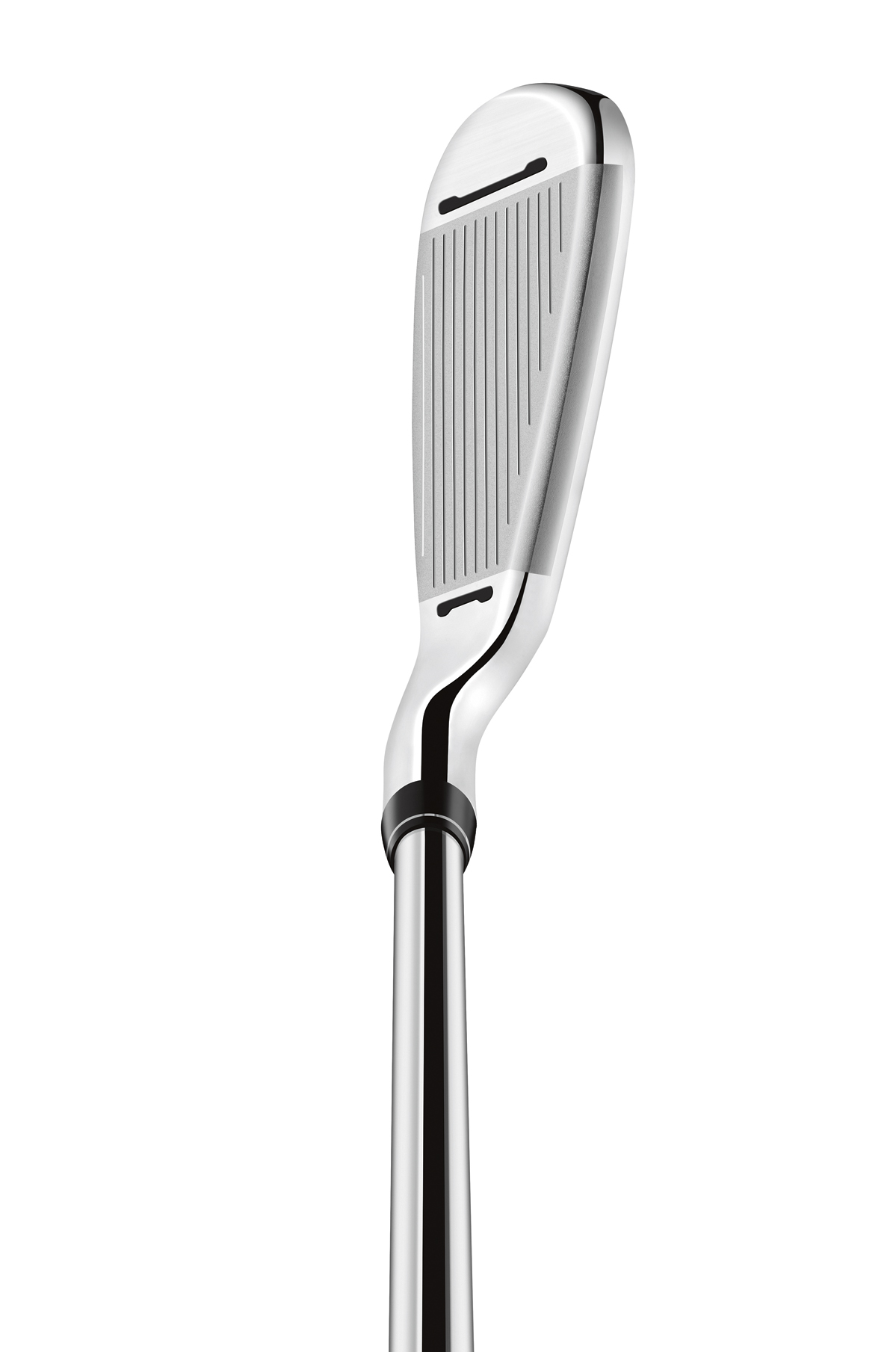
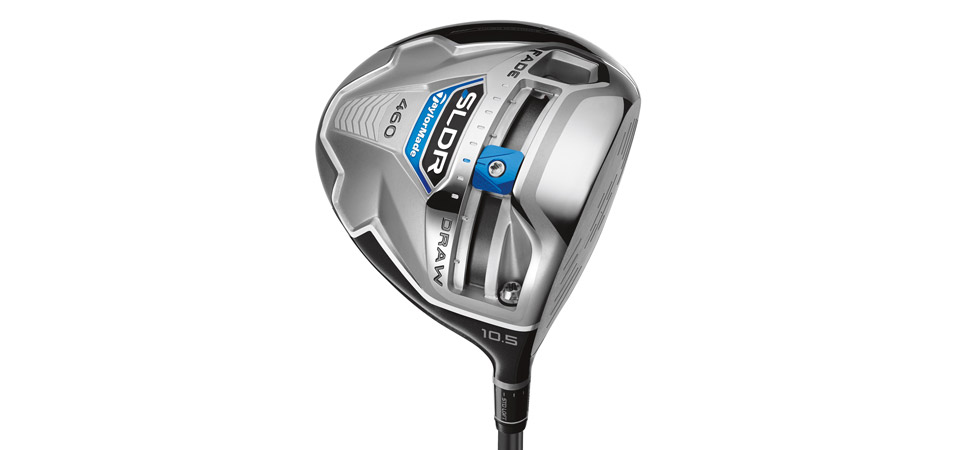
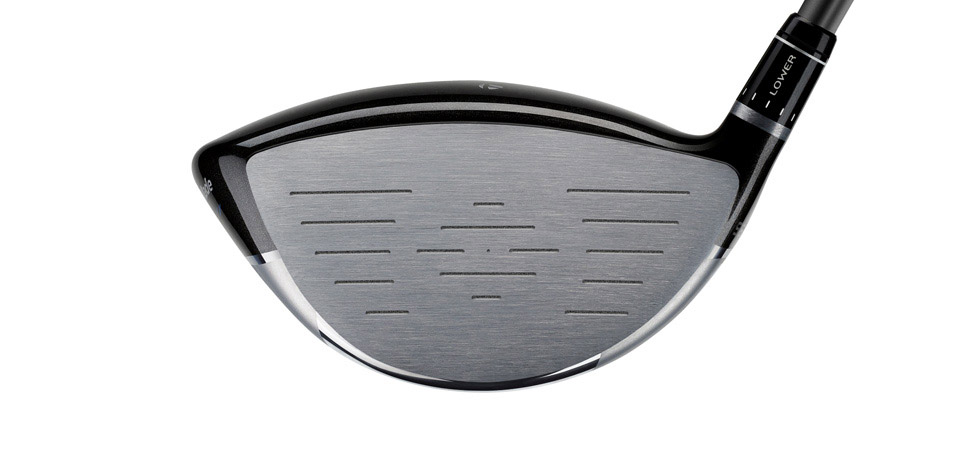
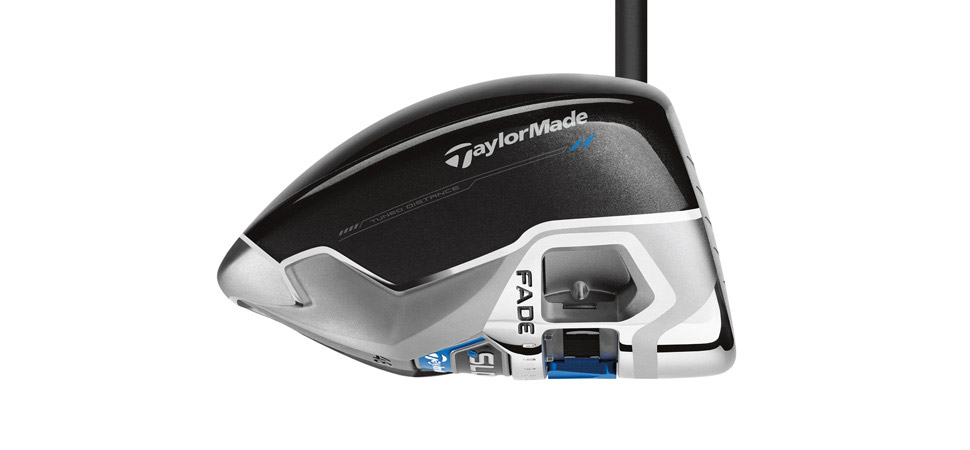
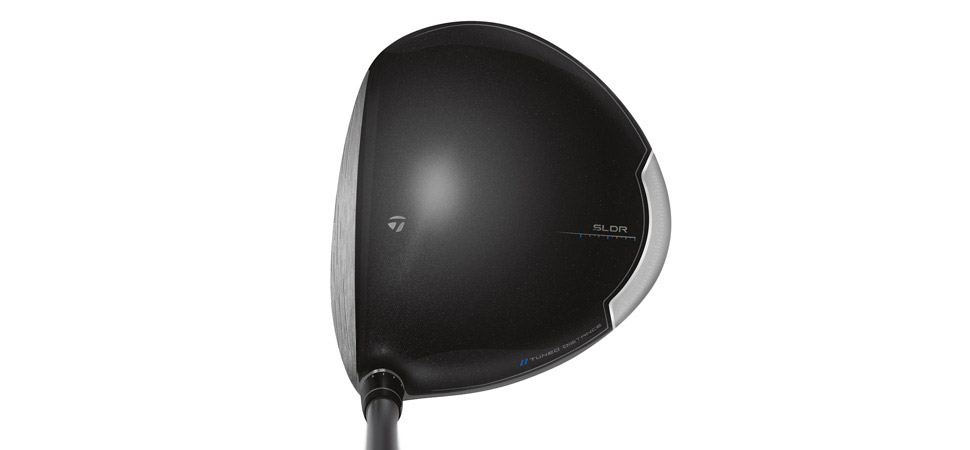


 The 2013 PGA Merchandise Show has come and gone, and the golf world is now ready for all the new toys to come to market. I’ve been going to the PGA Show in Orlando since 1996, and every year some companies come out smelling like roses, and others – not so much. In this “hit & miss” series, we’ll explore some of the winners and losers from this year’s show broken up into categories for Drivers, fairways, irons, wedges, putters, balls, accessories and misc items. Read on, because there will surely be some surprises and upsets!
 Adams Speedline Super LS
 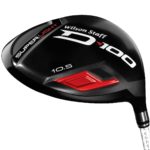 Wilson D 100
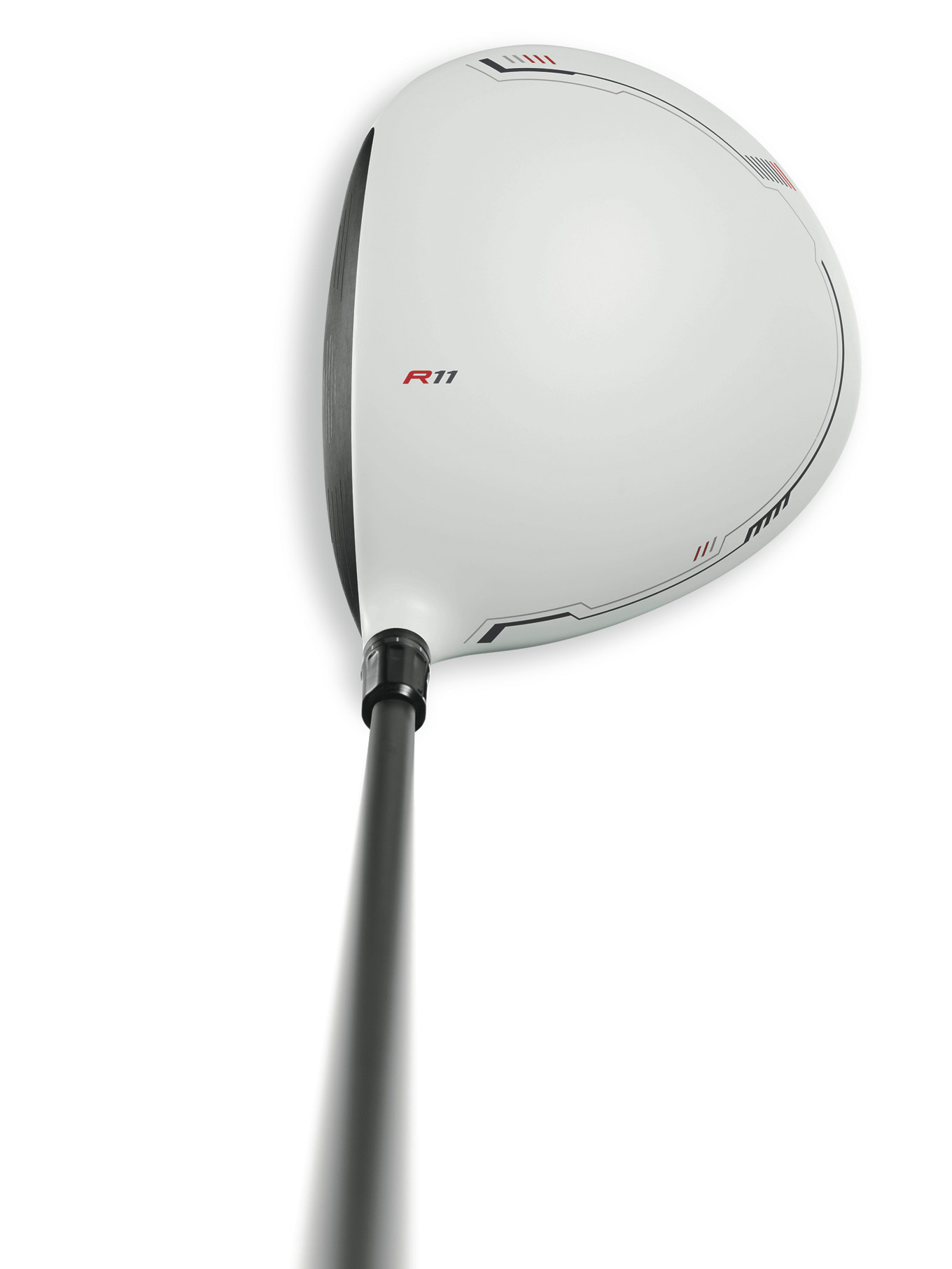
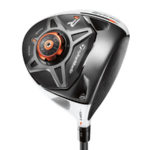 Taylor Made R1
  Ping G25 and Anser

 [/caption]
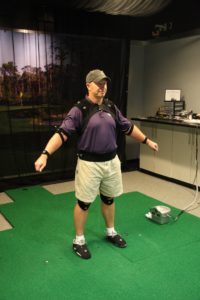
The club fitters start by suiting you up with the sensor jacket and apply sensors to your wrists, elbows, knees, feet and head. The little reflective balls all over your body are picked up by several IR cameras set up all around the room to capture your swing from all angles. Once calibrated, the club fitter has you make several swings with a special club outfitted with the same sensors. Along with a swing monitor computer to track club head and ball stats, the club fitter is able to show the golfer his swing from every angle and collect many stats about the swing. In fact, the system is so precise, figures such as swing speed and ball speed are measured to the millionth of a mile per hour. There is certainly plenty of data to digest, and it's why we have talented professionals like Travis on hand to digest this info and recommend the proper equipment for you.
[caption id="attachment_1018" align="alignright" width="300" caption="Before & after swings compared side by side"]
[/caption]
The club fitters start by suiting you up with the sensor jacket and apply sensors to your wrists, elbows, knees, feet and head. The little reflective balls all over your body are picked up by several IR cameras set up all around the room to capture your swing from all angles. Once calibrated, the club fitter has you make several swings with a special club outfitted with the same sensors. Along with a swing monitor computer to track club head and ball stats, the club fitter is able to show the golfer his swing from every angle and collect many stats about the swing. In fact, the system is so precise, figures such as swing speed and ball speed are measured to the millionth of a mile per hour. There is certainly plenty of data to digest, and it's why we have talented professionals like Travis on hand to digest this info and recommend the proper equipment for you.
[caption id="attachment_1018" align="alignright" width="300" caption="Before & after swings compared side by side"]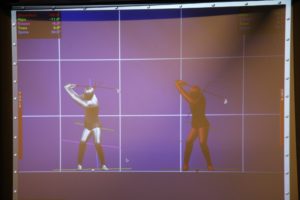 [/caption]
My guinea pig Lindsay made several swings and he noticed right away that his back swing was much longer than he thought. In his case he was over turning and losing power, so Travis compared his swing side by side with PGA golfer Jason Day to show how a short back swing and aggressive hip turn can produce more power. After making a few setup changes we compared the before and after swings, and he started hitting the ball more solid. On the right, you can see the new, shorter back swing with a more restricted hip turn vs. the old swing.
Golfers spend so much money playing golf every year, it blows me away that the vast majority of players play with clubs they bought off the shelf. For over a hundred years, the average golfer's score has remained at 100. With all the advances in technology like graphite shafts, titanium club heads, longer golf balls and more training aids than you can shake a stick at, the average Joe still has trouble breaking 100!? How can this be? I think one of the issues is people aren't playing with properly fit clubs. A guitar player doesn't simply pick up a guitar and start playing, he tunes the guitar first or it will sound horrible and out of tune. Similarly, golfers shouldn't simply take a club off the rack and start playing or they wont play their best. It's hard to explain to the average golfer how much of a difference it can make to have your clubs properly fit by a qualified club fitter like Travis at the TaylorMade Performance Lab. Properly fit clubs are easier to hit solid, leading to increased distance and consistency. Lindsay's irons and woods turned out to be well fit to his swing, but his putter was too upright, with the toe in the air at address. A toe up lie can lead to pulled putts, so we bent it a few degrees flat. Like many people, Lindsay's wedges were off the shelf, with cheap stock shafts. It was also recommended he switch shafts to match the rest of his set.
[/caption]
My guinea pig Lindsay made several swings and he noticed right away that his back swing was much longer than he thought. In his case he was over turning and losing power, so Travis compared his swing side by side with PGA golfer Jason Day to show how a short back swing and aggressive hip turn can produce more power. After making a few setup changes we compared the before and after swings, and he started hitting the ball more solid. On the right, you can see the new, shorter back swing with a more restricted hip turn vs. the old swing.
Golfers spend so much money playing golf every year, it blows me away that the vast majority of players play with clubs they bought off the shelf. For over a hundred years, the average golfer's score has remained at 100. With all the advances in technology like graphite shafts, titanium club heads, longer golf balls and more training aids than you can shake a stick at, the average Joe still has trouble breaking 100!? How can this be? I think one of the issues is people aren't playing with properly fit clubs. A guitar player doesn't simply pick up a guitar and start playing, he tunes the guitar first or it will sound horrible and out of tune. Similarly, golfers shouldn't simply take a club off the rack and start playing or they wont play their best. It's hard to explain to the average golfer how much of a difference it can make to have your clubs properly fit by a qualified club fitter like Travis at the TaylorMade Performance Lab. Properly fit clubs are easier to hit solid, leading to increased distance and consistency. Lindsay's irons and woods turned out to be well fit to his swing, but his putter was too upright, with the toe in the air at address. A toe up lie can lead to pulled putts, so we bent it a few degrees flat. Like many people, Lindsay's wedges were off the shelf, with cheap stock shafts. It was also recommended he switch shafts to match the rest of his set.
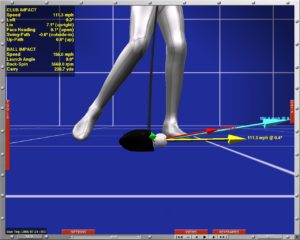 I highly recommend taking the time to have your clubs fitted, from the driver on down to the putter. A session at the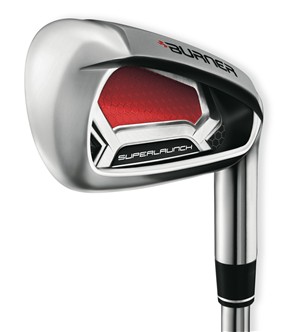


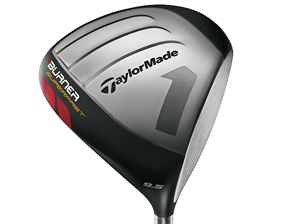
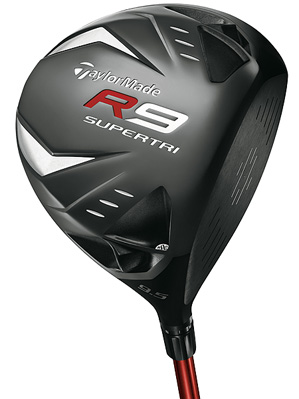
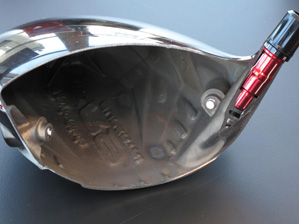

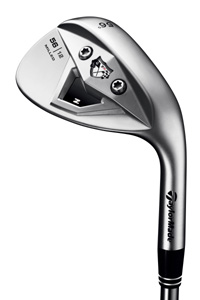 I received the latest press release from TMAG this week about the new TP xFT wedges, and I thought I would share it with everyone. A review is coming very soon so you can make a more educated choice as a consumer! Thanks for reading!
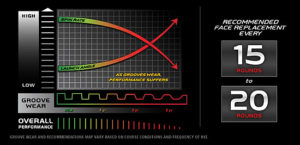
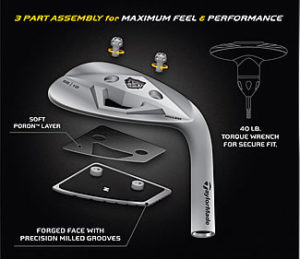 One popular reason why many pros don't retire their wedges more often is because they've become accustomed to the club's look, weight, feel and sole grind, which influences the way the sole reacts with turf, rough and sand. And sometimes they have great confidence in a particular wedge that they've performed well with under pressure. Yes, such pros would like fresh grooves, but they don't want to give up the wedge they've become attached to. Occasionally you see a pro with a wedge so well-used that the lower-middle part of the face is worn almost smooth; a clear case of sentimentality keeping the club in the bag. Meanwhile, myriad amateurs would like to put new grooves in play with greater frequency, but can't justify the expense of buying new wedges once or more per year.
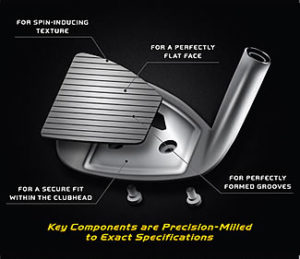
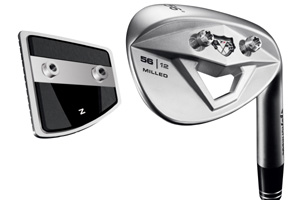 Each TP xFT wedge face is forged from soft 304 stainless steel, then completed with a four-step CNC precision-milling process. First, the surface of the face is milled flat. Second, the back and perimeter of the face are machined to ensure a precise fit into the pocket in the clubhead. Third, texture is milled onto the face surface. Fourth, the grooves are milled into the face with care taken to ensure that the depth, shape and edges are perfect.
 TP xFT Wedge and the
  TP xFT wedges are equipped with KBS High-Rev shafts, which are slightly heavier and feature a slightly longer tip parallel region compared to other wedge shafts. KBS' data indicates that the High-Rev shaft promotes increased spin because of its weighting, its kick and the way it presents the head to the ball. The High-Rev is new, making us the first brand to use it. We expect it to be played on tour, especially since the change in the groove rule will have players anxious to find ways to keep their spin-rates as high as possible. Because the shaft's unique design promotes additional spin, we expect the TP xFT wedge to gain wide acceptance on the PGA Tour.
Each TP xFT wedge will sell at a street price of $129 per club and will come equipped with a Z groove face (conforming to the pre-2010 USGA rule). Individual xFT wedge faces with either the Z groove or ZTP groove (
TP xFT wedges are equipped with KBS High-Rev shafts, which are slightly heavier and feature a slightly longer tip parallel region compared to other wedge shafts. KBS' data indicates that the High-Rev shaft promotes increased spin because of its weighting, its kick and the way it presents the head to the ball. The High-Rev is new, making us the first brand to use it. We expect it to be played on tour, especially since the change in the groove rule will have players anxious to find ways to keep their spin-rates as high as possible. Because the shaft's unique design promotes additional spin, we expect the TP xFT wedge to gain wide acceptance on the PGA Tour.
Each TP xFT wedge will sell at a street price of $129 per club and will come equipped with a Z groove face (conforming to the pre-2010 USGA rule). Individual xFT wedge faces with either the Z groove or ZTP groove (
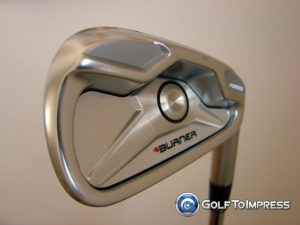

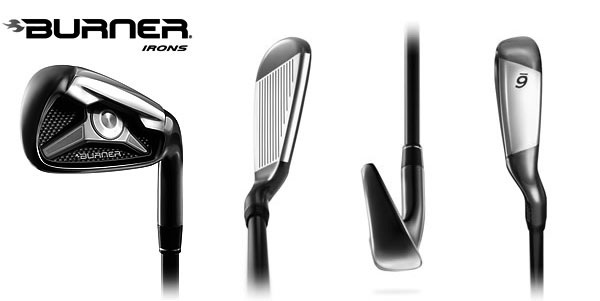 I have admired the new Taylor Made line of club since I first saw them at the PGA Show last year and hit them at a demo day in the spring. I didn’t get a chance to hit the Burner irons however, and I had every intention of procuring a set and writing a review when I discovered that the work had been done for me! My friend Dave Lair from Orlandogolfblogger.com recently got a set of these irons and posted a good review on his site, saving me the trouble! Click the link below to read his review.