Tag: Z-Star

  • 2015 PGA Show – Best New Golf Balls

    Callaway Chrome Soft
    Callaway Chrome Soft

    Frankly, I’ve become tired of all the promises golf ball manufacturers like to make about how their latest ball goes further, feels softer and spins more. We hear it every year around this time when the new models come out, but very few can actually deliver on their promises. Let’s take a look at the golf balls that lived up to the hype at the 2015 PGA Merchandise Show, and those that didn’t deliver. When you are done, come back up and click here to see the best new golf balls at the 2016 PGA Show!

    The Usual Suspects

    • Bridgestone E Series – Bridgestone Golf has performed over a quarter million live launch monitor fittings since starting their golf ball fitting program. This feedback from this testing has helped Bridgestone develop golf balls for every type of golfer, and the newest E series balls reflect the ongoing efforts to fit the right golf ball to each golfer. The Bridgestone E5, E6 & E7 golf balls feature WEB Dimple Technology that increases surface coverage by more than 10%. The E5 ball is designed to fly higher for the slower swinger or low ball hitters out there looking for more height. The E6 is softer and designed to spin less for straighter shots, and is the most popular ball in the series. The E6 has consistently been a favorite of testers during Golf Digest’s Hot List ball testing. (Even though we weren’t supposed to know what ball it was, I found out in some cases. Of course if I told you how I found out I would have to kill you.) Finally, the E7’s dimple pattern and construction are optimized for a more piercing ball flight for those who hit the ball high.
    • Srixon Z-Star & Z-Star XV – I’ve been playing Srixon golf balls almost exclusively since 2009, when the original Z-Star golf ball arrived. I was bitter when Titleist killed the wound “Tour Prestige” golf ball to focus on producing the new Pro V1, and I struggled to adjust to the solid core golf ball. The softer feel and added spin of the Z-Star helped my game almost immediately, and I haven’t looked back since. The latest Srixon Z-Star and Z-Star XV balls feature a new “Spin Skin” coating on the urethane cover that improves friction between the golf ball and club surface by 20%, according to the company. Players looking for a ball that spins around the green with soft feel off the putter but still remains controllable for flighted tee shots and workability with irons should look no further. Obviously I’m a bit biased, but I still think it’s hard to find a golf ball that performs better than the Z-Star.
    • Titleist ProV1 & ProV1x – Every couple of years, Titleist brings us a new version of their flagship ProV1 golf ball. And every two years they promise the same things. Distance! More spin! Softer feel! Just read for yourself from their website – “The new Pro V1 and Pro V1x deliver extraordinary distance and consistent flight. And there’s more short game control, even softer feel and long-lasting durability.” Seriously, how much more “short game control” and softer feel can I have? What does that even mean? All kidding aside, the Titleist ProV1 and ProV1x are the most popular golf ball on the professional tours and with many amateurs for good reason. It’s a great golf ball. What I’m trying to say is, buy with confidence because we all know the new ProV1 will perform, but don’t get too down if you don’t see much improvement in the new ball over last year’s version.
    • Nike RZN Black Volt – Speaking of colored golf balls… Nike has developed the RZN Black Volt golf ball in part to go with the new Vapor woods and irons which incorporate a similar yellow trip color scheme. The golf ball is essentially identical to the RZN Black tour ball that features the interlocking RZN core design that is supposed to deliver more energy between the layers for faster ball speeds and longer distance, according to Nike. The ball is softer than previous generations, which is good because the first RZN ball they delivered was hard as a rock. Watch for several Nike staffers to be playing the new RZN Black Volt on tour.

    The Up & Comers

    • Volvik – The South Korean company that has been making golf balls for over 30 years, and chances are you may not have heard of them! Their golf balls have been used to make over $5 Million, with 10 victories and 70 top ten finishes on men’s and ladies professional tours. Their most popular golf ball is the White Color S3 golf ball and the new White Color S4 was just launched. The S4 improves on the S3 golf ball by having a firmer feel and less spin for faster swing speed players. The original White Color S3 is in play by almost 70 tour pros, and the S4 should be very popular also. Volvik is famous for being the most popular colored golf ball on the market, so the golf balls are not only available in white, but several other bright colors as well.
    • Wilson Duo & Duo Spin – Have you ever hit a golf ball with a 29 compression rating? That’s how soft Wilson claims the Duo golf ball is. While “compression” ratings from manufacturer to manufacturer can vary wildly, it’s still a very, very soft golf ball. The main complaint against the Duo was lack of spin, so they are now offering the Wilson Duo Spin ball to fix that problem. With a slightly higher 35 “compression” and softer cover, the Duo Spin is sure to be a hit with golfers who prefer a very soft feel and added spin around the green.
    • Hopkins VL Pro – I love Hopkins wedges and have their fantastic 60 degree “channel” grind wedge in the bag as a gamer, but they offer golf balls too, and they are very good. To paraphrase their website, the Hopkins VL Pro golf balls are round, white and they perform just as well or better than the other balls they compete with, for a cheaper price. They sell for $22.99 per dozen and get even cheaper if you buy several dozen.

    Disappointment

    • OnCore MA 1.0 – A few years back, a startup called OnCore Golf sent me a dozen golf balls to try out that had a hollow, solid metal core. I thought the concept was interesting, but the first batch of balls I got from them didn’t work very well, because the covers were literally falling apart. A bad batch of golf balls had been sent to me in error. Fast forward 3 or 4 years, and OnCore has a new model golf ball called the MA 1.0 (Maximum Accuracy). This time around, the hollow metal core golf balls have been USGA approved. The concept behind the OnCore MA 1.0 is that by having a hollow core, the weight is shifted towards the perimeter of the ball to create a higher moment of inertia, reducing side-spin and leading to straighter shots. Unfortunately, this claim doesn’t seem to make any scientific sense, and I haven’t seen any data to back up their claims. Sure, the ionomer cover of this golf ball won’t provide much extra spin, but you won’t get much feel either. You’d need a urethane cover for that. Having said that, the problem I have is not with the technology or performance claims, but the price. When you offer a distance ball at a $44.99 price point that is normally reserved for tour caliber balls, your ball better deliver. I fail to see how the OnCore MA 1.0 can out perform the class-leading Bridgestone E6, which costs half as much as the OnCore.

    To The Victor Go The Spoils

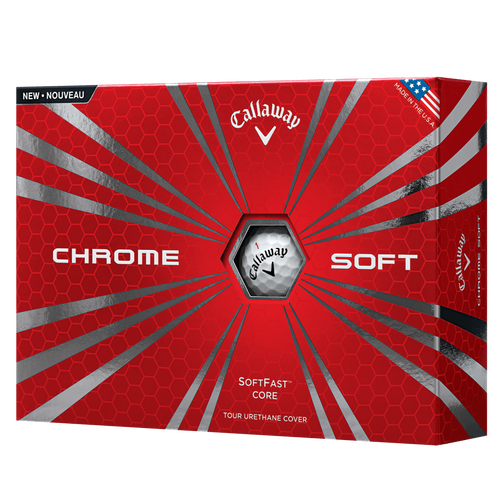
    • Callaway Chrome Soft – Callaway took the golf ball market by storm this year with the introduction of their new Chrome Soft golf ball. Any company can add a soft urethane cover to a low compression golf ball, but nobody has found a way to make that ball playable without spinning too much or flying too high – until now. The Callaway Chrome Soft features a resilient, 65 compression “SoftFast” core with mushy thermoplastic urethane cover and Callaway’s hex aerodynamics. As a golfer with tour-level swing speeds, I was worried about two things when testing this ball – over-compression and ballooning ball flight. Over-compression would mean a loss of energy and distance for faster swingers, and ballooning ball flight would be one that flies very high and out of control with too much spin. I experienced neither with the Callaway Chrome Soft. The ball feels soft, yet solid on full swings and flies on a stable mid-high trajectory. Knockdown shots are no problem. The Chrome Soft spins at least as much as other urethane cover balls like the ProV1, Z-Star and Bridgestone B330. In fact, on partial swing wedge shots I seem to get more spin, which makes sense when talking about a softer compression ball. I tried to dislike this ball, but I can’t. This is a great golf ball. My feelings were justified a week after my own testing when I learned that several Callaway staffers would put the ball in play on tour, including none other than Phil Mickelson. The feedback so far has been very favorable. Now is the time for you to try this ball. You’ll love it too.
  • Cleveland Classic Driver

    Cleveland Classic DriverLet’s face it – these days to compete in the very competitive golf club market you need to have something unique. Companies like TaylorMade and Callaway spend lots of time and effort (and cash) in promoting their new clubs with flashy ad campaigns and PGA Tour endorsements. With every new driver model that comes out, the golf manufacturers almost always make claims to add distance and/or accuracy to your game, but let’s get real. If all these claims of more distance were true, we’d all be flying it 400 yards by now. I see lots of new club introductions every year, so when something truly unique hits the market I take note.

    Cleveland Golf/Srixon made a splash last season with the Z-Star golf balls, the new XL, SL & TL series drivers (which I think are the most underrated on the market) and the re-birth of Never Compromise as a premium putter brand. Not resting on their laurels, they reintroduced one of the most popular wedges of all time in the 588 series, and this time around they are forged. Coming in 2012 is a new line of 588 forged irons in both a cavity back and blade model, and a complete line of Mashie fairway woods, hybrids and irons for the mid to high handicap players. There is also a fantastic new golf ball called the Srixon Q-Star. But the most exciting new product introduction for Cleveland in 2012 are the new Classic drivers.

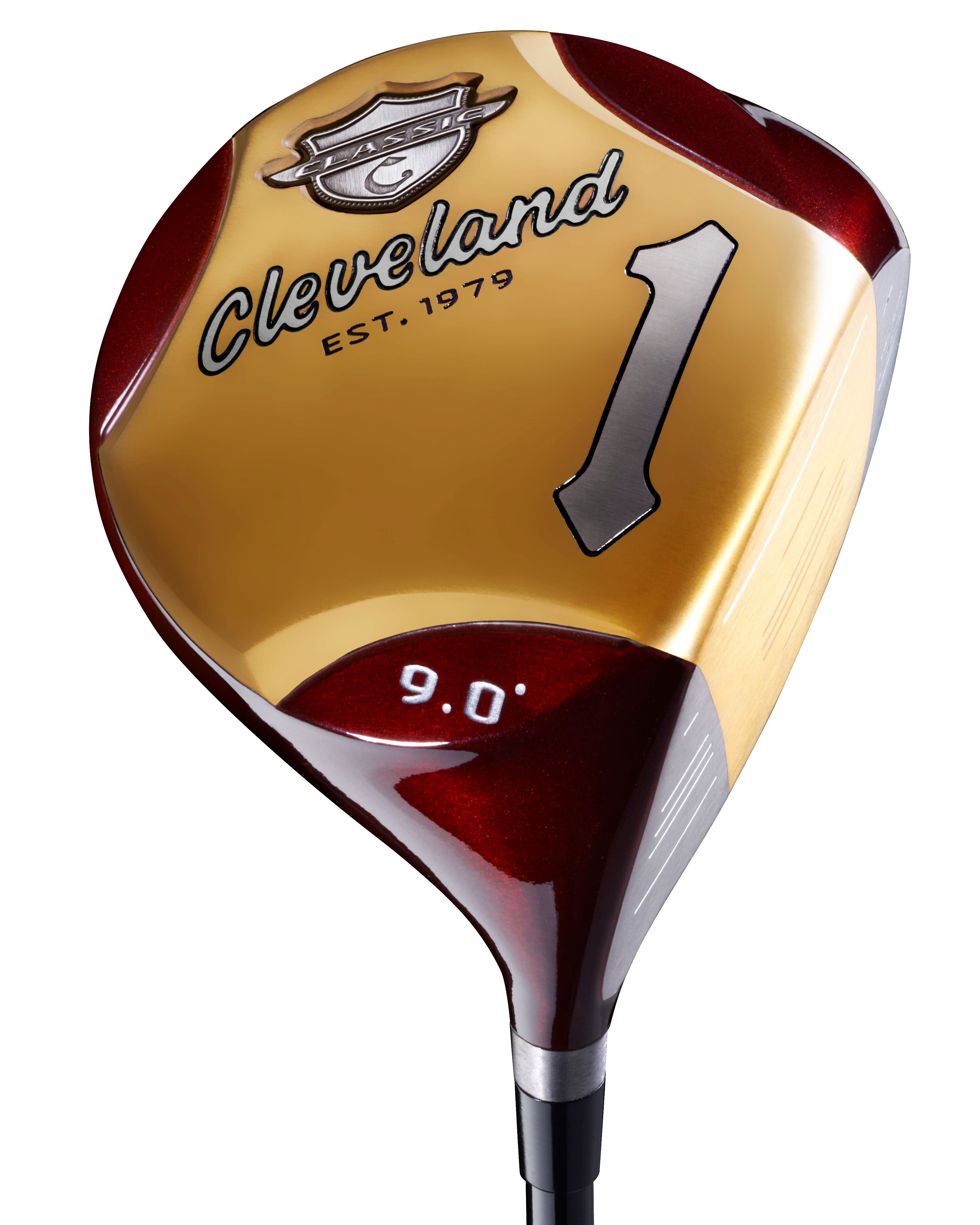
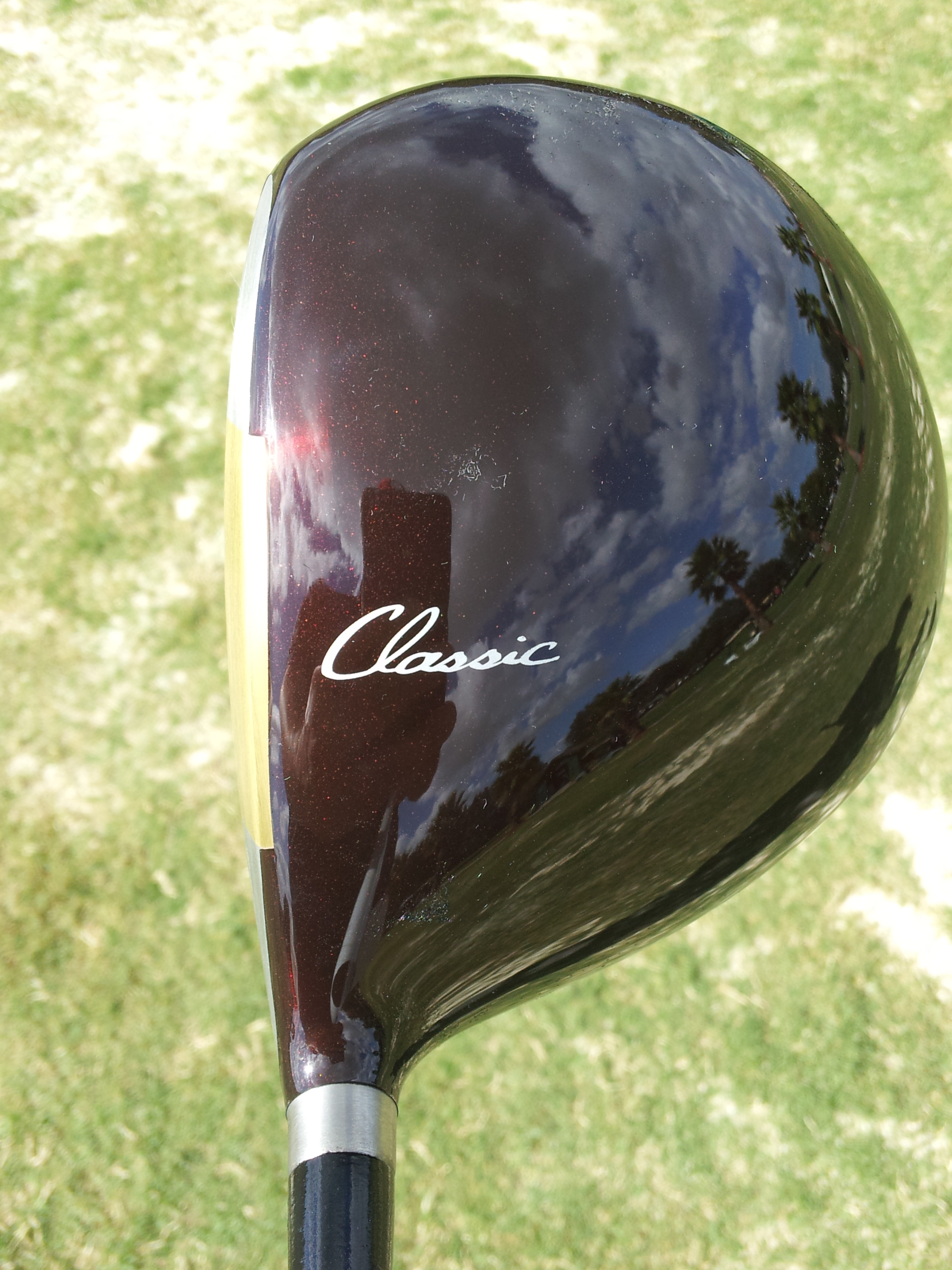
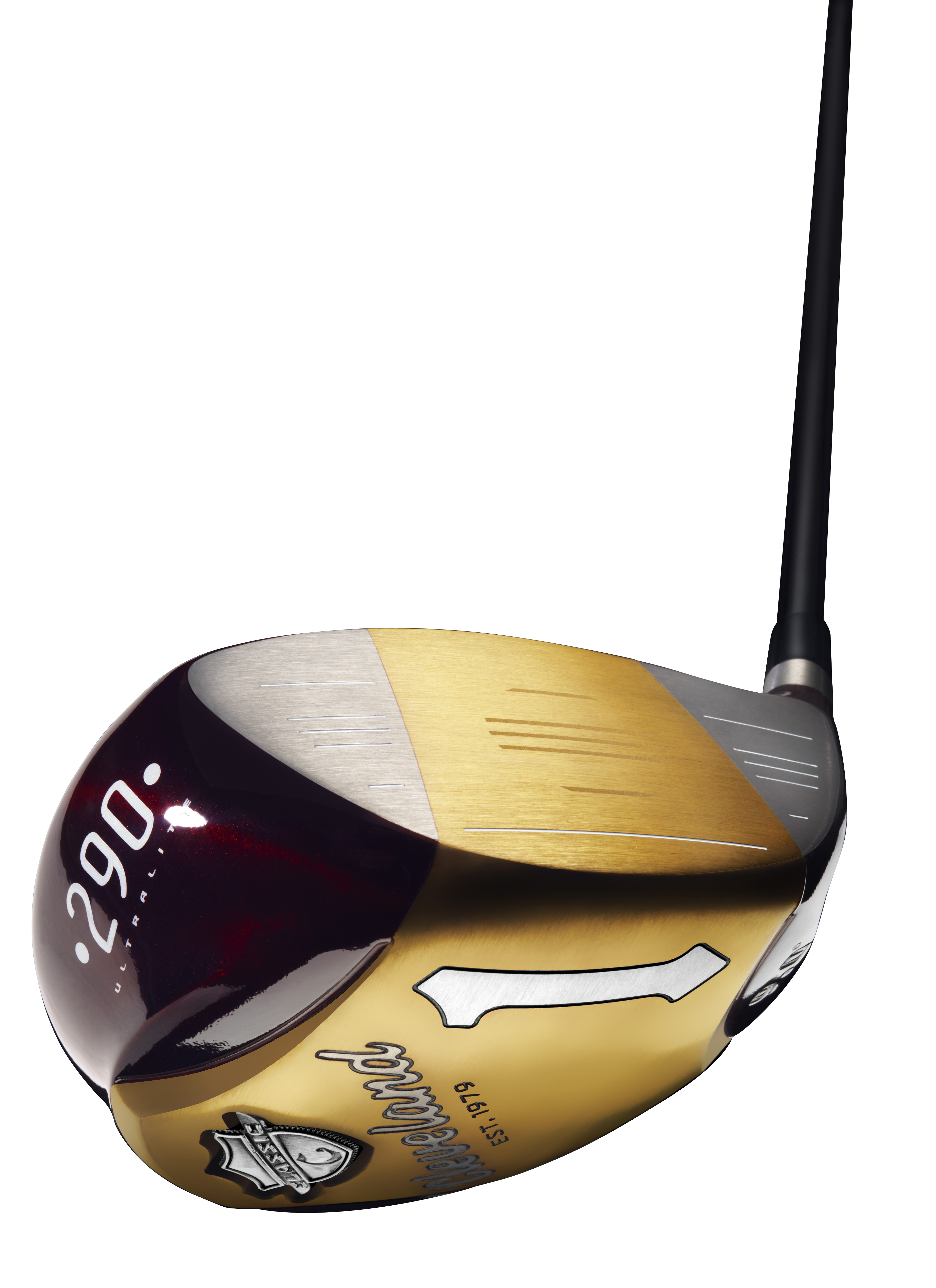
    With drivers becoming more and more complicated with adjustable weights and hosels, interchangeable shafts and busy graphics, Cleveland went the other way with the Classic Driver. With a unique design and color scheme inspired by the persimmon drivers of the 50s and 60s, the Classic driver is sure to turn heads. I know this for a fact, because every time I pull it out of the retro leather barrel head cover, people want to see it. The Classic driver has a traditional pear shaped profile and a large, deep club face. In fact, it's the deepest club face Cleveland has ever produced. The sweet-spot of the driver is framed in by a brass colored section, just like a brass insert from a persimmon driver of yesteryear. The paint is a nice deep reddish brown, as most wooden drivers would have been painted back in the day. The word "Classic" is written along the top as an alignment aid, but I could have done without that as I prefer a clean look with no marks on the top. Either way, this club truly is a modern representation of a persimmon driver, but how does it perform? Cleveland Classic DriverI put the Classic up against my current gamer, which is Cleveland's awesome Launcher TL310 driver (8.5 degrees loft). When I switched to the Launcher TL310 from the Cleveland Launcher DST, I went from a 43 gram shaft at 46 inches long to a 56 gram shaft at 45 inches, and picked up 10 yards in the process. Not only was I hitting the sweet-spot a bit more with a shorter shaft, but the head and shaft combo on the TL310 worked better for my swing. For this test, Cleveland Golf sent me a Classic 290 driver (7.5 degrees loft) along with a custom Miyazaki C.Kua 56x shaft. This is the same shaft that is in my Launcher TL310. My club maker then built the Classic driver to match the playability characteristics (frequency, shaft deflection & swing weight) of the TL310. As a result, both drivers feel much the same while swinging, and the shafts perform almost identically. After about two months of testing, both in practice sessions, casual play and even some competitive rounds, I can conclude that the Cleveland Classic 290 driver is going to stay in the bag. I can't say with confidence that the Classic is any longer than my Launcher TL310 driver because I've hit bombs with both clubs, and there are too many variables like ambient temperature, wind and course conditions to take into consideration. I'll have to get on a launch monitor for a while to determine which is longer, and if I do I'll be sure to update everyone on the results. What I can say is that the Classic driver spins less than the TL310 and other drivers I've hit recently. In my two months with the Classic, I've noticed that the ball flight is more penetrating and solid shots launch with less spin and seem to knuckle through the air with no ballooning, even into a strong headwind. When you catch a tee shot on the "hot area" of the driver (A shot struck just above the sweetspot), it launches high with very little spin and goes forever. Less spin means more fairways, and I've noticed that I'm hitting the ball with less movement left to right and right to left with the Classic. I've never been a very straight driver so I really notice when my tee shots don't curve as much. If I had to make an educated prediction, I would say that tee shots with the Classic driver carry less but roll more, and the Launcher TL310 hits a ball that carries more but rolls less than the Classic driver. The sound and feel of the Cleveland Classic are a little different than most titanium drivers on the market today. I have to admit I prefer the sound and feel of the TL310, which is a nice high pitch click. At impact, the TL310 feels like the face is flexing, almost like a trampoline. The Classic driver however feels a bit harder, and you can't feel the ball on the face as much at impact. Perhaps this is part of what makes the driver spin less than the TL310. It certainly doesn't feel bad, but its not as smooth as the TL310. If you hit a hard two-piece distance ball with the Classic driver, you might want to wear ear plugs. I recently played in a "glowball" night golf event and the sound of that hard glow in the dark golf ball with the Classic driver left my ears ringing. Check out the video below and you'll see what I mean. I had a chance to ask Nate Radcliffe, Cleveland Golf/Srixon's Metalwoods Development Manager, a few questions about this driver: ITG: What was the origin of the design and the retro theme of the Classic driver? NR: The design of the Classic driver was inspired by our heritage and history in creating persimmon woods decades ago. Cleveland is one of the few remaining OEMs that originally produced a Tour quality persimmon wood. ITG: Is the brass colored face insert area actually an insert, or simply painted differently? NR: The brass colored trapezoid is actually a thin metallic coating that is deposited over the titanium face and sole. The trapezoid hints at original persimmon designs but has drawn many extremely positive comments from our tour staff regarding alignment. ITG: Is the driver a one piece construction, or several pieces welded together? NR: The driver is created from several pcs using multiple, and carefully selected titanium alloys. ITG: How does the Classic driver differ in performance compared to the TL series clubs? NR: The Classic's deep face provides the potential for players with elevated tee heights to produce a high launching yet penetrating ball flight. Relative to the Launcher Ultralite, the Classic will spin slightly less for most players. As far as specs go, there will be something for just about everyone in the Cleveland Classic Driver. There are three different models to choose from: The Classic 270, 290 and Classic Tour. The number designations refer to the club's overall weight. The Classic 270 is the lightest model, with a 460cc club head and a super-light Miyazaki C.Kua 39 shaft and a 25g Golf Pride grip, making it one of the lightest drivers on the market to help slower swingers to gain a few yards by swinging the club faster. The Classic 290 is a bit heavier, with a Miyazaki C.Kua 43 shaft and 36g grip. Also 460cc in size, this one favors a wide range of golfers that want a stronger shaft and more playability. Both the 270 and 290 drivers have a square face angle at address. The Classic Tour driver has a smaller club head that measures 440cc, and sits one degree open at address. Designed for better players and strong swingers, the Tour driver is fitted with a premium Miyazaki Kusala Black 61 shaft that promotes a penetrating trajectory with a very stable feel. This model weighs in at 310 grams. Model: Classic 270 Size: 460cc Lofts Available: 9, 10.5, 12 Shaft: Miyazaki C.Kua 39 MSRP: $299 Model: Classic 290 Size: 460cc Lofts Available: 7.5, 9, 10.5, 12 Shaft: Miyazaki C.Kua 43 MSRP: $299 Model: Classic Tour Size: 440cc Lofts Available: 8.5, 9.5, 10.5 Shaft: Miyazaki Kusala Black 61 MSRP: $379 The Cleveland Classic driver will be available in retail locations on Feb 17, 2012. You can also pre-order from Cleveland at shop.clevelandgolf.com

    Cleveland Classic DriverConclusions & Recommendations

    Because the Classic driver is a low spin club, I suggest hitting this one before you buy. You may find that you'll need a bit more loft than usual, which will produce the ideal high-launch, low spin ball flight that is desireable these days for maximum distance. The Classic 290 will probably be the most popular model, with loft options from 7.5 to 12 degrees and a square clubface. With so many custom shaft options it's a good idea to get fitted by a reputable club fitter, should you choose to go with a custom shaft. For 90% of golfers out there I'll recommend the stock Miyazaki shafts. I've been playing them for a few years and they are among the best in golf for stability, consistency and light weight. Cleveland Golf keeps coming up with great clubs, and the Classic driver is no exception. I thought the Launcher XL, SL and TL series drivers were as good as anything on the market, but with the Classic driver they have managed to make a uniquely styled, high performance driver that separates itself from the pack. Not only that, but its price point is better than most of the clubs it competes with. This driver is going to make a big splash in the marketplace, and in my opinion it is worth a demo for everyone serious about their game!

    Subscribe to our email updates! You'll get the latest fresh news, reviews and stories delivered right to your inbox or RSS reader, and automatically be entered in our latest contests and giveaways! We are 100% SPAM FREE! Also, don't forget to check in with our Facebook fan page for exclusive content and get involved by leaving us comments on what you think!

  • Srixon Q-Star Golf Balls

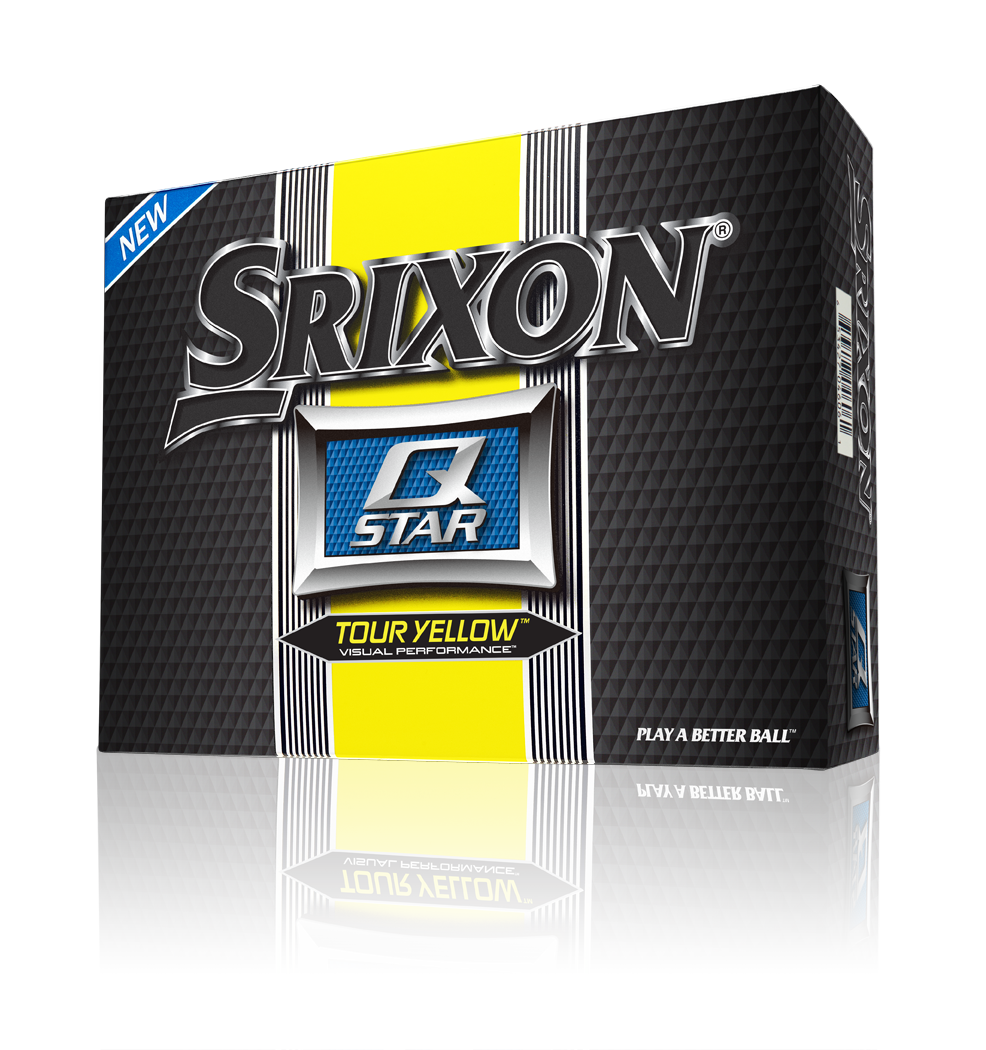
    Srixon Q-Star Tour Yellow Golf BallEver since the Titleist Pro V1 golf ball hit the market in late 2000 and killed the wound golf ball forever, I’ve struggled to find the best ball for my game. However, since the excellent Srixon Z-Star and Z-Star XV came out I’ve been a happy camper. The Z-Star is designed for the low handicap player, or one that desires a large amount or spin and control. It also costs about $45 a dozen. So what if you aren’t a single digit handicap or want to spend $45? Let me introduce you to the Srixon Q-Star golf ball.

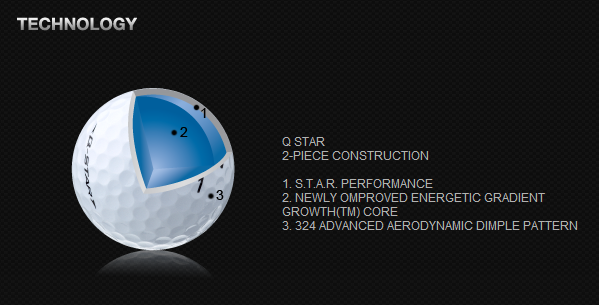
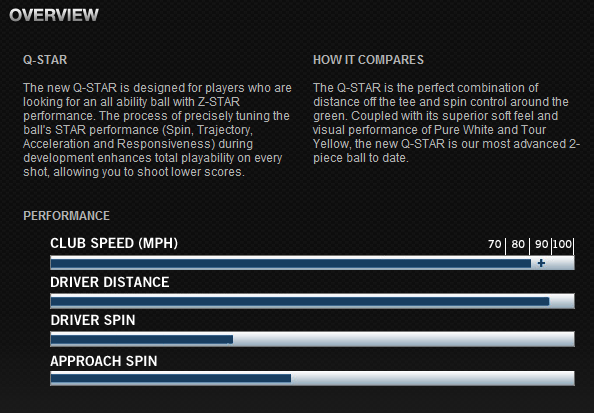
    The Q-Star golf ball was designed for low spin off the tee to help a mid to high handicap golfer keep it in the fairway, while still providing a soft feel and enough spin to hold the green. Srixon uses their S.T.A.R. performance process to tune the spin (S), trajectory (T), acceleration (A) and responsiveness (R) of each golf ball. Other than that, it’s just a cool marketing catchphrase. The Q-Star is a 2 piece golf ball with a core measuring 1.568″, and a cover measuring only 0.057″ thick. This very large core provides energy for distance off the tee, and the super thin cover enhances spin and feel.

    Srixon Q-Star Technology
    Click photo to enlarge

    Since the wound golf ball went away companies largely stopped using compression ratings, mostly because it just confused people.  But what they didn’t tell you is that in making wound balls there could be huge discrepancies in the actual compression rating from ball to ball, due to the imperfect nature of a golf ball constructed with rubber winding and a liquid core. Even if your old  Titleist Tour Balata was marked with a compression rating of 90, the actual compression rating could have been between 80 and 100. But I digress. And since I brought it up, the Srixon Q-Star has a compression rating of 75. That’s very, very low and it translates to a very soft feel and great distance for golfers who’s swing speeds are under 100 mph.

    In my early testing I found the Q-Star to be slightly softer feeling than the Z-Star, and even the distance off the tee and green-side spin were very comparable. I must however disclose that I was playing a course that day with soft greens after overnight rain. Once I got out to a course with firm, fast greens I started to see a difference. Approach shots with the Q-Star spun and held the greens well, but you won’t be sucking this ball back 20 feet with a wedge. Chips and pitches tried to bite, but instead checked up a bit and released to the hole. The Q-Star’s performance around the greens is predictable and consistent, and the lack of too much spin will probably help most golfers. Off the putter, the Q-Star feels very soft. It’s a joy to roll this ball on the greens, as it feels as good as any premium golf ball on the market. The bottom line is that the Q-Star is soft, has great feel off the putter and it spins enough for everyone to have some measure of green-side control. Just don’t expect to hit those low, spinning chip shots that the guys on TV make look so easy.

    Now, before you get all excited and decide to replace the $45 Z-Star you play with the $25 Q-Star in your arsenal, it's important to note that the Srixon Q-Star golf ball differs from the premium Z-Star line in several ways. Like I mentioned above, the Q-Star is a 2 piece ball designed for mid to high handicap golfers, where the Z-Star is a 3 piece construction designed as a "tour" ball for better players. The Z-Stars also have thinner covers. The Z-Star XV's cover is the thinnest in golf at 0.012" thick. That's about three tenths of a millimeter! This makes them more responsive for more spin around the greens. The Z-Star and Z-Star XV carry higher compression, because they are designed for golfers who's swing speeds are over 90 mph. [caption id="attachment_3500" align="alignleft" width="300" caption="Click photo to enlarge"][/caption] Srixon also led the re-introduction of yellow golf balls to the market, and several other companies have also jumped on the old-school colored ball bandwagon. The Srixon Q-Star Tour Yellow is very bright, and for those times where you may hit the ball a bit offline, it's very easy to see in the woods. If you are the only one playing a yellow ball in your weekend foursome, there will be no argument as to who's ball is who's. But the biggest advantage of the yellow ball is that your playing partners aren't going to like it when you use a yellow ball to take some of their green! If you are a slow swinger (under 90 mph) or have a handicap over 10, you probably won't get the most out of the Z-Star line. After all, this is why Srixon created the Q-Star! In creating a golf ball for the majority of golfers out there, Srixon has taken the best features of their premium Z-Star golf ball and eliminated the excessive spin and high compression that hamper the performance for those golfers. For the every-man golfer, weekend warrior or developing player, this ball is a winner, and priced at $25  a dozen it's a steal.

    Subscribe to our email updates! You'll get the latest fresh news, reviews and stories delivered right to your inbox or RSS reader, and automatically be entered in our latest contests and giveaways! We are 100% SPAM FREE! Also, don't forget to check in with our Facebook fan page for exclusive content and get involved by leaving us comments on what you think!

  • Srixon Z-Star Tour Yellow Golf Balls

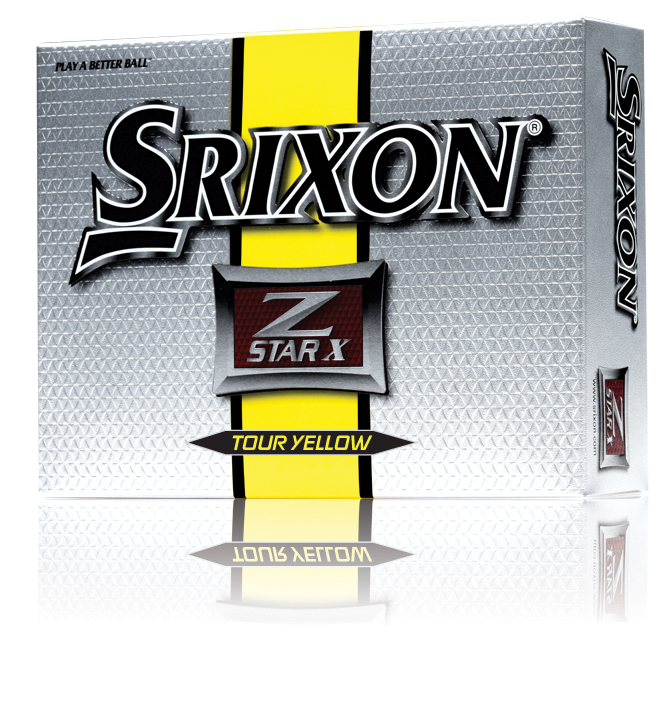
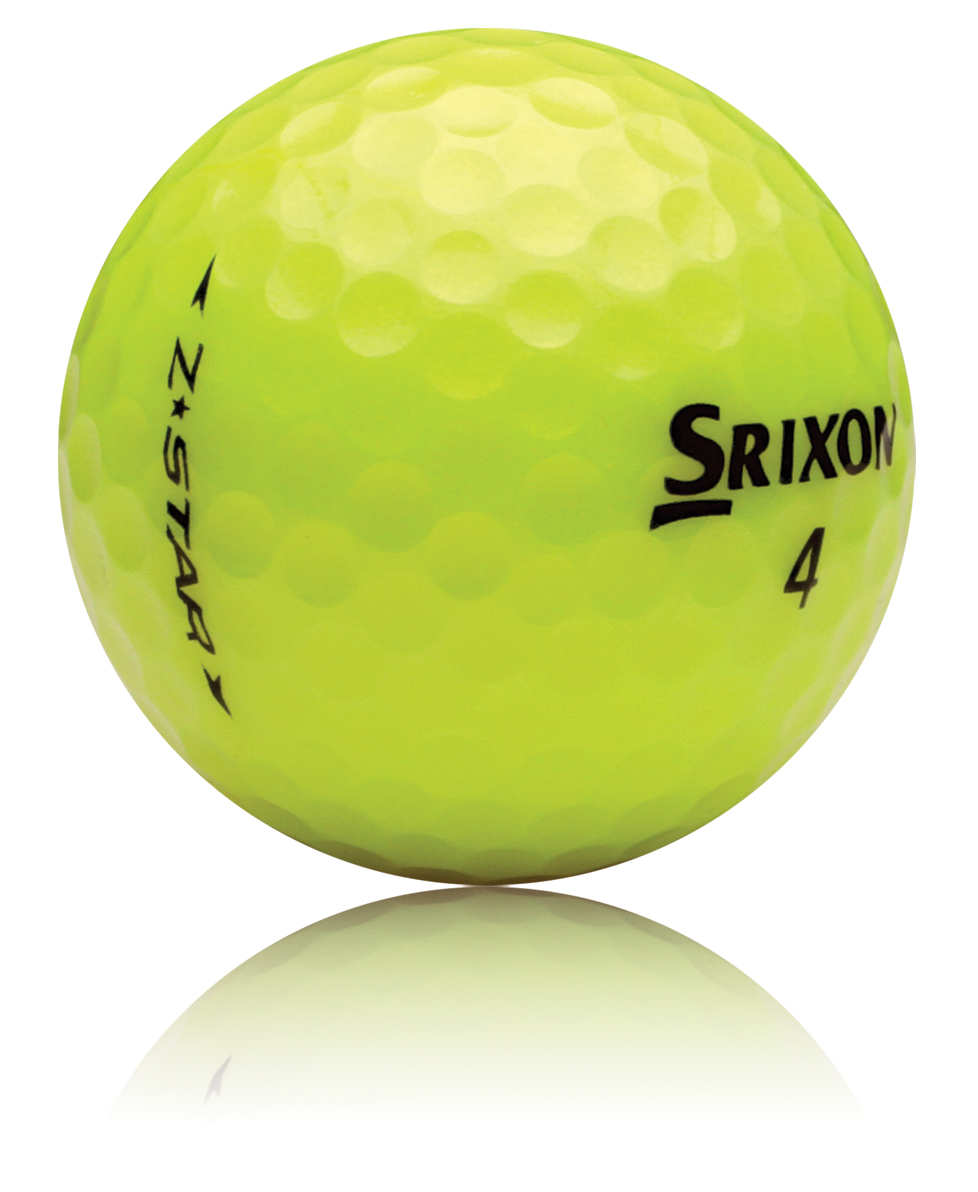
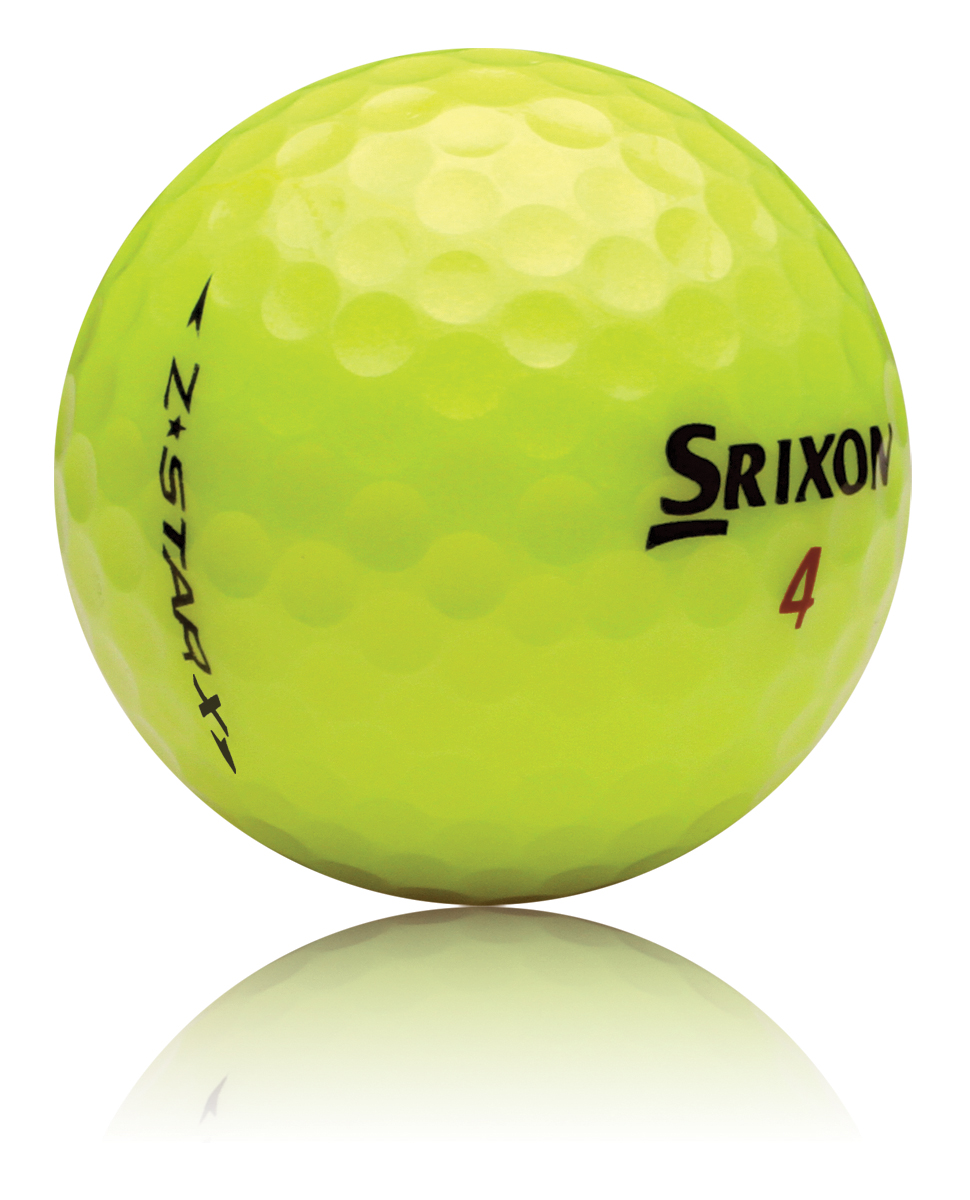
    Srixon Z-Star X Tour YellowI played with a yellow golf ball yesterday. I didn’t find it in the woods or swipe it from a range basket, and I didn’t get it in a 24 pack from the local Walmart either. No, I played Srixon’s new Z-Star Tour Yellow golf ball. New for 2010, Srixon is making their already very hot Z-Star golf balls in Yellow. Why would a company re-introduce a yellow golf ball to the market? After all, yellow golf balls come with a stigma that they are cheap and only for hackers. In fact, when I started rolling the Tour Yellow on the practice green yesterday, a few of my playing partners made some jokes and asked me if I needed more strokes. According to Srixon, the reason yellow golf balls will make a comeback is purely mental.

    Srixon Z-Star Tour YellowAccording to a Srixon press release “Science has proven that yellow is the most visible color in the visual spectrum and psychology has correlated green with calming and stress relief; therefore Srixon has combined the two colors based on these findings to tap into the player’s mind and expand the benefits of playing a better ball.”

    The idea is that a player will feel more at ease standing over a 3 footer to win a few bucks off your buddies if the ball is a yellow with a bit of green, rather than white. I may be more receptive than most to the idea that the ball’s color can help you play better, since I was a psych major in college and I take great interest in the mental side of the game. While I can’t confirm or deny the claims that the Z-Star Tour Yellow has a calming effect on the player, I can say that this ball is easier to see in the grass (and, ahem – the woods) and being yellow, there is certainly no confusion as to which ball was mine. Was it just a coincidence that I played my best round in months and made boatloads of putts with it? Perhaps, because I also had two 3-putts. Either way, I’ve been playing the Z-Star X since it came out and always liked being different, so I’ll continue to play the Tour Yellow and see what happens. Plus, it helps that the ball is the same color as my favorite website’s logo!

    “The new Z-STAR and Z-STAR X Tour Yellow golf balls are currently being tested by numerous PGA and Nationwide TOUR players, who are presently playing the Srixon Z-STAR series of balls,” said Chris Beck, Brand Manager for Srixon. “The response from our tour staffers has been overwhelmingly positive. We understand that players at all levels of the game want to lower their scores and the Tour Yellow balls have definitely peaked the interest of our tour players, as well as consumers.” Indeed, early word from a high-ranking source inside Cleveland Golf/Srixon is that several Srixon staffers will put the Tour Yellow into play on the PGA Tour this year. Srixon Z-Star X Tour Yellow Recently at the 2010 Masters Par 3 Contest, Jim Furyk made a hole in one with the new yellow ball, and Tim Clark had some success at the '10 Accenture World Match Play Championships using the ball. It's important to note that the Z-Star Tour Yellow is the exact same ball as the Z-Star. They all use an ultra-thin urethane cover technology, a larger core and a softer cover to improve distance, spin and feel. The only difference is the color. For more on the Srixon Z-Star line, check out our review here. The Z-STAR Tour Yellow golf ball is designed for the low-to-mid handicap players seeking a combination of distance, spin control and soft feel. The Z-STAR X Tour Yellow golf ball is a distance oriented tour-performance ball for players looking for a bit more distance and high-spin performance around the greens. The Srixon Z-STAR Tour Yellow ball lines both feature new Energetic Gradient Growth core technology, which promotes increased ball speed, as well as high launch and low spin. The 324 large seamless dimples also help reduce wind resistance for increased distance, while the new coating on their super-soft urethane cover significantly improves spin performance from the rough according to Srixon. The Z-STAR and Z-STAR X Tour Yellow golf balls will begin shipping to retailers on April 1, 2010 and will carry a price of $39.99.

    Want to win free stuff? Subscribe to our email updates! You'll get the latest fresh news, reviews and stories delivered right to your inbox or RSS reader, and automatically be entered in our latest contests and giveaways! Also, don't forget to check in with our Facebook fan page for exclusive content and get involved by leaving us comments on what you think!

  • Ball Review – Srixon Z-Star X

    srixon z-star xSrixon has been selling golf balls in the US market for a number of years now. Srixon is a spinoff from Sumitomo Rubber Industries, Ltd. SRI is a Japanese company also selling equipment in Japan under the market leading Dunlop/XXIO name. They started manufacturing tires in 1913, and then golf balls in 1930. In 1997, SRI founded Srixon USA and started marketing golf equipment.  In 2004 SRI Sports was formed to be the parent company of Srixon, and they acquired equipment companies Cleveland Golf and Never Compromise in 2007. Srixon’s golf ball offerings have been gaining ground in the past years with the ZUR line. Jim Furyk switched a few years ago, and several other pros have now joined and play the new Srixon Z-Star and Z-Star X. Some of the names include Tim Clark, Robert Allenby, Boo Weekly, Steve Flesch, John Rollins, Fuzzy Zoeller and Karrie Webb. This year, Vijay Singh switched to the new Z-Star X, leaving Titleist after many years, and he proclaims this fact in a new commercial we are seeing during weekend golf broadcasts.

    Let’s test one of Srixon’s latest offerings, the Z-Star X. Geared towards better players, this golf ball features a super-thin (0.5mm thick) urethane cover that allows for a larger core for more distance and spin potential. The Z-Star is the softer of the two models, producing a slightly higher ball flight and more spin on iron shots. The Z-Star X has a firmer feel and lower ball flight for more distance off the tee and is designed for swing speeds over 105 MPH.

    Having played the previous versions of these balls, the Z-URS and the Z-URC, I can see there is a big difference. The first difference is the lack of a discernible seam in the cover of the ball. The URS and URC had a pronounced seam marking the two halves of the cover, leaving a small strip around the equator lacking dimples. What effect that seam had on performance is unknown to me, but the new balls are seamless, and that can’t be a bad thing! The new Z-Stars also have 6 fewer dimples than the previous model at 324. By comparison, the Titleist Pro V1 and Pro V1x have 392 and 332 respectively.

    I have to preface this by repeating that I have played Srixon golf balls for over a year, and in that time I found myself switching back and forth between the Z-URC and Z-URS. I thought the Z-URC was too firm around the greens, and the Z-URS felt too mushy and spun too much off the driver. Then, just as I was preparing to run back to the Titleist Pro V1, Srixon introduced the Z-Star and Z-Star X. Since I was previously leaning towards the Z-URC, I picked up a sleeve of the new Z-Star X and put them through their paces. So how does the new Srixon Z-Star X perform? In a word – Brilliantly!

    free cleveland launcher fairway wood with driver purchase

    The first thing I noticed with the new Z-Star X is the fact that they have made it softer than the old Z-URC. This is a welcome change for me, as I prefer a soft feel for chipping and putting. It still feels on the firm side, coming off the putter face with a little click, but it is far from the feel of a harder ball like a Pinnacle or even the new Callaway Tour i. The cover feels very soft to the touch and I worry about what modern grooves will do to this ball. More on that later.

    I moved from the putter to the wedge and started chipping, and I noticed that this ball really grabs. I crisply hit chip shot skids and checks, then rolls out gently. Flop shots from a tight lie spin furiously, coming to an immediate stop. Balls chipped out of the rough behave predictably.

    Moving to the tee box, I was wondering how the thin cover would behave with the driver. Most players demand spin around the greens but want more distance off the tee. In the past with wound golf balls this was a trade off, spin or distance. You couldn’t have both. Nowadays with the advent of 3 piece and even 4 piece balls, it is possible to get high spin around the green and low spin from the driver. The Srixon Z-Star X is a great example of what the new golf ball technology can provide. This ball rockets off the driver with a mid to high trajectory and low spin. It is hard to say if I picked up any yardage compared to the old model. I would need a launch monitor to measure impact conditions and determine if it spins less than other golf balls. What I can confirm is that this new ball performs very well in the wind, especially crosswinds. I hit numerous balls into winds from all directions and the flight is very steady. I hit some cuts and draws into cross winds and the ball stays on line.

    Iron shots come off the club with a mid trajectory, and plenty of spin. A solid iron shot will stop quickly on anything but the most severe greens. I am not known as a high-spin player, but this ball can be drawn back with wedges and stops dead with other clubs. I didn’t see too much ballooning into the wind, not as much as the Titleist at least. I have always despised the Titleist Pro V1’s wind performance, so the Z-Star X’s wind performance is a big bonus. As far as durability is concerned, I was pleasantly surprised. I played 18 holes with the same ball with only minor scuffing and wear on the cover. I could easily go another 18 with it, provided I didn’t lose it or hit a cart path!

    I am very glad that Srixon released this new golf ball to replace the old Z-UR line. I am making the switch and now play the Z-Star X. It durable, holds it’s line in the wind, I love the way it spins and it feels softer than the previous generation. Overall it’s a great ball for aggressive swingers or players that like a high-spin ball with a slightly firmer feel. The price point is also good, at $39.95/dozen it is unchanged from last year and about $5 less than the Pro V1x, the Srixon’s main competition.

    Those who play the Pro V1 and prefer a softer ball will love the Z-Star, which I’ll try to cover in a future post. I will stop short of saying that I hit this ball further, because a recent driver upgrade has helped me also. But for good measure, between the new driver and this new golf ball, I’ve regained 15-20 yards that I lost last year off the tee.