Tag: Ben Crenshaw

  • Streamsong Resort – Florida’s Hidden Gem

    Streamsong Resort – Florida’s Hidden Gem

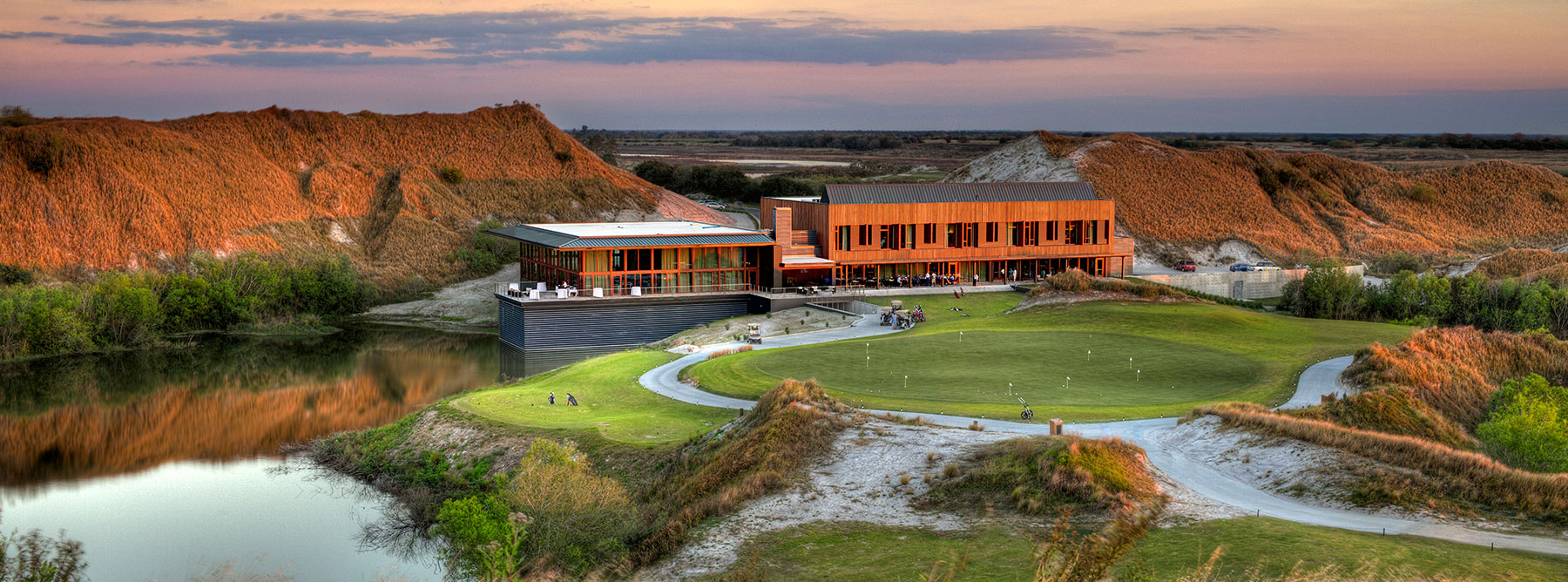
    the-clubhouse


    The History

    Several years ago the Mosaic Company, the world’s largest combined producer of potash and phosphates, was about to reclaim 16,000 acres of land near Fort Meade, Florida that had been mined for nearly 100 years for phosphate. Instead, Mosaic CFO Richard Mack proposed building a golf resort. When Mr. Mack invited the design teams of Bill Coore & Ben Crenshaw (and later Tom Doak) to tour the area, they were stuck by the unique assortment of dunes, elevation changes, sand and native grasses that distinguish the property from your typical Florida landscape. It is estimated that the mining process stockpiled 15 million cubic yards of sand. The land sat untouched for over 50 years, and what nature gave back was a spectacular collection of dunes, lakes and sandy soil on which to build golf courses. Tom Doak famously said about the property: “”If you parachuted me into Streamsong, and you gave me 75 guesses as to where I’m at in the world, my 73rd guess might be somewhere in Florida.”

    Streamsong Resort opened in January of 2013 to rave reviews. The Coore & Crenshaw designed Red course is ranked fourth in Florida (#18 in the US) and the Tom Doak designed Blue course is number six (#24 in the US) on Golf Digest’s Best in State Rankings. Both courses were built and opened at roughly the same time. In fact, Doak and Coore collaborated on the overall routing of both courses and even shared the design of some holes on each course, the details of which seem to be closely guarded. Because of the collaborative effort and clever routing of both courses, players can play some unique non-traditional six or twelve hole loops, including six holes on the Red and six on the Blue.

    Streamsong Blue #13
    Streamsong Blue #13

    The Courses

    The Red course measures 7148 yards (74.2 / 130) from the longest tees and 5184 from the shortest, giving everyone a course that is challenging but fair. I found the Red course to be a little more forgiving, with shallow bunkers, fewer forced carries and greens that were flatter and featured prominent chipping and run-off areas. The Blue course stretches to 7176 yards (74.1 / 131) from the back tees and down to 5531 from the gold tees. The Blue course has larger, more undulating greens and deeper bunkers, but like the Red course, it generally offers plenty of space off the tee. The relative lack of trees and exposed elevations of both courses means that the wind is always a factor, especially when playing from, over or around any of the large dunes that dot the landscape. My first round on the Blue course in late January was negotiated in constant 30 mph winds with gusts into the 40s. The terrain tends to play hard and fast, giving golfers many options for approach shots along the ground. For example, on the 18th hole of the Blue course my playing partner Jay and I waged a “closest to the pin” contest for fun from 125 yards out in the fairway. With our putters. The contours of the hole and the shape of the green gives you the option to run the ball up along the ground, and we both managed to get the ball on the green. Many holes on both courses set up the same way.

    Streamsong Red #17
    Streamsong Red #17

    These Boots Are Meant For Walking

    During peak season from January 1 to April 15 Streamsong is walking only. They have an experienced roster of professional caddies available at all times. (At additional cost) During the summer months when temperatures usually hit the mid 90s, golf carts are available, but the use of a forecaddie is mandatory. This walking-only policy may turn away some visitors, but Streamsong believes walking is by far the best way to appreciate the subtleties of the golf courses while keeping the turf in excellent shape year-round. Of course those with physical disabilities are allowed to use a cart, and caddies are not required when walking but highly recommended. Most of them have lots of experience on both layouts and are of great assistance in plotting your way around the course.

    Architecture

    Almost as striking as the dramatic landscape is the architecture at Streamsong. The golf clubhouse is a modern looking structure designed by Alberto Alfonso. It sits between the dunes and next to a lake that golfers must carry the ball over on both courses at one time or another during the round. The building has everything you need, and nothing you don’t. Besides the pro shop and 4500 square feet of conference space, the steak and seafood restaurant Fifty-Nine and and outdoor terrace, the clubhouse also has twelve guest rooms that served as the only on-site accommodations when the resort first opened.

    Streamsong Lodge
    Streamsong Lodge

    Since opening in January of 2014, the Lodge has become the center of off-course activities at Streamsong Resort. This 216 room luxury hotel sits on the shores of a pristine private lake teaming with wildlife and stocked with bass. The horseshoe shape of the building gives every room a great view of the lake, outdoor fire pits and beautiful infinity pool. AcquaPietra, the 7000 square foot subterranean grotto-style spa with seven bathing pools and and nine treatment rooms will help melt away stress and treat those aches and pains.

    AcquaPiettra Spa at Streamsong
    AcquaPietra Spa


    Dining

    With four top notch restaurants on site, you’ll never leave hungry. SottoTerra features traditional Italian cuisine, P2O5 serves traditional Floridian favorites like oysters, conch chowder and fried chicken, and is named after the chemical symbol for phosphate. Finally, take a short elevator trip to the rooftop grill of Fragmentary Blue to enjoy Sriracha glazed chicken skewers, buffalo pork rinds and other casual fare while having a drink and enjoy the views that go on for miles in all directions.

    Off Course Activities

    The virtually untouched lakes and streams surrounding Streamsong offer some of the best bass fishing in the state, and guided tours depart from the docks just a short walk away from the Lodge. For shooting sports enthusiasts there’s also a well designed Sporting Clays course led by certified instructors just a short drive away on property. For large groups, there is 18,000 square feet of flexible meeting space, but who expects to get any work done at a place like this?

    What makes Streamsong Resort so unique is the location and topography. Situated just over an hour from Tampa and about 90 minutes from Orlando, it is close enough for a quick weekend trip, but the property itself is so remote and isolated that you don’t feel like you are that close to any civilization. Some people have compared Streamsong Resort to Bandon Dunes in Oregon or Cabot Links in Nova Scotia, and perhaps the comparisons are valid in terms of remoteness, but to me comparing repurposed phosphate mines in rural Florida to true seaside links land isn’t fair. Bandon and Cabot are on the coast, but Streamsong is over 40 miles from the Gulf or Mexico and the weather is much better!

    The Future is Black

    Where all these resorts do compare however is in the accolades they have received. In just a few years Streamsong has managed to get everyone’s attention and rank highly in many golf industry rankings. Both courses sit in the top 20 nationally in rankings from Golfweek, Golf Digest, Golf Magazine and others. But if you thought Streamsong would rest on their laurels, you were wrong. 2016 Olympic course designer Gil Hanse was recently announced as the architect for a third golf course that will start construction this summer with an anticipated opening in 2017. The new Black course will have its own clubhouse and dedicated practice facility and be located a short distance away from the Red and Blue courses. The terrain for the Black course isn’t quite as dramatic as the original two, but there is no shortage of interesting land forms and vegetation to route a course through. There are also rumors about a fourth course in the future. With 16,000 acres to work with and given the stellar golf Streamsong has produced so far, perhaps the comparisons to Bandon Dunes will continue – Minus the ocean breezes and rain of course.

    Fragmentary Blue @ Streamsong Resort
    Fragmentary Blue Restaurant

    At Streamsong Resort, the course designers proved that you don’t have to move tons of dirt and sand to make beautiful and playable golf courses. The leadership team also proved that when executed properly, a piece of seemingly useless land can be transformed into a place people really want to go. In many respects, Streamsong is a collection of contradictions. It’s remote enough that you could never find it by accident, but close enough to Tampa and Orlando for a day trip. The golf is played on foot with caddies, but valet service and complementary shuttles transport guests to and from the course. The post modern architecture of the clubhouse and lodge clash with the unkempt wilderness that surrounds them. The land that sat untouched by humans for decades now attracts people from all over the world.

    Streamsong Resort is a must-visit for all golfers. The courses are among the best in the US, the accommodations and dining are excellent, the amenities are a perfect complement to the golf and the service is exceptional. Stay and play packages range from $139 to $199 per person depending on the time of year and size of your group. For more information visit http://www.streamsongresort.com/

  • The 2010 Masters Tournament – A First Timers Visit

    View of the 2nd (left) and 7th greens at Augusta National Golf Club
    View of the 2nd (left) and 7th greens at Augusta National Golf Club

    It is pretty safe to say that most golf fans will go their entire life without ever setting foot on the grounds at Augusta National Golf Club for The Masters. The biggest reason for this is that it’s so hard to get tickets. Tournament badges have not been available to the public since 1972, and are only available to those who are already on the patron list. Even the waiting list was closed, so no applications for tournament badges are being accepted. As far as the practice rounds go, they are sold in advance by application only. If you want a chance to go see the practice rounds in 2011, you must write to the Masters and applicants are randomly selected and notified in September. Masters tickets are not supposed to be resold, but it isn’t uncommon for people who will not be attending to sell their badges for several thousand dollars each. Folks, it’s a tough ticket.

    This year a friend of mine was given four passes to the practice rounds by someone, and I was lucky enough to be invited to tag along! It was my first time at Augusta National, and the experience was one I’ll never forget. The first thing that struck me as I entered the gates past the security checkpoint is the level of organization and the condition of the grounds. People say Augusta National is a mecca for golf, and they aren’t lying. It’s like Disney World on steroids, the efficiency with which this tournament is run. Nothing is ever out of place, nothing is done randomly, and everything has a place and purpose at the Masters.

    Before I even stepped foot on the golf course I noticed that everything around the clubhouse and concessions is meticulously maintained. From the fresh paint on buildings and fences, perfectly sculpted bushes and hedges and blooming flowers, green grass bordered by beds of pine straw and ageless pines, magnolias and oak trees, the facilities are so well maintained it’s almost eerie. Staff members dressed in yellow coveralls walk around constantly with garbage picks at the ready, such that a piece of garbage carelessly tossed on the ground doesn’t stand a chance.

    One thing you never see on television are the concession stands where patrons can buy food and drinks, and the merchandise stores. Set back in the woods away from the golf course, and out of the way of camera angles sit the various food stands. Where most golf tournament gouge the spectators for $8 burgers and $5 beers, the prices for food at The Masters are so low it makes you wonder what’s the catch. I bought a Ham & Cheese on Rye ($1.50) with a Lemonade ($1.50) and was left wondering why I had so much cash left over! The most expensive item on the menu is Import Beer, at $3.50. The food and drink prices are something that never gets any publicity, but it really should. Maybe this is just Augusta National’s way of thanking the patrons for their loyalty, or perhaps this is a genius marketing ploy to get you to spend more of your money buying shirts, flags, mugs, belts and ball markers!

    The gentleman in front of me at the souvenir shop spent about $750, and many others spend well over $100 on merchandise that is only available on site for one week a year. Another service that is provided to the patrons is a bag check service that allows you to leave your purchases to be retrieved at the end of the day so that you don't have to carry them all over the place. They could certainly charge people and make a lot of money, but the service is provided for free. Another freebie that you wouldn't expect is parking. If you show up early and park in the main lot adjacent to the property, there is no charge. It's only the greedy business owners up and down Washington Road that charge for parking. We spent most of the day on Monday wandering around the grounds and watching whoever was in the area. To start the day we walked up to #8 green to catch Tiger and Fred Couples playing up #8 and tee of on #9. We then walked down to Amen Corner to catch them playing 11, 12 and 13. Fuzzy Zoeller pulled a young boy out of the crowd on 12 and bet Ian Woosnam $100 that he would hit it on the green. The youngster calmly stroked Fuzzy's 3 wood on to the green. Apparently, 12 year olds don't know it's supposed to be a tough hole! Woozy handed Fuzzy a $100 bill to pay his debt, and Fuzzy proceeded to hand it to the kid. After all, he earned it! After that we went to #16 to watch the groups skipping balls across the water in accordance with the traditions of the practice rounds at Augusta. I have always been a traditionalist, so for me the best part of the day was getting to watch Ben Crenshaw roll balls across the 2nd green with his legendary putting stroke. Making a smooth stroke that would have hit the ball 4 feet on the local muni's greens, I watched as the ball rolled slowly about 30 feet down a hill, break left about 3 feet, and come to rest gently against a pencil his caddy had placed there. 3 times in a row. It may sound insane, but the ball seems to dwell on the face of his putter, and he seems to simply guide it towards the hole with perfect speed every time. Much like Masters Tournament founder Bobby Jones' golf swing, there is nothing remotely violent about Ben Crenshaw's putting stroke, and that is why I love watching him putt. Without further ado, I present to you my photo gallery of the 2010 Masters Tournament Monday Practice Rounds. One thing worth noting is the size of the galleries. While the number of people allowed on the grounds is limited, it is certainly a much larger gallery than Monday at any other tournament! The crowds following Tiger and Fred were the largest of the day, but with that exception, access to the players was very good and there was always a place to get a good view of the action. Enjoy!

    Want to win free stuff? Subscribe to our email updates! You'll get the latest fresh news, reviews and stories delivered right to your inbox or RSS reader, and automatically be entered in our latest contests and giveaways! Also, don't forget to check in with our Facebook fan page for exclusive content and get involved by leaving us comments on what you think!