Tag: Shaft

  • BGT – Stability Tour Putter Shaft

    BGT – Stability Tour Putter Shaft

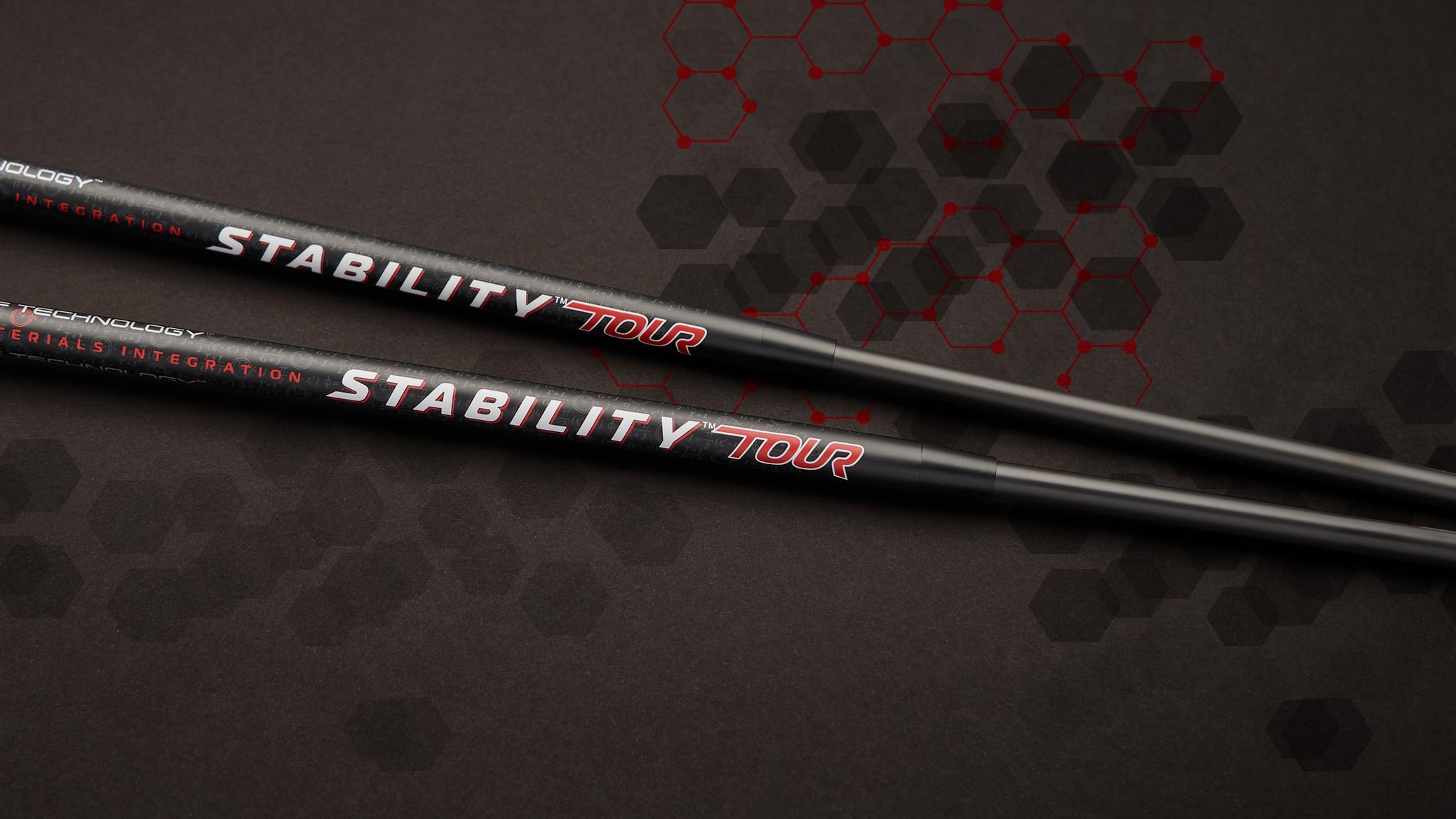
    Upgrade your putting performance with the Stability Tour putter shaft from Breakthrough Golf Technology

    It’s no secret that I have been a fan of industry titan Barney Adams and his newest venture Breakthrough Golf Technology (BGT) for a few years now. I first covered the company and their Stability Putter Shaft a few years ago, and they aren’t showing any signs of slowing down.

    Be sure to tune in to The Back of the Range Golf Podcast for a great interview with Barney Adams about his remarkable career in making us all better golfers

    BGT’s latest product is the Stability Tour putter shaft. Like the original Stability Tour shaft, it is a graphite & carbon fiber putter shaft designed to improve putter specific motion and performance. Compared to a standard steel putter shaft who’s technology has remained unchanged for over 50 years, the Stability and Stability Tour shafts have increased flexural rigidity, which greatly reduces torsional rotation.

    English Please…

    What are flexural rigidity and torsional rotation? In laymen’s terms, the Stability shafts are 25% stiffer and reduce torque by 50% compared to those old-fashioned steel shafts, without sacrificing feel. With a putter shaft that doesn’t twist or bend as much through the stroke, you will be able to return the putter to impact more consistently, which means your misses will be closer, and in the long run you’ll make more putts.

    The Stability Tour shaft differs from the original Stability in several ways. In addition to the softer feel, it has a thinner profile, weighs more and is balanced more like a steel shaft. All these factors make it easier to transition from a steel shaft without changing the overall weight and balance of your putter, and that’s why tour players requested these features.

    What Took So Long?

    Why hasn’t putter shaft technology changed in so long? Most people buy putters without thinking about the shaft. We just assume it’s a standard putter shaft, right? Nothing to it! The answer is simple – Until recently, we didn’t have the technology to analyze putting performance, so we couldn’t really tell if changing shafts in your putter would make a measurable difference.

    With the help of new technology like high-speed cameras, robots, SAM Putt Lab, Quintic Ball Roll software and Trackman 4, the Stability Shaft was exhaustively tested with hundreds of putters, rolling thousands of putts.

    I have used the SAM Putt Lab before with other putters. It is an amazing tracking device that uses ultrasound and measures 28 parameters of the putting stroke down to a tenth of a degree. One thing is for sure, the data you get from a session on SAM is critical in understanding how a shaft like the BGT Stability and Stability Tour can help your putting.

    Breakthrough Golf Technology claims you are 82% more likely to return the face square at impact with the Stability & Stability Tour shaft. Maybe that’s why 99% of golfers who play with the Stability prefer it over steel.

    Real World Results

    As with the original Stability shaft that I tested, the Stability Tour shaft produced instant results for me in the Bettinardi BB8 putter I installed it in. The first and perhaps most obvious difference is the feel. Dampening the vibration from impact is something that these shafts do way better than steel, which has the effect of deadening the sound and making your putter feel softer at impact.

    It may be hard to notice with the naked eye and seem funny to talk about launch angles with a putter, but the Stability Tour shaft actually launches the ball a bit lower than a steel shaft. What this translates to when putting is a ball that skids less and starts rolling end over end faster. I would love to get this putter on a Quintic or SAM Putt Lab to get some hard data, and if/when that happens I’l be sure to update this post with my findings.

    Price & Availability

    The Stability and Stability Tour putter shafts are available through custom club fitters like Club Champion or direct from Breakthough Golf Technology’s online store.

    Prices range from $199 for the original Stability Shaft to $249 for the Stability Tour. That price included shipping and installation by the professional staff at BGT’s state-of-the-art facility in Texas.

  • Breakthrough Golf Technology Instantly Made Me A Better Putter

    Breakthrough Golf Technology (BGT) is a new golf company that makes putter shafts. Founder Barney Adams is a golf industry veteran and pioneer, bringing Adams Golf from nothing to become one of the major players in golf innovations in the 1990s & 2000s. Adams golf turned the industry on its head with the Tight Lies fairway woods and then changed golf forever by popularizing hybrids, making them a staple in amateur & touring pros’ golf bags around the world.

    Mr. Adams left Adams Golf when Taylor Made Golf purchased the company in 2012 (and promptly killed the iconic brand through neglect) He started BGT a few years later in 2014, and we’re now able to see the fruits of his labor with the Stability putter shaft.

    Breakthrough Golf technology - Stability Shaft

    There are four parts to the Stability shaft that work together to improve putting performance. This “Advanced Materials Integration” uses advanced multi-material design combined with geometries never before used in putter shafts. The Stability shaft has the same look and weight as traditional steel putter shafts but feels more solid and stable. The Stability shaft delivers the face of the putter more square at impact for better accuracy. The shaft also produces a lower launch for more predictable roll, resulting in better distance control.

    Real World Testing

    I found my latest gamer putter – a Scotty Cameron Futura 5W – last winter after my last Scotty Cameron met its unfortunate end at the bottom of a lake at the Mines Golf & CC in Malaysia following one too many three-putt greens. Since then, I’ve been a one-putter man. It has been my gamer for over 8 months, which is pretty remarkable given my history of frequently changing putters.

    I sent my Futura 5W off to Texas for BGT to work its magic, and I got the putter back in about 10 days from the day I sent it. My Scotty Cameron was now attached to the Stability shaft, and I started rolling putts in my living room with it the same day. Almost immediately I noticed the solid feel, free of unwanted vibrations. In fact, I never knew how much vibration you get from a putter until I tried this shaft. The difference to me was dramatic. Breakthrough Golf Technology claims that the Stability shaft launches the ball lower. I can’t confirm that claim without some fancy and expensive testing equipment, but I’ll take their word for it because the end result of lower launch is better roll, and this shaft seems to make the ball roll better coming off the face.

    Another claim made by Breakthrough Golf Technology about the Stability shaft is improved accuracy because the putter face will be more square at impact. Again, without some fancy testing equipment like the SAM Putt Lab, I can’t verify those claims with raw data, but I can tell you that in the five rounds (90 holes) of golf I’ve played since getting the Stability shaft installed, I’ve made (Pardon my French) a shit-load of putts! What that translates to in numbers is 26 birdies in 90 holes, or a birdie percentage of about 34%. Obviously, I can’t attribute all those birdies to my putter alone, but it has been a great month for me on the greens.

    Bottom Line

    Confidence with the putter can be very fleeting for me, but maybe the Stability shaft is what I needed to get me over the hump and get my handicap back in the highly desirable plus range. Even when putting poorly I’m usually around the hole, but the added stability and consistency of Breakthrough Golf Technology’s Stability shaft might be the edge I needed to convert two or three more 10-footers per round.

    The list price for the Stability shaft is $199.99 with free installation, and it’s worth every penny. People don’t hesitate to drop $400 or more on a new driver that they can only use 14 times per round, but balk at spending money on a putter. When it comes to improving the performance of the most-used club in everyone’s golf bag, every dollar is well spent. Just don’t tell my playing partners!

  • Aerotech Releases New TiFiber Shafts

    Aerotech Releases New TiFiber Shafts

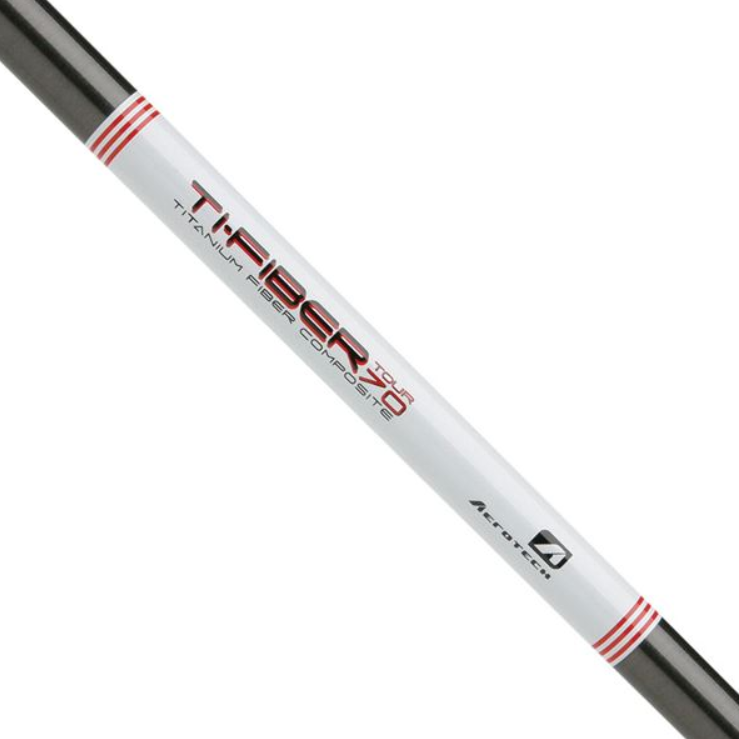
    Aerotech TiFiber ShaftAerotech’s Golf’s president & mad scientist Chris Hilleary is up to his old tricks again, and this time his experience in composites and engineering wizardry has resulted in the new Aerotech TiFiber shaft. Last season, Aerotech Golf’s SteelFiber shafts delivered 20 wins on pro tours around the world as well as won the coveted CME Race for the Globe Trophy and 2016 Money Title on the LPGA Tour. I’ve been playing with and evangelizing the SteelFiber shafts in my irons & hybrids for over 6 years, and for me, there’s no going back to steel.

    Why TiFiber?

    While the original SteelFiber shafts are incredibly consistent and playable, in driver and wood lengths they became too heavy for most golfers to be comfortable with. By replacing steel fibers with much lighter titanium, Aerotech was able to adapt the benefits of their SteelFiber technology to full-length driver and fairway wood shafts.

    What is TiFiber?

    TiFiber shafts combine a high-modulus graphite core like you would find in almost all driver shafts with 47 miles of micro-thin titanium fiber lacing the entire shaft surface. 47 Miles! The addition of high-strength, lightweight titanium fiber increases stability while allowing the weight to be redistributed to optimize tip stiffness. As a result, TiFiber shafts are a great match for modern oversized titanium/composite driver heads.

    TiFiber shafts are currently available in two models – the TiFiber Tour 70 and Pro 60.

    1. TiFiber Tour 70 shafts feature a “Tour Stiff” tip section to optimize flight by reducing spin and lowering trajectory. The Tour 70 is available in F5 (Stiff) and F6 (X-Stiff) flex options.
    2. The TiFiber Pro 60 has a slightly softer tip section and benefits players who need a bit more launch and spin but still want the added stability of titanium. The TiFiber Pro 60 is available in F4 (Regular) and F5 (Stiff) flexes.

    Success on Tour

    Players with SteelFiber shafts routinely rank high on the PGA Money List, Official World Golf Rankings and the FedEx Cup Season Points. Brandt Snedeker and Matt Kuchar have been in Aerotech’s corner for years. In 2013, Kuchar & Snedeker ranked No. 2 and No. 3 in FedEx Cup points and ended the season as #3 and #5 on the PGA Tour money list. Snedeker also won the FedEx Cup in 2012 using SteelFiber shafts.

    While the adoption of SteelFiber continued to grow on the professional tours, the company was testing the TiFiber shaft on tour in 2017 and introduced them to the public at the 2018 PGA Show in Orlando. It’s only a matter of time before TiFiber also records its first win on tour.

    Performance

    I spent some time on the practice range with the Aerotech TiFiber Tour 70x shaft installed in my Ping G driver. I hit several shots with both the TiFiber shaft and the Ping Tour 80x shaft (custom option from Ping) to compare ball flight and launch monitor data. I used the cool new FlightScope MEVO launch monitor to capture club and ball flight data.

    My initial testing has produced numbers that are very similar to the stock Ping shaft, but the little FlightScope MEVO is limited in the data it can gather. More on that in a minute. Both the stock Ping shaft and the TiFiber were giving me similar numbers for launch angle, swing speed, smash factor and spin rates. Carry distance was about 2 yards less with the TiFiber, which is consistent with the ball speeds which were roughly 1 MPH lower with the TiFiber. Shots hit with the TiFiber shaft stayed in the air a fraction of a second less and flew about 5 feet lower, which may help explain the carry distance number. I only got to hit about 8 or 10 drives with each shaft, but once I gather more data I think the results will be more clear.

    What the numbers don’t tell me is what I’m perhaps most interested in with the TiFiber, and that is shot dispersion. The FlightScope MEVO being a palm-sized personal launch monitor priced at $500, it can’t compete with the big boys that cost $10,000+ and one of the areas where the MEVO is lacking is measuring shot dispersion. Since it doesn’t track the entire ball flight, it can’t tell me what the dispersion is from shot to shot.

    I did notice a difference between the shafts, but without measurable data, it’s hard to be 100% sure. I felt that I was hitting the ball straighter with the TiFiber shaft, with a tighter dispersion from shot to shot. I’ll get more data and play a few rounds with the Aerotech shaft in the coming weeks and will know more. I believe the TiFiber shaft to be straighter based on my observations.

    3/12/2018: I’ll update this post when I get more info about the accuracy of the Aerotech TiFiber shaft.

    Where Can I Get One?

    The best way to get your hands on one for your driver will be to schedule a fitting with a good club fitting specialist like Tour Spec Golf. Aerotech Golf shafts are also widely available as custom options with many club manufacturers such as PXG, Callaway, Titleist, TaylorMade, Ping, Cobra, Bridgestone Golf, Wilson, Cleveland Golf, Miura, Srixon and more.

    For more information on Aerotech Golf and Aerotech shafts, call 888.733.8988 or visit aerotechgolfshafts.com. Also check out the Aerotech page on Facebook: facebook.com/aerotechgolf.

  • TPT Golf Shakes Up Shaft Industry

    TPT Golf Shakes Up Shaft Industry

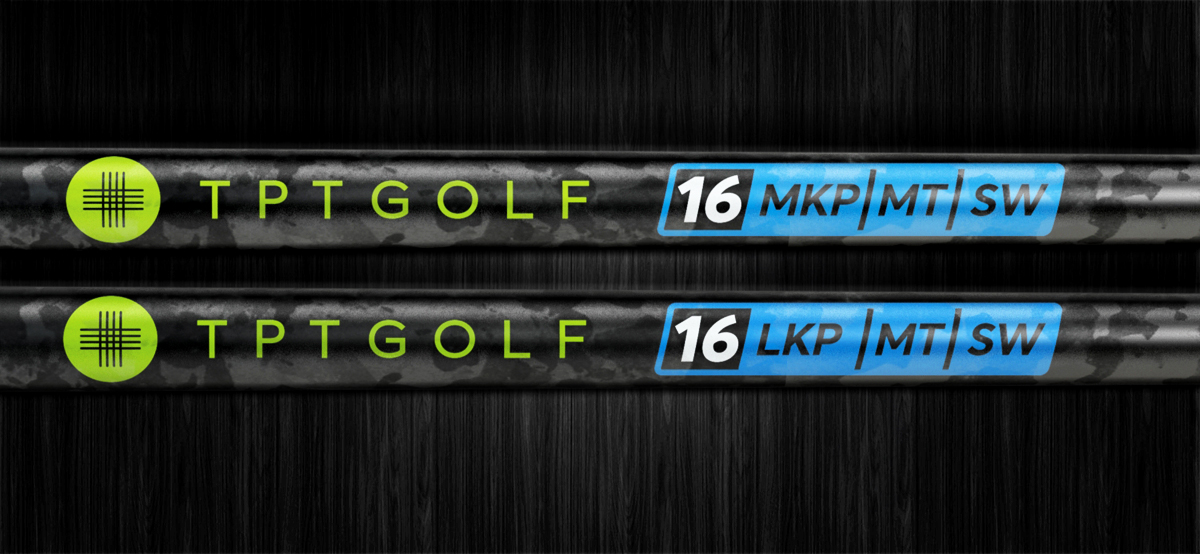
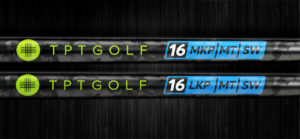
    TPT_Golf_16_Series_ShaftMost golfers aren’t tuned in to shaft news on a daily basis, and I have to admit that most of the press releases I get pertaining to golf shafts have a tendency to go in one ear and out the other, but when a top-ranked golfer wins with a new shaft nobody’s heard of, people start noticing. What I’m trying to say is, TPT Golf is starting to get noticed in a big way.

    This small Swiss company that started out specializing in composites used in yacht racing, Formula One and satellites recently made quite a splash when Justin Rose, the number six ranked golfer in the world, won 3 times in 10 events with 10 top ten finishes to close out 2017 season playing the TPT 15LKP-LT-LW shaft in his driver. The buzz continued into early 2018 with the official launch of TPT Golf at the PGA Merchandise Show, and just this past weekend Jason Day used TPT Golf shafts in his driver and fairway woods to capture the Farmer’s Insurance Open at Torrey Pines near San Diego, California.

    What Makes TPT Golf Shafts Special?

    Nearly every golf shaft on the market today is made using a process called roll wrapping. This entails rolling multiple “flags” of material around a steel mandrel. The layers overlap each other creating a seam and a spine in the shaft. This spine must then be aligned by the club maker to achieve the best playability. On the course, this can lead to inconsistent twist and torque which means bigger shot dispersions and poor feel.

    By contrast, TPT Golf shafts are manufactured using their proprietary Thin Ply Technology, lightweight prepreg plies, and a patented technology known as the “Thin Ply Winding” method. The result of these processes, according to the company, is a perfectly concentric and near-homogeneous shaft. What this means for the golfer is a more consistent shaft that delivers tighter shot dispersion and more consistency from swing to swing.

    What’s The Catch?

    Justin Rose TPT Golf ShaftTouring Pros like to hear words like “tighter dispersion” and “consistency” when looking for a new driver shaft. Despite many of them being multi-millionaires, professional golfers at the highest levels don’t pay for their equipment, so money is no object when it comes to performance. Unfortunately for amateur golfers, most of us have to pay for our stuff, and that’s the catch. When it comes to the premium golf shafts offered by TPT Golf, there is good news and bad news. The good news: TPT Golf shafts used to be sold for $699, but they’ve lowered the price! The bad news: TPT Golf shafts are still priced beyond the reach of most golfers at $499 each.

    Indeed, a $500 price point for a single shaft is way beyond what most golfers are willing (or able) to spend, but for those whose budget allows it, they are almost always going to go through a high-end fitting for the shaft. Anyone that is ready to spend $500 on a shaft will be visiting an advanced fitting studio like True Spec Golf to get the most out of that shaft.

    Does TPT Golf Deliver?

    I’ve only just begun testing the TPT 15LKP-LT-LW shaft in my Ping G400 LST Driver. I have it going up against the Ping Tour 75x shaft that came with the club and another brand’s new driver shaft that we’ll be reviewing later. I’m using the very cool new FlightScope MEVO launch monitor to gather data from the shots I hit, as well as playing several rounds with each shaft to see the real world results because the reality is that we swing differently on the course than we do on the driving range where nothing is at stake.

    With the limited data I’ve gathered thus far, I’m seeing an increase in ball speeds with the TPT shaft, but I won’t know for sure what the difference is until I complete my testing. I’ll update this post as soon as that is complete, and we’ll see what the TPT 15LKP-LT-LW shaft can do.

    The Specs

    TPT Golf’s shafts come sin various weights and kick points, designed to fit the majority of golfers depending on your swing speed and desired ball flight and spin. This is why we make such a big deal out of custom fitting, because investing $500 on a shaft makes no sense if you are guessing at what shaft may be best for your swing. After a session on the Trackman with a good fitting professional, you may be surprised to find out that the shaft you thought you should use turns out to be something completely different…

    Model Swing Speed Range (mph.) Kickpoint Torque Torque (deg) Flex (cpmc) Weight (gm) Length (inch)
    15 LKP/MT/SW 105 – 120 Low Mid 3.7 266 73 46″
    15 MKP/MT/SW 105 -120 Mid Mid 3.3 268 73 46″
    16 LKP/MT/SW 90 – 105 Low Mid 4.1 254 68 46″
    16 MKP/MT/SW 90 – 105 Mid Mid 3.8 254 68 46″
    17 LKP/MT/SW 80 – 90 Low Mid 5.5 248 62 46″
    17 MKP/MT/SW 80 – 90 Mid Mid 4.8 244 63 46″
    18 LKP/MT/SW 70 – 80 Low Mid 6.7 230 53 46″
    18 MKP/MT/SW 70 – 80 Mid Mid 5.8 230 56 46″
    19 LKP/MT/SW 60 – 70 Low Mid 7.5 217 52 46″
    19 MKP/MT/SW 60 – 70 Mid Mid 6.4 217 50 46″
  • Aldila Tour Green Shaft

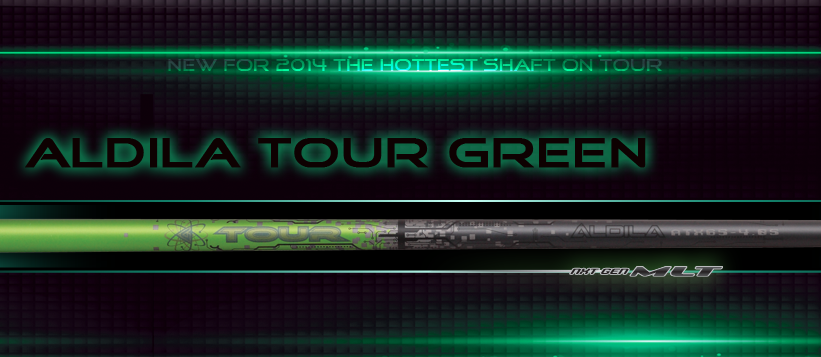
    Aldila Tour GreenAldila has been making graphite golf shafts for as long as I can remember, and has been one of the industry leaders for decades. Aldila is actually an Italian word that means “the next life” or “above and beyond” depending on the context. As manufacturing processes and materials continue to improve, golf shafts have become more and more precise and consistent. As of this writing, Aldila was leading the shaft count on the PGA Tour for more than 30 straight events.

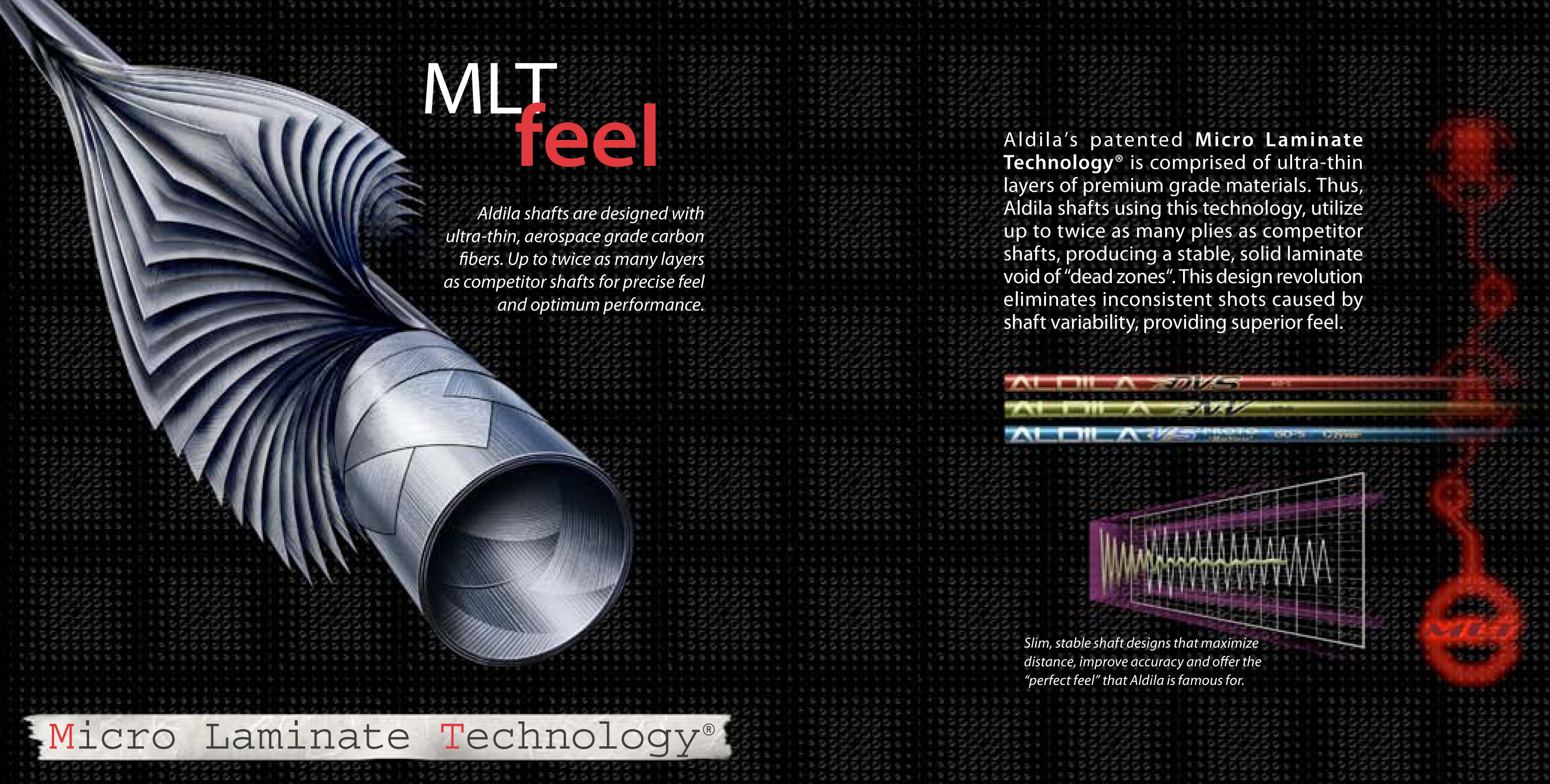
    The Aldila Rogue shaft is currently the most popular shaft on the tour, and while we didn’t get to test out the Rogue, we got our hands on its little brother – the Aldila Tour Green shaft for some play testing recently. The Tour Green shaft is a constant taper wood shaft that is designed to launch the ball on a mid-low trajectory with tight dispersion and a smooth, consistent release. Featuring their Micro Laminate Technology, the Aldila Tour Green will be more consistent from shaft to shaft than competitors.

    Testing the Aldila Tour Green

    We fitted the Tour Green in two clubs for testing. The first is an Adams Super LS driver (9.5 degrees) and the other is a TaylorMade SLDR Mini Driver with 14 degrees of loft. Our professional club builder Glen Belden fitted the shafts according to the manufacturer specifications and we saw a marked improvement in performance over the stock shafts in both test clubs.

    In the Adams driver, the stock Fujikura Kuro Kage 60X shaft simply wasn’t stiff enough or consistent enough for the strong swinger that it belongs to. The Aldila Tour Green 65X shaft was able to bring down spin rates and the launch angle, eliminating the ballooning ball flight that sometimes plagued the golfer with the stock shaft. The owner also had to dial the adjustable face to the open position to counteract the tendency for the shaft to release early and hit the ball left. Once we got the Tour Green in there however, we set the club face back to square and the owner’s tee shots because more controllable and consistent. The Tour Green 65X did its job by bringing the trajectory down and the release is more predictable, leading to increased accuracy.

    Aldila MLT TechnologyThe next test subject was my TaylorMade SLDR Mini driver (14 degrees), fitted with the stock Fujikura Speeder 57S shaft. Since I play a heavier extra-stiff shaft, the 57 stiff was obviously inadequate for my 110+ mph swing speeds. Like the Adams Driver, I found the stock shaft to be wildly inconsistent at producing a repeatable ball. This was mostly due to the Fuji shaft not being stiff enough, but also because most OEM shafts are not ready for prime time. (See my footnote about this later.) I fitted the Aldila Tour Green 75X to the SLDR Mini and instantly transformed it. The Tour Green shaft turned the SLDR Mini Driver into a strong 3 wood that launched the ball on a high trajectory with low spin. The ball carries forever with this club, and the Tour Green shaft makes sure that the ball won’t balloon too high or with too much spin. The heavier weight of the Tour Green 75 shaft is perfect for fairway woods.

    Conclusion

    There isn’t much to say about the Aldila Tour Green shaft other than it simply performs as advertised. It gives the golfer a lower launch and lower spin for stronger players, without feeling “boardy” or too heavy. The Tour Green also has a sister shaft called the Tour Blue that has a slightly softer tip section for a higher ball flight. Both shafts are available through national retailers and custom club fitters for around $249. If you want to upgrade to the latest tour-proven technology and breathe new life into that 2 year-old driver, spending $249 for a new shaft will probably be a better investment than plunking down $400+ on yet another new driver making promises it can’t keep.

    Footnote on OEM Shafts

    In my experience of testing dozens of clubs every year since the mid 90s, I’ve learned that most stock OEM shafts are garbage to be perfectly honest. While the brand names are familiar, the shafts are mass produced and along the line the quality control process is scrapped to cut costs. I don’t mean to pick on the big guys, but my club builder has several 50 gallon drums full of OEM shafts from Callaway & TaylorMade that were pulled from clubs to be replaced with shafts that are properly fit to the player. Most of the shafts that are pulled from these clubs show huge variations in stiffness, weight and frequency readings, which explains why Joe Golfer can hit his buddy’s identical driver great, but his performs awful. It’s hard to know if the club you buy will have a good shaft nowadays, but you can give yourself a better chance of success by staying away from the stock “off the shelf” shaft when buying a new driver or fairway wood. Instead, go to the local golf shop and get fitted for the right shaft by a qualified fitting specialist, then order the driver with that shaft as a custom option. It may cost a bit more, but you’ll be more likely to get the right fit and get the most out of your investment.

  • Aerotech Steelfiber Shafts

    Aerotech Steelfiber ShaftsFor decades, the material of choice for iron shafts has been steel. Compared to the hickory shafts of yesteryear and composite shafts of the present, steel shafts proved to be more consistent and stable. On professional golf tours around the world, steel shafts have been the overwhelming shaft of choice for irons for many years. There are several great steel shafts available for irons, like the new KBS C-taper shaft and the venerable Dynamic Gold shaft that has been around for what seems like forever. There have also been many advancements in composite shaft technology in the last decade. Graphite shafts are getting longer, lighter and more stable, but there hasn’t been a significant advancement in steel shaft design in a long time. Until now.

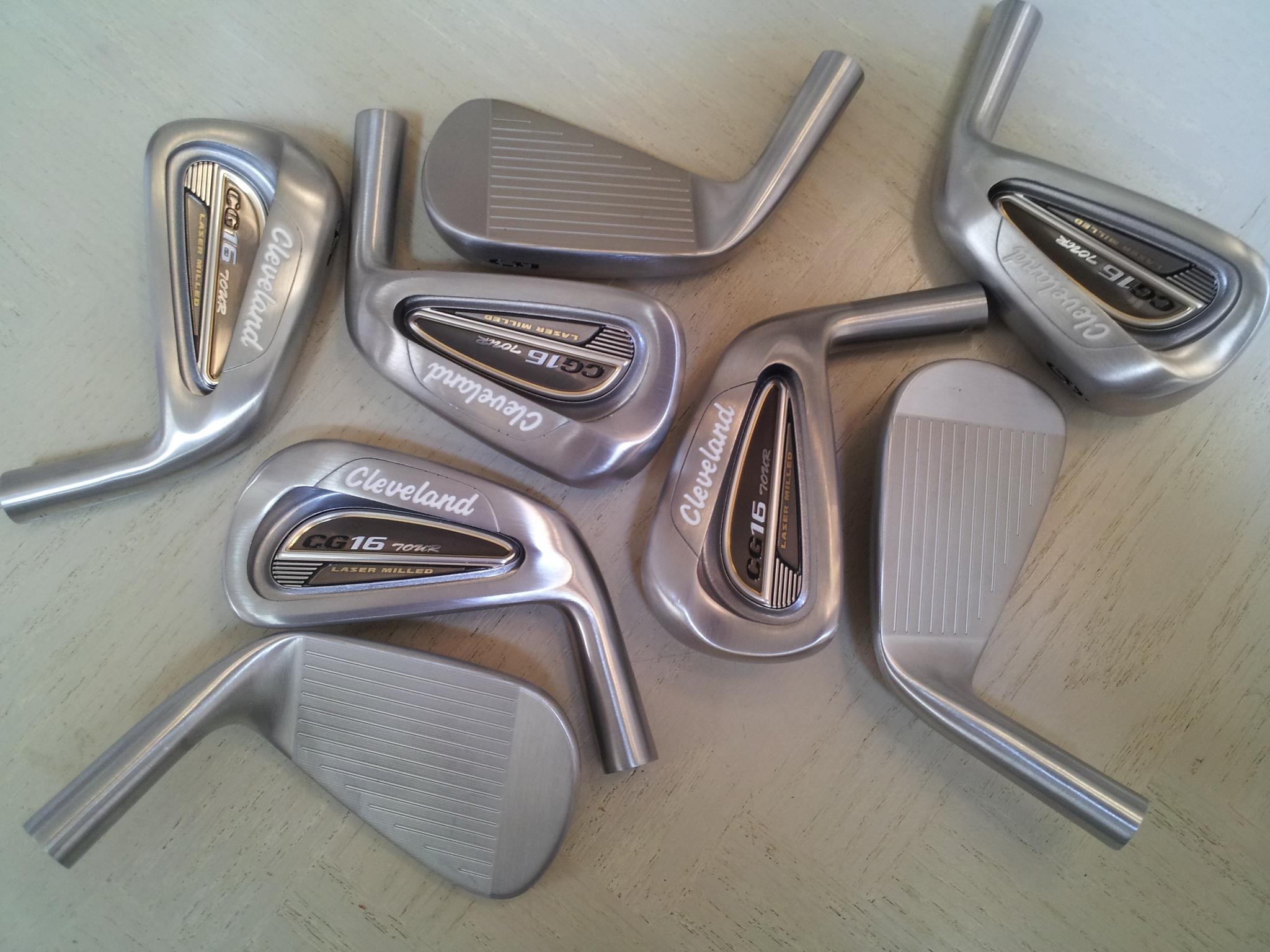
    Earlier this year while watching coverage of the PGA Tour on television, I noticed tour players Matt Kuchar and Brandt Snedeker playing iron shafts that weren’t like the rest. They appeared to be composite shafts, but after some research I found out they were Aerotech Steelfiber shafts. I reached out to Aerotech Golf for more information on the shafts and they agreed to send me a set of the very same constant weight, taper tip Steelfiber i95 shafts played by the PGA Tour pros. To help me test these shafts, I had them spine aligned and installed on a set of Cleveland CG16 Tour Concept iron heads by my club maker extraordinaire Glen Belden. He’s been building and fitting amateur golfers and touring pros since 1979. These iron heads are similar to the retail version but have a smaller head with less offset preferred by their tour players. They are also made of softer metal for better feel . In this case – 8620 with a raw satin finish.

    Founded in 1991, Aerotech Sports was the first company to produce an NHL approved composite hockey stick. They made helmets, bike components, fishing rods and more until breaking into the golf industry in 1994 when they produced their first golf shaft. At first Aerotech operated as an OEM supplier, making shafts for companies like Cleveland, Adams, Fenwick, Zevo and Pure Spin. In 2002 they launched their own line of branded shafts, and in 2005 Aerotech Golf was born.

    matt-kuchar-aerotechThe Aerotech Steelfiber shaft is like nothing I’ve ever seen before. Aerotech has managed to combine materials to create a shaft that has all the best properties of composite and steel shafts without any of the drawbacks. The innovative Steelfiber shaft is a high modulus graphite core wrapped with very thin steel fibers. Each steel fiber has a diameter of only 8 microns, or approximately 1⁄10th the diameter of a human hair. That means there is over 59 miles of steel fiber covering the entire surface of each shaft! This construction translates to a shaft that is very stable & consistent like steel, but is light weight and absorbs vibration like a graphite shaft.

    I’ve played with heavy (130+ gram) Dynamic Gold X100 steel shafts in my irons for most of my golfing career, so I was a bit worried when switching to a 95 gram Steelfiber shaft. Before even hitting the first shot with my new irons, I knew that these shafts were going to be special. Just flexing these shafts with my hands, they felt stiffer than any graphite iron shaft I’ve ever tried. In my hands they felt as stiff as my old X100 shafts, even though they are 35 grams lighter, and after hitting a few hundred balls on the range my predictions were confirmed. This shaft is remarkable. After playing with these shafts in my irons for over 20 rounds, hundreds of range balls and several months in temperatures ranging from 50 to 95 degrees, I can say that the Aerotech Steelfiber shaft is a winner.

    The first thing that stands out about this shaft is the vibration dampening. The Aerotech Steelfiber shaft does a great job at mitigating the shock and vibration of hitting the ground with an iron swing. As a result, they make your irons feel softer. My cast 8620 irons heads feel like butter on a solid strike, and on a cold day they eliminate that “stinger” you get if you hit the ball a few grooves low. The second thing I noticed was the stability and consistency of the Steelfiber shafts. It took me almost 72 holes to adjust to the shaft’s tendency to want to go straighter than my old shafts. I’m used to working the ball left or right with my irons, but these shafts hit it straighter than my old X100s and I had to make an adjustment and play less fade or draw. This sounds like a good problem to have for most golfers! The steel fibers woven around the shaft make them incredibly stable too. I’m able to hit knockdown shots, high shots and everything in between with no fear of losing control or ballooning the ball like a graphite shaft. Finally, the lighter weight of this shaft allows me to swing the club a bit faster, producing a little more distance. For me the gain wasn’t much, maybe a half club, but for others it will be more significant. Compared directly to the Dynamic Gold X100, the Steelfiber i95 tends to hit the ball slightly higher.
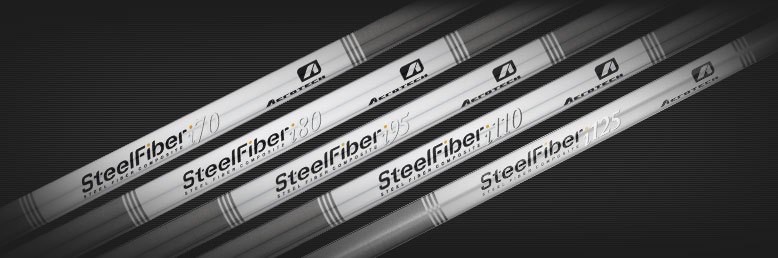
    Cleveland CG16 Tour Concept IronsAerotech offers the Steelfiber shafts in five weight classes: 70, 80, 95, 110 and 125 grams. On the lighter end of the spectrum, the i70 and i80 shafts will benefit players looking for more distance and/or a more stable composite shaft option for their irons. The i80 shaft is the most popular shaft in the Steelfiber line, and the one I would recommend for most golfers out there. The i95 shaft that I tested for this review is a great transition shaft for those wanting to move into a lighter weight iron shaft without going too light and substantially changing the feel of the club during the swing. The 95 gram weight allows the player to see some good improvement in distance while still maintaining accuracy and incredibly consistent distance control. The Aerotech Steelfiber i110 and i125 shafts are generally preferred by stronger players that are looking to maintain the overall effort it takes to swing their steel shafted irons, but want to benefit from the vibration dampening characteristics of a composite shaft. Aerotech Golf is able to maintain the playability of the 125 gram shaft by minimizing the wall thickness with the use of metal to increase weight instead of adding more graphite. Because graphite is 1/5th the weight of steel, it would take 5 times the amount of graphite material for the same weight increase, which increases wall thickness and gives the shaft a boardy feel.

    As with many other golf products, the biggest measure of success for a company can be adoption on the PGA Tour. Aerotech shafts are used by several players on the PGA Tour without paying the players to use them. Most notable is Matt Kuchar. Using the Steelfiber i95 in his irons, Matt was #1 on the 2010 money list, scoring average, all around ranking and top ten finishes. He also finished second in the FedEx Cup standings. “When I switched to Aerotech Golf shafts, I was looking for a lighter weight iron shaft that could provide me with consistent ball flight and spot on distance control. Aerotech’s SteelFiber shafts fit the bill perfectly. The SteelFiber technology has allowed me to take advantage of all the benefits of a graphite shaft yet still maintain complete control over my golf ball.” 

    The only negative I can find about these shafts is that for a player like myself who is used to playing heavy clubs, the adjustment to light weight shafts can take some time. Despite my love for these shafts in my irons, I’m hesitant to install them in my wedges. I think I would have to go with the i125 to maintain the same weight and feel I prefer in a wedge. That being said, if you get these I highly recommend a skilled club maker installs them in order to get the gram weighting of your iron heads right, or they may be way too light on the swing-weight scale. This is often an issue when moving from a steel shaft to graphite in your irons.

    Aerotech Golf really has something with the Steelfiber shaft. To me it’s the most significant advancement in iron shaft technology in my lifetime. The construction is unique and the performance of the Steelfiber shafts far exceeded my expectations. Any golfer who is looking to take advantage of the benefits of composite shafts without sacrificing the control and consistency of steel shafts needs to take a look at these. The Steelfiber line of shafts is also available for woods and hybrids, and they have a composite wood shaft called the Claymore that has taken the world of professional Long Driving by storm. The Steelfiber shafts are priced comparably to other premium steel shafts, and I believe they are a better value. Give them a try, I know you won’t be disappointed. Let us know what you think or what your experience with them is like by leaving a comment.

    Don’t forget to “LIKE” the Facebook fan page for daily updates, exclusive content, unboxing pictures and more! Get involved in which products we review and tell us what you think!