Tag: SAM putt lab

  • BGT – Stability Tour Putter Shaft

    BGT – Stability Tour Putter Shaft

    Upgrade your putting performance with the Stability Tour putter shaft from Breakthrough Golf Technology

    It’s no secret that I have been a fan of industry titan Barney Adams and his newest venture Breakthrough Golf Technology (BGT) for a few years now. I first covered the company and their Stability Putter Shaft a few years ago, and they aren’t showing any signs of slowing down.

    Be sure to tune in to The Back of the Range Golf Podcast for a great interview with Barney Adams about his remarkable career in making us all better golfers

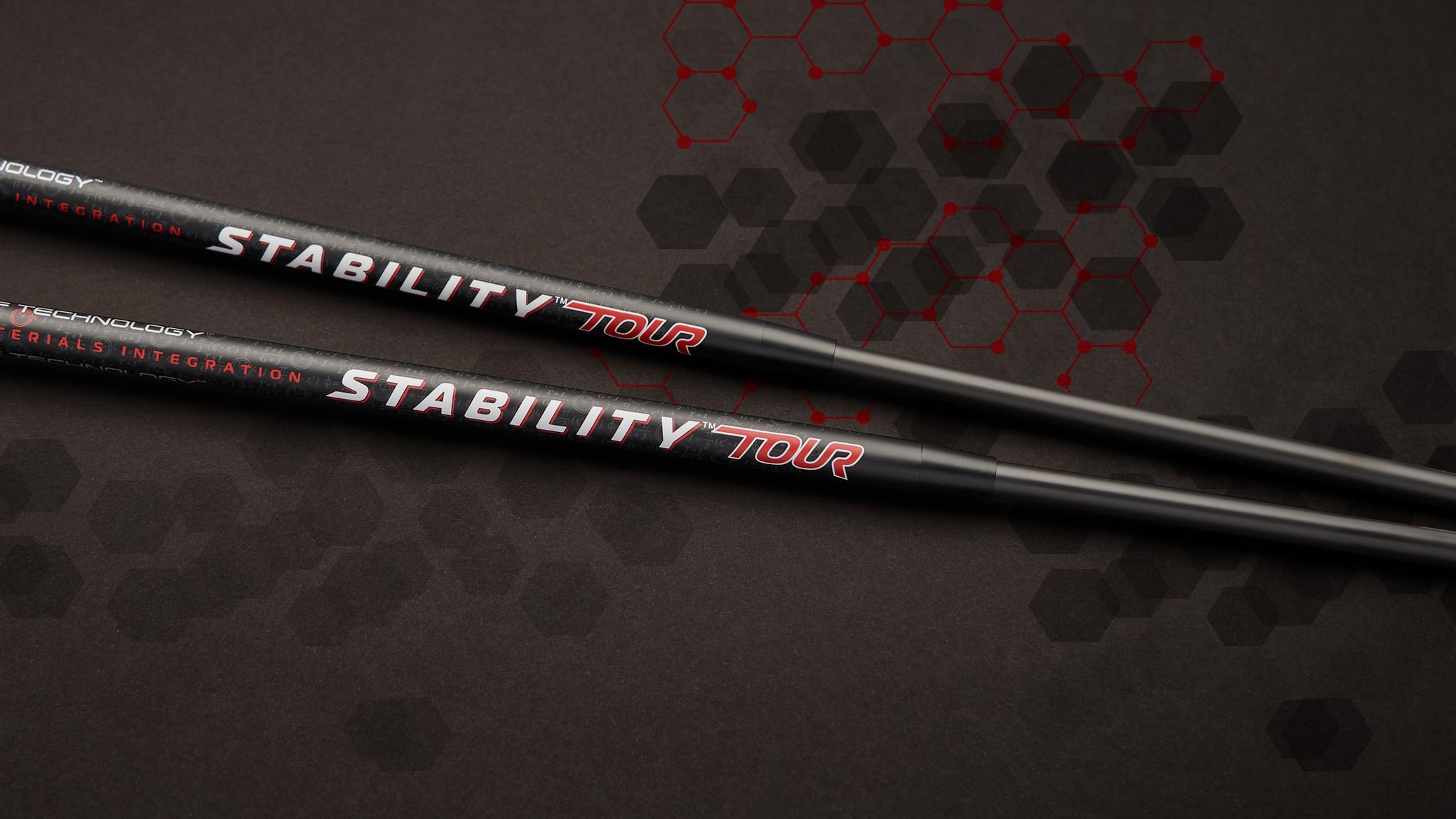
    BGT’s latest product is the Stability Tour putter shaft. Like the original Stability Tour shaft, it is a graphite & carbon fiber putter shaft designed to improve putter specific motion and performance. Compared to a standard steel putter shaft who’s technology has remained unchanged for over 50 years, the Stability and Stability Tour shafts have increased flexural rigidity, which greatly reduces torsional rotation.

    English Please…

    What are flexural rigidity and torsional rotation? In laymen’s terms, the Stability shafts are 25% stiffer and reduce torque by 50% compared to those old-fashioned steel shafts, without sacrificing feel. With a putter shaft that doesn’t twist or bend as much through the stroke, you will be able to return the putter to impact more consistently, which means your misses will be closer, and in the long run you’ll make more putts.

    The Stability Tour shaft differs from the original Stability in several ways. In addition to the softer feel, it has a thinner profile, weighs more and is balanced more like a steel shaft. All these factors make it easier to transition from a steel shaft without changing the overall weight and balance of your putter, and that’s why tour players requested these features.

    What Took So Long?

    Why hasn’t putter shaft technology changed in so long? Most people buy putters without thinking about the shaft. We just assume it’s a standard putter shaft, right? Nothing to it! The answer is simple – Until recently, we didn’t have the technology to analyze putting performance, so we couldn’t really tell if changing shafts in your putter would make a measurable difference.

    With the help of new technology like high-speed cameras, robots, SAM Putt Lab, Quintic Ball Roll software and Trackman 4, the Stability Shaft was exhaustively tested with hundreds of putters, rolling thousands of putts.

    I have used the SAM Putt Lab before with other putters. It is an amazing tracking device that uses ultrasound and measures 28 parameters of the putting stroke down to a tenth of a degree. One thing is for sure, the data you get from a session on SAM is critical in understanding how a shaft like the BGT Stability and Stability Tour can help your putting.

    Breakthrough Golf Technology claims you are 82% more likely to return the face square at impact with the Stability & Stability Tour shaft. Maybe that’s why 99% of golfers who play with the Stability prefer it over steel.

    Real World Results

    As with the original Stability shaft that I tested, the Stability Tour shaft produced instant results for me in the Bettinardi BB8 putter I installed it in. The first and perhaps most obvious difference is the feel. Dampening the vibration from impact is something that these shafts do way better than steel, which has the effect of deadening the sound and making your putter feel softer at impact.

    It may be hard to notice with the naked eye and seem funny to talk about launch angles with a putter, but the Stability Tour shaft actually launches the ball a bit lower than a steel shaft. What this translates to when putting is a ball that skids less and starts rolling end over end faster. I would love to get this putter on a Quintic or SAM Putt Lab to get some hard data, and if/when that happens I’l be sure to update this post with my findings.

    Price & Availability

    The Stability and Stability Tour putter shafts are available through custom club fitters like Club Champion or direct from Breakthough Golf Technology’s online store.

    Prices range from $199 for the original Stability Shaft to $249 for the Stability Tour. That price included shipping and installation by the professional staff at BGT’s state-of-the-art facility in Texas.
  • Resort Reboot – PGA Village

    PGA-Village

    There is a ton of competition out there for golf resorts in Florida. In order to separate yourself from the competition, you need to offer quality, value and a unique experience. While many resorts claim it, few can deliver. Many can offer the traveling golfer quality and a unique experience, but at a price. Many can offer great value, but the playing conditions are usually disappointing.

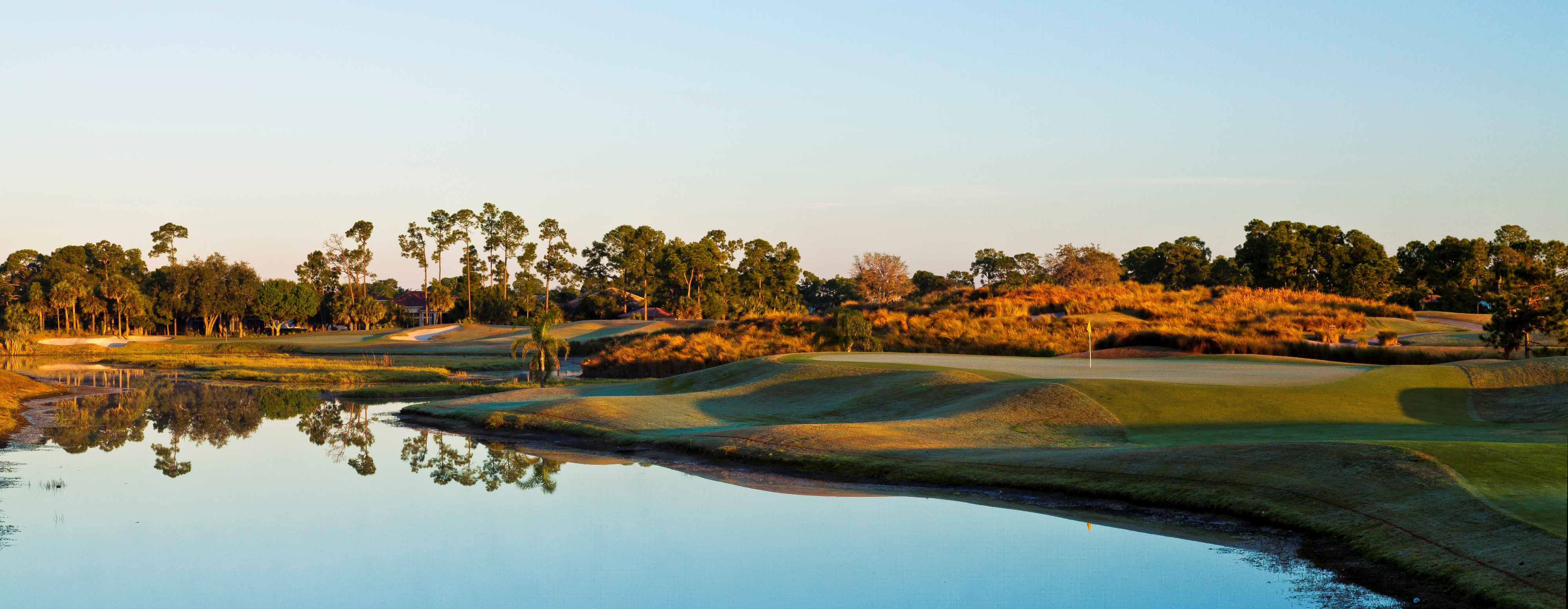
    PGA Village in Port St. Lucie, Florida is one of those few resorts that can deliver value without compromising on quality. Owned by the PGA of America, PGA Village is ranked  as one of Golf Digest’s “75 Best Golf Resorts”. With 54 holes of golf designed by Tom Fazio and Pete Dye, superb playing conditions, a state of the art 35 acre practice facility and the PGA Museum of Golf, PGA Village fulfills the previously mentioned “unique experience” criteria.

    I moved to Florida in 1997, just after Tom Fazio had completed the original North and South courses at PGA Village. A few years later, Pete Dye added the third course. In 2006 all three courses underwent a redesign, and the North and South courses were renamed Ryder and Wanamaker. The Ryder course is named after Samuel Ryder, who founded the Ryder Cup matches. Rodman Wanamaker organized the first group of golf professionals that led to the formation of the PGA in 1916.

    5th green - wanamaker course
    Click to Zoom

    Despite having lived in Florida for over 15 years, I had never been to PGA Village until this past October. I drove past it many times while heading south on I95, and this is a pattern that I came to learn was all too common for golfers. PGA Village was simply overlooked by many when searching for golf resorts in Florida. As a result, the facility suffered from declining morale and sub-standard playing conditions. Late in 2012 the PGA took a hard look at the property and decided to make some changes. A new management team was brought in, along with a new attitude, and they have turned the place around in a dramatic way.

    My visit to PGA Village included rounds on the Ryder and Wanamaker courses, along with a practice session at the PGA Center for Learning and some time on the amazing SAM Putt Lab with PGA Golf Technology Specialist Mark Drenga. After breakfast with GM Jimmy Terry and Head Superintendant Dick Gray to get more familiar with the property, my buddy Dave and I went out on the Ryder course. Fazio designed this course to be generous off the tee, while still being challenging for all abilities. The greens are fast and smooth with just enough slope to keep you on your toes.

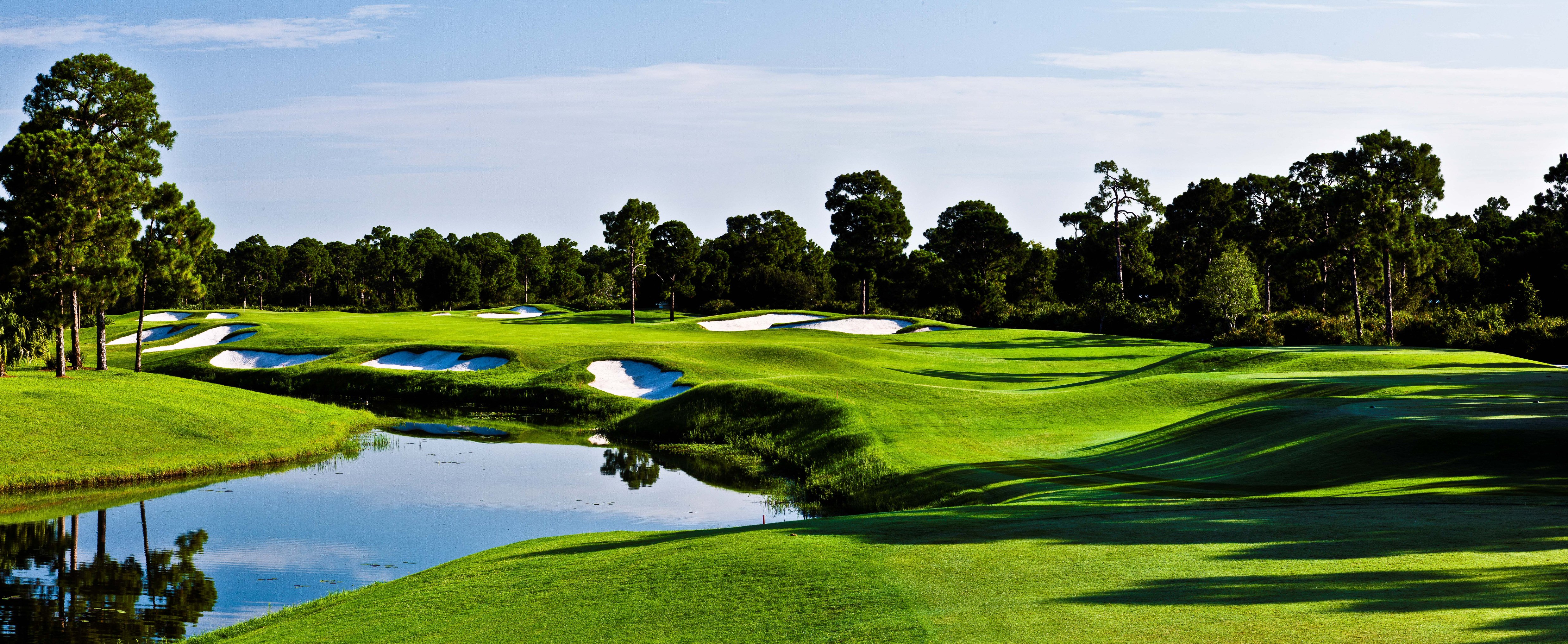
    The Wanamaker course continues where the Ryder course leaves off by adding length, making the fairways a bit tighter and punishing stray shots in deeper and larger bunkers. This course is consistently ranked in the top 25 public courses in the state. It is a classic Florida layout with wetlands and vegetation coming into play more frequently than the Ryder course. Again, the playing conditions were ideal with fast, smooth rolling greens and dramatic white sand bunkers that test your courage on almost every shot.

    BRIAN OAR - FAIRWAYS PHOTOGRAPHY
    Click to Zoom

    I didn’t get to play the Pete Dye course, but I was able to ride around several holes and get a good feel for the layout. It is a classic Dye design with dramatic mounds, steep face bunkers and plenty of nasty surprises for errant shots. More of a link style course, the greens are in great shape and roll true like the other courses. As with most Pete Dye courses, don’t miss on the short side! While there is plenty of water and waste areas around the course, Dye always gives you a bail out area. If I was to recommend an order in which to play the three courses during your stay, I would go with the Ryder, Dye then Wanamaker.

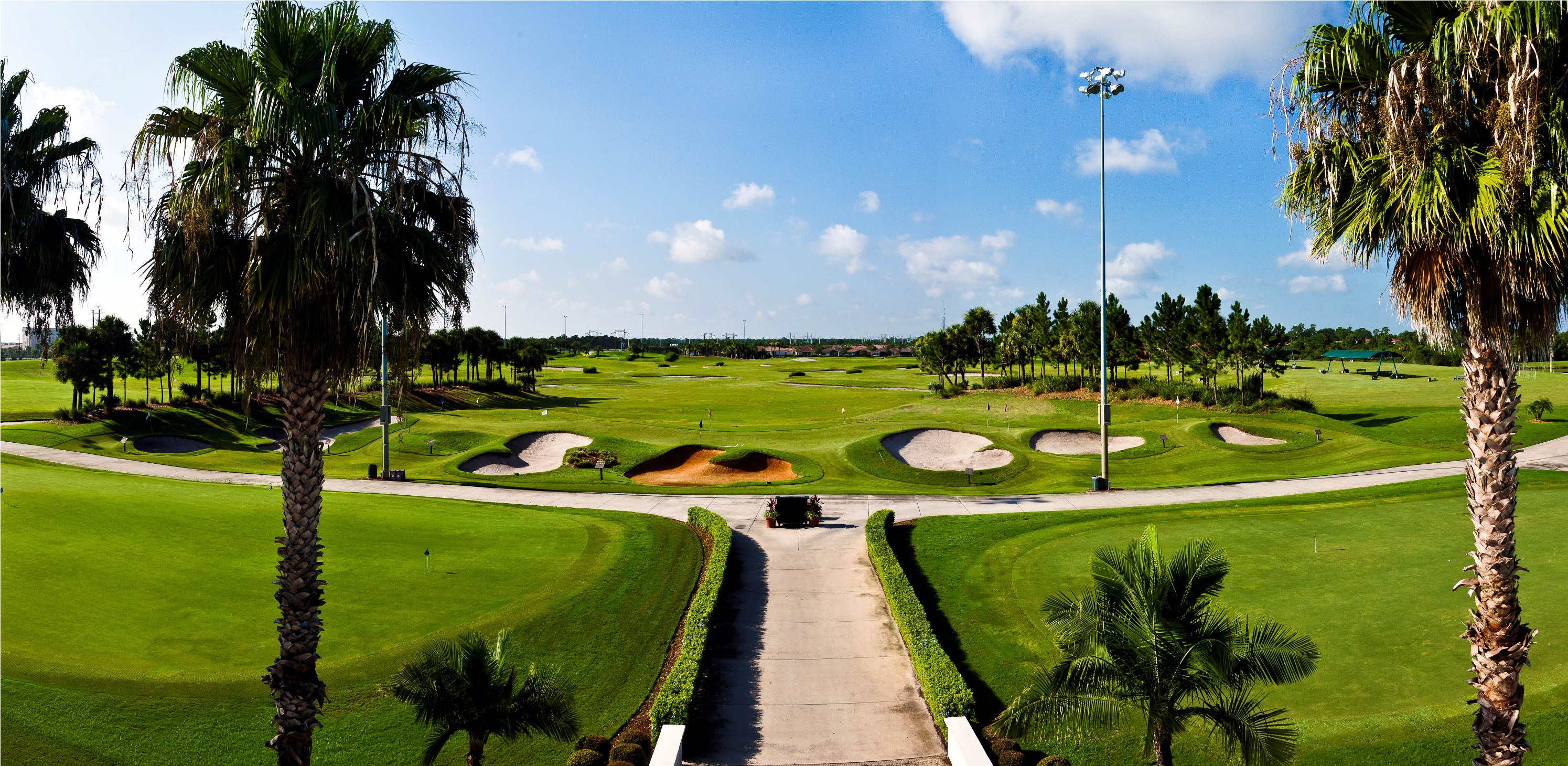
    In the afternoon we stopped by the 35 acre PGA Center for Learning. This amazing practice and teaching facility has a huge circular practice range with chipping and putting greens scattered all over the place, different types of practice bunkers, a three hole discovery course for new players and a staff of PGA Professionals. The learning center boasts one of the most technologically advanced facilities in the nation. They have a ForeGolf Sirgul 180 Simulator, TrackMan Launch Monitor, Sam Putt Lab, Dynamic Balance System, V1 Pro, LinxTracker and more to assist the pros. There is also a world class golf fitness and performance center and a fully stocked club fitting and repair center.

    BRIAN OAR - FAIRWAYS PHOTOGRAPHY
    Click to Zoom

    To round out the experience at PGA Village is the 8000 square foot PGA Professional Hall of Fame and PGA Museum of Golf that houses one of the most complete and diverse golf libraries in existence. Be sure to make some time on your trip to check it out. In fact, to get your trip started I would suggest everyone spend a half day at the museum and library, then head over to the practice facility and work off the rust or get a quick lesson and play the 6 hole PGA Short Course. The next two or three days can be spent playing the big courses. I believe this itinerary will give golfers more than just a resort golf experience, but some historical perspective as well and a way to easy into the trip in a more relaxing way.

    Located two hours down the turnpike from Orlando and only 45 minutes from West Palm Beach, PGA Village is perfectly located for both north and south Florida golfers seeking a place to get away. There are plenty of amenities and restaurants in the area, and choices for accommodations are also diverse. Stay and play packages can be booked right on their website. With a central location, great playing conditions, wonderful facilities, courses from two legendary designers and unique attractions like the PGA Museum and Learning Center, PGA Village should be on everyone’s Florida golf resort short list.

  • Bettinardi Kuchar Model 1 Arm Lock Putter

    Bettinardi putterMatt Kuchar is on to something. He may not be the one that invented his Arm-Lock putting style, but he is quickly making it famous. I once heard Johnny Miller claim on the air at Doral that he invented the Arm Lock style, but that’s disputable. Either way, he’s using it with great effect and I wanted to see what all the fuss is about.

    Kuchar used a unique Bettinardi putter to win more than $5.5 million in 23 starts on the PGA Tour in 2013 without missing a cut. That’s an average of $244,209 for every tournament he played. The guy is simply a check cashing machine, and his putting has a lot to do with it. A quick look at his putting stats reveals that he made 88.25 percent of all putts inside 10 feet for the season, and an incredible 97.56 percent inside 5 feet. For the season, Matt had 1268 putts inside that critical 10 foot scoring range, and made 1119.

    Bettinardi putter - km1_toplineIf you don’t think those numbers are all that impressive, try it yourself! Line up 100 five foot putts on the putting green at your club and try to make 97 of them. Then try it on different courses with different grasses and greens rolling at 12 on the stimpmeter, and put $244,000 on the line. The PGA Tour is right on with their catchphrase: “These guys are good.”

    I just spent three paragraphs talking about Matt Kuchar and his putting stats because I think his putter has a lot to do with it. I would be skeptical reading this had I not tried this putter first hand and almost immediately put it in my own bag. Kuchar’s tool of choice is the Bettinardi Kuchar Model 1 Arm Lock putter. Designed specifically for him, it varies greatly from Bettinardi’s standard Kuchar Model 1. The special Arm Lock model has seven degrees of loft, 2.5 degrees of shaft offset, a 400g head weight and is 42″ long. Like all Bettinardi putters it is 100% milled in the USA and looks fantastic with a striking pewter PVD finish.

    First Impressions

    At first glance, this Bettinardi putter looks weird. Most putters have between 3 and 4 degrees of loft and slight offset, but the Kuchar Model 1 Arm Lock has 7 degrees of loft and a large shaft offset, which makes it look strange when at address. This high loft and amount of offset is by design of course, because the arm lock style requires a pretty healthy forward press to anchor the top of the handle to a right handed golfer’s left forearm. Once locked in to the required stance, the putter sits perfectly square and is easy to align.

    The 400 gram mild carbon steel head and milled F.I.T. (Feel Impact Technology) face give this putter a classic Bettinardi feel. The ball rolls off the face with a soft feel, yet isn’t mushy like most insert putters. The weight and face balanced design make it very forgiving on off center hits, and the traditional Bettinardi hex face milling and beautiful pewter PVD finish gives the putter a classy look.

    Performance

    Photo Credit: GolfWRX Bettinardi putter
    Photo Credit: GolfWRX

    The Arm Lock putting style is such a radical departure from my standard putting style that it felt very strange and uncomfortable to get into such an extreme forward press with this putter. However, once I figured out where to grip down the shaft and how to align the putter properly, I found that the ball was rolling on target immediately. I was starting to see what made the Bettinardi putter so solid on short putts. The key to this style of putting is to make sure the shaft remains anchored to the left forearm (for righties) throughout the stroke. Imagine pulling with the left arm during the stroke with the right hand just along for the ride, and you’ll have the right feeling. The main drawback to the arm lock style is the same as any anchored putting style – distance control. I’m used to letting my wrists hinge a bit on long putts for better feel, but any anchored stroke eliminates the wrists and engages the big muscles of your shoulders instead. Distance control can be an issue with the anchored strokes, so a little practice outside 20 feet will go a long way to fixing that.

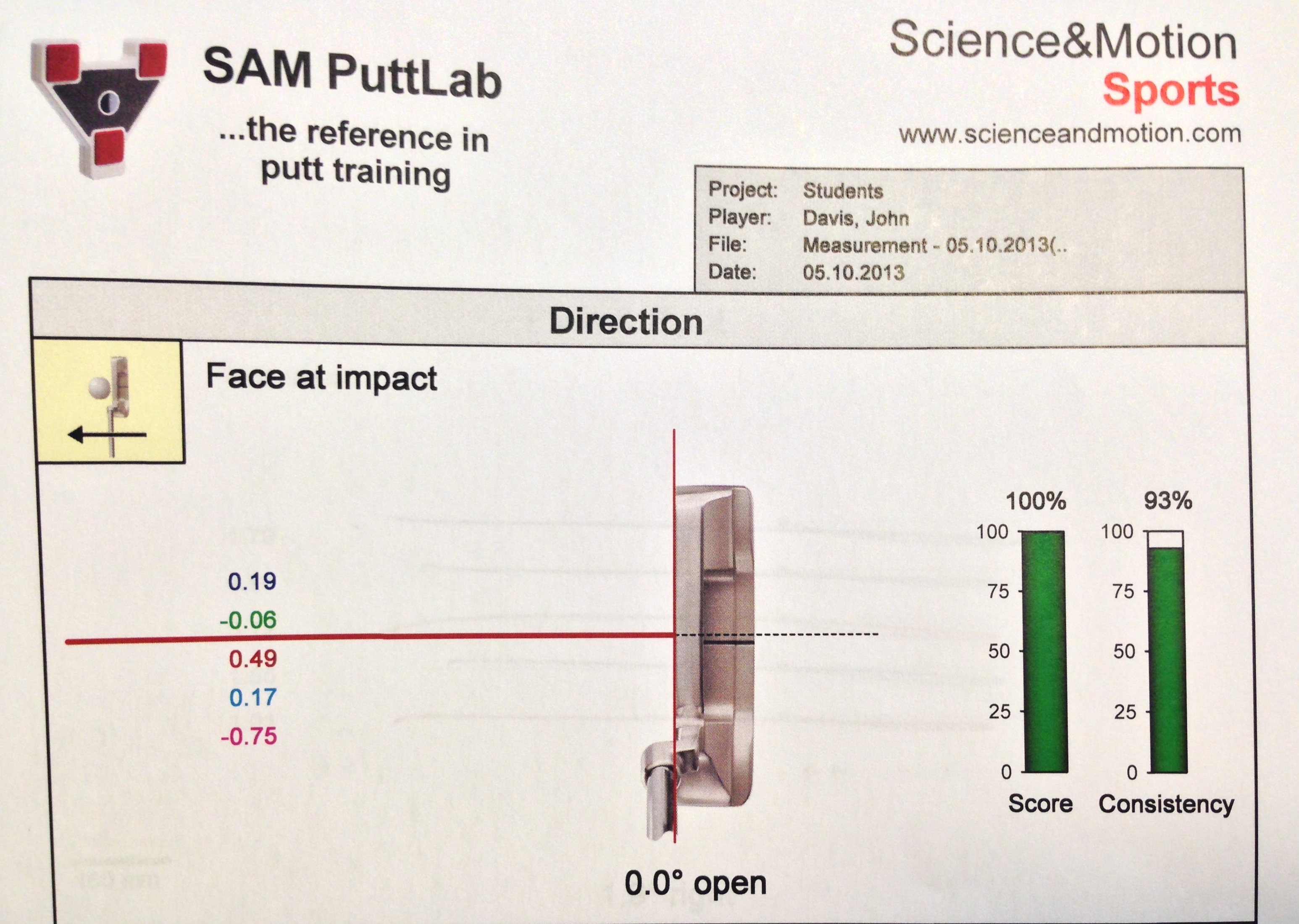
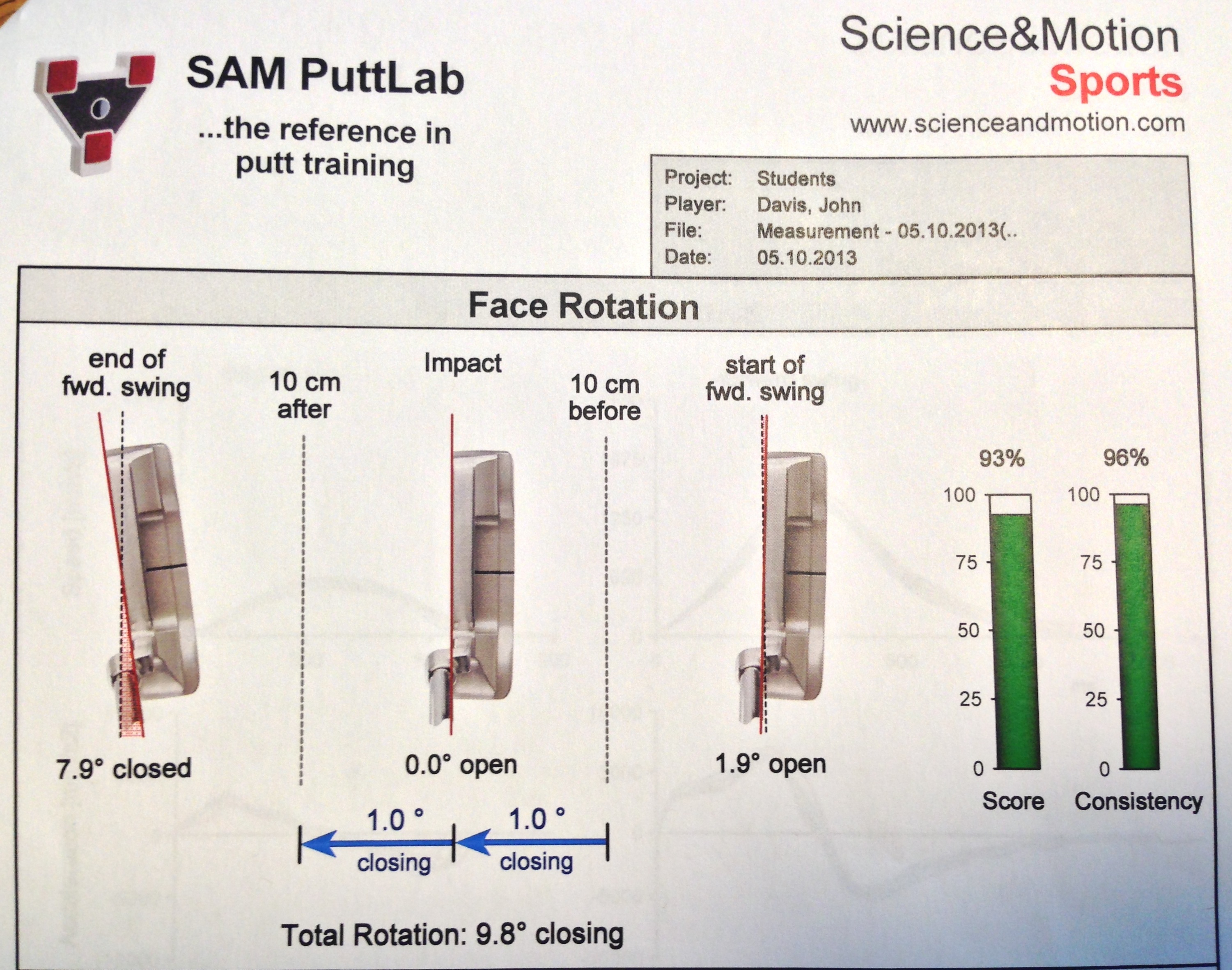
    SAM Putt Lab Data 1I was fortunate enough to have the Kuchar Model 1 Arm Lock in the bag during my visit to PGA Village in Port St Lucie, FL recently. There I met golf technology specialist Mark Drenga, PGA  who put me through the paces with the SAM Putt Lab. This amazing ultrasound tracking device measures 28 parameters of the putting stroke down to a tenth of a degree. During my session, the Kuchar Model 1 Arm Lock allowed me to keep the face almost perfectly square at impact, and I also had minimal face rotation (about 1 degree) before and after impact. What this means is my putts will almost always start on my aim line. The SAM Putt Lab also showed my stroke path going 1.2 degrees right, which is a slightly in-to-out direction. While not perfect, I am able to repeat this path with 99% consistency, which is key.

    SAM Putt Lab Data 2 - Bettinardi putterWhat does all this data mean? According to Mark who guided me through my session with the SAM Putt Lab, my stroke with the Bettinardi Kuchar Model 1 Arm Lock putter is on par with PGA Tour players. That was a huge ego boost for me. Unfortunately my speed control, green reading and aim are not quite at the same level, which explains why I don’t make as many putts as the guys on the PGA Tour. What I can say with a high degree of confidence is that the Arm Lock putter style has dramatically improved my putting inside 10 feet, just as it has for Matt Kuchar. I have played quite a bit lately (9 rounds in 12 days) and have seen the results of better ball striking converted into better scores because of my improved putting. My handicap has fallen a full stroke to +2.4 in just over 6 weeks due to improved scores with the Bettinardi putter.

    Conclusions

    Robert Bettinardi has taken his mastery of the flat stick to another level with the Kuchar Model 1 putter. Matt Kuchar has wielded this wand with great effectiveness on the PGA Tour, and now everyone can try it out for themselves. The anchored arm lock style is USGA legal also, since the butt of the club is not static. It swings with your arm, so by definition isn’t illegal like belly and long putters who’s anchor point doesn’t move. This putting style isn’t for everyone, but it has worked wonders for me and I look forward to getting better with it at longer distances. The Kuchar Model 1 Arm Lock putter is available at select Bettinardi dealers around the country. To find a dealer, visit Bettinardi’s website for a complete list. MSRP for the Kuchar Model 1 Arm Lock is $375.