Tag: practice

  • Challenge Yourself With The Worst Ball Scramble

    There’s a popular saying in sports: Practice makes perfect. Short game guru Dave Pelz came up with a better one: Perfect practice makes perfect. Having studied the way golfers work on their games for years, I can make two educated assumptions about the average weekend golfer and their practice habits.

    1. Most golfers don’t spend enough time practicing.
    2. Not enough of that time is spent working on the short game and putting.

    Golf is one of those games that rewards you proportionally to the work you put into it, so it’s not hard to see why the average golfer doesn’t improve from season to season. Since most people don’t have the time to dedicate to practice golf, you have to maximize the time you get to help you improve.

    When I was in college I frequently skipped class to play golf tried to schedule my days in such a way that I could play golf between classes, and when playing golf alone I started inventing games to keep my mind and game sharp. One of these games was a worst-ball scramble. Like many people do when playing alone, I played two balls on every hole. In a normal scramble you would hit two shots, select the best shot of the two, then proceed to hit two balls from that spot and so forth until you hole out.

    The worst ball scramble is the exact opposite. The player hits two shots, then selects the worst shot between them and hits the next two shots from that location, then continues hitting from the worst ball until the ball is holed out. This game is very difficult, which also makes it fantastic practice for your game and your mind.

    • Worst ball scramble forces you to focus and concentrate on hitting two good shots every time, because you will be playing your next shot from the worst of the two
    • Worst ball will test your patience and mental fortitude. Nothing is more frustrating than hitting a shot close to the hole knowing it won’t count because you missed the green with your second shot.
    • In order to hole out and move to the next hole, you must make a two putts in a row, since the worst shot on the green would be a missed putt.
    • You’ll find that your thought process on the course becomes much more conservative. You’ll be much more inclined to hit something other than a driver off the tee in order to stay in play, and you will tend to aim your approach shots towards the middle of the green with greater frequency. This conservative mindset is common in the pro game, but most amateurs simply aim for every flag and usually pay the price with higher scores.
    • Playing a worst ball scramble is great practice because you will likely hit as many shots in 18 holes as you would in 3 normal rounds of golf, especially on and around the greens. Extra reps!
    • I’ve seen touring professionals shoot 85 playing this game with me. There is nowhere to hide. Playing worst ball will immediately identify the area(s) of weakness in your game.

    If you play golf alone or in a twosome, worst ball is a fantastic and challenging game to play. It will help you work on the weak areas of your game and help you focus and force you to plot your way around the course in a conservative way, which will help any golfer in the long run. Give it a try the next time you have a lazy Sunday afternoon to spend on the course. Just bring plenty of golf balls!

  • 5 Cyber Monday Golf Deals

    Cyber Monday Golf DealsCyber Monday Golf Deals

    The Christmas shopping season seems to start earlier every year, doesn’t it? Here in the US, Black Friday kicks off the holiday mess on the day after Thanksgiving, and Cyber Monday follows on the Monday after Thanksgiving for online retailers looking to get in on the action. While the golf season may be over for much of the country, there are still lots of reasons to be on the lookout for some cyber Monday golf deals. If you are a true golf nut like myself, you don’t need a good reason to be looking for new gear!

    We took a look back at all the product launches this season and seasons past and think these five are some of the better cyber monday golf deals out there.

    1. Hopkins Golf Wedges – Greg Hopkins knows a little something about making wedges. He was the President & CEO of Cleveland Golf for 16 years. Now he’s formed his own company to make wedges a bit more personal. Just about everything about Hopkins Golf wedges is customizable, and their manufacture in small batches ensures they’ll be high quality and very playable. Click here to get started building your own custom wedges, and use the promo code ITG20 to get a free custom grind!

    2. Eyeline Golf Training Aids – Eyeline Golf makes a dizzying array of training aids, and their signature putting mirrors are a great way to sharpen your putting by getting your eyes directly over the ball and give you good feedback on your stroke. I’ve used one for a while and I’m a great putter getting better. But don’t take my word for it, just ask any of the dozens of touring pros that use their aids every day. Combine their Speed Trap swing trainer with the ProAdvanced net (see below) for a complete swing improvement station in your house.

    3. Sheex Performance Sheets – Sheex makes the best sheets money can buy. That’s my opinion of course, but I’ve been sleeping on them for several years now and I’ll never go back to cotton sheets. What do these have to do with golf? Nothing, other than helping you get a good night’s sleep so you can play your best. Sheex are made of the same material as the light, moisture wicking athletic apparel everyone wears these days, but thicker and softer. I’ve sent Sheex to several friends as gifts and they are all converts. Try them now and save 10%. Just click on the link above or go here: I promise, you’ll love them.

    4. ProAdvanced Practice Nets – If you are stuck in a part of the world that is covered in snow during the winter, you still have a few options to practice your golf swing. Get a net! ProAdvanced Sports makes nets that set up in seconds, are easy to use and even return the ball to you. They make a full size net called ProReturn for full swings or a smaller version called ProApproach for short game practice. Get one, throw it up in the basement or living room and keep your swing sharp and ready for spring!

    5. Kikkor Golf Shoes & Apparel – There are lots of choices out there for golf shoes, but only Kikkor makes shoes that literally make you cooler. Just kidding, but One thing is for sure, Kikkor Golf makes some cool shoes. Crossing the line between golf and the skate/surf culture, these shoes will help you stand out against the crowd. Use our exclusive link and you’ll get an additional 10% off your entire order, and don’t forget to drop them a line and tell them intothegrain sent you. Company founder and Big Break star James Lepp will be happy.

  • Tour Striker – Review

    Tour StrikerHere at intothegrain.com, we get plenty of training aids and swing gadgets to try out. Some of them work great, and others… not so much. When I first saw the ads for the Tour Striker I thought it would be just like many golf training aids that claim to fix your swing, so I paid it no real attention. Then, at the PGA Merchandise Show and Demo Day at Orange County National in Orlando I got to actually try it, and my impressions changed. A friend of mine happened to be a rep for Tour Striker and I was able to bring home a few units to test out for this review.

    There are several models of the Tour Striker available. The regular Tour Striker is targeted for mid-to-high handicap golfers and slower swing speeds (under 90 mph with driver), while the Tour Striker Pro is generally geared for players with higher swing speeds and a handicap of 10 or less. There is a Tour Striker for women and younger players also, with a graphite shaft that is slightly shorter (35 inches vs. 36 inches) which is more appropriate for women and juniors. The last model, and the one I was most interested in is the Tour Striker Pro X. This model is basically the same as the Tour Striker Pro, but the sweet spot is only the size of a quarter. This one is designed for low handicap golfers who want a real challenge. More specifically, there are 6 models available: The Tour Striker 8 iron, the Pro 7 iron, Pro X 7 iron, Pro 5 iron, 56 degree wedge and Tour Striker Ladies/Junior. The Tour Striker sells for $119.99 for graphite and $99.99 for a steel shaft.

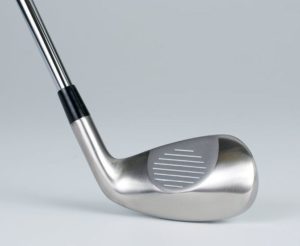
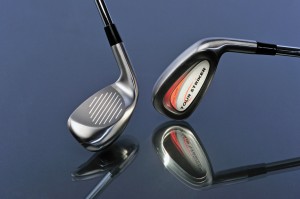
    Tour StrikerSo what’s the big deal with the Tour Striker? If you’ve seen their commercials on the Golf Channel, you know that the concept behind this training club is to promote forward shaft lean at impact, which produces a descending hit, a boring trajectory and the solid strike that is desired by touring pros and top amateurs. If you watch good players and pros, they all swing with the hands leading the club. To help train the golfer in producing this impact position, the Tour Striker was designed with the leading edge of the club raised up a half inch or more from the bottom of the club. From this design came a club in which the only way to get the ball airborne is to use a descending hit with the hands ahead of the club, so that the leading edge is lowered to get under the ball. If the required swing is not made properly, you’ll hit the ball with the bottom of the leading edge, producing a rolling dribbler that resembles a topped shot.

    .

    Now that you know what the concept is behind the tour Striker, does the thing work? Yes! I went to the range to give it a try in the hopes of not making a fool out of myself in front of the other golfers. I brought the Pro 5 iron and the Pro X 7 iron to try out. After a warm up with my own clubs I started with the Pro 5 iron. Setting the Tour Striker down behind the ball is strange, because it’s not like any other club I’ve hit before. It’s also intimidating with the raised leading edge. Initially hitting shots with the Pro 5 iron wasn’t too hard, but I had to make sure I made a good swing to make solid contact. I’m a plus handicap player, so leading with the hands is a natural move that I make already. This made hitting the Pro 5 iron relatively easy. However, you still have to be on your toes when hitting the Tour Striker. Making a swing that would produce a thin shot with a normal club instead results in a low worm burning roller that is sure to turn heads. You must hit down on the ball to get a good result.

    Tour Striker Pro X 7 ironAfter having success with the Pro 5 iron, I moved on to the Pro X 7 iron (shown at left) with a good deal of confidence. Setting the 7X down behind the ball, I noticed that the quarter-sized sweet spot seems much smaller when you set it down behind the ball. Clearly this model was designed for players who make consistent contact. Confident but apprehensive, I made a few swings. Of the first four balls I hit, 1 of them got airborne. The Tour Striker Pro X 7 iron is no joke. You have to make a good swing with a descending blow and manage to hit a tiny sweet spot to get the ball in the air. I found shots hit just a bit on the heel curved way left. Solid shots flew high and straight, like a normal 7 iron would. I found the best way to use this club was by hitting a few balls with the Tour Striker, then switching to my normal 7 iron for a few, then back and forth. Once you get in a groove with the Tour Striker, it’s a pretty good feeling.

    The Tour Striker is cast from 431 steel and should last a long time. They are available in steel and graphite shafts. The stock steel shaft was more than adequate for my use, but if you are serious about using the club extensively in your practice, I would suggest having the club re-shafted with the same shaft and stiffness as your irons and bent to your specs for lie angle also. In summary, of all the swing aids and training devices I’ve ever tested, this may be the best. The Tour Striker is simple to use, easy to carry with you, doesn’t need batteries or a computer to work and provides instant feedback on good and bad swings alike. Perhaps the best selling point for this training aid is the fact that everywhere I play people are always reaching into my bag to try it out. I play golf with players ranging from high-handicap amateurs to touring pros, and they all enjoy testing themselves with the Tour Striker.

    I recommend the Tour Striker to all levels of golfers, but those who will benefit the most from it are mid to high handicap players. This level of golfer have not yet learned to hit the ball with a descending blow and lead with the hands, and the Tour Striker is ideal at showing you how to produce this impact position in real time. There is a model available for all abilities too. Beginning golfers can start with the Tour Striker 8 iron, and work up to the Pro X 7 iron for the maximum challenge. Through their affiliate program, readers interested in purchasing a Tour Striker can use the following link to the Tour Striker Store, or simply click on the banner below.

    .

    Subscribe to our email updates! You’ll get the latest fresh news, reviews and stories delivered right to your inbox or RSS reader, and automatically be entered in our latest contests and giveaways! We are 100% SPAM FREE! Also, don’t forget to check in with our Facebook fan page for exclusive content and get involved by leaving us comments on what you think!

  • The Floppy Indoor Practice Balls

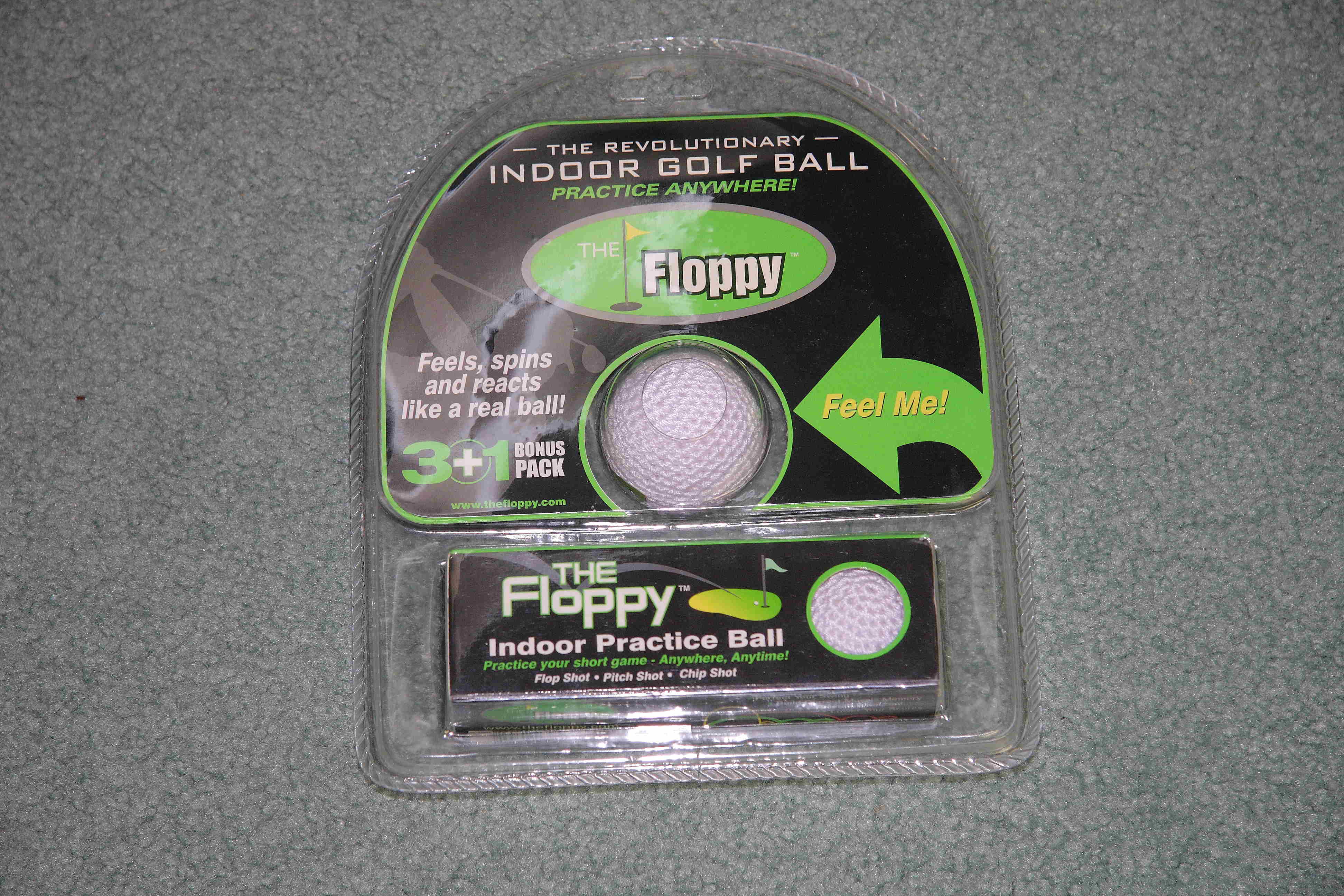
    The Floppy Indoor Practice Golf Ball
    Click photo to enlarge…

    There aren’t many practice aids these days that are designed to be used indoors, and even fewer yet that encourage you to make full swings indoors! To all the wives, girlfriends or significant others of golfers out there, I apologize in advance for this review. For all those golf nuts who are stuck in a snowy climate  and can’t afford a fancy golf simulator in their basement, I think I’ve found the ideal practice aid to help you get through the winter and keep things fun all year round.

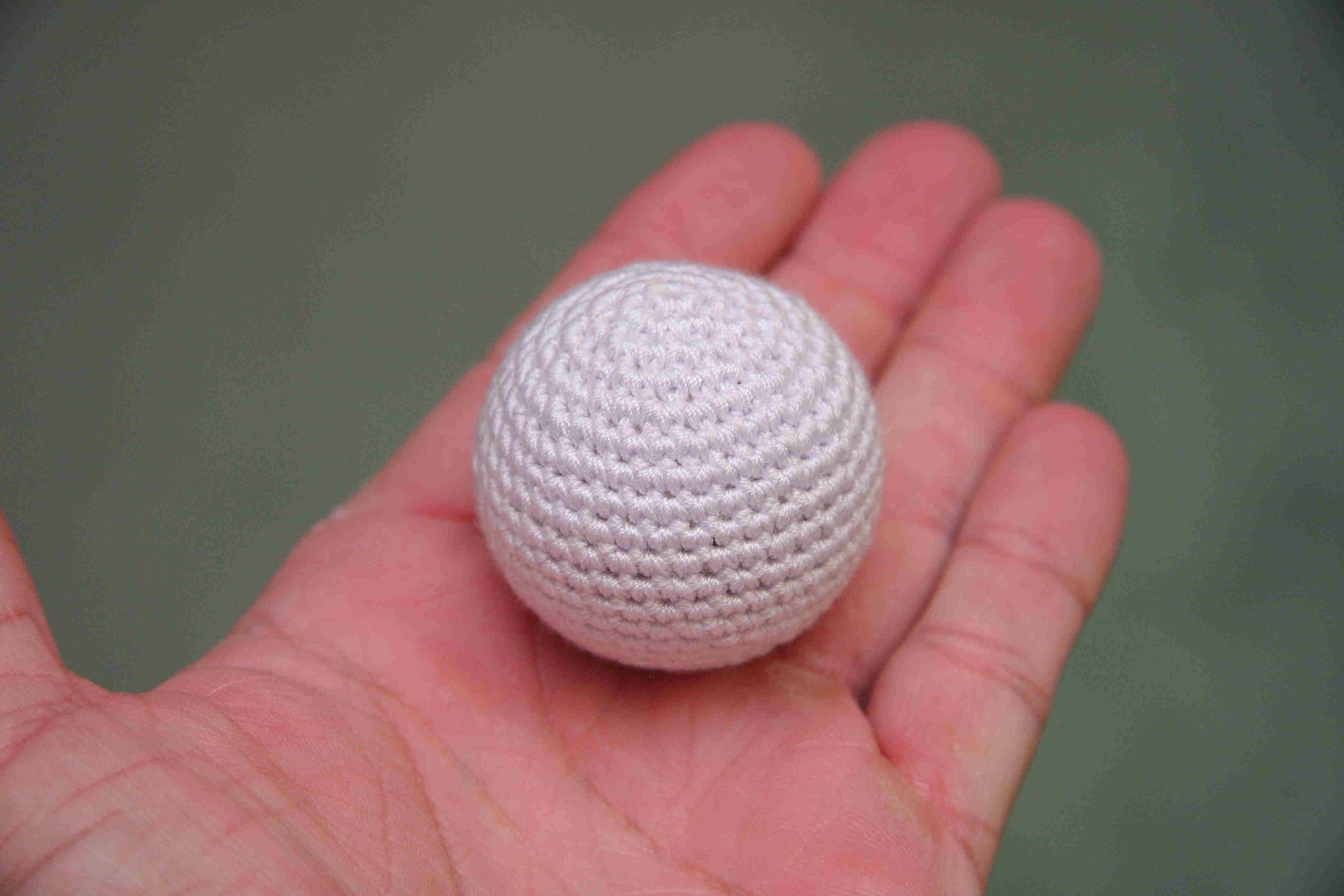
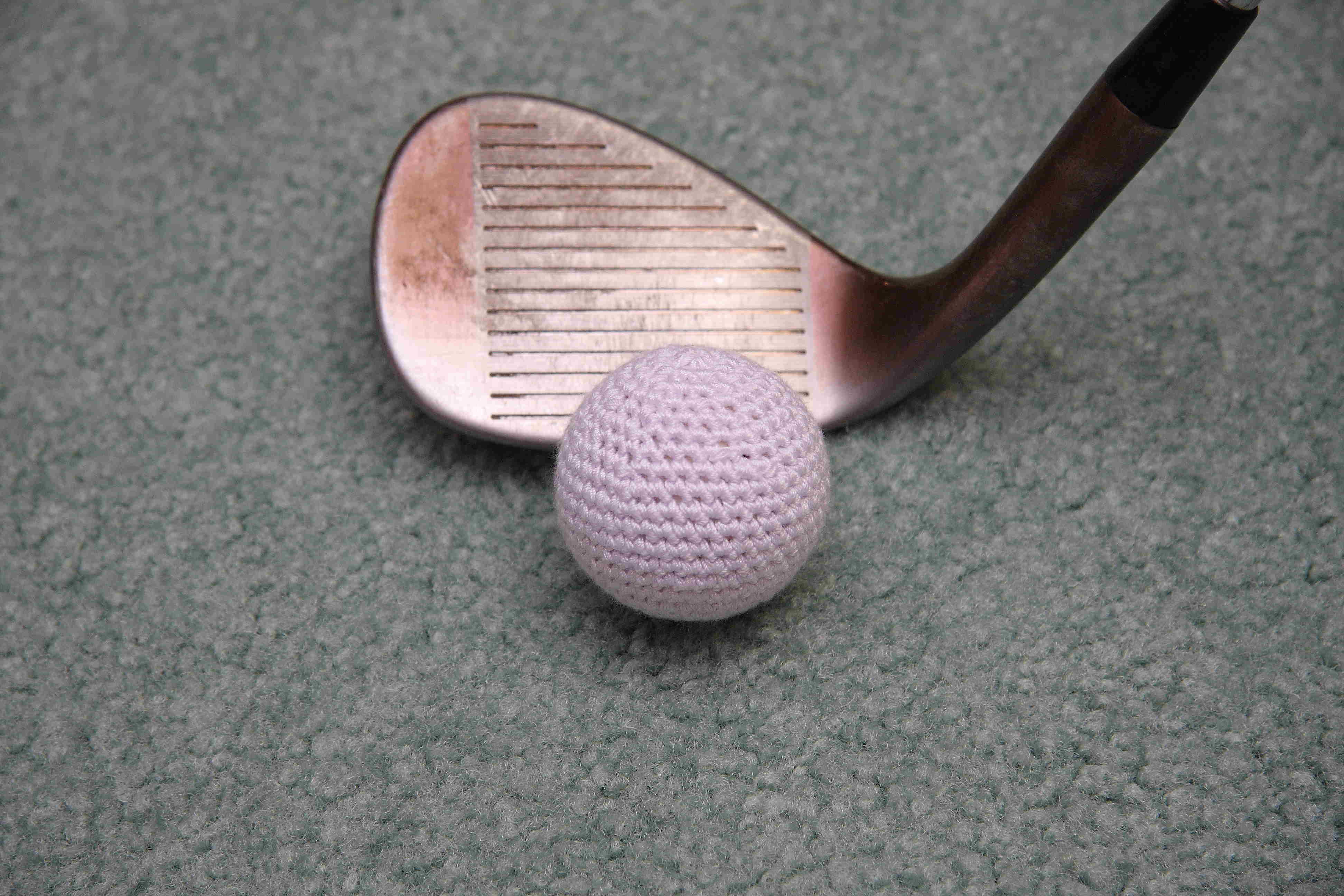
    It’s called The Floppy, and it’s a really simple idea that is perfectly executed. The floppy is an indoor practice ball designed to help people practice their short game without having to worry about breaking windows and making a huge mess. The Floppy is the same size as a regulation golf ball, has a woven fabric cover that goes over a proprietary liner and is filled with some sort of granular material to add weight and feel. The cover feels soft and pliable to the touch, but is durable enough to hit full wedge shots. Because it is soft it will bounce harmlessly off walls, windows and furniture.

    [caption id="attachment_2074" align="alignright" width="300" caption="Click photo to enlarge..."]The Floppy Indoor Practice Golf Ball[/caption] I received a 4 pack of balls to try out and immediately found myself whacking it all around the house. While watching the weekend golf coverage, I used my Cleveland CG15 lob wedge (shameless plug, I know) to aim at various objects while messing around during the commercials (And when Johnny Miller was talking). While this ball isn't as heavy or hard as a real golf ball, I think you get enough feedback from it to get legitimate practice value from using it. Although the makers claim it spins like a real ball, I wasn't able to hit the low spinning chip shots that check hard. I can't expect to spin this ball much either, considering this ball is made of cloth and plastic. All you need to get some practice in with the Floppy is an open, carpeted area and a target. I used the Floppy to practice hitting pitch shots into a basket about 20 feet across the room, and just for fun, I set up a soda can on the top of the door jam and tried hitting it off its perch. I could see this ball being used outdoors too, but it was primarily designed for indoor use. [caption id="attachment_2075" align="alignleft" width="300" caption="Click photo to enlarge..."]The Floppy Indoor Practice Golf Ball[/caption] The Floppy is available online at www.thefloppy.com. For $19.95, you get a 4 pack which should last you a long time - that is, unless your kids find them! Back when I lived up North, I used to paint those solid white plastic balls orange and play in the snow, and more than once I destroyed the ceiling drywall in my basement when making golf swings. If I had the Floppy back then I probably would have caused less damage to my dad's house. If you want to drive your Wife/girlfriend/boyfriend/sister/brother/housemates crazy and get some short game practice at the same time, pick up The Floppy! By the way, try not to take too deep a divot out of your living room carpet...

    Want to win free stuff? Subscribe to our email updates! You'll get the latest fresh news, reviews and stories delivered right to your inbox or RSS reader, and automatically be entered in our latest contests and giveaways! Also, don't forget to check in with our Facebook fan page for exclusive content and get involved by leaving us comments on what you think!

  • Hooks & Slices – Cause and Effect

    Hooks & Slices – Cause and Effect

    Only two things control the flight of the ball as far as hitting a fade or draw. Swing path and clubface angle. The angle of the clubface has a much more pronounced effect on the shot than does the swing path. So…

    Assuming your swing path is perfect and you make perfect contact, an open face would send the ball to the right, and a closed face would send the ball to the left. Furthermore, assuming your clubface angle is perfect and you make perfect contact, an inside-out path will produce a draw and an outside-in path will produce a fade.

    I taught myself to work the ball by first learning how to hit big hooks and big slices. Really exaggerate the path and clubface angle and experiment on the range. You’ll get a great feel for what it takes to produce those shots. Once you can hit a big hook or slice, you can start reducing the clubface angle and make the path of your swing return more to normal and start hitting fades and draws.

    Also, pay attention to your misses and you will know what swing produced them. It’s really not too complicated. There are basically only 9 shot patterns and 9 causes for those shot patterns. You can tell what kind of swing you made by the type of shot you hit:

    1. Pull Hook – Closed face and outside-in path
    2. Pull – closed face and outside-in path
    3. Pull slice – Square Face, outside-in path
    4. Hook – closed face and straight path
    5. Straight – Square Face and path
    6. Fade – Open face and straight path
    7. Push Hook – Square face and inside-out path
    8. Push – Open face, inside-out path
    9. Push-Slice – Open face and inside out path

    For example, if you hit a shot that started left of your target and faded back towards it, you probably had a square face but had a slightly outside-in path. If the ball flight starts left and fades to the right of your target, your outside-in path was more exaggerated.

    Understanding what it takes to produce a draw or a fade will help you on your way to becoming a better ball striker. Now we just have to work on making solid contact! Without a solid hit, the ball will seldom do that you want, and will never go the correct distance. But that issue is a subject for another column. Stay tuned!

  • Practice Habits For Working Stiffs

    Let’s face it, most of the people in the United States that can afford to play golf work for a living. I happen to be one of those people. I am however, fortunate to be able to maintain a +1 handicap index while only playing once or twice a week. While one certainly needs to have some talent, the most important thing for me is quality practice,  and that means prioritizing my limited practice time.

    6 or 7 years ago I worked in the golf industry and played or practiced golf at least 6 days a week. I played some tournament golf as well and got down to a +2 at one point. My practice time consisted mainly of pounding 3 or 4 hundred balls a day on the back of the range, and chipping and putting for a few hours. I was a pretty consistent ball striker and my short game was sharp, but suffered with a streaky putter.

    When I left the golf course job to get a “real” job, I became a weekend golfer. In order to maintain my handicap, I had to prioritize my practice time to work on the parts of my game that made the most difference in my score. Since it has been proven that up to 65% of your score is shots inside of 125 yards, (See Dave Pelz’s Short Game Bible) I decided I would spend 70% of my practice time on the short game and putting.

    The difference has been dramatic. During the long days of summer, I try to practice every Friday afternoon for a few hours and play every Saturday. That is about all the time I have. I spend 30 minutes or so hitting a small bucket of balls. I’ll hit mostly wedges and short irons, a few mid irons, a few long irons and the last few balls with the driver. It is important to go through your routine on every shot to get the most out of your practice. I’ll spend about an hour chipping and pitching balls around the practice green. Use 6 or fewer balls and take your time, preparing for each shot as if you were on the course. Sometimes I’ll play a game I used to play in college. Take 3 balls and chip to a hole until you make one, then take that ball out of play and chip to another hole with the 2 remaining balls until you make one again. Then take the last ball and chip to yet another hole until you make the last one. Only then can you walk away. It’s a great game to introduce a bit of pressure into your practice session. Finally, spend the last half hour or so putting. Start with some long putts for speed control, work on leaving your putts inside a few feet, and try to get it past the hole. I like to try finishing my putting practice by making 20 three footers. Again, introducing the element of pressure will make you concentrate, rather than mindlessly rolling the ball around.

    While I feel my long game has declined since the time when I could hit 300 balls a day, it has not declined to much from that level. Rather than spend hours machine gunning balls, I am able to really focus on each shot and get a better quality practice in less time. I also use training aids to help focus on one thought or another. My favorite drill is to use 2 sticks aligned with my target line, sightly wider than the club head. I place a ball in the center and hit shots without touching the sticks. This drill helps me maintain a path that is going down the target line, and it has really helped my iron play.

    I am able to maintain a zero handicap because I have a solid short game and I have turned my biggest weakness into a strength. I now feel confident on the greens and that also helps the rest of my game. I know I don’t have to hit the ball great because I will be able to get up and down for pars and make some longer putts every now and then. If you prioritize your practice time and focus on quality over quantity, you’ll ee your game improve also!