
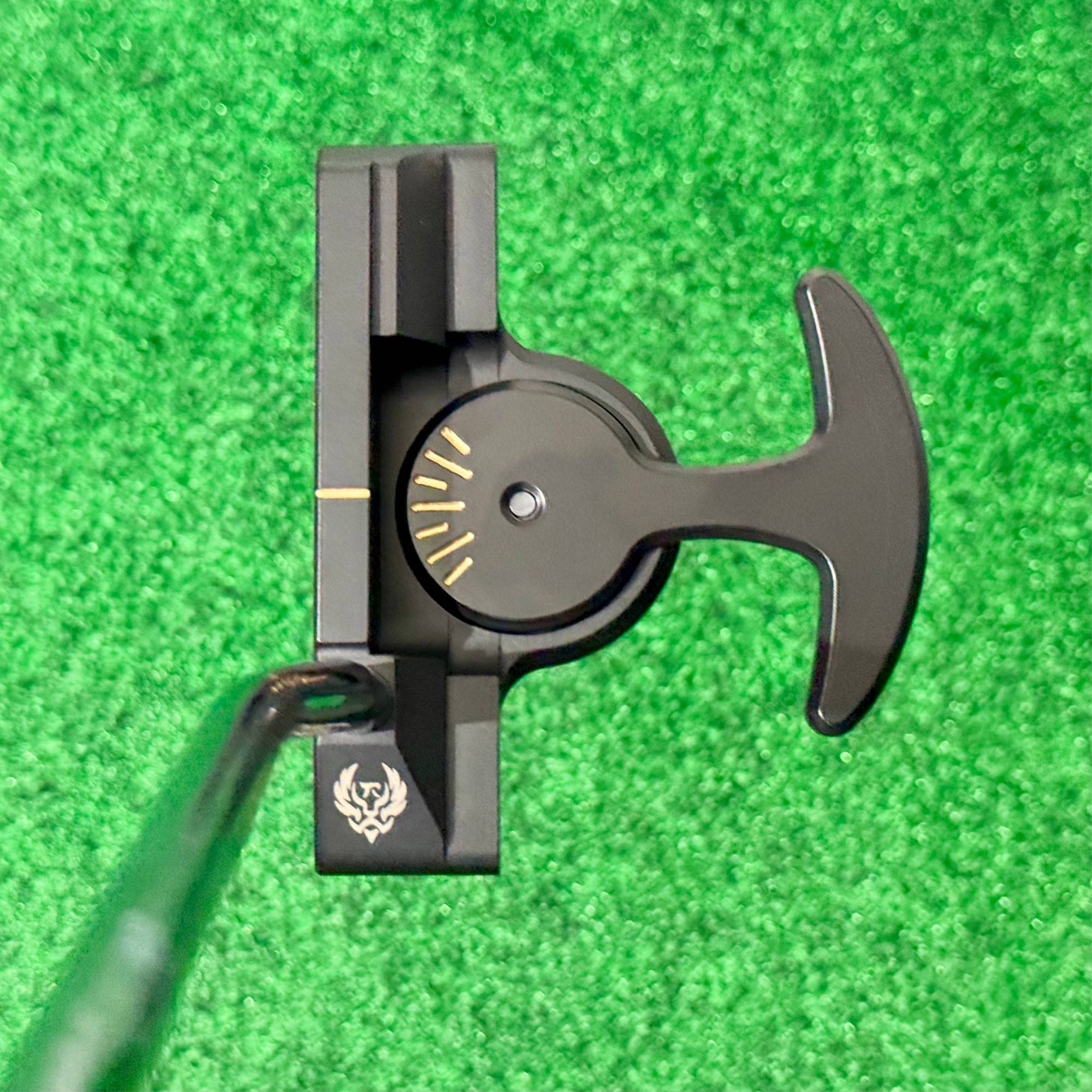
Most putters are finished the day they leave the factory. The weight, the balance and the way the head wants to rotate are all locked in, and if your stroke changes or the greens speeds change, the only fix is a different putter. Killer Golf, a young putter company out of Boise, Idaho, thinks that’s backwards, and it has built its whole lineup around the idea that you should be able to retune your putter instead of replacing it.
Founder and CEO Shamik Patel set up a CNC machine shop in Boise, Idaho in 2020, which is where every Killer putter is designed, machined, assembled and finished. The name comes from his wife’s family: her grandfather emigrated from Fiji to Canada as Killa, and an immigration official wrote it down as Killer.
Patel came up with the idea for a new kind of putter in November 2024. The first Artifact prototype was finished in August 2025, and Killer unveiled the platform at the PGA Merchandise Show in Orlando this January, with production starting the same month. LPGA player Mi Hyang Lee now uses one on tour, and Champions Tour veteran David Frost, who led the PGA Tour in putting average twice, has been tuning a custom Killer build since this spring.
Killer sent me an Artifact Blade with both weighting kits for review, and I’ve had it out on the course for a few rounds.
Two Heads, Two Weighting Systems, Endless Options
The Artifact Blade is a compact blade milled from 303 stainless steel, 4.24 inches heel to toe, with a high, forward center of gravity and a 300-gram head before any weights go in. On paper that’s a traditional player’s blade. What sets it apart is the rounded flange behind the face, which takes one of two weighting systems. The Blade costs $419, with additional weights purchased separately.
CenterStrike (CS) is the simpler weighting option. Anchor discs weighing from 25 to 150 grams sit directly behind the sweet spot. The weights change how the head feels and how the ball comes off the face, without adversely affecting the balance or how the head rotates. Go light for fast greens and heavy for slow ones. Simple.
Equilibrium (EQ) is the weighting system for tinkerers. A 65-gram module with a fin that sticks out the back rotates in seven 15-degree steps, from 45 degrees toward the heel to 45 degrees toward the toe, which effectively moves the center of gravity and changes toe hang. This also affects face rotation during your stroke, so you can actually tune the putter to help correct your misses.
Stack it on a 40- or 60-gram base and you lower the CG and add stability. The combinations are extensive. In plain English, EQ matches the putter to the shape of your stroke and corrects your misses, while CS is all about a traditional look and feel with tunable speed control.
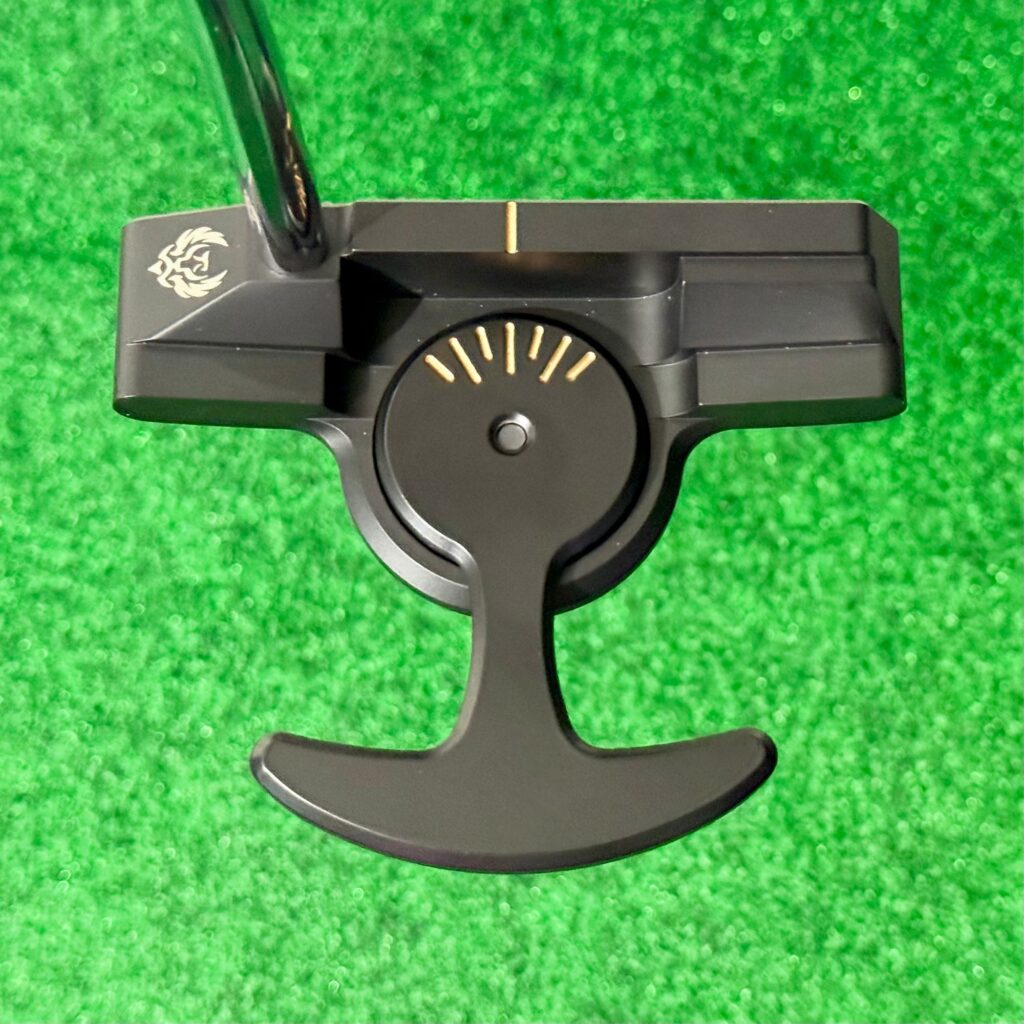
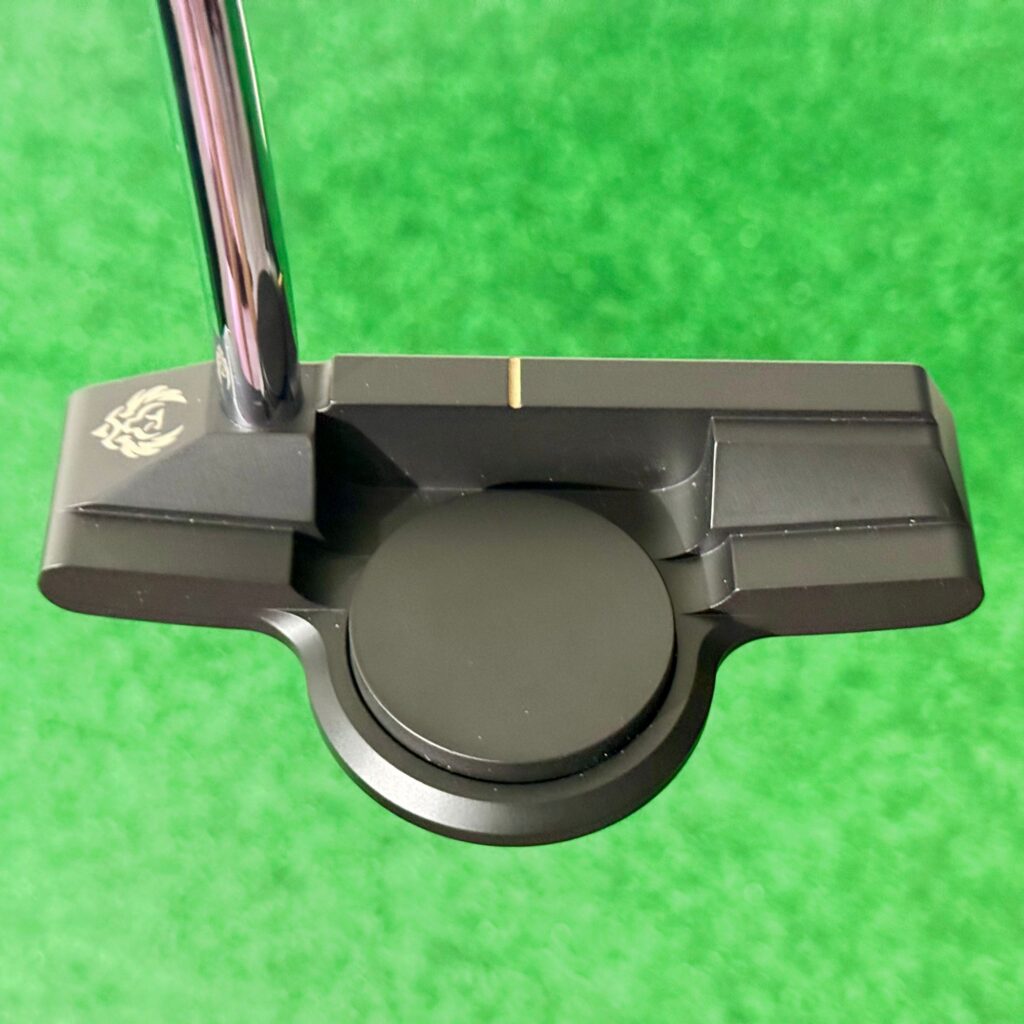
Same head, two systems: Equilibrium (left) and CenterStrike (right)
Decoding the Weights| Part | Mass | What it does |
|---|---|---|
| A25 AnchorCenterStrike | 25 g | Lightest feel. Built for fast greens and a quicker roll. |
| A50 AnchorCenterStrike | 50 g | The middle setting for most players and most conditions. |
| A75 AnchorCenterStrike | 75 g | Smoother, more stable stroke for slower greens. |
| A150 AnchorCenterStrike | 150 g | Maximum mass and stability for the slowest greens. |
| EQ65 ModuleEquilibrium | 65 g | Rotates from 45° heel to 45° toe in 15° steps (seven positions), shifting the CG to change toe hang and how the face rotates through the stroke. |
| Base 40Equilibrium | +40 g (105 g total) | Stacks under the EQ65. Lowers the CG and raises MOI. |
| Base 60Equilibrium | +60 g (125 g total) | Deepest CG and highest MOI in the system. |
| Artifact Blade CS | Artifact Blade EQ | |
|---|---|---|
| Adjusts | Total head weight | CG position, toe hang, MOI |
| Weights included | 25, 50, 75, 150 g | 65 g module, 40 and 60 g bases |
| Setups | 4 | 21 |
| Head weight with weights | 325 to 450 g | 365 to 425 g |
| Feel (per Killer) | Crisp and direct | Classic and solid |
| Best for | Distance control and strike feedback | Arc strokes, players who want blade looks with more stability |
| Head | 303 stainless steel, 2.13″ × 4.24″ × 0.85″, 300 g base weight | |
| Finish | Black or silver; sandblasted or Cerakote | |
| Options | RH or LH; thin, medium or thick grip; black shaft (+$20); sole engraving (+$50) | |
| Warranty | Limited lifetime | |
| Price | $419 | |
On the Course
The first thing I noticed was the look. At address the Artifact Blade is clean and classic, with a thin gold sight line on the top edge and nothing too busy to distract you. The adjustable hardware is prominent behind the face, but it’s not a distraction and can even help with alignment. That’s a hard combination to pull off. Plenty of adjustable putters look like science projects, but this one doesn’t.
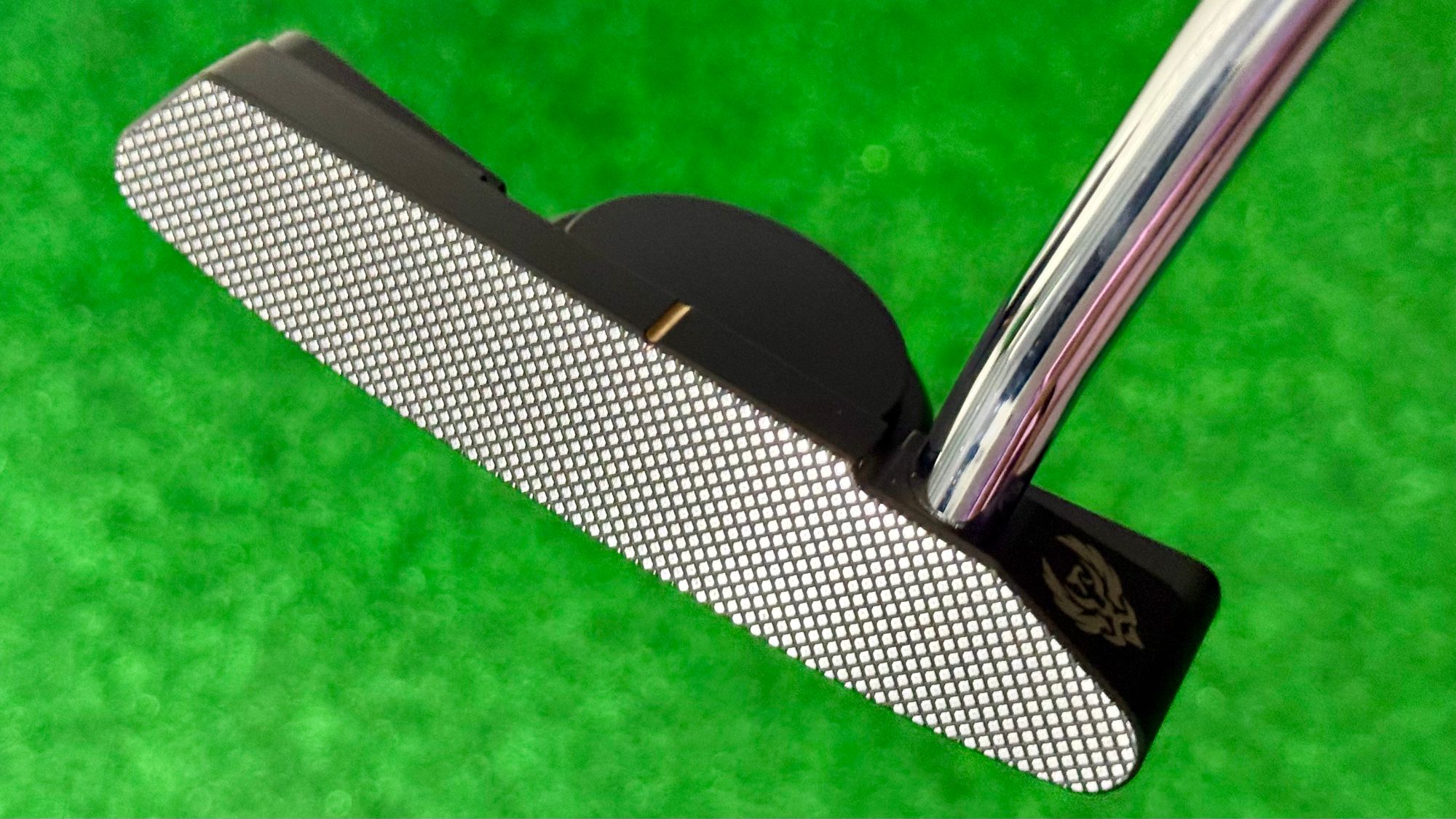
Feel is the other standout. The face carries a fine diamond-pattern milling, and impact is soft without being mushy the way so many insert putters feel. You still get honest feedback on a mishit, which is part of what you buy a blade for in the first place.
Between the two weighting systems, the grip sizes and the finishes, there are dozens of ways to build this putter, and that makes it a good fit for just about anyone. If you play the same course every week, CS with one well-chosen Anchor may be all you ever need. If you travel, or you’ve fought an pull stroke for years, EQ gives you a lot more to work with.
At $419, the Artifact Blade sits right alongside premium milled putters from the big brands, and you get a build-to-order putter with a fitter who confirms every setup. The Wing mallet versions run $449, and a single-body Wing 390 and 365 line without the swappable weights starts at $299. For a blade player who wants options, this one is well worth a look.
Frequently Asked Questions
How much does the Killer Golf Artifact Blade cost?
The Artifact Blade costs $419 with either the CenterStrike or Equilibrium weighting system. A black shaft adds $20 and custom sole engraving adds $50.
What is the difference between the Artifact Blade CS and EQ?
The CS uses four Anchor weights, from 25 to 150 grams, to change total head weight without changing the putter’s balance. The EQ uses a rotating 65-gram module and stackable 40- and 60-gram bases to move the center of gravity and change toe hang and MOI.
How much does the Artifact Blade head weigh?
The base head weighs 300 grams before any weights are added. With weights installed, the CS ranges from 325 to 450 grams and the EQ from 365 to 425 grams.
Where are Killer Golf putters made?
Every Killer Golf putter is machined, assembled and finished to order in Boise, Idaho.
Who founded Killer Golf?
Killer Golf was founded by Shamik Patel, a former semiconductor equipment engineer who bought a CNC machine shop and moved it to Boise, where the putters are built in-house.
Is the Killer Golf Artifact Blade USGA conforming?
Yes. Killer Golf says the Artifact Blade is fully conforming to USGA rules.
Leave a Reply