Tag: Golf ball

  • You Can’t Miss the New TaylorMade TP5 Pix Golf Balls

    You Can’t Miss the New TaylorMade TP5 Pix Golf Balls

    Clearly, the era of boring, plain white golf balls is over. Every year at the PGA Merchandise Show – the golf industry’s annual trade show – more and more companies are showing off new golf balls with ever more bright and creative graphics.

    Very conspicuously, TaylorMade Golf wasn’t at the PGA Show this year. In a weird way, their absence had almost as much impact as if they had been in attendance. For example, the release of a new golf ball doesn’t normally create waves, but since we didn’t see the new TP5 Pix golf balls at the PGA Show, this announcement is now more impactful. Well played TaylorMade… I think?

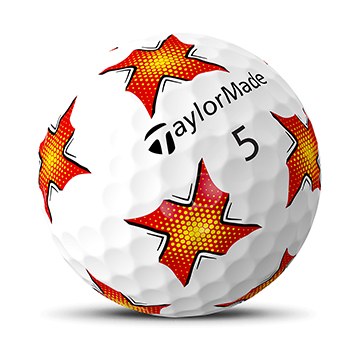
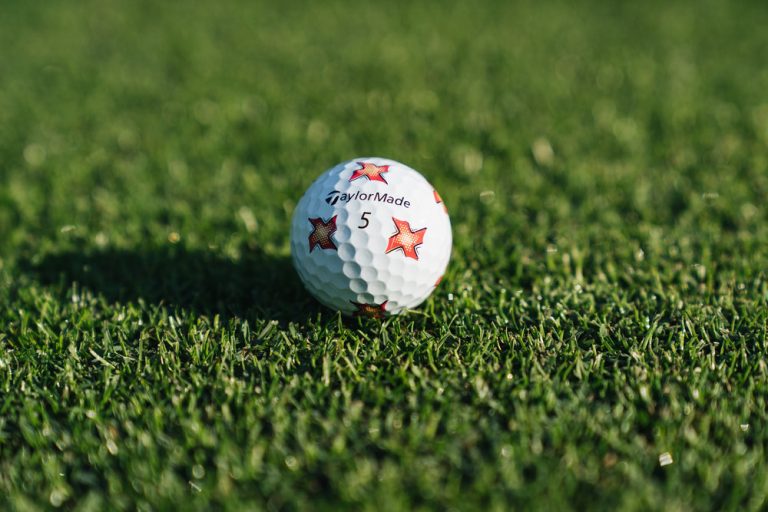
    The new TP5 Pix golf balls are the same excellent TP5 golf ball, with some distinct graphics added for greater visual impact. As TaylorMade describes it: The TP5 Pix golf balls are “optically designed using advanced visual technology to offer more visibility in The Most Complete Tour Ball in TaylorMade’s product lineup.”

    Tech Talk

    Pix, derived from ‘pixelated’, was designed following extensive research with partners at Indiana University, who also helped them design their latest putter line.

    From the official press release: “First and foremost, Pix™ is easier to see than a normal white golf ball. The human eye processes lighter colors more efficiently when it’s darker and darker colors when it’s lighter. It’s this phenomenon that led designers to the two-color design of TP5 Pix. Whereas most competitive products have only one color within a single image or shape, TP5 Pix’s unique design features 2 colors within one shape, further enhancing visibility and delivering a product that’s easy to see, regardless of the time of play during the day. Producing this shape requires a unique, one-of-a-kind printing machine which has taken more than 18 months to design and develop.”

    Seems to me like a lot of words to say “we’ve painted this cool pattern on our golf ball so you can see it better.” Naturally, there’s some science behind the design of the pattern and the colors they used, but in the end it will allow the golfer to see the spin of the golf ball on short shots and putts.

    As I’m currently gaming the TP5 myself, I’ll be putting these in play to see if they help me visualize the spin of my pushed and pulled putts or chunked chip shots! (Just kidding, I never push putts. The pulls though…UGH)

    Taylor Made Golf TP5 Pix Golf Balls

    Pricing & Availability

    TP5 Pix will be available (US and Canada only) at retail on March 22 at an MSRP of $44.99 USD per dozen. Pix is not currently available in the TP5x golf ball. To learn more about TP5 Pix or any of TaylorMade’s ’19 golf ball offerings, visit TaylorMadeGolf.com.

  • Srixon Q-Star Golf Balls

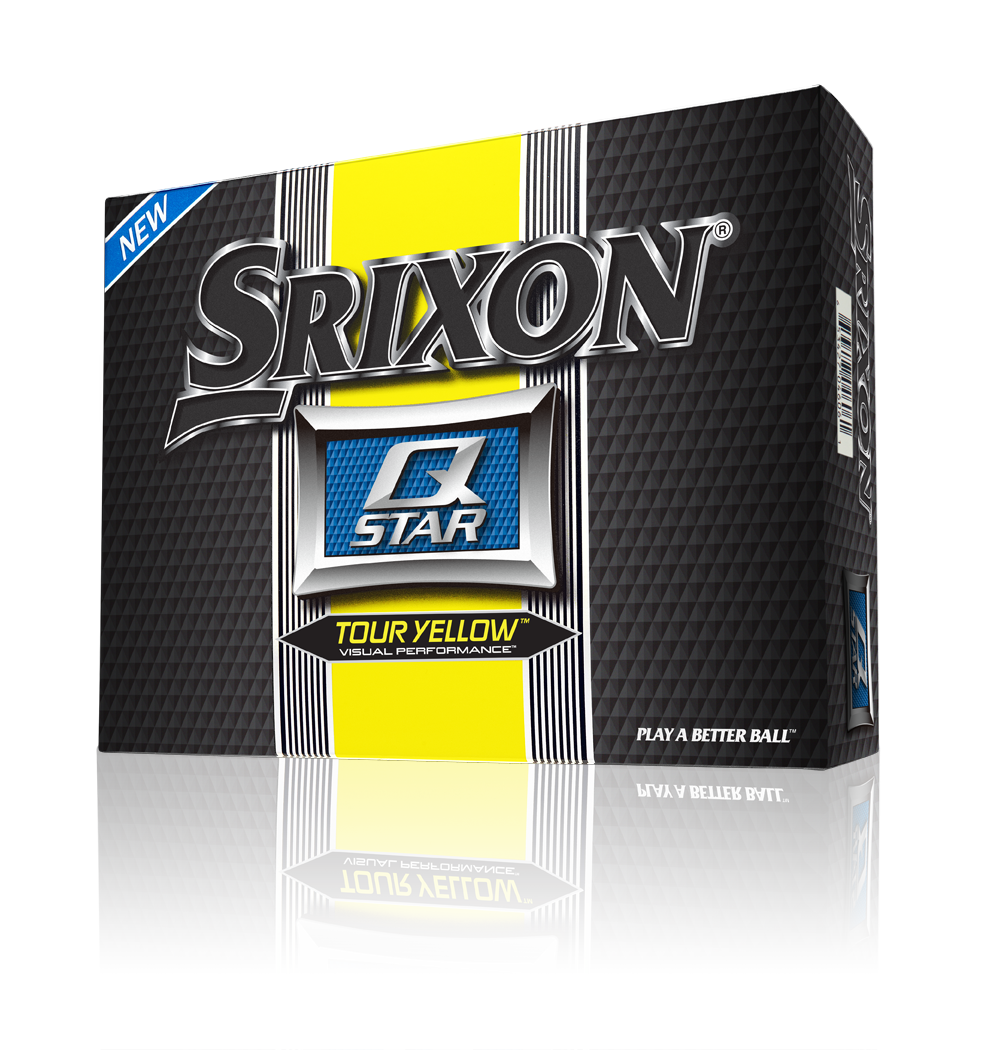
    Srixon Q-Star Tour Yellow Golf BallEver since the Titleist Pro V1 golf ball hit the market in late 2000 and killed the wound golf ball forever, I’ve struggled to find the best ball for my game. However, since the excellent Srixon Z-Star and Z-Star XV came out I’ve been a happy camper. The Z-Star is designed for the low handicap player, or one that desires a large amount or spin and control. It also costs about $45 a dozen. So what if you aren’t a single digit handicap or want to spend $45? Let me introduce you to the Srixon Q-Star golf ball.

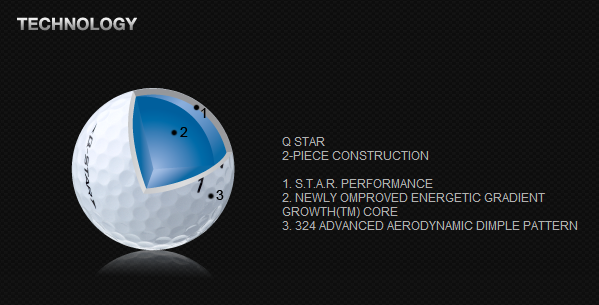
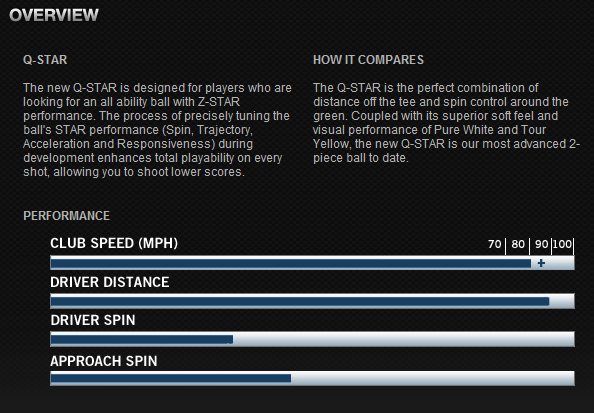
    The Q-Star golf ball was designed for low spin off the tee to help a mid to high handicap golfer keep it in the fairway, while still providing a soft feel and enough spin to hold the green. Srixon uses their S.T.A.R. performance process to tune the spin (S), trajectory (T), acceleration (A) and responsiveness (R) of each golf ball. Other than that, it’s just a cool marketing catchphrase. The Q-Star is a 2 piece golf ball with a core measuring 1.568″, and a cover measuring only 0.057″ thick. This very large core provides energy for distance off the tee, and the super thin cover enhances spin and feel.

    Srixon Q-Star Technology
    Click photo to enlarge

    Since the wound golf ball went away companies largely stopped using compression ratings, mostly because it just confused people.  But what they didn’t tell you is that in making wound balls there could be huge discrepancies in the actual compression rating from ball to ball, due to the imperfect nature of a golf ball constructed with rubber winding and a liquid core. Even if your old  Titleist Tour Balata was marked with a compression rating of 90, the actual compression rating could have been between 80 and 100. But I digress. And since I brought it up, the Srixon Q-Star has a compression rating of 75. That’s very, very low and it translates to a very soft feel and great distance for golfers who’s swing speeds are under 100 mph.

    In my early testing I found the Q-Star to be slightly softer feeling than the Z-Star, and even the distance off the tee and green-side spin were very comparable. I must however disclose that I was playing a course that day with soft greens after overnight rain. Once I got out to a course with firm, fast greens I started to see a difference. Approach shots with the Q-Star spun and held the greens well, but you won’t be sucking this ball back 20 feet with a wedge. Chips and pitches tried to bite, but instead checked up a bit and released to the hole. The Q-Star’s performance around the greens is predictable and consistent, and the lack of too much spin will probably help most golfers. Off the putter, the Q-Star feels very soft. It’s a joy to roll this ball on the greens, as it feels as good as any premium golf ball on the market. The bottom line is that the Q-Star is soft, has great feel off the putter and it spins enough for everyone to have some measure of green-side control. Just don’t expect to hit those low, spinning chip shots that the guys on TV make look so easy.

    Now, before you get all excited and decide to replace the $45 Z-Star you play with the $25 Q-Star in your arsenal, it's important to note that the Srixon Q-Star golf ball differs from the premium Z-Star line in several ways. Like I mentioned above, the Q-Star is a 2 piece ball designed for mid to high handicap golfers, where the Z-Star is a 3 piece construction designed as a "tour" ball for better players. The Z-Stars also have thinner covers. The Z-Star XV's cover is the thinnest in golf at 0.012" thick. That's about three tenths of a millimeter! This makes them more responsive for more spin around the greens. The Z-Star and Z-Star XV carry higher compression, because they are designed for golfers who's swing speeds are over 90 mph. [caption id="attachment_3500" align="alignleft" width="300" caption="Click photo to enlarge"][/caption] Srixon also led the re-introduction of yellow golf balls to the market, and several other companies have also jumped on the old-school colored ball bandwagon. The Srixon Q-Star Tour Yellow is very bright, and for those times where you may hit the ball a bit offline, it's very easy to see in the woods. If you are the only one playing a yellow ball in your weekend foursome, there will be no argument as to who's ball is who's. But the biggest advantage of the yellow ball is that your playing partners aren't going to like it when you use a yellow ball to take some of their green! If you are a slow swinger (under 90 mph) or have a handicap over 10, you probably won't get the most out of the Z-Star line. After all, this is why Srixon created the Q-Star! In creating a golf ball for the majority of golfers out there, Srixon has taken the best features of their premium Z-Star golf ball and eliminated the excessive spin and high compression that hamper the performance for those golfers. For the every-man golfer, weekend warrior or developing player, this ball is a winner, and priced at $25  a dozen it's a steal.

    Subscribe to our email updates! You'll get the latest fresh news, reviews and stories delivered right to your inbox or RSS reader, and automatically be entered in our latest contests and giveaways! We are 100% SPAM FREE! Also, don't forget to check in with our Facebook fan page for exclusive content and get involved by leaving us comments on what you think!

  • 2011 Golf Digest Golf Ball Hot List – Behind The Scenes

    Golf Digest 2011 Hot ListaThe May 2011 issue of Golf Digest has hit the shelves at your local news stand, and it’s one of the most anticipated of the year. The Hot List issues are always in high demand, and the Golf Ball Hot List is no exception. Every year the editors at Golf Digest get together and test golf balls. Lots and lots of golf balls. Using a combination of machine testing and real life play testers, they find the best golf balls and hand out their gold medal picks in the magazine. Here’s a behind the scenes look at how the process works.

    This year I was fortunate enough to take part in Golf Digest’s Hot List golf ball testing at Reunion Resort in Orlando Florida just after the 2011 PGA Merchandise Show. Golf Digest enlisted the services of about 20 testers with handicaps ranging from +1 to 10 or so. After a brief warmup on the driving range we broke up into pairs, each with a Golf Digest editor in tow. Each golf cart of two players is followed by a cart with an editor that observes, takes notes and asks questions of the players in an effort to gather as much information as possible. My friend Lindsay and I went out first on the Arnold Palmer Legacy course with editor Michael Johnson, who is Senior Editor of equipment for GolfWorld.

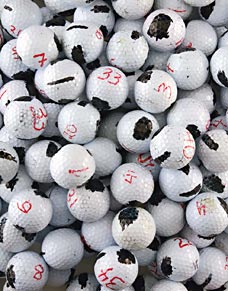
    In order to make the testing as objective as possible, all the golf balls being tested were disguised using black markers. All the markings on the cover of all golf balls were blacked out so as to be almost indistinguishable from each other, and they all had numbers painted on to tell them apart. Obviously we were not told what brand or model golf ball we were hitting, which is mostly done to avoid subjective results from testers who may have a brand preference or may be influenced by manufacturer marketing efforts. For example, most low handicap players would not give a low-cost distance ball a fair shake over a “players” ball with high spin and soft cover, but this way every player gives every ball a chance to be a winner.

    Because human golfers don't have the ability to create a perfect impact condition every time, Golf Digest uses robot testing to get data for driver hits with each golf ball. The use of a robot provides consistent contact, spin rates and ball speeds. While feel is a very important factor in golf ball performance, for the purpose of the golf ball hot list the human testers don't hit tee shots during the ball testing for the reason I just stated, and also so that we don't run out of golf balls via wayward drives! Instead, we proceed past the tee box and down the fairway to hit iron and wedge shots on every hole. For the first three holes we were assigned two different golf balls to test. We each received 3 of each ball for a total of 12 golf balls between the two of us. Starting at about 160 yards in the fairway, we alternated hitting iron shots to the green. I found the best method was to hit all three of one brand to get a better idea of the feel and ball flight. I hit all three of mine, followed by Lindsay hitting 3, and back to me until all the balls were on or around the green. All I knew about the golf balls was that they were white and round. I had no idea what brand, model or type of golf ball I was hitting. Our editor Mike was watching and taking notes as we hit iron shots, observing the ball flight and listening to our comments about the feel, ball flight and overall impressions. Once we arrived at the green we collected our assigned golf balls and proceeded to hit chips and putts for a little while and then moved on to the next hole. We played 3 holes from the fairway in, varying the distance of our approach shots on each hole from 200 yards to inside 80 yards. The distance we hit from didn't matter so much, but the goal was to hit mid iron, short iron and wedge shots with each golf ball. Golf balls marked for testingAfter playing three holes with two different golf balls and hitting 60+ shots from irons to wedges, chips and putts with each ball, we gave Mike our final comments on the balls and rated them from 1 to 5 on playability, feel, spin and overall performance. We then moved on to the next 3 hole stretch and were assigned two new golf balls to test. We continued switching every three holes until we finished 18 holes. In all, each player tested 12 different golf balls, hitting somewhere between 300 and 400 shots. We repeated this process the next day also, and I figure I hit close to 1000 golf balls in the two days, between warm ups on the range and testing. I preferred hit a few more chips and putts around the greens to get a better idea of a ball's overall performance. The Golf Digest editors had quite a large task in testing all these golf balls. It must have taken a lot of time to mark every single ball, organize them into bunches and then collect the data from each play tester. Compiling all that data into metrics and information readers can use to make informed decisions isn't easy. Having been a part of the testing, I can say with confidence that the golf balls that earned Golf Digest's gold medals are the real deal. The testing methods used are about as thorough as you can be to test the vast number of golf balls they had in a reasonable amount of time. I learned a lot from the ball testing. I had a chance to hit some golf balls I never would have given a second look to before, and I also learned that golf ball technology has started to blur the line between your cheap, durable golf balls and the soft, spinny player's golf ball. We are starting to see cheaper golf balls that spin, and spin balls that go a mile. Gone are the days of delicate, wound balata covered balls that felt like marshmallows, but these days there is a good chance that if you keep it in play, you can play 36 holes with the same ball. In the past, you had basically two choices - A balata ball that lasted 9 holes, or a surlyn covered rock that didn't offer any spin or feel. Today, with multi-layer construction and advanced manufacturing techniques it is possible to be fit for a golf ball that does it all. My current golf ball of choice has a perfect blend of feel, spin, distance and durability, and I could never get that in a ball 10 years ago. Swing by your local news stand or book store and pick up the 2011 Golf Digest Golf Ball Hot List issue and see what golf ball is right for you. With several companies now performing ball fitting, it's even easier to get the right formula for your game. With all the different models and brands available, it's nice to have a comparison test like the one Golf Digest performs to give us some way of narrowing down the field!
    Subscribe to our email updates! You'll get the latest fresh news, reviews and stories delivered right to your inbox or RSS reader, and automatically be entered in our latest contests and giveaways! We are 100% SPAM FREE! Also, don't forget to check in with our Facebook fan page for exclusive content and get involved by leaving us comments on what you think!

  • The Floppy Indoor Practice Balls

    The Floppy Indoor Practice Golf Ball
    Click photo to enlarge...

    There aren’t many practice aids these days that are designed to be used indoors, and even fewer yet that encourage you to make full swings indoors! To all the wives, girlfriends or significant others of golfers out there, I apologize in advance for this review. For all those golf nuts who are stuck in a snowy climate  and can’t afford a fancy golf simulator in their basement, I think I’ve found the ideal practice aid to help you get through the winter and keep things fun all year round.

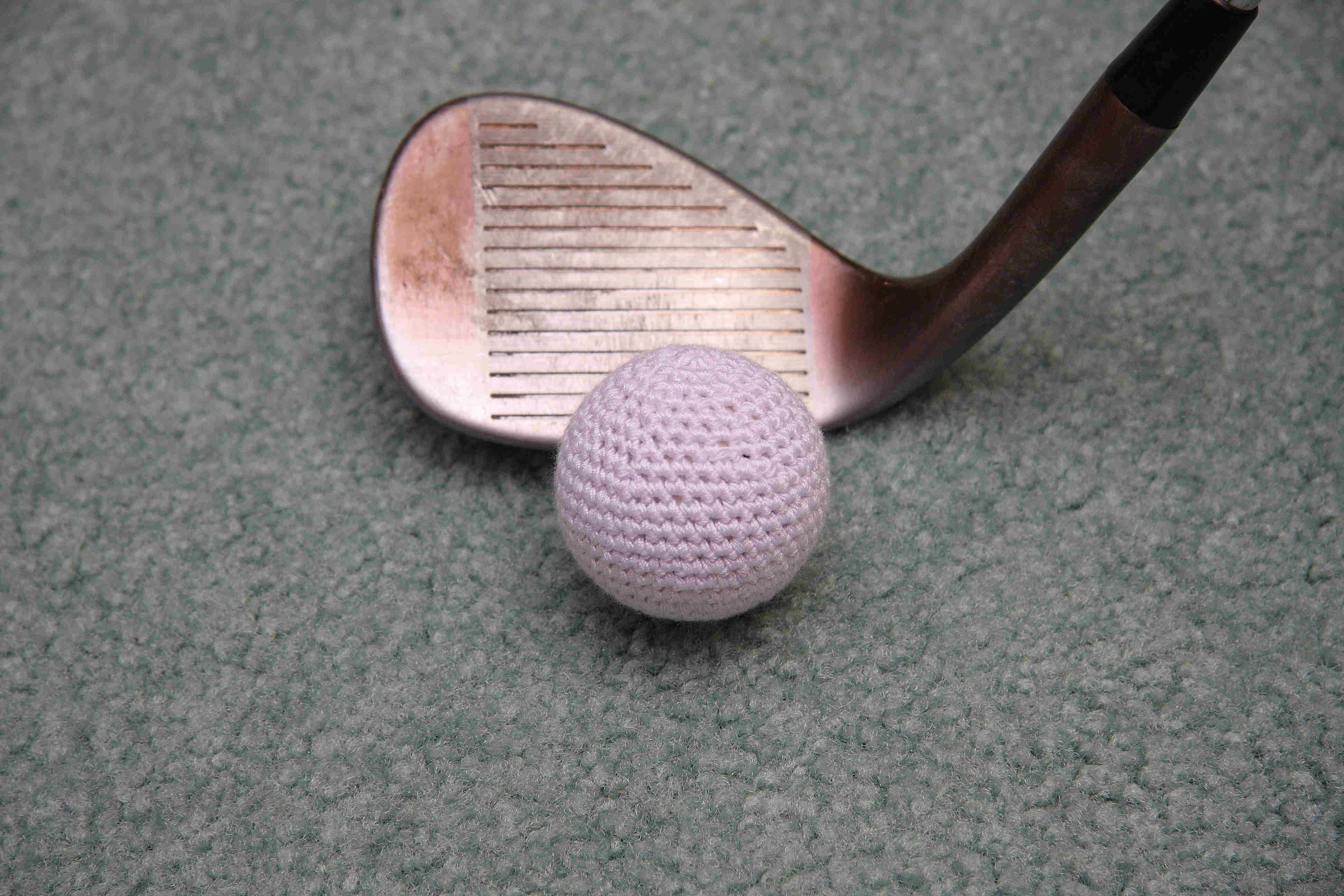
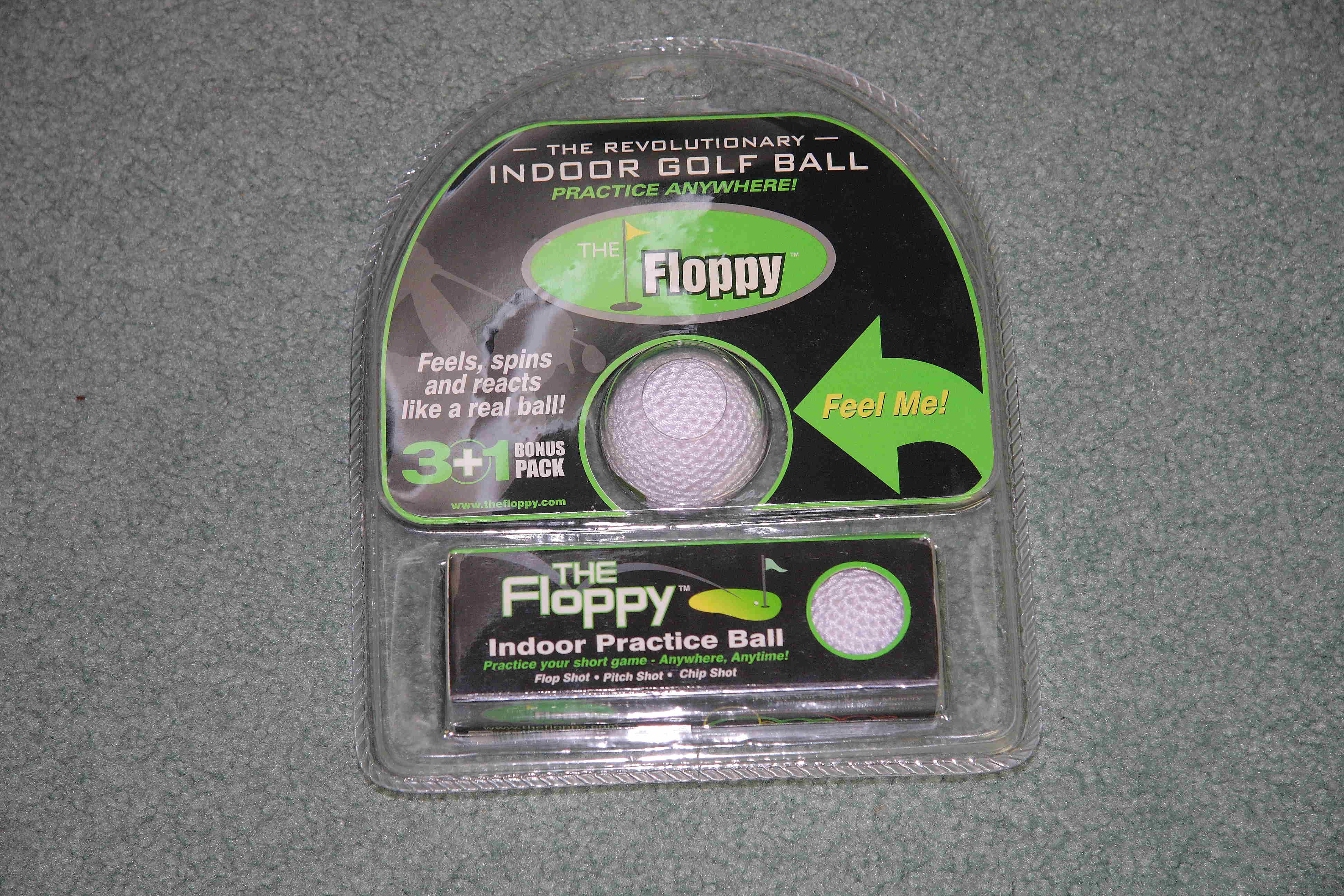
    It’s called The Floppy, and it’s a really simple idea that is perfectly executed. The floppy is an indoor practice ball designed to help people practice their short game without having to worry about breaking windows and making a huge mess. The Floppy is the same size as a regulation golf ball, has a woven fabric cover that goes over a proprietary liner and is filled with some sort of granular material to add weight and feel. The cover feels soft and pliable to the touch, but is durable enough to hit full wedge shots. Because it is soft it will bounce harmlessly off walls, windows and furniture.

    [caption id="attachment_2074" align="alignright" width="300" caption="Click photo to enlarge..."]The Floppy Indoor Practice Golf Ball[/caption] I received a 4 pack of balls to try out and immediately found myself whacking it all around the house. While watching the weekend golf coverage, I used my Cleveland CG15 lob wedge (shameless plug, I know) to aim at various objects while messing around during the commercials (And when Johnny Miller was talking). While this ball isn't as heavy or hard as a real golf ball, I think you get enough feedback from it to get legitimate practice value from using it. Although the makers claim it spins like a real ball, I wasn't able to hit the low spinning chip shots that check hard. I can't expect to spin this ball much either, considering this ball is made of cloth and plastic. All you need to get some practice in with the Floppy is an open, carpeted area and a target. I used the Floppy to practice hitting pitch shots into a basket about 20 feet across the room, and just for fun, I set up a soda can on the top of the door jam and tried hitting it off its perch. I could see this ball being used outdoors too, but it was primarily designed for indoor use. [caption id="attachment_2075" align="alignleft" width="300" caption="Click photo to enlarge..."]The Floppy Indoor Practice Golf Ball[/caption] The Floppy is available online at www.thefloppy.com. For $19.95, you get a 4 pack which should last you a long time - that is, unless your kids find them! Back when I lived up North, I used to paint those solid white plastic balls orange and play in the snow, and more than once I destroyed the ceiling drywall in my basement when making golf swings. If I had the Floppy back then I probably would have caused less damage to my dad's house. If you want to drive your Wife/girlfriend/boyfriend/sister/brother/housemates crazy and get some short game practice at the same time, pick up The Floppy! By the way, try not to take too deep a divot out of your living room carpet...

    Want to win free stuff? Subscribe to our email updates! You'll get the latest fresh news, reviews and stories delivered right to your inbox or RSS reader, and automatically be entered in our latest contests and giveaways! Also, don't forget to check in with our Facebook fan page for exclusive content and get involved by leaving us comments on what you think!
  • Callaway Tour i(s) Golf Ball

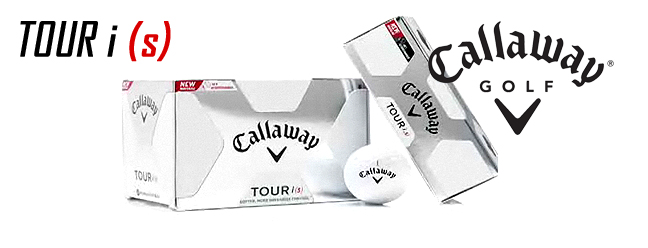
    Callaway has a new golf ball called the Tour i(s), and from the immediate success it has seen on tour, it will be a hit. Just ask Ernie Els and Ryan Moore; using the new ball, they finished second and third this past weekend at the WGC HSBC Masters in China, behind Callaway staff player Phil Mickelson, who is still using the Tour ix. “I started playing a new golf ball that Callaway made,” Els said. “This is what I’ve been looking forward to, is this golf ball. It would have been unbelievable if I could have won with this ball. It would have been great for Callaway and myself. I’m looking forward to the future now, and I think my equipment is now spot on.”

    Many companies have been researching and testing new golf balls for their tour players in response to the groove rule change that goes into effect on January 1, 2010. Since the groove placement and shape is being reduced, players are looking for a way to maintain high spin without losing distance. Taylor Made has released the new five piece Penta golf ball, and now it seems like Callaway has answered with the new Tour i(s) ball.

    I played 18 holes with the new Tour i(s) ball recently. It was a cold and windy day at Falcon's Fire Golf Club in Orlando Florida, a day after the close of the PGA Merchandise Show, but we braved the elements in the service of our readers! OK, and because we're kind of nuts too.

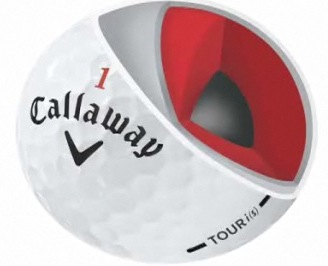
    Callaway's vice president of ball R&D, Steve Ogg, called the Tour i(s) the most highly-engineered golf ball product they have ever come out with. Using four piece construction, it is the softest ball they have ever developed. To increase performance, the new ball features a large degree of spin separation. What this means is the inner core and outer core work together on certain types of shots to reduce or increase spin. For example, on a driver swing, the force of the shot compresses the very soft inner core of the ball, reducing spin. On an iron shot, the force of the shot reacts with the harder outer core, producing more spin for greater control. The result, according to Callaway, is a ball that is much softer with higher spin than anything they have ever offered without losing any of the distance as compared to the Tour i and ix. Callaway Tour i(s)My first impression of the ball was that even in 50 degree temperatures, the ball felt very soft off the putter. It's very similar in feel to the Titleist Pro V1. What I don't like about the V1 is it's durability (or lack thereof) and the performance in the wind. The Callaway performed beautifully in the windy conditions that day, which was a bit of a shock. Usually a soft, high spinning ball will have a tendancy to balloon into the wind, but the Tour i(s) was solid and stable into the wind, and in cross winds the ball doesn't budge! I hit many a solid iron shot that simply didn't drift towards my target as I expect in a cross wind. This ball likes to fly straight when hit crisply. I also expected a ball this mushy feeling not to go, but that wasn't the case either. This ball flew as far as any other ball I hit against it, including my current gamers, the Srixon Z-Star X Tour Yellow. Callaway seems to have been able to combine a soft feeling, high spinning ball without sacrificing distance or wind stability. It's early adoption on tour suggests it has a winner on it's hands, and my play test with it in the strong winds and on firm greens confirmed that this golf ball is indeed a winner. In fact, I'm seriously considering switching to it. I'll have to do some more testing to be sure though. The Callaway Tour i(s) will be available in mid-January 2010 for about $43 per dozen.

    Want to win free stuff? Subscribe to our email updates! You'll get the latest fresh news, reviews and stories delivered right to your inbox or RSS reader, and automatically be entered in our latest contests and giveaways! Also, don't forget to check in with our Facebook fan page for exclusive content and get involved by leaving us comments on what you think!