When I first started playing golf around 1989-1990, metal woods were starting to dominate the PGA Tour and only a handful of holdouts still used persimmon drivers and fairway woods. Golf club technology evolved rapidly in the 90s, and it wasn’t long before club heads started getting bigger and bigger. In the 1990s, the best player on the planet was Greg Norman, and he used the original King Cobra driver to launch tee shots like moonballs on a frozen rope. The King Cobra driver of that era will go down in history as one of the most recognized and influential clubs of the 90s, along with the Callaway Big Bertha.
These days, golf club technology continues to evolve but the emphasis has shifted towards fitting rather than distance. The USGA’s limits on club design with regards to performance have constrained manufacturers when it comes to ball speeds and overall distance, so much of the new technology you’ll find is geared towards fine-tuning the way the club performs for individual golfers. The new Cobra KING F8 and F8+ (plus) drivers are no exception.
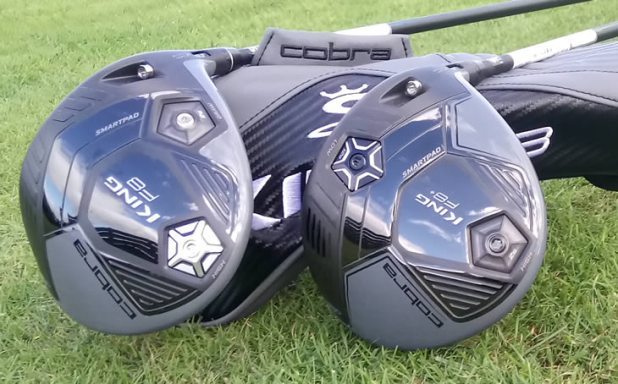
Cobra Golf’s F8+ driver is geared towards the better player (0 to 15 handicap according to Cobra), and the difference between this model and the regular KING F8 driver is evidence of that. The forward weight port on the F8 driver is located in the heel area and set back a bit to help square the clubface and produce a draw action to combat a slice. In the F8+ driver, the weight port is located front and center, near the middle of the clubface which moves the center of gravity (CG) forward to reduce spin, while remaining in a neutral position for better workability. The other main difference is in the shaft. The F8+ driver comes with a choice of premium shafts from Aldila and Project X that feature premium materials and stiffer, low torque profiles that reduce spin for improved performance in distance and dispersion.
Technology Overload
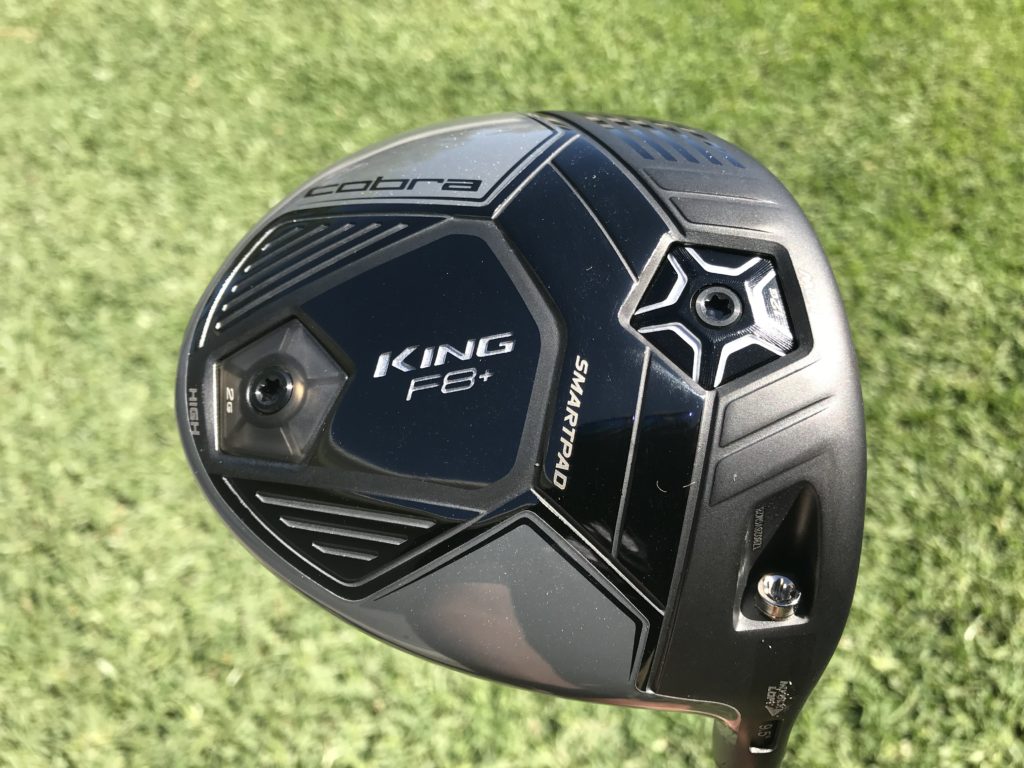
My Cobra KING F8+ came fitted with the Project X HZRDUS Yellow 75x shaft. Cobra Golf packed a lot of features and tech into this driver, so let’s go over all the features:
- Golf’s first CNC milled face – The forged titanium face is precision milled for exact face thickness, weight, and consistency. According to Cobra, testing against a traditional hand-polished driver face, the CNC milled face on the KING F8 driver produced increased ball speeds ranging from 1.2 to 1.6 mph across the face.
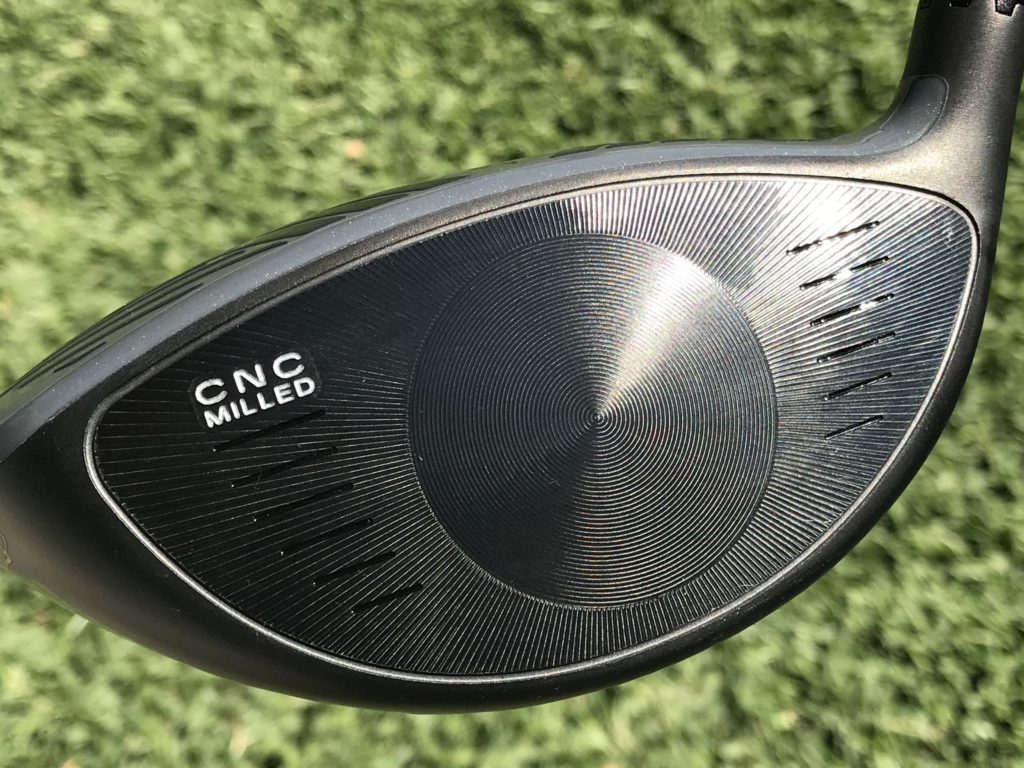
- Have you heard of Taylor Made’s “Twist Face” technology? Sorry to break it to you, but Cobra did it first, and they did it years ago. Cobra’s Dual Roll Technology utilizes different curvatures on the top and bottom of the face to optimize launch and spin for shots hit above or below face center.
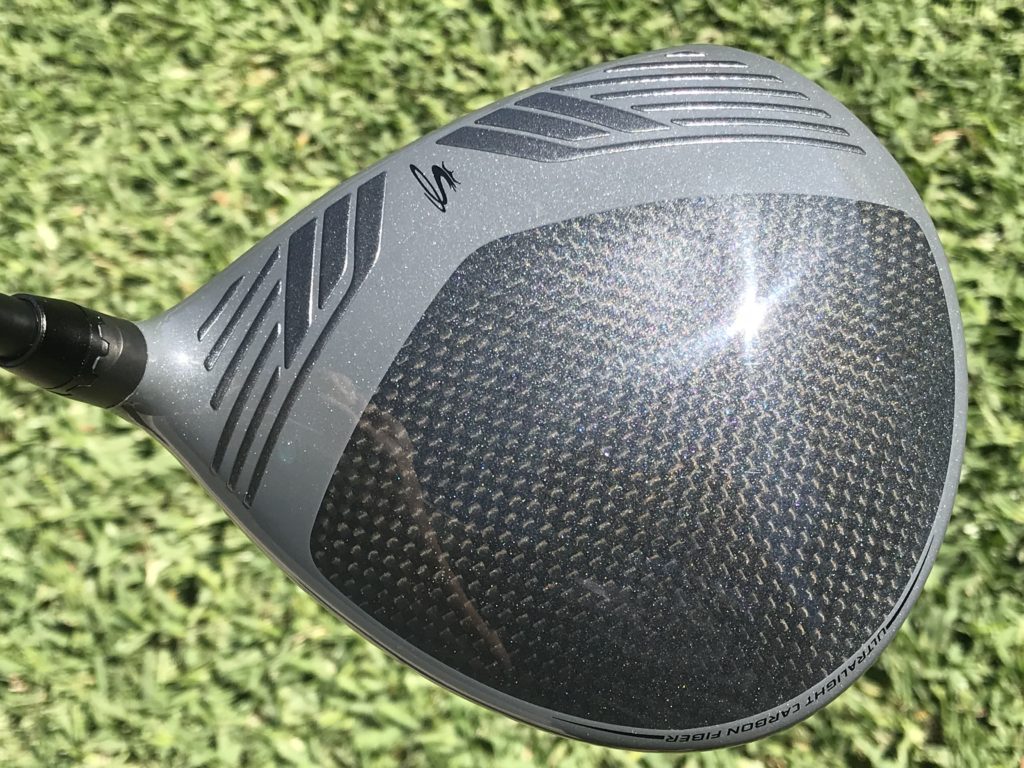
- 360 Aero – Polymer trips on the crown and titanium trips on the sole are optimized for better aerodynamic efficiency, giving you more clubhead speed. All I know is, they certainly help give the club a unique look at address.
- 2 adjustable CG settings – With a heavier weight in the back and a lighter weight in front, you’ll get a slightly higher ball flight and more spin. If you swap the weights and put the heavier weight in the front, you’ll bring the ball flight down a bit and lower spin by as much as 400 rpm.
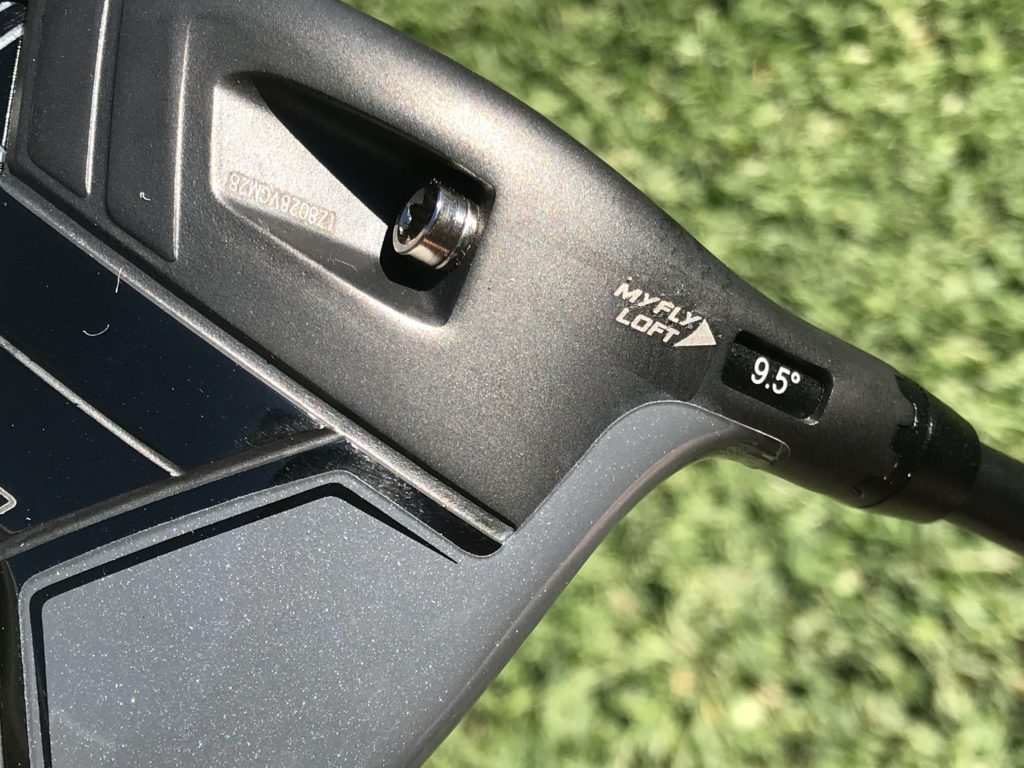
- MyFly w/ Smart Pad – The adjustable hosel has eight loft settings to fine-tune launch and spin to each player. In my F8+ driver, I can turn the loft setting from 8 degrees all the way up to 11.5. The Smart Pad ensures that the driver sits square at address in every setting for greater confidence. One issue with other adjustable drivers is that changing the loft also changes the look at address; Not so with the F8+ driver.
- Carbon fiber crown – Making the crown out of ultra-lightweight carbon fiber allowed Cobra engineers to move weight around where it is needed to make the club more forgiving. It also looks really cool.
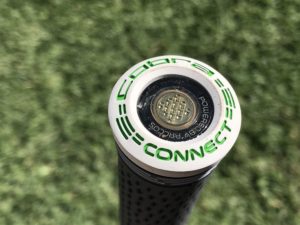
- Cobra Connect, powered by Arccos, allows golfers to track their driving performance and accuracy with the Arccos app on their phone. A sensor built into the grip connects with the app and uses GPS to track your location on the course. The sensor can detect when you hit a drive and marks the location that you hit your second shot from to determine if you are in the fairway or rough and how far from the tee you are to calculate distance. Arrcos Driver, their stand-alone product, usually sells for $49, but the same technology is built into the F8 drivers at no additional cost.
What I Like
- I love the look of this driver. The nardo gray colored head with all the aero features and circular milling on the face just looks cool and futuristic to me. I’ve always been a traditionalist, but this club looks really good without being distracting.
- The feel is perfect. The ball comes off the face with a muted “click” and you can really feel the impact in your hands. In fact, the feel is good enough to know immediately where you hit the ball on the face, and that’s easily confirmed because you can usually see the impact mark from the golf ball on the face. This driver reminds me of the foam filled metal drivers from the early 2000s before they got obnoxiously loud.
- Ball flight with the driver set up at 9.5 degrees and neutral settings was ideal. The HZRDUS Yellow shaft keeps the ball from ballooning but still gets it in the air quickly. My short swing and relatively quick tempo managed to load this shaft pretty well, even if it’s not my favorite model shaft. I prefer something with a little more active tip section, like the excellent range of ultra-premium shafts from TPT Golf.
- Cobra has made it easy to customize this driver, with over 40 custom shaft options! You can also change the length, grip type and even build up your grips if that’s what you prefer. There are more than a dozen different grips available with the built-in Cobra Connect feature, and even more standard grips.
- The Cobra KING F8+ driver isn’t the most forgiving club I’ve hit recently, but it isn’t supposed to be either. This is a serious club for good players that can generate enough clubhead speed to make it work. Like I previously mentioned above, the face transmits feel to your hands about mishits better than most modern drivers. In this regard, the F8+ is a bit of a throwback.
- The KING F8+ is infinitely adjustable, between the multiple loft settings and weight port tuning. I ordered two extra weights from Cobra because I like to swing sledgehammers. I replaced the 12g & 2g standard weights with an 8g in the back and a 16g weight in the front. Overall swing weight at 45″ comes out to D7. I have swung heavy clubs for decades because I want to leverage physics to my advantage. As long as you can maintain your average swing speed, a heavier club will transmit more energy to the ball than I lighter one, and you’ll not only get more distance, but a heavy club is also more forgiving than a light club.
What I don’t like
- I’m not a fan of the stock Lamkin Crossline grip with Cobra Connect. I’ve always preferred cord grips, but unfortunately, the Cobra Connect grips don’t include a cord grip in their custom options. I used the stock grip for a while to play with the Arrcos app and Cobra COnnect features, but eventually changed the grip out for one of the new Lamkin Players Cord grips.
- The Project X HZRDUS Yellow shaft is a good shaft, but to get the most out of this club I would have had to order it with one of the many custom options. The other two stock options are the Aldila NV 2KXV Blue 60 and 2KXV Green 65 shafts. However, in their custom shaft offerings, I would lean towards Mitsubishi’s Tensei CK Pro line or Fujikura’s awesome ATMOS Tour Spec shafts (fitted in my Ping G400 three wood) would transform this club into a monster.
- I know I just finished saying that the Cobra KING F8+ driver is infinitely adjustable, but for some, that may not be a good thing. If you are one of the people that end up buying this club right off the rack and have not been fit for it, you’ll probably need some time to find the loft and weight settings that work best for you. Without the help of an experienced club fitter, it may take several months to get it right. If you have access to a launch monitor or a good pro, they can help you get it dialed in much sooner. It took my buddy Tony from Hookedongolfblog.com about two months to get his KING F8 driver set up right. I still don’t think I have it dialed in properly. It’s close, but I don’t think the HZRDUS shaft is right for me.
Conclusions
The Cobra KING F8+ driver is loaded with tech, looks great, feels and sounds awesome and can be customized far beyond the needs of most golfers. It is the total package in a driver unless you prefer a super loud hollow sound at impact and a very high ball flight. This is a driver for serious players and purists which is blended with slick looking technology and aero features. Pricing varies depending on custom options, but expect to pay $399 for stock versions and up to $600 for a driver with custom shaft and grips.