Tag: Steelfiber

  • Aerotech Releases New TiFiber Shafts

    Aerotech Releases New TiFiber Shafts

    Aerotech TiFiber ShaftAerotech’s Golf’s president & mad scientist Chris Hilleary is up to his old tricks again, and this time his experience in composites and engineering wizardry has resulted in the new Aerotech TiFiber shaft. Last season, Aerotech Golf’s SteelFiber shafts delivered 20 wins on pro tours around the world as well as won the coveted CME Race for the Globe Trophy and 2016 Money Title on the LPGA Tour. I’ve been playing with and evangelizing the SteelFiber shafts in my irons & hybrids for over 6 years, and for me, there’s no going back to steel.

    Why TiFiber?

    While the original SteelFiber shafts are incredibly consistent and playable, in driver and wood lengths they became too heavy for most golfers to be comfortable with. By replacing steel fibers with much lighter titanium, Aerotech was able to adapt the benefits of their SteelFiber technology to full-length driver and fairway wood shafts.

    What is TiFiber?

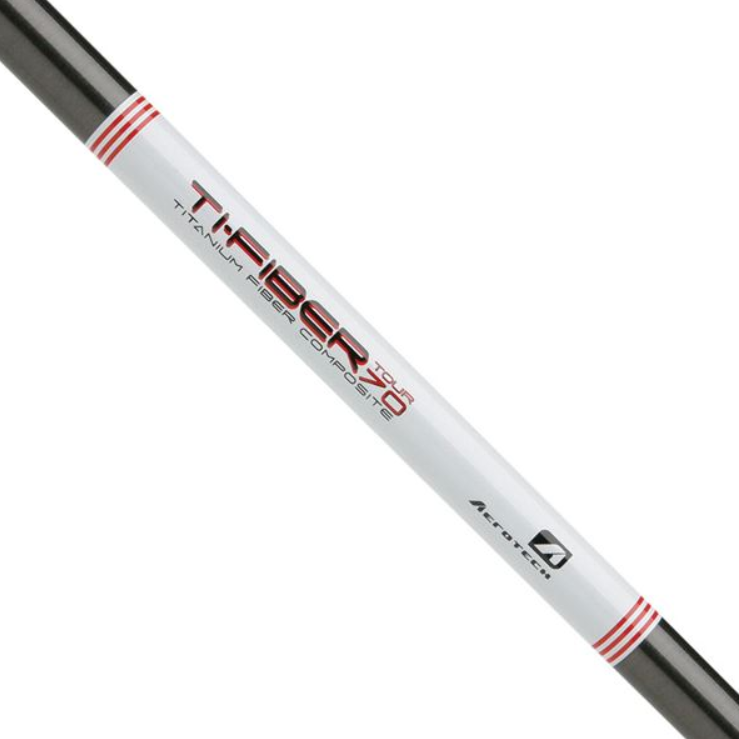
    TiFiber shafts combine a high-modulus graphite core like you would find in almost all driver shafts with 47 miles of micro-thin titanium fiber lacing the entire shaft surface. 47 Miles! The addition of high-strength, lightweight titanium fiber increases stability while allowing the weight to be redistributed to optimize tip stiffness. As a result, TiFiber shafts are a great match for modern oversized titanium/composite driver heads.

    TiFiber shafts are currently available in two models – the TiFiber Tour 70 and Pro 60.

    1. TiFiber Tour 70 shafts feature a “Tour Stiff” tip section to optimize flight by reducing spin and lowering trajectory. The Tour 70 is available in F5 (Stiff) and F6 (X-Stiff) flex options.
    2. The TiFiber Pro 60 has a slightly softer tip section and benefits players who need a bit more launch and spin but still want the added stability of titanium. The TiFiber Pro 60 is available in F4 (Regular) and F5 (Stiff) flexes.

    Success on Tour

    Players with SteelFiber shafts routinely rank high on the PGA Money List, Official World Golf Rankings and the FedEx Cup Season Points. Brandt Snedeker and Matt Kuchar have been in Aerotech’s corner for years. In 2013, Kuchar & Snedeker ranked No. 2 and No. 3 in FedEx Cup points and ended the season as #3 and #5 on the PGA Tour money list. Snedeker also won the FedEx Cup in 2012 using SteelFiber shafts.

    While the adoption of SteelFiber continued to grow on the professional tours, the company was testing the TiFiber shaft on tour in 2017 and introduced them to the public at the 2018 PGA Show in Orlando. It’s only a matter of time before TiFiber also records its first win on tour.

    Performance

    I spent some time on the practice range with the Aerotech TiFiber Tour 70x shaft installed in my Ping G driver. I hit several shots with both the TiFiber shaft and the Ping Tour 80x shaft (custom option from Ping) to compare ball flight and launch monitor data. I used the cool new FlightScope MEVO launch monitor to capture club and ball flight data.

    My initial testing has produced numbers that are very similar to the stock Ping shaft, but the little FlightScope MEVO is limited in the data it can gather. More on that in a minute. Both the stock Ping shaft and the TiFiber were giving me similar numbers for launch angle, swing speed, smash factor and spin rates. Carry distance was about 2 yards less with the TiFiber, which is consistent with the ball speeds which were roughly 1 MPH lower with the TiFiber. Shots hit with the TiFiber shaft stayed in the air a fraction of a second less and flew about 5 feet lower, which may help explain the carry distance number. I only got to hit about 8 or 10 drives with each shaft, but once I gather more data I think the results will be more clear.

    What the numbers don’t tell me is what I’m perhaps most interested in with the TiFiber, and that is shot dispersion. The FlightScope MEVO being a palm-sized personal launch monitor priced at $500, it can’t compete with the big boys that cost $10,000+ and one of the areas where the MEVO is lacking is measuring shot dispersion. Since it doesn’t track the entire ball flight, it can’t tell me what the dispersion is from shot to shot.

    I did notice a difference between the shafts, but without measurable data, it’s hard to be 100% sure. I felt that I was hitting the ball straighter with the TiFiber shaft, with a tighter dispersion from shot to shot. I’ll get more data and play a few rounds with the Aerotech shaft in the coming weeks and will know more. I believe the TiFiber shaft to be straighter based on my observations.

    3/12/2018: I’ll update this post when I get more info about the accuracy of the Aerotech TiFiber shaft.

    Where Can I Get One?

    The best way to get your hands on one for your driver will be to schedule a fitting with a good club fitting specialist like Tour Spec Golf. Aerotech Golf shafts are also widely available as custom options with many club manufacturers such as PXG, Callaway, Titleist, TaylorMade, Ping, Cobra, Bridgestone Golf, Wilson, Cleveland Golf, Miura, Srixon and more.

    For more information on Aerotech Golf and Aerotech shafts, call 888.733.8988 or visit aerotechgolfshafts.com. Also check out the Aerotech page on Facebook: facebook.com/aerotechgolf.
  • The Search for the Perfect 3-Wood

    The Search for the Perfect 3-Wood

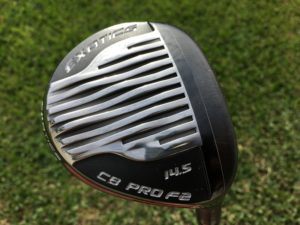
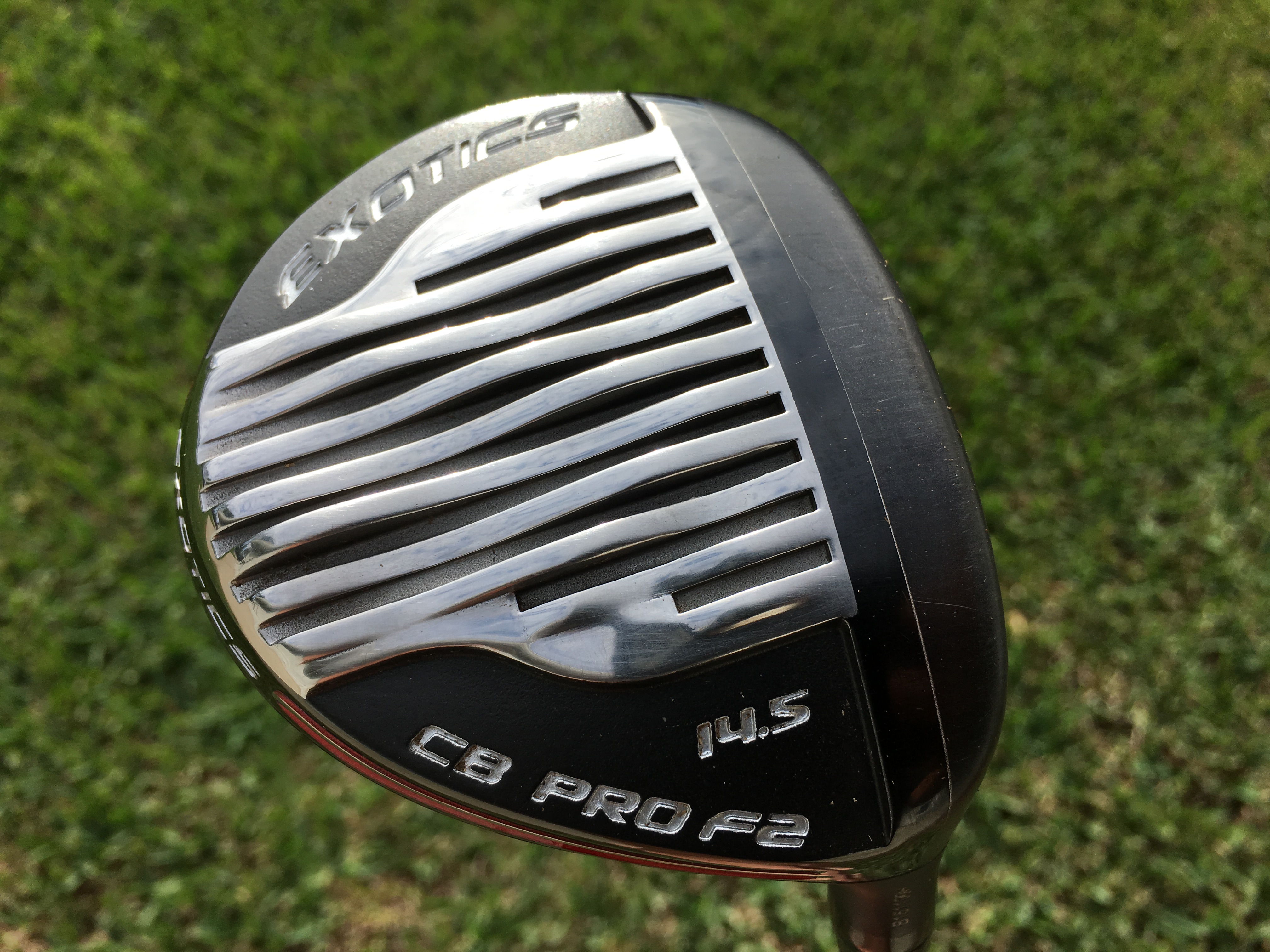
    Exotics CB Pro F2My golf buddies are well aware of my struggle. I’ve had a love-hate relationship with my three wood for a long time. For whatever reason – and there have been many – I have had a terrible time trying to find the right combination of loft, club head and shaft to make a three wood that is good enough for me to count on. For me, a three wood has to be versatile. I need to hit it well off the tee and off the fairway. It has to be forgiving but workable, and the ball flight cannot be too high or too low. Because of my very specific needs for this club, (bordering on obsessive compulsive) it has taken me the better part of a decade to find the perfect three wood, but I think the search is finally over.
    My first three wood was a Spalding Executive with a ladies flex steel shaft. I actually hit it further than my driver, as many beginners often do. Soon after titanium drivers took the market by storm, my old Taylor Made Original One 12 degree driver became my (strong) three wood. For the last decade I have relied on an Adams Golf RPM LP Tour Prototype three wood with 13 degrees of loft and a Fujikura Rombax shaft. I got the club from a player that was on the Senior PGA Tour back in 2005 (Now called PGA Tour Champions) and it has stayed in the bag for over 10 years. When the rest of my golf game went to crap, I could always count on my three wood to produce good shots for me.

    I’ve tested and played with countless fairway woods in the ten years since I got my Adams RPM, and until this summer I wasn’t able to find a three wood that performed well enough to replace the “gamer” Adams. A few came very close, but ultimately were rejected. The first was the Ping Rapture. With 13 degrees of loft, a larger club head and 43.5 inch shaft, the Rapture is more of a “2-wood” or “fairway driver,” and while I hit it a mile, it wasn’t versatile enough. The next candidate was the new Tour Edge Exotics CB Pro F2. After testing various Exotics clubs in the past like the CB3 & CB4 Tour, XCG7, EX9 and E8, I was excited to try the flagship model CB Pro F2. This club has an amazing blend of technology packed into a compact but classic looking club head, but the stock Mitsubishi Rayon KURO KAGE Silver Tini Series shaft wasn’t quite right for me. Keeping that in mind, a search for the right shaft to pair with the CB Pro F2 was underway.

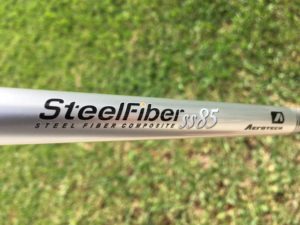
    Aerotech Steelfiber SS85 ShaftWhen I arrived at the 2016 PGA Demo Day in Orlando, I wandered by the Aerotech Golf booth and stopped in to see owner Chris Hilleary and catch up. I have been playing the amazing Aerotech Steelfiber graphite shafts in my irons for over 5 years and discovered that he had now developed a new Steelfiber fairway wood shaft. After hitting his demo club fitted with the new Steelfiber SS85 shaft, I knew I had found the perfect match for the Exotics CB Pro.
    I immediately ordered an Aerotech Steelfiber SS85 shaft and when the CB Pro F2 three wood arrived. I dropped everything off with my club maker. When I got the finished club back, I went out to test it. The results were as expected, and very exciting. The face of the CB Pro F2 is very hot and the Steelfiber SS85 shaft produces a mid launch without ballooning. The shaft is amazingly consistent as usual for the Steelfiber line, and it never feels boardy or unplayable. Going from a three wood with 13 degrees of loft to one with 14.5 degrees will obviously affect the ball flight. One would expect that increasing loft would result in a corresponding drop-off in distance, but so far in early testing with Game Golf the CB Pro F2 is actually averaging 4 yards more from all lies (255 yards vs. 251 yards) than my old Adams RPM. This very likely has to do with the advance in technology and materials since 2005 when the Adams was released to market. The Adams is made of steel, while the Exotics has a steel body and a beta titanium cup face with a much higher “spring” effect, or coefficient of restitution.

    It is still early as I’ve only had it in the bag for a month or so, but so far the Exotics CB Pro F2 (14.5 loft) fitted with an Aerotech Steelfiber SS85 shaft is a big winner. This three wood can hit all the shots and has just the right amount of forgiveness, power and control. It looks awesome, sounds solid and produces consistent shots from the tee or the fairway. I’ve finally found a fairway wood worthy of replacing my old gamer for good. The CB Pro F2 is so good in fact, that I’ll be looking into getting the 17.5 degree five wood to match it!

    While the Exotics CB Pro F2 may not be for everyone, Tour Edge’s Exotics line has something for everyone and I consider them some of the best performing fairways on the market. Even if you prefer another company’s fairway woods, if you are looking for the consistency of steel and the power of graphite in moderately weighted fairway wood shafts, I highly suggest looking at Aerotech’s Steelfiber SS offerings in 65, 75, and 85 gram weights. They are an amazing compliment to their game-changing iron and hybrid shafts.

    Thanks to Tour Edge and Aerotech, after almost a decade of searching for and trying hundreds of fairway woods, I think I have finally found the closest thing possible to the perfect three wood.

  • Aerotech Steelfiber Shafts

    Aerotech Steelfiber ShaftsFor decades, the material of choice for iron shafts has been steel. Compared to the hickory shafts of yesteryear and composite shafts of the present, steel shafts proved to be more consistent and stable. On professional golf tours around the world, steel shafts have been the overwhelming shaft of choice for irons for many years. There are several great steel shafts available for irons, like the new KBS C-taper shaft and the venerable Dynamic Gold shaft that has been around for what seems like forever. There have also been many advancements in composite shaft technology in the last decade. Graphite shafts are getting longer, lighter and more stable, but there hasn’t been a significant advancement in steel shaft design in a long time. Until now.

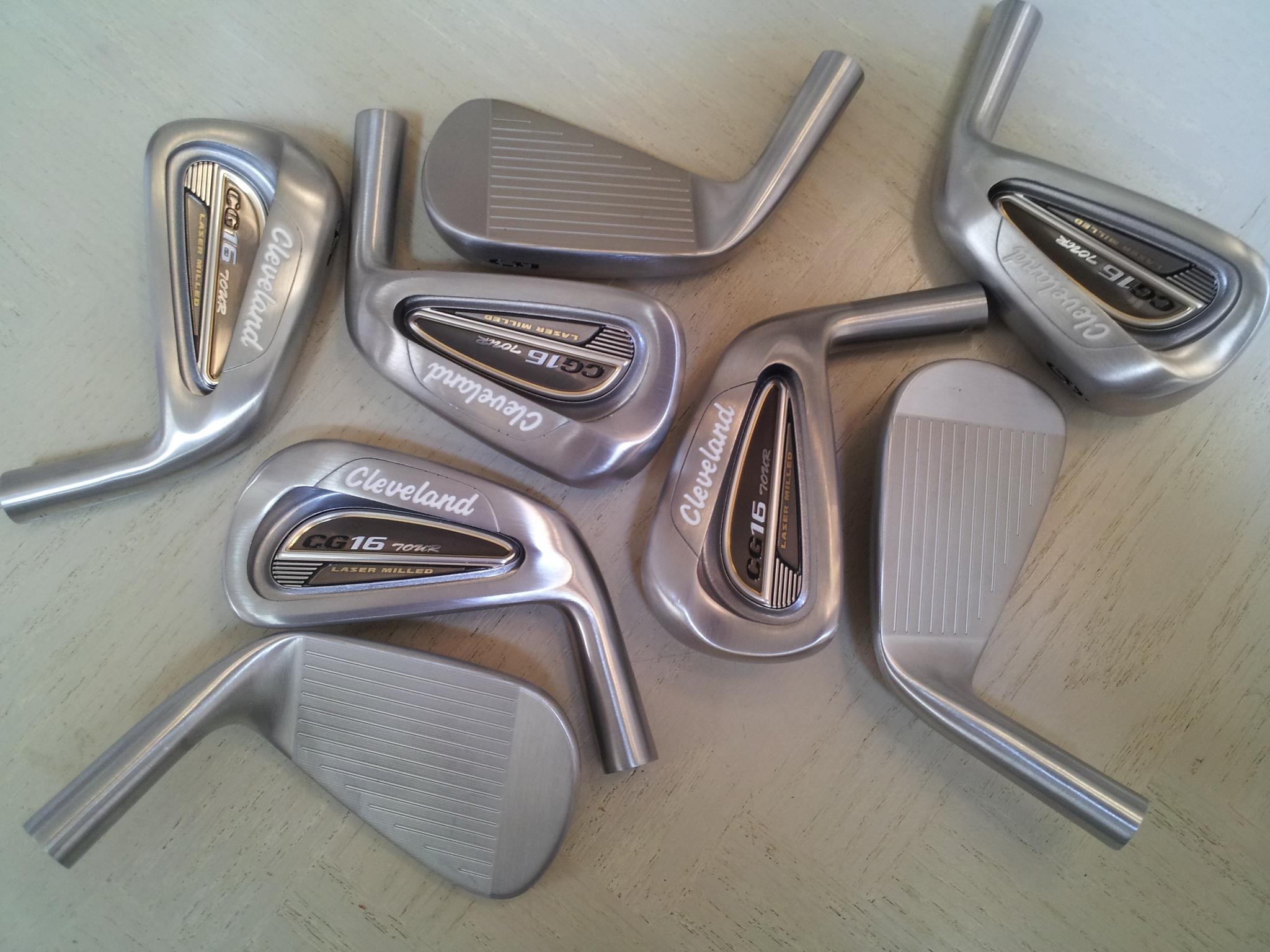
    Earlier this year while watching coverage of the PGA Tour on television, I noticed tour players Matt Kuchar and Brandt Snedeker playing iron shafts that weren’t like the rest. They appeared to be composite shafts, but after some research I found out they were Aerotech Steelfiber shafts. I reached out to Aerotech Golf for more information on the shafts and they agreed to send me a set of the very same constant weight, taper tip Steelfiber i95 shafts played by the PGA Tour pros. To help me test these shafts, I had them spine aligned and installed on a set of Cleveland CG16 Tour Concept iron heads by my club maker extraordinaire Glen Belden. He’s been building and fitting amateur golfers and touring pros since 1979. These iron heads are similar to the retail version but have a smaller head with less offset preferred by their tour players. They are also made of softer metal for better feel . In this case – 8620 with a raw satin finish.

    Founded in 1991, Aerotech Sports was the first company to produce an NHL approved composite hockey stick. They made helmets, bike components, fishing rods and more until breaking into the golf industry in 1994 when they produced their first golf shaft. At first Aerotech operated as an OEM supplier, making shafts for companies like Cleveland, Adams, Fenwick, Zevo and Pure Spin. In 2002 they launched their own line of branded shafts, and in 2005 Aerotech Golf was born.

    matt-kuchar-aerotechThe Aerotech Steelfiber shaft is like nothing I’ve ever seen before. Aerotech has managed to combine materials to create a shaft that has all the best properties of composite and steel shafts without any of the drawbacks. The innovative Steelfiber shaft is a high modulus graphite core wrapped with very thin steel fibers. Each steel fiber has a diameter of only 8 microns, or approximately 1⁄10th the diameter of a human hair. That means there is over 59 miles of steel fiber covering the entire surface of each shaft! This construction translates to a shaft that is very stable & consistent like steel, but is light weight and absorbs vibration like a graphite shaft.

    I’ve played with heavy (130+ gram) Dynamic Gold X100 steel shafts in my irons for most of my golfing career, so I was a bit worried when switching to a 95 gram Steelfiber shaft. Before even hitting the first shot with my new irons, I knew that these shafts were going to be special. Just flexing these shafts with my hands, they felt stiffer than any graphite iron shaft I’ve ever tried. In my hands they felt as stiff as my old X100 shafts, even though they are 35 grams lighter, and after hitting a few hundred balls on the range my predictions were confirmed. This shaft is remarkable. After playing with these shafts in my irons for over 20 rounds, hundreds of range balls and several months in temperatures ranging from 50 to 95 degrees, I can say that the Aerotech Steelfiber shaft is a winner.

    The first thing that stands out about this shaft is the vibration dampening. The Aerotech Steelfiber shaft does a great job at mitigating the shock and vibration of hitting the ground with an iron swing. As a result, they make your irons feel softer. My cast 8620 irons heads feel like butter on a solid strike, and on a cold day they eliminate that “stinger” you get if you hit the ball a few grooves low. The second thing I noticed was the stability and consistency of the Steelfiber shafts. It took me almost 72 holes to adjust to the shaft’s tendency to want to go straighter than my old shafts. I’m used to working the ball left or right with my irons, but these shafts hit it straighter than my old X100s and I had to make an adjustment and play less fade or draw. This sounds like a good problem to have for most golfers! The steel fibers woven around the shaft make them incredibly stable too. I’m able to hit knockdown shots, high shots and everything in between with no fear of losing control or ballooning the ball like a graphite shaft. Finally, the lighter weight of this shaft allows me to swing the club a bit faster, producing a little more distance. For me the gain wasn’t much, maybe a half club, but for others it will be more significant. Compared directly to the Dynamic Gold X100, the Steelfiber i95 tends to hit the ball slightly higher.

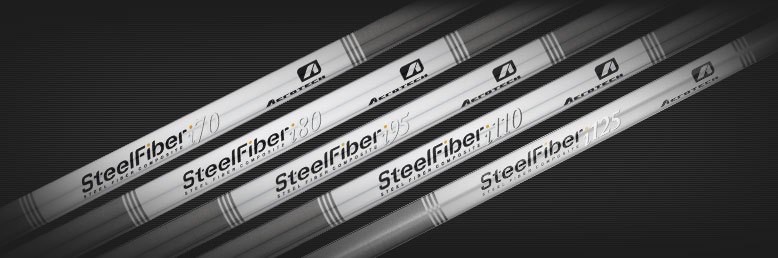
    Cleveland CG16 Tour Concept IronsAerotech offers the Steelfiber shafts in five weight classes: 70, 80, 95, 110 and 125 grams. On the lighter end of the spectrum, the i70 and i80 shafts will benefit players looking for more distance and/or a more stable composite shaft option for their irons. The i80 shaft is the most popular shaft in the Steelfiber line, and the one I would recommend for most golfers out there. The i95 shaft that I tested for this review is a great transition shaft for those wanting to move into a lighter weight iron shaft without going too light and substantially changing the feel of the club during the swing. The 95 gram weight allows the player to see some good improvement in distance while still maintaining accuracy and incredibly consistent distance control. The Aerotech Steelfiber i110 and i125 shafts are generally preferred by stronger players that are looking to maintain the overall effort it takes to swing their steel shafted irons, but want to benefit from the vibration dampening characteristics of a composite shaft. Aerotech Golf is able to maintain the playability of the 125 gram shaft by minimizing the wall thickness with the use of metal to increase weight instead of adding more graphite. Because graphite is 1/5th the weight of steel, it would take 5 times the amount of graphite material for the same weight increase, which increases wall thickness and gives the shaft a boardy feel.

    As with many other golf products, the biggest measure of success for a company can be adoption on the PGA Tour. Aerotech shafts are used by several players on the PGA Tour without paying the players to use them. Most notable is Matt Kuchar. Using the Steelfiber i95 in his irons, Matt was #1 on the 2010 money list, scoring average, all around ranking and top ten finishes. He also finished second in the FedEx Cup standings. “When I switched to Aerotech Golf shafts, I was looking for a lighter weight iron shaft that could provide me with consistent ball flight and spot on distance control. Aerotech’s SteelFiber shafts fit the bill perfectly. The SteelFiber technology has allowed me to take advantage of all the benefits of a graphite shaft yet still maintain complete control over my golf ball.” 

    The only negative I can find about these shafts is that for a player like myself who is used to playing heavy clubs, the adjustment to light weight shafts can take some time. Despite my love for these shafts in my irons, I’m hesitant to install them in my wedges. I think I would have to go with the i125 to maintain the same weight and feel I prefer in a wedge. That being said, if you get these I highly recommend a skilled club maker installs them in order to get the gram weighting of your iron heads right, or they may be way too light on the swing-weight scale. This is often an issue when moving from a steel shaft to graphite in your irons.

    Aerotech Golf really has something with the Steelfiber shaft. To me it’s the most significant advancement in iron shaft technology in my lifetime. The construction is unique and the performance of the Steelfiber shafts far exceeded my expectations. Any golfer who is looking to take advantage of the benefits of composite shafts without sacrificing the control and consistency of steel shafts needs to take a look at these. The Steelfiber line of shafts is also available for woods and hybrids, and they have a composite wood shaft called the Claymore that has taken the world of professional Long Driving by storm. The Steelfiber shafts are priced comparably to other premium steel shafts, and I believe they are a better value. Give them a try, I know you won’t be disappointed. Let us know what you think or what your experience with them is like by leaving a comment.

    Don’t forget to “LIKE” the Facebook fan page for daily updates, exclusive content, unboxing pictures and more! Get involved in which products we review and tell us what you think!