Tag: SLDR

  • Don’t Believe The Hype – TaylorMade’s Driver Alternatives

    2014-10-20 13.34.16The driver is the most popular club in many people’s bag, and the one club that consumers change the most often. This is why you see the massive marketing campaigns for each new driver that golf club manufacturers release. I’ve seen the game evolve in the last 20 years on the professional tours as equipment technology advanced. The predominant course management strategy is the bomb-and-gouge method where distance takes priority over accuracy. The idea is that one would rather hit a wedge from the rough than a 7 iron from the fairway.
    2014-10-20 13.35.25My own game is proof that the bomb-and-gouge approach can work for better players. Using the awesome new golf tracking device from GAME GOLF to track my stats over the last 18 rounds of golf, I am sporting a scoring average of 72.1 despite hitting only 47% of the fairways. While I would love to be more accurate off the tee, I know it hasn’t hurt my game too much to be in the rough, as I still managed to hit 66% of greens in regulation over that span.

    The problem is – Most average golfers can’t create the kind of club head speed to hit the ball out of rough with control like the PGA Tour pros and low handicap amateurs. So how can you improve your driving accuracy? Don’t believe the hype of that new driver that promises more distance, accuracy and forgiveness! The most obvious answer is by using something other than a driver off the tee.

    SLDR Mini Driver

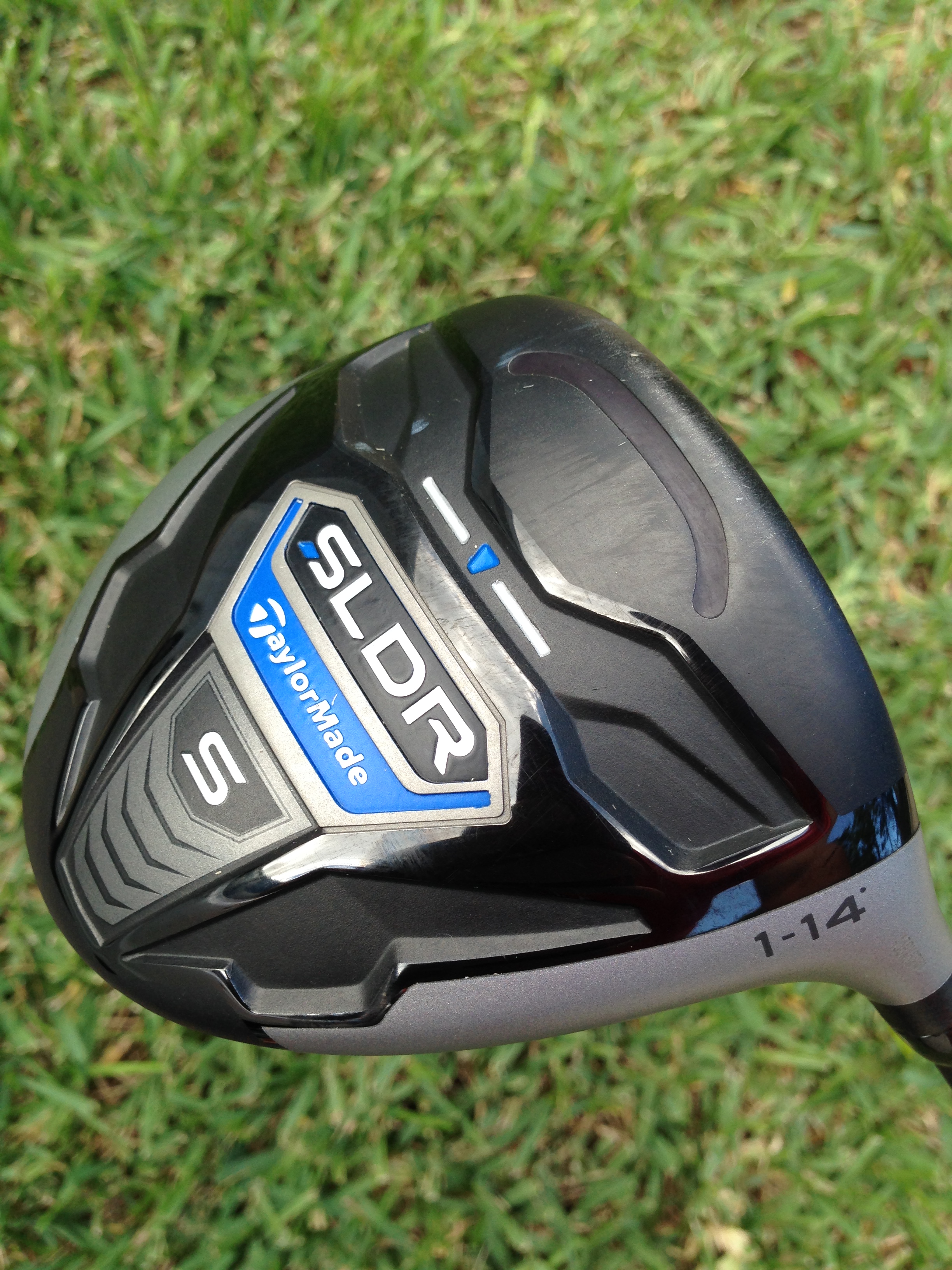
    For the last few months I’ve been experimenting with a couple of clubs from TaylorMade adidas Golf (TMAG) that are designed as alternatives to the driver for those that are seeking more accuracy off the tee. The first is TaylorMade’s SLDR Mini Driver. TMAG noticed that tour pros and low handicap amateurs hit their 3-wood off the tee far more often than in the fairway, so they used that data to create a new club that fits somewhere in between the two. At 260cc, the SLDR Mini Driver is bigger than a typical fairway wood but far smaller than the average 460cc driver. The shaft is also a little bit longer than a 3-wood at 43.5″, compare to a driver’s modern standard at 45″. The SLDR Mini is available in 12, 14 or 16 degree lofts.

    TaylorMade sent me an SLDR Mini with 14 degrees of loft, and I eventually re-shafted it with the awesome new Aldila Tour Green 75TX shaft. (More on that later) The idea for me was that the SLDR Mini could replace my old Adams RPM 3-wood. With its larger head and deeper face, the SLDR mini is easy to hit and more forgiving than a standard 3-wood off the tee. The sole design also makes it easy to hit from the fairway, despite the bigger head size. This club hits bombs. I was easily getting 10-15 yards more carry than my Adams RPM 13 degree 3-wood, and the SLDR Mini was a joy to hit off the deck too. Even though I seldom hit 3-wood off the fairway, I know I can pull off just about any shot with it. For golfers looking for a club they can hit almost as far as a driver with greater accuracy, the SLDR Mini will be a godsend.


    Tour Preferred UDI – Ultimate Driving Iron

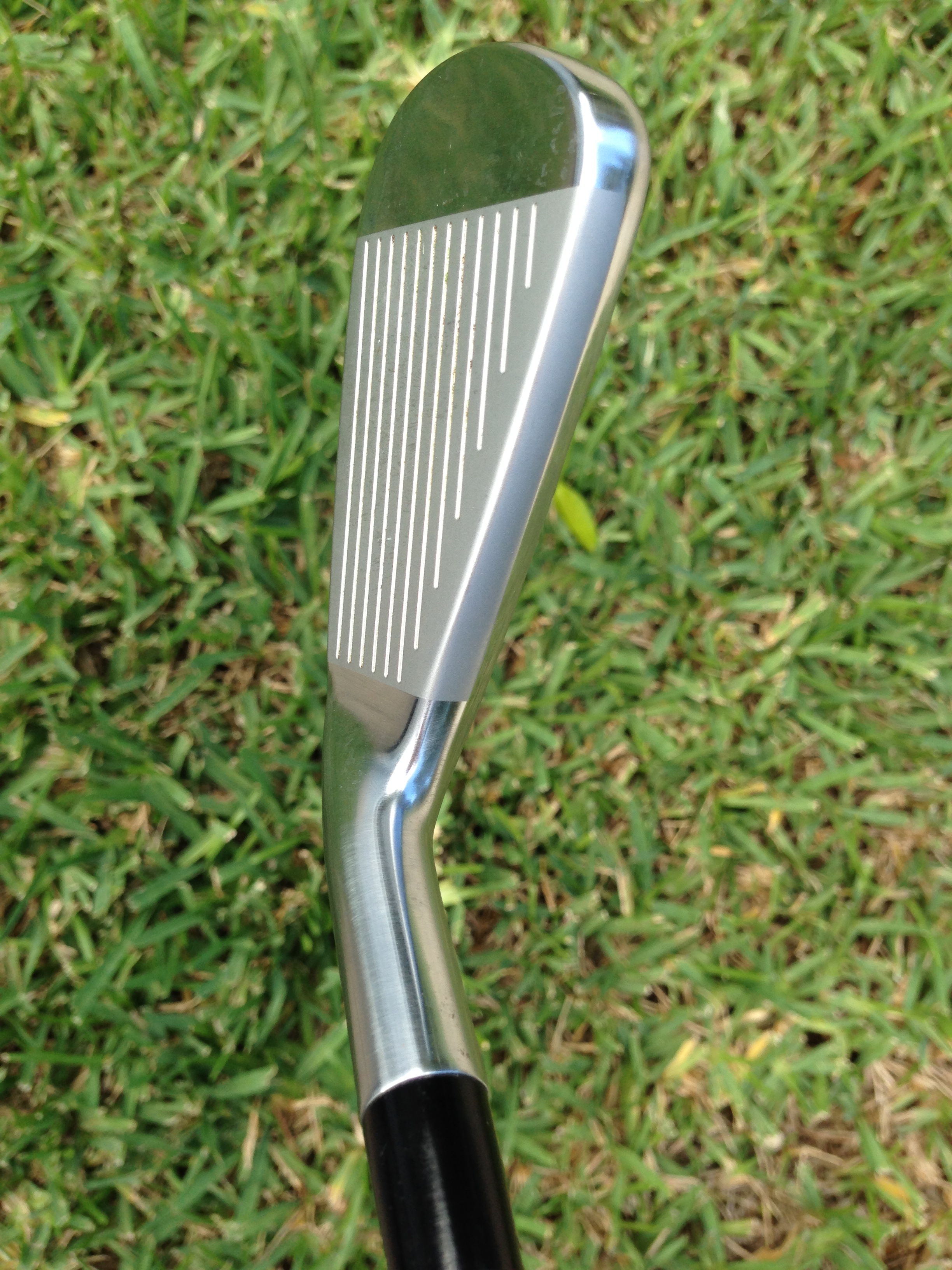
    The second driver alternative I’ve been messing around with is TMAG’s Tour Preferred UDI – Ultimate Driving Iron. The UDI is a hollow construction 450 carpenter steel faced driving iron that was designed to deliver distance and playability of a hybrid with the control and workability of an iron. Many of TaylorMade’s staff pros played the UDI at the British Open to help control ball flight in the wind. The UDI comes in 16, 18 and 20 degree lofts.

    The old saying goes “Only god can hit a 1-iron”, but that isn’t true any more. I’ve always loved hitting long irons, and have never been a fan of hybrid clubs, so I had a feeling I would love the Tour Preferred UDI 1-iron. To make room for the UDI (16 degrees) in my bag I took out the 18 degree Cleveland Launcher DST hybrid I’ve had for a few years. I have been hitting it for a couple of months and my numbers with it have earned it a place in my bag on most days. Over a testing period of 18 rounds, the UDI 16 is averaging 251 yards off the tee with a long of 294 yards and fairway accuracy of 71%. Considering the stock KBS Tour C-Taper Lite shaft is too weak for my swing speeds, I think that accuracy number will go up a bit with a properly fit shaft. As you would expect from a 1-iron, the ball flight stays very low and hot, with very low spin.

    The UDI is a great driver alternative on courses that play firm and fast, especially for the better player who can swing aggressively and find the sweet spot on a consistent basis. While the UDI is pretty easy to hit, the lower ball flight and more traditional iron-like shape and size may be more difficult to hit for mid to high handicap golfers. This is exactly why hybrids were created in the first place. What’s the difference between the UDI and a standard hybrid? As mentioned above, the UDI has the flat face and smaller size of an iron for control and workability with a hollow cavity and low CG for distance and some forgiveness. A typical hybrid club will have a slightly rounded club face like a wood and will offer a higher ball flight and slightly longer shafts for more distance.


    Conclusions

    The SLDR Mini is still a bit of an enigma for me, mostly because I may hit it too far in stock form. I know what you are thinking – what a good problem to have, right? With its longer shaft and higher ball flight compared to my regular 3-wood, I find the distance gap between the 3-wood and 5-wood is too great at about 25 yards. What I did to fix this is re-shaft the club and cut half an inch off the playing length. The new Aldila Tour Green 75TX shaft I installed at 43″ reduced the carry distance by 5-7 yards while increasing accuracy for me. With a little more testing and tweaking, I’m confident that the SLDR Mini Driver may become my new strong 3-wood.

    The Tour Preferred UDI 16 degree 1-iron is an instant favorite for me, but it won’t have a full time spot in my bag due to the specialized nature and lack of versatility of a 1-iron. Simply put, the UDI isn’t useful for me in softer conditions or on a longer golf course. The UDI 1-iron hits the ball very low and straight, so it will be used almost exclusively off the tee. I’ll play it on tighter courses, windy days or in dry conditions when the ball is rolling out. Since most courses in Florida play soft and lush, the UDI will probably be swapped in and out of the bag as needed with the 5-wood or 3/4 iron.

    The bottom line is, if you struggle off the tee, one of these two options could be a game changer. The SLDR Mini Driver is a legitimate driver-replacement option for all golfers, and the Tour Preferred UDI gives better players a deadly long-iron replacement option for tight courses and firm or windy conditions.
     

  • TaylorMade SLDR Mini Driver

    TaylorMade SLDR Mini Driver

    Taylor Made adidas Golf (TMAG) has done it again. We’re used to seeing new clubs hit the market at several times during the year, but this time they’ve gone way beyond designing a new club – they’re invented a time machine! TMAG’s new time machine (aka – SLDR Mini Driver) takes us way back to the 1990s when shafts were shorter, heads were smaller and the center of gravity was close to the club face.  Naturally this new SLDR Mini Driver has modern shaft options, but the design concept is similar to the older clubs of the 90s to me. Based on the premise that many players struggle with the driver, they’ve built a 3 wood that is made to hit the ball off the tee for driver-like distance. So, if I understand correctly – It’s for people that want to hit their 3 wood almost as far as a driver, but not as far as a regular driver, but straighter than a regular driver, but not quite as straight as a 3 wood. Yeah. Tell you what – I’ll let TMAG explain it to you with their official press release below:

    Carlsbad, Calif. (April 7, 2014) – TaylorMade Golf Company, makers of the No. 1 played driver in golf, today announced the launch of the SLDR Mini Driver, a 260cc metalwood equipped with a 43.5” shaft, designed to promote distance and accuracy off the tee for players who frequently drive with their 3-wood. 

    TaylorMade research indicates that a high percentage of golfers, regardless of skill level, hit 3-wood off the tee more often than from the fairway. However, the 3-wood is designed to hit the ball off turf, not a peg. That void between product design and product use led to the development of the SLDR Mini Driver, which is engineered to be longer off the tee than a 3-woood and incredibly accurate.

    “Tour pros and betters amateurs often hit their 3-wood off the tee more often than from the fairway,” said Brian Bazzel, TaylorMade’s Senior Director of Metalwood Creation. “We embraced that fact to create a metalwood that’s sized between a 3-wood and driver and is designed to be easy to hit off a tee.”

    Like the SLDR driver – the No. 1 driver on the PGA Tour – the SLDR Mini Driver features a low-forward center of gravity (CG) location that reduces spin. From there, most players benefit from playing a higher loft (what TaylorMade calls “lofting up”) by combining a low spin-rate with a high launch angle, which are the launch conditions that promote maximum distance.

    The SLDR Mini Driver also incorporates TaylorMade’s Speed Pocket technology, which promotes lower spin on impacts low on the clubface, where the majority of driver mis-hits occur.

    And though it’s engineered to be easier to tee off with than a 3-wood, the SLDR Mini Driver is also easy to launch the ball off the turf with, thanks to its smooth sole that’s smaller and offers less resistance than a driver’s.

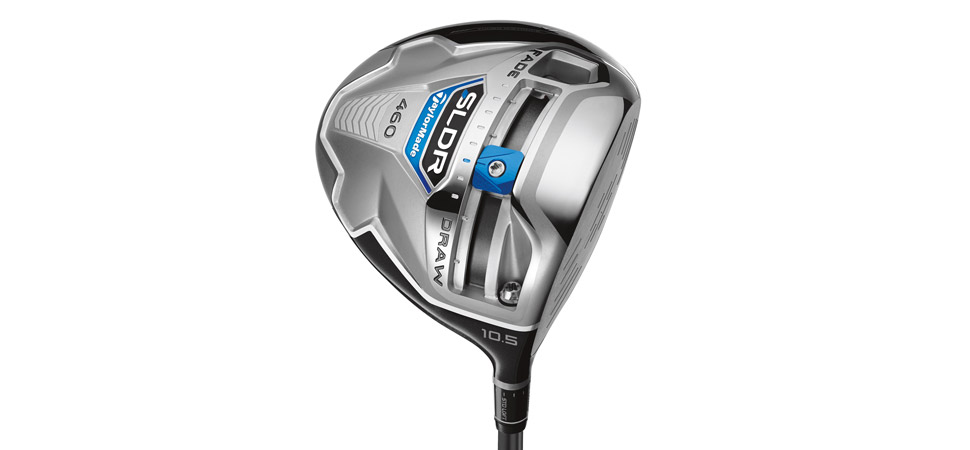
    Aesthetically, the SLDR Mini Driver’s sleek shape and smooth matte silver crown, black clubface and black button-back gives the club an attractive appearance from all angles, especially at address. The contrasting colors also facilitate easy and accurate face alignment.

    The first Tour pro to put the SLDR Mini Driver in play was Troy Matteson, who put not one but two in his bag at the Valero Texas Open: one to use off the tee and one to use from the fairway.

    “The SLDR Mini Driver is intended to appeal to a wide audience,” added Bazzel. “For the Tour pro or top amateur who places a premium on distance control and accuracy, this club is a fantastic option. It’s also a great choice for those amateurs who struggle with 460cc drivers.”

    Two SLDR Mini Driver models are available, standard and TP. The standard model retails for $279 and is equipped with a Fujikura 57 shaft. It is the same shaft used in the SLDR driver, but at 43.5 inches (two inches shorter than the SLDR driver) it promotes tighter dispersion for increased accuracy. The TP model retails for $379 and is equipped with Fujikura’s Motore Speeder 7.3 shaft and is built to a heavier, D5 swingweight for improved control. Lofts in both models range from 12°, 14° and 16°.

    Both SLDR Mini Driver models will be available at retail starting on 5/2. Visit TaylorMadeGolf.com for more information.

  • TaylorMade SLDR Driver

    TaylorMade SLDR DriverIf I could only use one word to describe TaylorMade Golf for the past 3 or 4 years, I think it would be: Prolific.

    pro·lif·ic (prəˈlifik) adjective: present in large numbers or quantities; plentiful.

    TaylorMade is everywhere. Go to any major sporting goods retailer, golf store or green grass pro shop and you are likely to see TaylorMade clubs, balls, hats, bags and more. This is deliberate of course. In the marketing war to win over customers, more is better. The more you see their name on TV, in pro shops or on the course, the more likely you will become a TaylorMade customer yourself.
    For this strategy to work however, you need a good product and money, and TaylorMade has both. Now backed by the adidas Sports Group, TaylorMade adidas Golf (TMAG) has a long history of industry changing products. It all started in the 70s when Barney Adams created the original “Pittsburgh Persimmon” cast metal driver. Once he got a few PGA Tour pros to try it and they started winning with it, the metalwood era had begun. By the mid 90s, wooden headed clubs were gone. In 1995, they introduced the Burner Bubble driver with a painted (imagine that) copper head and the innovative bubble shaft, and it took the market by storm. By 2004 when the R7 adjustable driver came out, TaylorMade had already established itself as an industry leader. Last year we had the famous (or infamous) white drivers and fairways, and while one TMAG staffer once told me “We’re all in on white”, they have returned to a more neutral color scheme with their most recent clubs, the SLDR Driver and the newly introduced JetSpeed Driver and Fairways.

    TaylorMade SLDR Driver

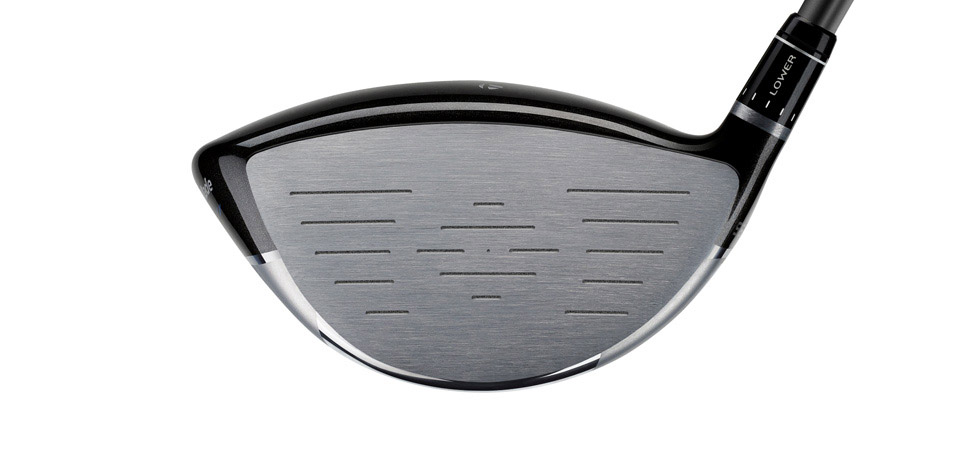
    TaylorMade SLDR DriverThe TaylorMade SLDR driver is almost old hat at this point, having come out earlier this summer. TaylorMade loves to introduce new products at several points in the year, making it seem like there is a constant stream of new goodies coming from the R&D folks in Carlsbad, California. They say what makes this driver long is the placement of the CG (center of gravity) low and forward in the club to reduce ball spin. When combined with greater loft at impact, balls are launching higher with less spin, and according to the magical club testing robots and launch monitors, it is their longest driver ever.
    We’ve all heard this before of course. Longer, straighter, more forgiving – these words are attached to every company’s new product launch press releases nowadays. Will the TaylorMade SLDR driver deliver on this promise? In a word, maybe. Every golfer will get different results, and obviously a proper fitting makes a huge difference. I compared the SLDR driver side by side with two current “gamer” drivers. The Adams Super LS and a Cleveland Classic that is now my backup.

    Performance

    TaylorMade SLDR DriverHaving such a low and forward center of gravity (CG), the TaylorMade SLDR will perform better if you add some loft. If you normally play a 9.5 degree driver, try the SLDR with 10.5 degrees. The forward CG lowers ball spin to the point that too little loft will leave you unable to carry the ball very far. I had the 10.5 lofted TaylorMade SLDR TP, which is the “tour” model with an upgraded shaft. I usually play 7.5 (Cleveland Classic) to 8.5 (Adams Super LS) degrees of loft, so going to the 10.5 head was a big change. Naturally I launched the ball very high with the SLDR driver. Since I was basically comparing apples and oranges, I didn’t notice a gain or loss in distance with the SLDR driver. The SLDR driver carried a bit further than the Cleveland Classic and Adams Super LS, but because the conditions are usually soft and wet in my area I wasn’t able to see how much roll I would get. It seems that every year my swing speed goes down, but I don’t lose distance. Advancements in club and ball technology are the main reasons for that. In practical terms, distance depends largely on one’s golf swing and playing conditions. It is too hard for me to judge if this driver is really longer than my “gamers” in real world testing. One thing is for certain, this driver is as hot as any current driver, so if you have a club that is a year or two old, you will most certainly see a gain in distance with the TaylorMade SLDR driver if properly fitted.
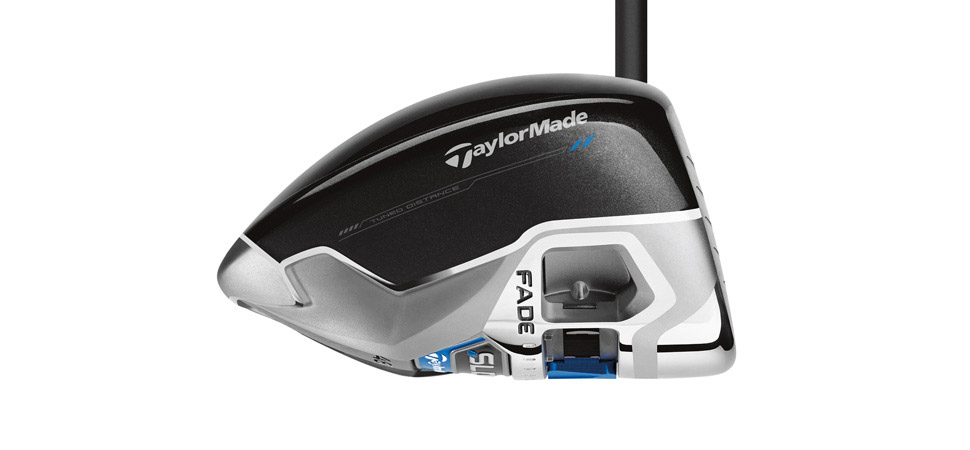
    I generally don’t mess with adjustable drivers much, because I like to work the ball both ways off the tee and prefer a neutral setup that allows me to shape shots without too much extra effort. The SLDR driver’s sliding weight allows a person to dial in up to 30 yards of side to side ball flight, according to TaylorMade. Out of the box I found the TaylorMade SLDR wanted to draw the ball, so I set it a few clicks towards to toe and found a setting that worked pretty well. Had the shaft been a little stiffer I think the default setting may have worked. Either way, this adjustment is simpler and easier to adjust than the removable weights and confusing sole plate of the R1 driver, and a welcome change.

    Aesthetics

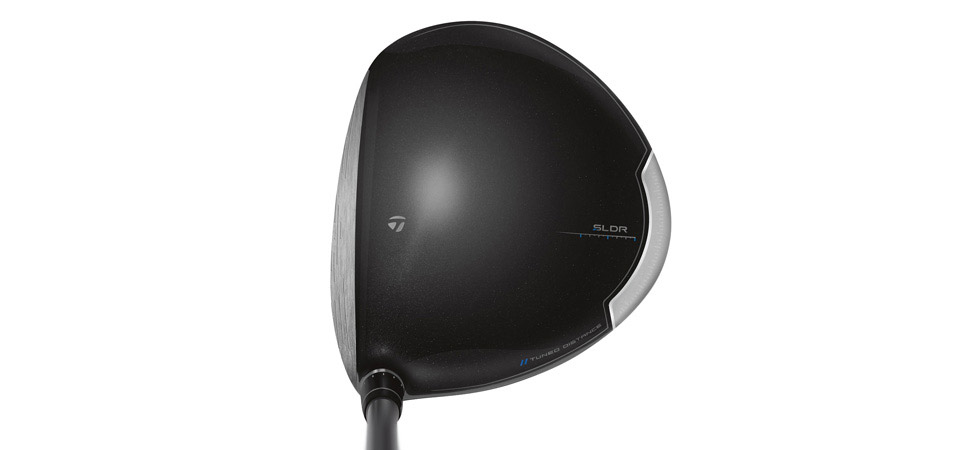
    TaylorMade SLDR DriverIs the era of the white drivers over? I’m not sure, but for the moment it is on hiatus for the TaylorMade SLDR driver. This one is painted a nice charcoal-gray color, which is more traditional and looks great. The chrome accent at the rear of the crown and busy graphics let you know this is still a TaylorMade driver, however. The busy design on the sole is classic TaylorMade, as the MWT (moveable weight technology) has evolved to become a single weight sliding along a track for adjustments in draw or fade bias. The adjustable hosel is still there to allow the golfer to adjust dynamic loft by opening or closing the club face. Compared to some of the more recent offerings, the TaylorMade SLDR is a pretty good looking club.

    Conclusions

    The SLDR driver is a solid, low spinning club that strikes a decent balance between new technology and classic looks. If properly fit, I’m confident that most golfers will see an increase in distance, but depending on what kind of driver you are upgrading from, that gain may be negligible in the real world. To get the most out of this driver, I highly recommend adding loft. Even the 10.5 that I was hitting wasn’t producing a ball flight that was too high for me. Everyone differs of course, so go out and hit one and see for yourself. If you are looking for a good upgrade from a driver that is a few years old, the TaylorMade SLDR is a worthy choice.