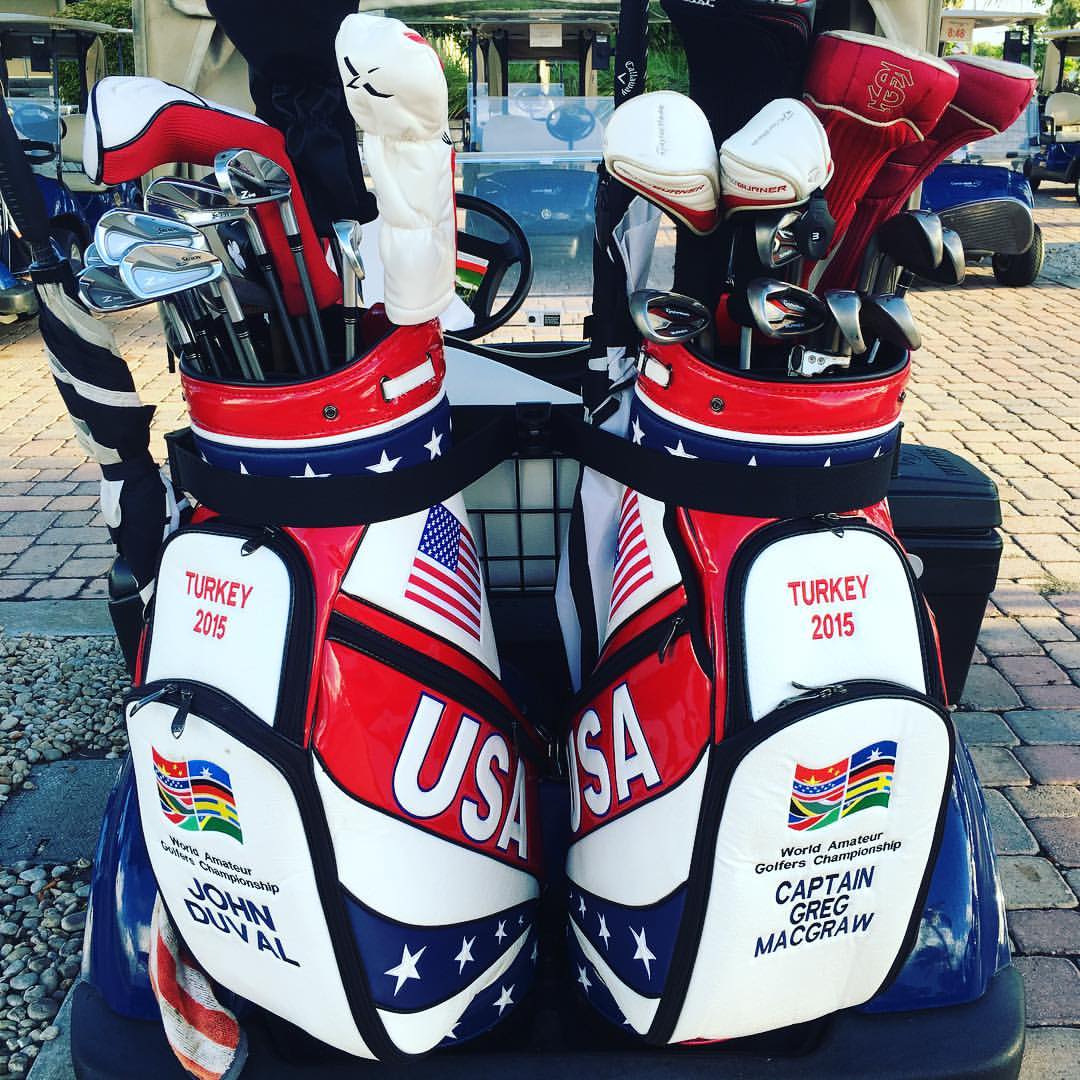
My very first WITB post was written in September of 2015 before I left for the WAGT National Championship in Pennsylvania. Since then a lot has changed. In fact, nothing from that bag remains in play for me today, including the bag itself! All fourteen clubs have changed, I got a new staff bag from the WAGT and I’ve even switched golf balls.
I love to tinker with equipment, but being a low handicap golfer with a self-taught swing means that in order to play my best I need custom fit clubs. This makes testing new clubs a bit of a challenge. Variations in a shaft’s weight, kickpoint and flex can send shots way offline if not fit properly. I’ve worked hard with my amazing club builder to get every club in my bag set up perfectly for my game, and I can’t tell you how important it is for your game to have your clubs properly tuned and fitted by a competent club fitter.
Now – Let’s dive into my golf bag(s) and talk about my clubs, and how they’re set up as well as my favorite gadgets and gizmos that help me play golf.
My Golf Bags, Accessories & Favorite Gadgets
While I would prefer to walk, I play golf using a motorized cart most of the time since it is mandatory at many Florida golf courses, and most of my golf buddies are too lazy to walk with me at the courses that allow it. For that reason, I alternate between a custom 10.5″ Burton USA staff bag I got when I qualified to represent Team USA at the World Amateur Golfer’s Championship in 2015 and a new Sun Mountain 4.5 LS carry bag.
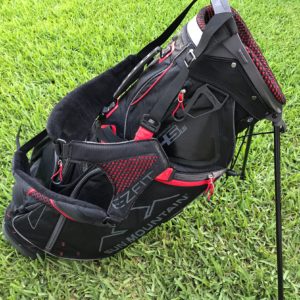
I’ve only had the Sun Mountain 4.5 LS carry bag for a few months, but I’m a big fan of the innovative design and efficient use of space. It’s the heaviest of Sun Mountain’s carry options, but also adapts well to life on a golf cart and holds everything I need to bring with me with ease. My Burton “Team USA” staff bag is huge and heavy, but I can pack it with everything I’ll need for tournament golf like some snacks, 32oz sports drinks, extra towels, rain gear and more. Despite the large size, I can shoehorn it nicely into my Club Glove Last Bag travel case and go anywhere in the world with it easily. So far I’ve logged over 20,000 miles of international travel on in without incident.
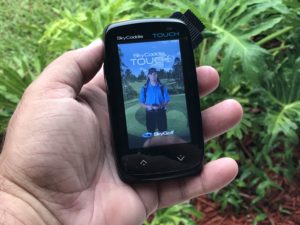
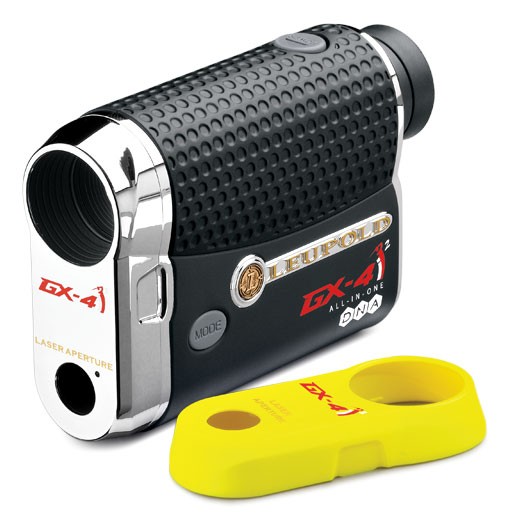
I like to have as much information as possible when playing, so I frequently combine the use of a GPS distance device with a laser rangefinder to get accurate yardage information and help plotting my way around the course. To that end, my distance measuring devices of choice are the SkyCaddie TOUCH and the Leupold GX-5i³ laser rangefinder. Both devices are one of the best available in each category, and function flawlessly. Adding Frogger Golf’s Latch-It rangefinder strap makes using the rangefinder that much easier, and the Latch-It ecosystem is my favorite new golf gadget in years. While I haven’t posted a round with it in a while, GAME GOLF is still a fun and easy way to track stats and help you improve. Since most of my clubs have changed, I plan to start using GAME GOLF again this summer to see how the newer clubs perform compared to the older ones.
Driver – Ping G LS-TEC 9°
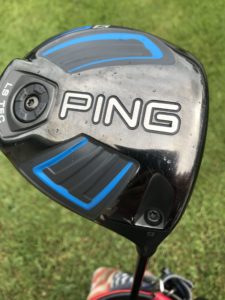
Ping gave us one of the best drivers in the game a few years ago when they introduced the G30 and G30 LS-TEC drivers. I was fortunate to see amazing accuracy gains of 30% with it while still getting more distance over my old driver. Also fortunate for me, Ping later introduced the G LS-TEC driver that I now use. It is fitted with the Ping Tour 80 shaft in X-Flex, which is a custom option. They updated the head and made it sound a little different, but I haven’t gotten enough data to know if it’s really longer and straighter as they claim. Either way, I hit it great and recommend it for anyone that wants the best blend of distance with accuracy and forgiveness.
Fairway Woods – Tour Edge Exotics EX10 Beta
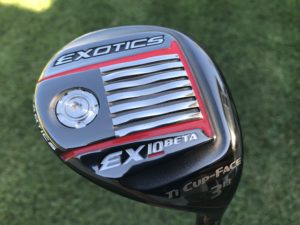
My recent struggle to find the perfect three-wood has been well documented, but when Tour Edge came out with the Exotics CB Pro f2 last year thought I had found my new fairway howitzer. It is a very high performance, versatile three wood that averages almost 260 yards and I couldn’t be happier with it. But – Tour Edge being one of the leading golf club companies when it comes to technology, they took some of the best design features from previous fairway wood designs and combined them using new a manufacturing process and created the Exotics EX10 and EX10 beta fairways. I immediately ordered the EX10 beta in 13 degrees with the new Project X HZRDUS Black shaft. I had my club fitter tweak it to my specs with a spine-alignment and swing weight adjustment, re-gripped it with my preferred Golf Pride MCC Plus4 grips and it is now ready for prime time. It’s very new and I’ve only played 18 holes with it so far, but the results have been impressive and I’ve already hit some tee shots with it to places I’ve never seen before. I can’t wait to try it out on the launch monitor.
Hybrids/Long Irons – Srixon Z H45 & U45
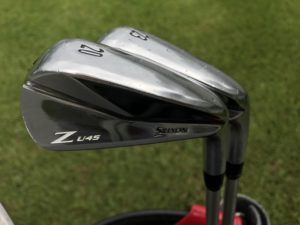
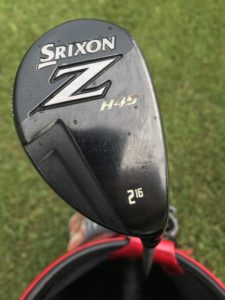 I got my Srixon Z H45 hybrid and Z U45 utility irons back in 2015 and from the first ball I knew I had something special in my hands. Even though it is marked with a number two, the Z H45 hybrid has 16 degrees of loft which makes it more of a one iron. As a result, it hits low, piercing bullets which makes it great for use off the tee, but not very versatile for approach shots. Depending on the course, this club may be swapped for a 50 degree gap wedge. It is fitted with an amazingly consistent Aerotech hls880 hybrid shaft.
I have two Srixon Z U45 long irons in the bag – The 20º and 23º models, which are my three iron and four iron. I absolutely love hitting these clubs. Forget about traditional long irons, these utilities are amazingly easy to hit while being more versatile and just as forgiving as a hybrid. My only regret is not replacing my old long irons with utilities like these much sooner.
Irons – Srixon Z745 (5-PW)
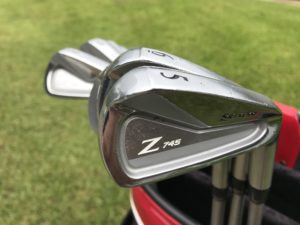
My irons are the 2015 model year Srixon Z745 cavity back forged irons. They replaced my Cleveland CG16 Tour Concept irons from 2010. The Srixon irons have a little less offset than the Cleveland irons which took a wee bit of adjustment for me, but I adapted to the new clubs quickly. I’ve been playing Aerotech Steelfiber shafts in my irons for over 5 years and I saw no reason to change with these clubs. I fitted them with the Steelfiber i110 constant weight shafts. There’s nothing like the feel you get from a forged iron with a graphite shaft, and with Aerotech you get that awesome graphite feel with the consistency and control of steel. I keep saying it over and over, but Aerotech really does make the best shafts in golf.
Wedges – Hopkins CJ1 (54 & 60)
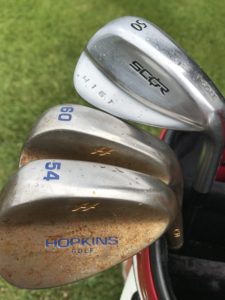 When Greg Hopkins left Cleveland Golf in 2012, took one of Cleveland’s lead designers with him and formed Hopkins Golf, I became an instant fan. What Hopkins was doing essentially was selling a Cleveland look-alike wedge cast from soft 8620 steel direct to the customer that you could customize with various grind options and plenty of paint fill and stamping choices. I got a raw lob wedge with the channel grind and fell in love instantly. Sadly, Hopkins Golf seems to have shut down operations since mid 2016, so I took to the interwebs to find some and discovered a website that had the discontinued wedges I wanted in stock, so I ordered two for $60 each.
The other change I made in my wedges was going to a softer shaft. After consulting with my club fitter, we decided it would be best for me to switch from a Dynamic Gold X100 to the softer S400 that is so popular on tour. After a half-dozen rounds with the new wedges I’m glad I did and a little peeved that I didn’t so it years ago. At least now I have a three-wedge setup that works well for most situations. I still swap the 2 hybrid or 3 iron out for a SCOR 50º gap wedge on occasion if the course demands it, and will be replacing the SCOR 50º with a Hopkins 50º soon for a matching set.
Putter – Scotty Cameron Select Newport 2 Notchback Dual Balance
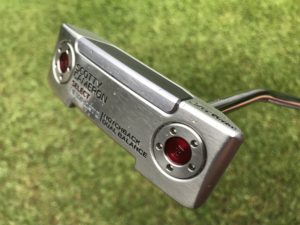 The most important club in my bag is the putter. It is also the club I struggle with the most, and as a result it becomes the club that changes most often. I have a bad habit of changing putters whenever I have a bad day on the greens, and these frequent putter changes only compound the problem by hurting consistency. I suppose that’s one of the drawbacks of being a golf blogger and having a couple dozen putters in the garage, all fighting for my attention.
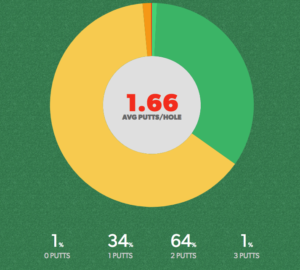
When I really think about it, I’m being unnecessarily hard on myself because my putting statistics are very good compared to other players of my ability, but that’s the point – I’m trying to improve, not be average. Using a tool like GAME GOLF has shown me that I need to make more putts in the 5-15 foot scoring range. I think just sticking with one putter will help, so that’s my goal.
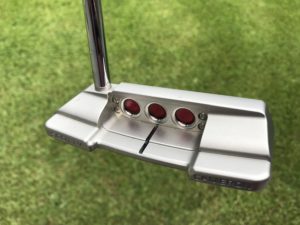
The putter I’ll be sticking with is a good one, even if the name is way too long and complicated – In my bag is the Scotty Cameron Select Newport 2 Notchback Dual Balance. It is like the standard Newport 2 Notchback but measures 38 inches long, has a 50 gram back-weight in the handle and features a larger head with an additional 50 grams of weight – hence the name Dual Balance. The idea with all the extra weight is to help slow down your stroke and eliminate the small muscles that tend to sabotage putting strokes. I love the heft and balance of this putter and if it’s a Scotty you know it rolls the ball well. My only gripe with Scotty Cameron is that they tend to have more loft (3.5º) than I like in a putter.
The Golf Ball
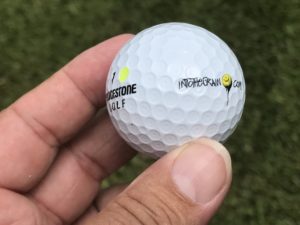
Last but certainly not least, since our last WITB post I have a new golf ball. In 2000 Titleist introduced the legendary Pro V1 golf ball and killed my beloved Titleist Tour Prestige and Tour Professional, effectively ending the wound golf ball era. In the coming years I struggled mightily adjusting to the new solid core golf balls. Eventually I found the Srixon Z-UR balls in 2005 and most recently played with the Srixon Z-Star & Z-Star XV until early 2016.
In early 2016 at the PGA Show in Orlando I met with the folks from Bridgestone to talk about their new B330 line and came away impressed. After a few rounds of testing the new B330, I switched. I ordered a case of the B330 balls with my logo, and an additional ten dozen without a logo so I’m set with enough golf balls to last me several years. The B33o is very similar to the Z-Star XV I used to play, but spins a bit more around the greens and flies a bit straighter in the wind. It’s very durable for a “tour” ball and I’ve been very happy with it so far.
 It wasn’t that long ago that I remember playing golf without any distance measuring devices other than a bush around the 150 yard mark in the fairway. Along came the 100, 150, 200 and 250 yard markers, then sprinkler heads all over the course were marked with yardages. From there, it wasn’t long before laser range finders and GPS devices started showing up. The game hasn’t been the same since.
 The dramatic elevation changes of this course and high altitude of the Heber Valley area make club selection very difficult for someone like me who usually plays at sea level. The thinner air means the golf ball travels 10-15% further, and while that can be a huge ego boost for tee shots, the sometimes severe uphill and downhill holes require lots of imagination to get the correct distance with approach shots.
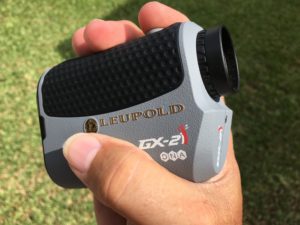
 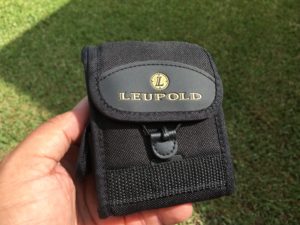 In my 54 holes of testing the Leupold GX-2i2 rangefinder at high altitudes in the mountains of Utah, I found that the True Golf Range was amazingly accurate and invaluable for me. The Club Selector feature is a very nice addition, but I found that I mostly ignored the club suggestions because not every shot is a stock iron shot in golf. When in doubt however, it proved very useful. This rangefinder is staying in my golf bag for a long time, even if I don’t use TGR for tournament play. It’s accurate, light weight and packs a lot of technology into a nice compact package.