Tag: Laser

  • First Look: Bushnell’s Advanced Distance Measuring Devices

    First Look: Bushnell’s Advanced Distance Measuring Devices

    Bushnell has been a leader in GPS and laser rangefinders for golf and other outdoor activities like hunting for years. Electronic distance measuring devices have been a part of my golf routine for so long, I can’t even remember the last time I played a round of golf without one. Using a laser rangefinder or GPS speeds up the game so much, especially for low handicap and pro golfers that usually take more time getting yardages, that I still don’t understand why golf’s governing bodies haven’t accepted their use in high-level events. In any case, Bushnell has some new devices to show off this season, and they won’t disappoint! Here’s a sneak peek:
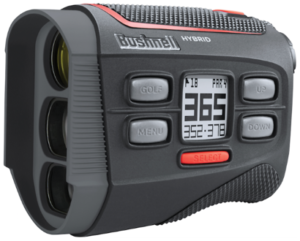
    Bushnell Hybrid
    Bushnell Hybrid: MSRP- $399.99

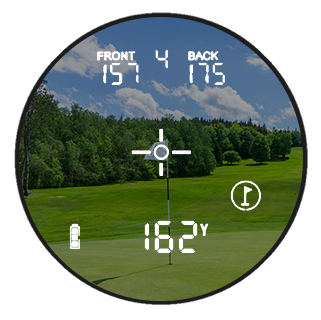
    Description – The Hybrid combines the latest in Laser and GPS technologies to provide better data so golfers of all levels can make better decisions on the course. The new Bushnell Hybrid rangefinders utilize precise laser and GPS yardages allowing the golfer to see distance like never before. The new Bushnell HYBRID takes the guesswork out of the game by displaying the lasered distances to the pin and GPS provided front and back yardage readings within the LCD.  Additionally, Bushnell has incorporated exterior GPS front, center and back yardages to assist with correct club selections when golfers have cart path only or blind shots.
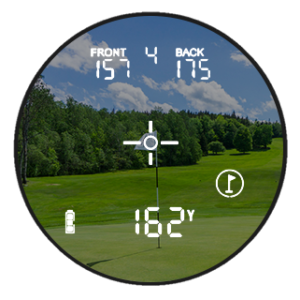
    Bushnell Hybrid - Reticle

    Key Differentiators

    • 1st ever integrated Laser/GPS display
    • Dual Battery source (CR2 for Laser, USB for GPS)

    HYBRID Laser Features

    • PinSeeker w/ JOLT Technology
    • Accurate to 1 yard
    • 5X Magnification
    • Ranges 400 yards to a Flag
    • Fast Focus System
    • Stable-Grip Technology
    • Tournament Legal

    GPS Features

    • Exterior Front/Center/Back Readouts
    • Up to 4 hazard distances per hole
    • Bluetooth for auto course updates
    • Auto course recognition
    • Auto hole advance

    Bushnell Phantom: MSRP- $99.99
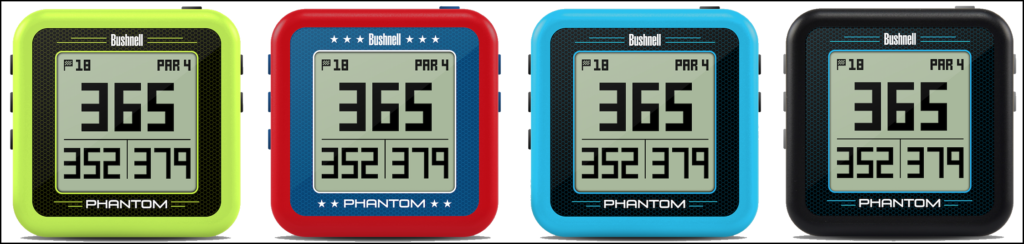
    Bushnell Phantom GPS

    Description – Phantom GPS Rangefinder, rounding out a robust collection of products comes preloaded with more than 36,000 courses and provides simple measurements to the front, center and back distances of the green – along with up to four hazard/layup distances per hole.  The Phantom unveils “Bite Technology.” Equipped with a high powered magnet the Phantom can easily attach to a cart bar or any metal surface, providing quick and easy yardage readings. Additional features include auto course and auto hole recognition, shot distance calculator and long battery life (play up to two rounds before charging).


    Bushnell Pro X2: MSRP- $499.00
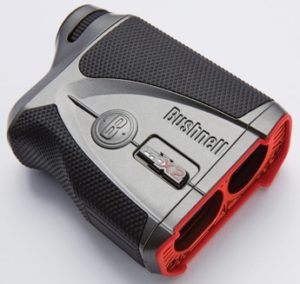
    Bushnell Pro X2

    Description –The Pro X2 has rubber armored metal housing that makes the device fully IPX7 waterproof, incredible range capabilities of up to 1,300 yards (450+ yards to a flag), 2nd Generation E.S.P. (Extreme. Speed. Precision.) and PinSeeker with JOLT Technology.  Dual Display Technology allows users to easily toggle between the bright red display featuring VDT (Vivid Display Technology) or the crisp black display. Bushnell Golf also included JOLT Technology amongst the host of features offered in the new Pro X2. When the golfer aims the Pro X2 at the flag, JOLT Technology will provide short, vibrating bursts to reinforce Bushnell’s advanced PinSeeker Technology has isolated the target and locked onto the flag. The vibrating bursts provided by JOLT Technology will assure golfers have the exact distance to the flag. The Pro X2 is also equipped with 2nd generation E.S.P. technology.  E.S.P. provides yardage five times faster and more accurately than ever before. Not only has the acquisition speed been increased to a lightning fast level, E.S.P. provides 1/2 yard accuracy from five to 125 yards, and the distance is displayed to 1/10th of a yard.  Having more accurate distances creates the confidence the golfer to hit every shot with confidence.

    Pro X2 Features

    ・      Slope-Switch Technology

    ・      Rubber Armored Metal Housing

    ・      IPX& Fully Waterproof

    ・      Dual Display Technology

    ・      PinSeeker W/ Jolt Technology

    ・      Accurate to 1?2 yard

    ・      6X Magnification

    ・      Ranges 5-1,300 yards; 450+ to a Flag

    ・      2nd Generation E.S.P.

    ・      Fast Focus System

    ・       Stable-Grip Technology

    Conclusions

    You really can’t go wrong with any of Bushnell’s offerings. My current rangefinder of choice is the Pro X2, and I’ve been using it for over 8 months as of this writing. It’s fast, accurate, compact, and the display is easy to read. That’s basically everything you’re looking for in a laser rangefinder. I’ve also used the predecessor to the Phantom and loved it’s compact size and simplicity. The new model is magnetic, which addresses the only complaint I had with the old model, which was what to do with it once you broke the flimsy plastic clip it came with. Now you can simply stick it on the roof supports on your golf cart or the handle of your push cart. Easy peasy!
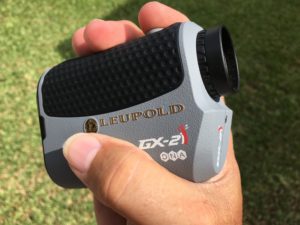
  • Leupold GX-2i2 Rangefinder

    LeupoldGX-2i2 handheldIt wasn’t that long ago that I remember playing golf without any distance measuring devices other than a bush around the 150 yard mark in the fairway. Along came the 100, 150, 200 and 250 yard markers, then sprinkler heads all over the course were marked with yardages. From there, it wasn’t long before laser range finders and GPS devices started showing up. The game hasn’t been the same since.

    Leupold is well known in the hunting and shooting sports world for making some of the best rifle scopes and optics available, so naturally their expertise would lend itself well to golf rangefinders. I’ve used lasers from several different companies over the years, but I’m most impressed with the technology that Leupold has built into their GX line of rangefinders.

    All laser rangefinders can give you accurate distances to most targets, and some also give you yardages adjusted for slope, but Leupold has taken it to the next level with a feature called True Golf Range (TGR) and Club Selector. The Leupold GX-2i2 laser rangefinder has the ability to adjust for slope, elevation and temperature to give you the most accurate adjusted yardage. It can even suggest the right club to hit based on the adjusted yardage. While these features aren’t legal for USGA tournament play, they are very useful for practice rounds and getting to know an unfamiliar golf course. It’s also important to note that you can easily turn off the TGR features to make the device legal to use in tournament play.

    Testing this rangefinder at home in Florida might be tricky since most of the golf courses are flat and the highest point in the entire state is only 345 feet above sea level. So, to put Leupold’s True Golf Range feature to the test, I flew west to the Rocky Mountains! While attending the ING Spring Conference in beautiful Heber City, Utah I found the ideal place to test the Leupold GX-2i2. At close to 6000 feet in altitude, Wasatch Mountain State Park‘s mountain course is a perfect example of alpine golf at its finest. The front nine rises two miles up into the mountains, and the back nine descends back down to the clubhouse.

    WastachMountainStateParkThe dramatic elevation changes of this course and high altitude of the Heber Valley area make club selection very difficult for someone like me who usually plays at sea level. The thinner air means the golf ball travels 10-15% further, and while that can be a huge ego boost for tee shots, the sometimes severe uphill and downhill holes require lots of imagination to get the correct distance with approach shots. Golf blogger extraordinaire and Salt Lake City resident Tony Korologos knows this better than most.
    To set up the True Golf Range and Club Selector features, you simply go through the menu options on the screen while looking through the rangefinder’s reticle. When you turn on TGR, the GX-2i2 will ask you to input the altitude, temperature and how far you hit a typical four, six and eight iron shot. Once equipped with this data, the GX-2i2 will not only give you the actual line-of-sight yardage to your target (accurate to a tenth of a yard), but it will also will give you an adjusted distance based on the temperature, altitude and slope. Not only that, but the GX-2i2 will also suggest which club to hit based on this information.

    I know what you are thinking – That’s cool and all, but how well does it work? Fantastically! For my high altitude testing in the mountains of Utah, the True Golf Range feature worked flawlessly. I remember a few specific situations in which I simply didn’t trust the adjusted distance, but went with it anyway and I’m glad I did.

    The 12th hole at Wasatch Mountain is a straight downhill par 5 that measures 635 yards from the back tees. Now, I’m a pretty long hitter (I average about 290 off the tee according to Game Golf) but 635 yards is no joke! Well, after a drive that measured about 377 yards, I was left with 254 yards to the flag for my second shot. The Leupold GX-2i2 told me the adjusted yardage was 219 and to hit a four iron. I have a hard time wrapping my head around the idea of hitting a four iron over 250 yards, but in the name of science – I hit it anyway! I flushed it, and to my surprise the ball landed on the green and ended up pin high. Mind blown.

    The next situation came up on the 17th hole, a 223 yard downhill par 3. On that day I had 217 yards to the pin, and the GX-2i2 suggested a seven iron. Again, my brain is just not able to process hitting a seven iron 217 yards, but being an obedient test subject I pulled a seven iron and hit it pin high. Mind blown again.

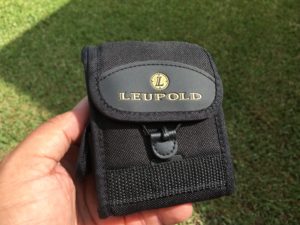
    GX-2i2 carry caseIn my 54 holes of testing the Leupold GX-2i2 rangefinder at high altitudes in the mountains of Utah, I found that the True Golf Range was amazingly accurate and invaluable for me. The Club Selector feature is a very nice addition, but I found that I mostly ignored the club suggestions because not every shot is a stock iron shot in golf. When in doubt however, it proved very useful. This rangefinder is staying in my golf bag for a long time, even if I don’t use TGR for tournament play. It’s accurate, light weight and packs a lot of technology into a nice compact package.

    Perhaps my buddy Tony will want a ruling now because without the GX-2i2 rangefinder and its whiz-bang technology there is no way I could have beaten him 1-up in our tightly contested 36 hole grudge match at the fantastic Soldier Hollow Golf Course. In my defense, I was actually playing with a torn retina in my right eye, but that’s a story for another day…

  • Leupold GX-4i2 Rangefinder

    Leupold GX-4i2 RangefinderWhat do guns and golf have in common? The technology in many of the best rangefinders used on the golf course comes from rifle scopes and range finders made for hunting and military use. The latest offering from optics company Leupold has taken golf rangefinder technology to the limit with its new model – The GX-4i2 Rangefinder.

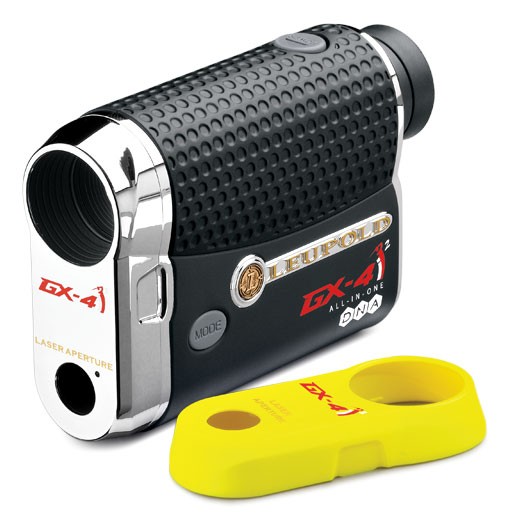
    The GX-4i2 Rangefinder is light, compact and well made. Leopold’s Smart Key technology now conforms to USGA Rule 14-3 concerning distance measuring devices. It also features an improved PinHunter 2 Laser and a bright, vivid OLED display. Add to that some proprietary features such as True Golf Range (TGR) and Club Selector and you have a virtual caddy in your pocket.

    The GX-4i2 can be tailored to your own personal ball-striking abilities, or used for tournament play when permitted by local rules simply by switching out the smart key plate. The silver chrome faceplate disables the TGR and slope features to make it simply measure distance, making it legal for tournament play according to USGA and R&A rules.

    However, the real fun starts when you install the yellow plastic smart key. The mini-USB key enables all the cool wiz-bang features for use in casual golf or tournament practice rounds. True Golf Range is a set of algorithms that help the user select the correct club for each shot. To use it, you input the current temperature, altitude you are at and how far you typically hit your 4, 6 and 8 irons. Once your data has been entered, the GX-4i2 measures distance and slope, then recommends the right club to hit. So far in my testing, the GX-4i2 has been very accurate in selecting the proper club. Of course there are variables it can’t take into account that affect distance – like wind, course conditions and other intangibles such as player confidence and adrenaline, but for the most part it has been very accurate on the relatively flat courses here in Florida. I would love to test it further in the mountains where courses have more slope and altitude is a factor. I would send it over to my friend Tony from Hooked on Golf Blog in Utah for some high altitude testing, but I’m afraid I wouldn’t get it back!

    The Leupold GX-4i2 isn’t cheap at an MSRP of $599, but you get a very high quality rangefinder that can be used for tournament play or casual golf with the TGR feature enabled. It measures distance in yards or meters, works even in foggy conditions and is waterproof in case it rains. The optics are top notch, very clear and red OLED display is very bright and easy to read in all lighting conditions. The device is very light and compact, making it very simple to use. Leopold crafted the GX-4i2 from aircraft grade aluminum to ensure that it will last. The only concern came from some of my older friends that had trouble keeping it steady enough to capture the pin. If the flag stick has a reflective prism installed, the GX-4i2 will lock in on it very quick. Without a prism it may take a few shots to get it right. In terms of accuracy, the GX-4i2 is probably the best on the market. Leopold claims accuracy down to 6 inches at up to 800 yards off a reflective surface, and 450 yards off a pin.

    If you are willing to shell out 600 bucks for premium quality optics, precision laser accuracy and class leading technology all wrapped in a solid, compact package, the Leopold GX-412 is the model for you. Simply put, it’s the best golf rangefinder I’ve ever used.

    )


  • ‘O’ Beam – Putting Aid Review

    'O' BeamTraining aids are a dime a dozen these days. Everything out there promises to correct your swing or fix a problem, but very few actually deliver. In my experience, the best training aids are those that are based on traditional, time tested instruction. We’ve all watched the scene in the movie Tin Cup where Roy McAvoy is clad from head to toe in all kinds of useless swing aids. I think the key to a good golf training aid is to keep it simple. I recently was sent such a training aid. It’s called the ‘O’ Beam, and it is designed to help you with one of the all time most used pieces of putting advice – Keep your head still!

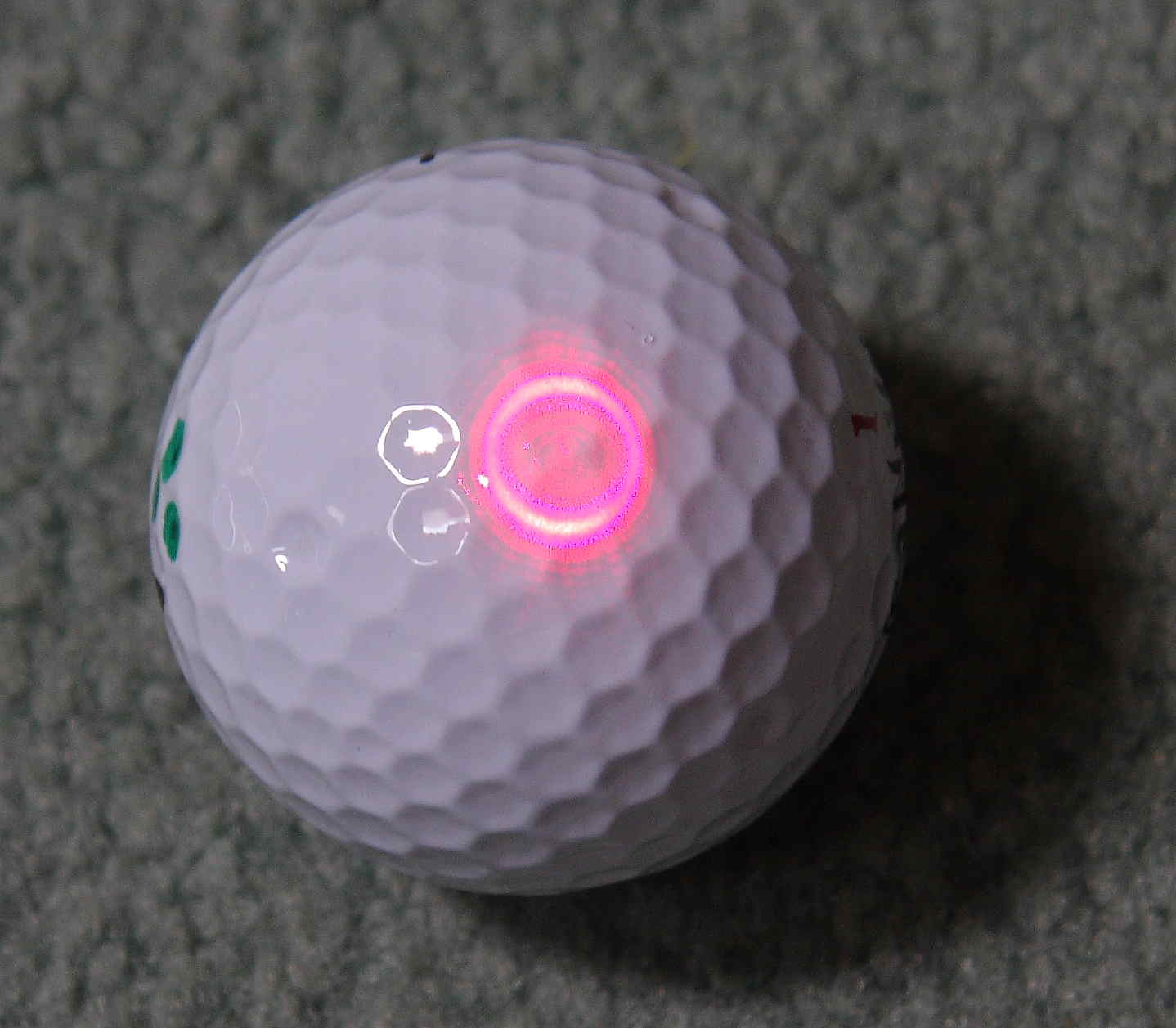
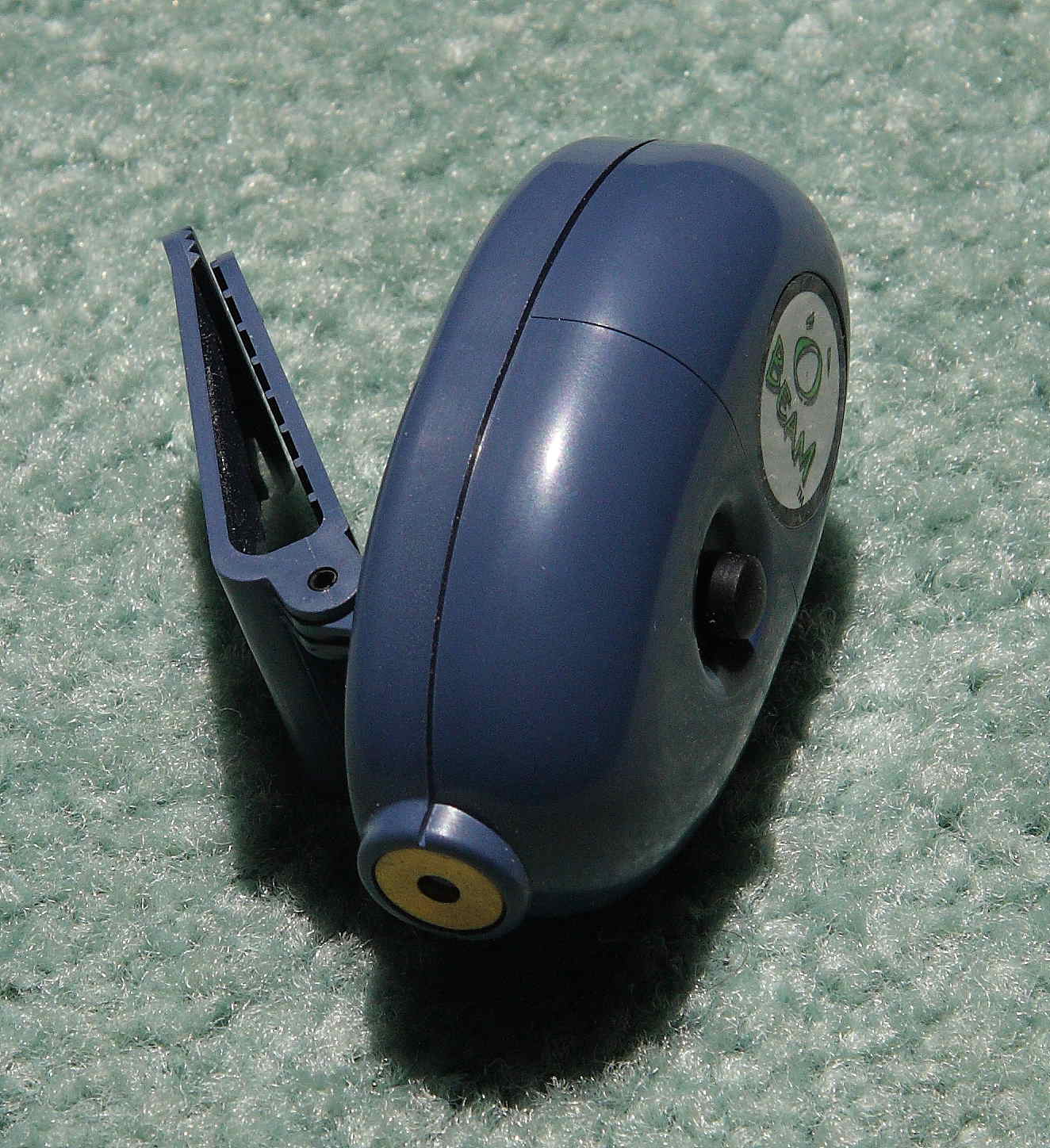
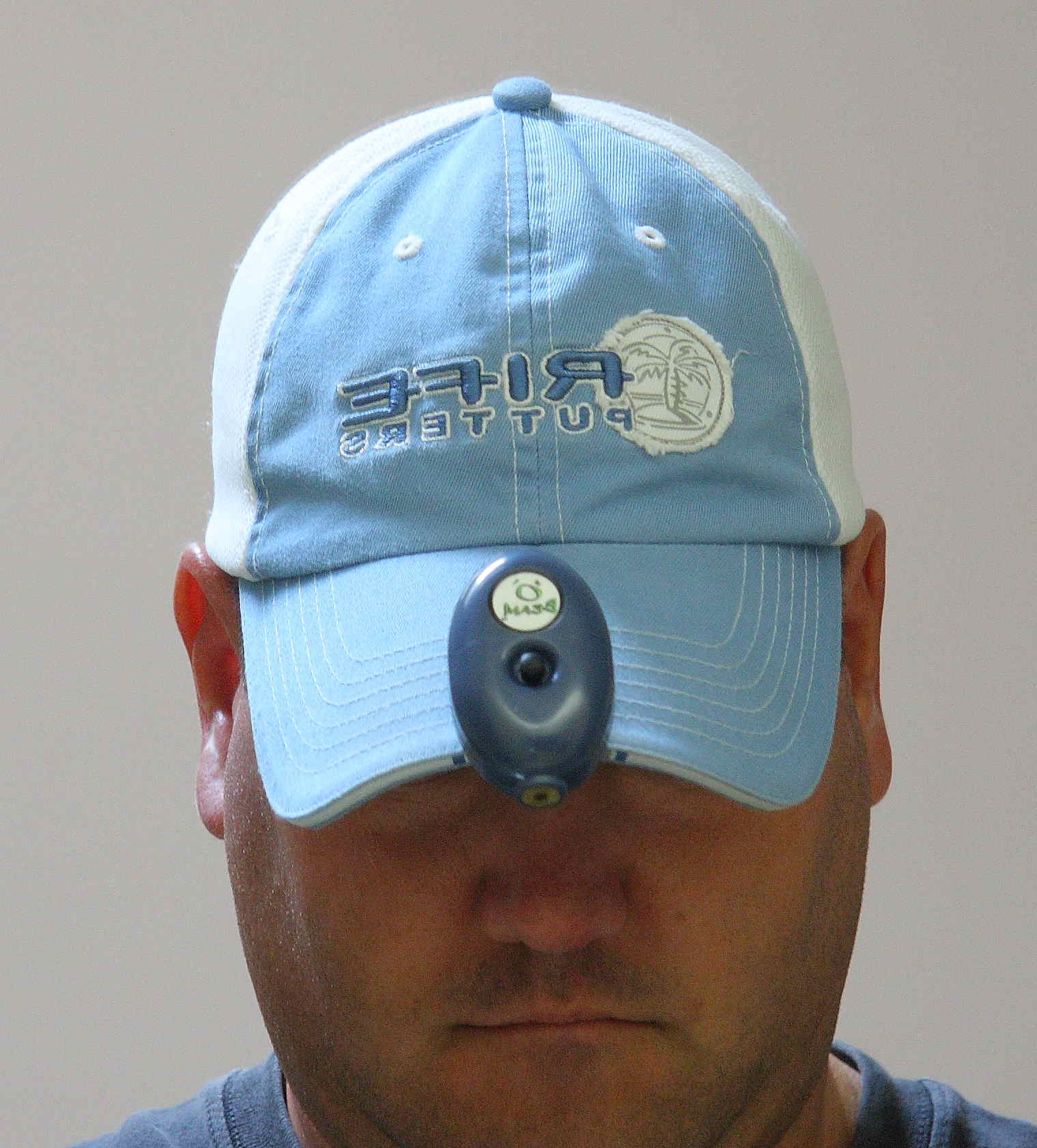
    'O' BeamThe ‘O’ Beam is simply a laser that attaches to your hat brim and projects a “O” shaped beam of laser light from the end. The idea is simple – position the O on the ball and keep it there while you putt. At first you may be thinking what I first thought. “I don’t need a laser to tell me to keep my head still, I keep it still anyway!” Let me tell you, the first time I put the ‘O’ Beam on and hit a putt with it I was shocked at how much my head actually moves during the stroke!

    The feedback from this device is of course immediate. If you move your head even slightly, the laser light moves dramatically. It’s very difficult for me to keep my head perfectly still, so I started very slow making practice swings and worked my way up to full strokes. Every time I made a full stroke and hit the ball it rolled on line. While it’s not easy to make a perfect stroke keeping your head completely still, I don’t think any instructor would expect that. The nature of a putting stroke means that your head will tend to follow your swinging shoulders a bit no matter what. However, any excess head motion should be addressed, and this simple device certainly helps!

    My only problem with the 'O' Beam is that in the very bright Florida sunshine, the red laser becomes a little hard to see. The laser simply isn't powerful enough to shine bright enough in the full sun. While it's certainly not impossible to see, it is more visible in overcast conditions. It's also very easy to use indoors, which is where I predict  most people will use it anyway. 'O' BeamChampions Tour player Chip Beck has endorsed the product, along with Renee Powell who is a former LPGA Tour player and now the PGA/LPGA Head Golf Professional at Clearview Golf Club in East Canton, Ohio. Inventor Katie O'Keefe talks about the 'O' Beam: "I have been a golf instructor for 10 years and have enjoyed helping players of all ages and abilities. I learned in a short time that two major problems most players have are improper setup and excess head movement. The setup and head movement are, in my opinion, the most important parts of the golf swing. I believe that a proper setup is the prominent foundation to a good golf swing. If you have a solid setup you can make a simple repetitive swing. Minimal head movement is necessary in a solid golf swing; however, it is imperative in a solid putting stroke. Too many times I have heard the expression "keep your head down." That is something that you will never hear me say. You will, however, hear me say, "Keep your head still." Obviously it is impossible to keep your head absolutely still, but minimizing your head movement will dramatically improve your putting stroke and lower your scores. Why does minimal head movement improve your putting stroke, you ask? Good question! When the golf ball is addressed, you have established your ball position and setup. When the club is put into motion for the putting stroke, the most efficient way for the club head to return to the ball square and on the intended path is for the player to have minimal head movement. That is why the 'O' BEAM is a great aid - it provides you with instant feedback on how much your head moves, thus helping you train yourself to keep your head still." 'O' BeamThe 'O'Beam has been featured on the Golf Channel's Champions Tour Learning Center. You can watch the video by clicking on the link below: http://www.obeamputt.com/news-feature-golfchannel.htm The 'O' Beam works because it's easy to use and carry with you in your golf bag, and it provides instant feedback. If you want to reduce excess head movement and improve your putting, give it a try! The 'O' Beam costs $49 and is available online at their website.

    Want to win free stuff? Subscribe to our email updates! You'll get the latest fresh news, reviews and stories delivered right to your inbox or RSS reader, and automatically be entered in our latest contests and giveaways! Also, don't forget to check in with our Facebook fan page for exclusive content and get involved by leaving us comments on what you think!