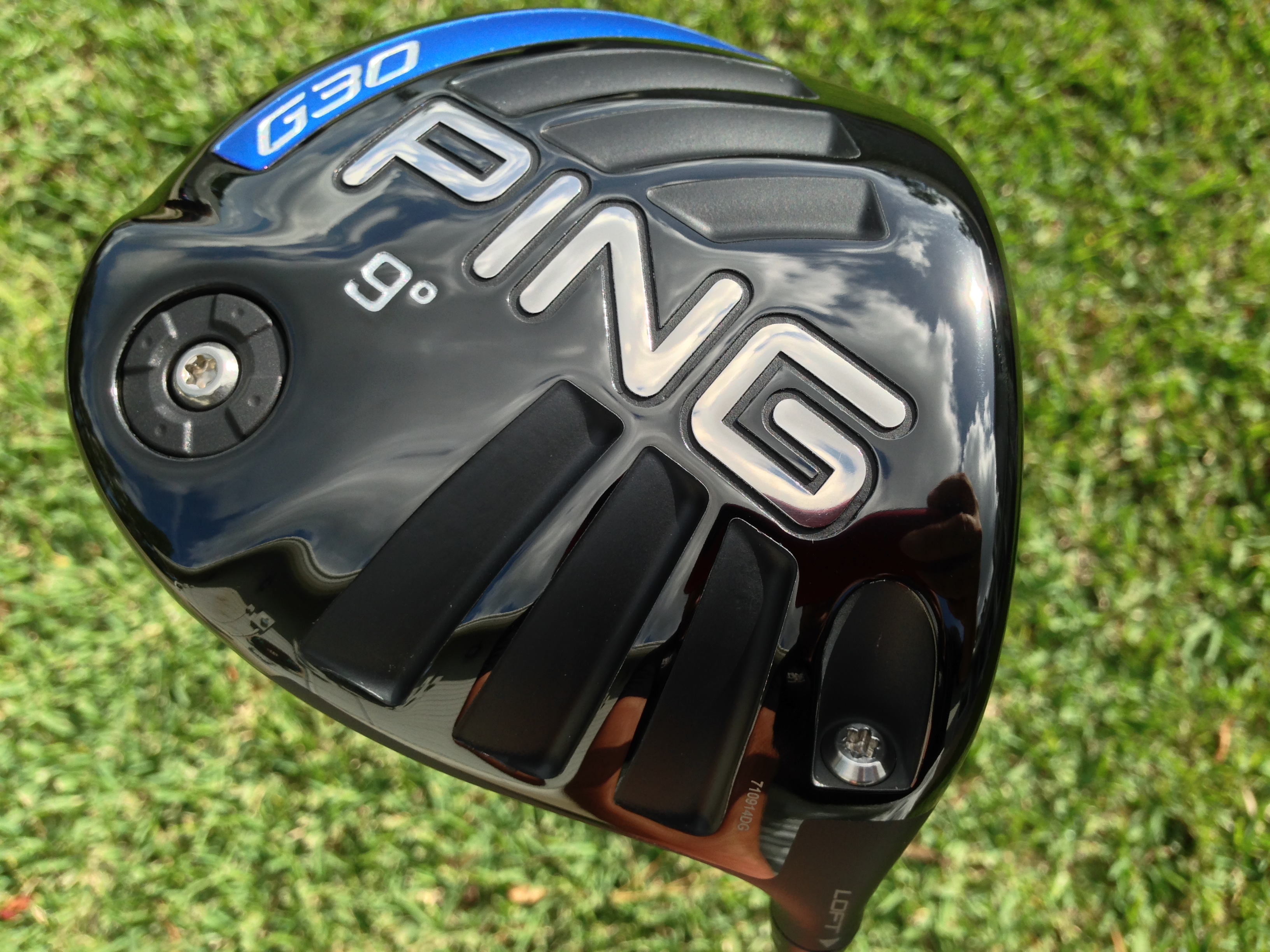
 Normally when writing a review of a club, I’ll start with an introductory paragraph, then tell you a bit about the design and specs of the club before describing how it plays. This time however, I feel compelled to flip the script and tell you how the story ends first. Quite simply, the Ping G30 driver is the best club I’ve hit off the tee in over a decade. Now, let me tell you why.
In the past 10 years as a blogger and golf industry insider, I’ve had the opportunity to hit many, many drivers. It’s the club golfers change the most, which is why the golf club manufacturers dedicate most of their marketing efforts to sell them. I had to think long and hard about the best drivers I’ve hit over that time and even prior, and I’m confident in saying that the Ping G30 has had a bigger impact on my golf game than all the rest. It’s not just me either. The sales figures since being introduced last July show that golfers have noticed also.
As golf club technology has evolved over the years we’ve seen golf balls that fly further and drivers that hit those balls further still. As a result, I’m hitting the ball every bit as far at age 41 as I did at age 21, despite a swing speed that has dropped from the mid 120s to the low 110s. I may swing a golf club slower than I used to, but the launch monitor data suggests that I’m still transferring as much energy to the golf ball as I used to with a metal-headed Titleist driver and Tour Balata golf balls.
Hotter club faces and more responsive golf balls have changed the game for everyone. But the USGA and R&A rules have imposed limits on the performance of golf clubs and golf balls, and I’ve seen technology hit the wall in that regard. The equipment companies may tell you otherwise, but they can’t make a club hit the ball any further than they do now. Instead, what they are doing is tweaking launch conditions and fitting clubs to individual swings using movable weights and interchangeable shafts in an effort to squeeze every last yard out of your drives.
Technology & Specifications
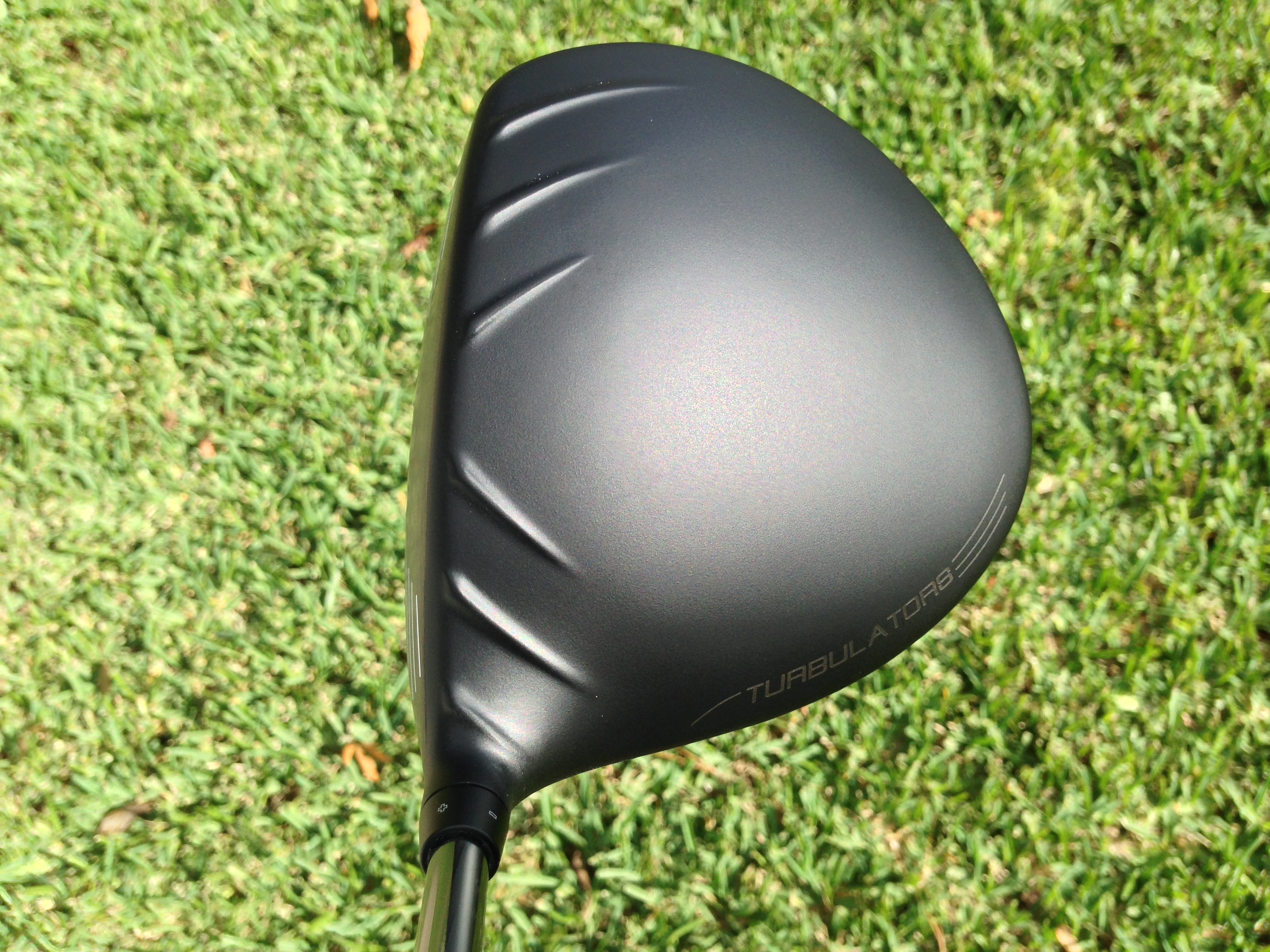 When it comes to the Ping G30, there aren’t any fancy moveable weights, but there are several options for fitting the club to the player. To start, Ping makes three different G30 drivers. The standard G30, the slice-fighting G30 SF-TEC and the low-spin G30 LS-TEC. All three G30 models are assembled with a T9S Titanium face and Ti 8-1-1 body. The T9S material is light and thin and allows more face deflection for greater ball speeds, up to the USGA limit that is. All three models have built-in aerodynamic features on the crown that Ping calls “Turbulators” to (theoretically) help generate greater clubhead speed. Also included is an adjustable hosel to tune the face angle, which will change the dynamic loft of the driver, allowing for a higher or lower ball flight as wanted.
The standard G30 model is set up neutral, with the weight and balance designed to be playable for everyone. The G30 SF-TEC model is designed with the weight port shifted towards the heel and a lighter swing weight (D1 compared to D3) to help chronic slicers straighten out their tee shots. The G30 LS-TEC model is the low spin version of the standard G30, and I’m told by Ping that the LS-TEC driver reduces backspin by 400 RPM over the standard G30. This model will appeal mostly to higher swing speed players that generate too much spin. The G30 and G30 LS-TEC are available in 9 and 10.5 degree lofts. The SF-TEC version is available with 10 or 12 degrees of loft.
Ping offers a few self-branded stock shaft choices and several more brands as custom options. The standard shaft is the Ping TFC 419D. Upgrades include the Ping Tour 65 and Tour 80 shafts. Ping is one of the few companies that still sells their own shafts, and I believe this gives them an advantage because they can better control the quality and performance of their clubs if they also make the shafts that go in them. While they offer many well known brands as custom options, I would recommend choosing one of their shafts. Most players will fit into the TFC 419D shaft, and stronger players will love the Tour 65 and Tour 80 shafts.
Performance
So what does all this technology do? In the right hands, it hits golf balls far. The tester I got was a standard Ping G30 with the Tour 80x shaft and 9 degrees of loft. Some initial testing was done at the driving range on an Ernest Sports ES14 launch monitor, but most of my testing takes place on the golf course because I prefer real-world testing in real, variable conditions. To supplement my on-course testing, I used GAME GOLF to gather data about every shot hit to compare clubs. I put the G30 up against my old gamer (2013 Adams Super LS, 8.5 degrees w/ UST ProForce VTS Black 75x) for comparison.
My initial testing with the launch monitor confirmed my suspicion that the aerodynamic turbulators on the club’s crown wouldn’t do much to deliver more clubhead speed, but they look cool I guess. In 20 swings with the Adams driver I averaged 110.75 MPH of club speed. After 20 swings with the G30 I averaged 111.25 MPH. The G30 averaged 0.5 MPH more than the Adams, but I don’t think this slight improvement is statistically relevant. Similarly, ball speeds (167.5 to 165.5), launch angles (12.025 to 12.775) and spin rates (2253.5 to 2571) were also very similar. Since total distance on the ES14 launch monitor is an estimated figure derived from launch data, I didn’t include it. (See note below) Instead I used the more accurate real-world data from my rounds on GAME GOLF (more on this later) Bottom line: The Ping G30, when properly fit to the individual golfer, is about as long as any other driver on the market. In this case it’s as long as the Adams Super LS and TaylorMade SLDR 430. (The SLDR 430 and G30 were tested on-course by me and another play tester in a separate test.)
This hard data shows that even a two year old driver can deliver the same performance as a new model. It also contributes to my theory that equipment performance has hit the limit and companies can’t get any more distance out of clubs and balls. There is of course, one factor I haven’t mentioned yet – Accuracy.
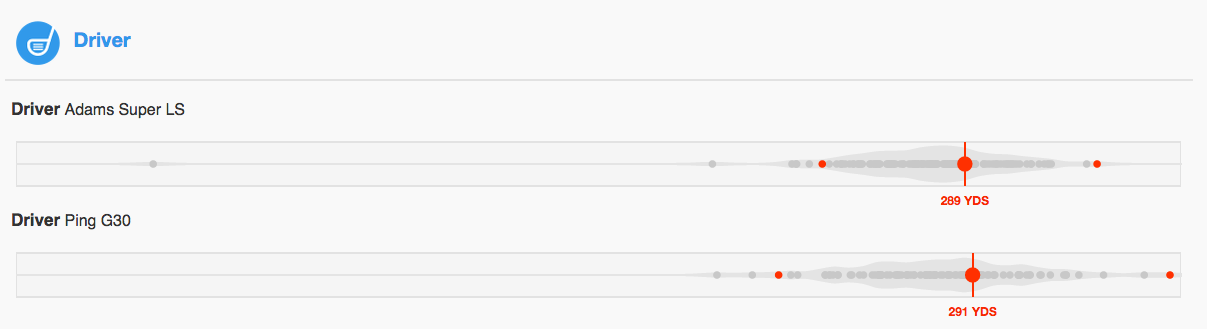 Note on distance data: The ES14 launch monitor data showed my hits using Adams Super LS driver averaging 300.75 yards, compared to the Ping G30 at 296.75 yards. While this is a nice ego boost, those numbers are unrealistic because of the way the ES14 estimates distance. Meanwhile, the actual on-course, GPS-measured data from GAME GOLF shows that I really average 289 yards with the Adams and 291 yards with the Ping G30. The data from GAME GOLF also validated the launch monitor data that showed that both drivers were within 4 yards of each other in total distance. Four yards may be huge for the marketing department at company X that’s trying to sell you a driver, but in reality there are just too many factors at play to make an accurate claim on distance. The launch monitor tells me that the Adams Super LS is longer, but the real-world data proved otherwise. The data I got from playing over 30 rounds of golf with both clubs shows that the difference is much smaller. I think this helps to show that since club technology has hit legal limits, driver distance will once again mostly depend on swing speed, solid contact and course/weather conditions, not club technology.
Accuracy & Forgiveness
Launch monitors and wide open driving ranges can’t give you the whole picture about how straight you hit a club. That’s why I prefer to play as much as possible with a club before writing a review. I use the GAME GOLF platform to track my shots and club performance with their excellent built in stats. But don’t take my word for it, go check it out for yourself!
I’ve played at least 15 rounds with the Ping G30 since I got it (I put it in the bag right away as my gamer), and I had been playing with the Adams for almost a year before that. Armed with 15 rounds of actual golf data on multiple golf courses in varying weather conditions, The Ping G30 is almost 30% more accurate off the tee than my old Adams Super LS. I hit 62% of fairways with the G30 compared to 48% with the Adams. Thirty percent is a significant number!
My golf swing didn’t change during the testing period, and the difference in average distance shows that I wasn’t “taking something off” drives with the G30. The Ping G30 driver is a very accurate golf club, because it is very forgiving on off-center hits. Don’t take it from me though, take it from our friends at GolfWRX who said “Hands down… The most forgiving driver in golf.” or the equipment testers at Golf Magazine who called the G30 SF-TEC “The top-rated model in the test”.
Conclusions
When I get new clubs to test out I always try to get them into the hands of a few buddies to get their thoughts. Most of the time, they hit 10 to 15 shots and can tell me if they like it and want to hit more, or dislike and hand it back to me. With the Ping G30, my playing partner hit 5 balls on the range and half a dozen tee shots on the course and immediately ordered one for himself.
What it comes down to is simply this – I hit the Ping G30 in or around the sweet spot more often than the other drivers I’ve played in the past 10 years. Solid contact means more distance, better accuracy and greater consistency. The numbers don’t lie. I’m hitting almost 30% more fairways with the G30 – without losing any distance. That is why the G30 went right in the bag and will stay there for the foreseeable future, and that is why you should go try the Ping G30 yourself. It’s the best driver I’ve hit in the last decade.