 Most people are familiar with the concept of club fitting, and most golfers have probably been through some kind of fitting for their clubs at one point or another. As equipment has evolved, fitting has evolved with it. Adjustable drivers and interchangeable shafts have greatly benefitted club fitting professionals, allowing them to tune the clubs for each golfer. With the amount of technology available in the modern game, club fitting has become even more precise and important to get the best possible performance out of your clubs.
The Technology
Like many companies, True Spec Golf is taking advantage of technology to provide advanced club fitting for golfers of every ability. Unlike manufacturer specific fitting carts at those big box stores, True Spec Golf is brand-agnostic. Because of that, their fitting matrix stocks more than 30,000 combinations of club heads and shafts from all the leading equipment manufacturers. They combine that amazing selection with high performance launch monitors from industry leaders TrackMan and Foresight, and they use advanced tools like their patented Club-Connex adapter system to fit any shaft to any head, and the SST Pure Shaft Alignment System to ensure you get the best performance from your shafts.
The Mission
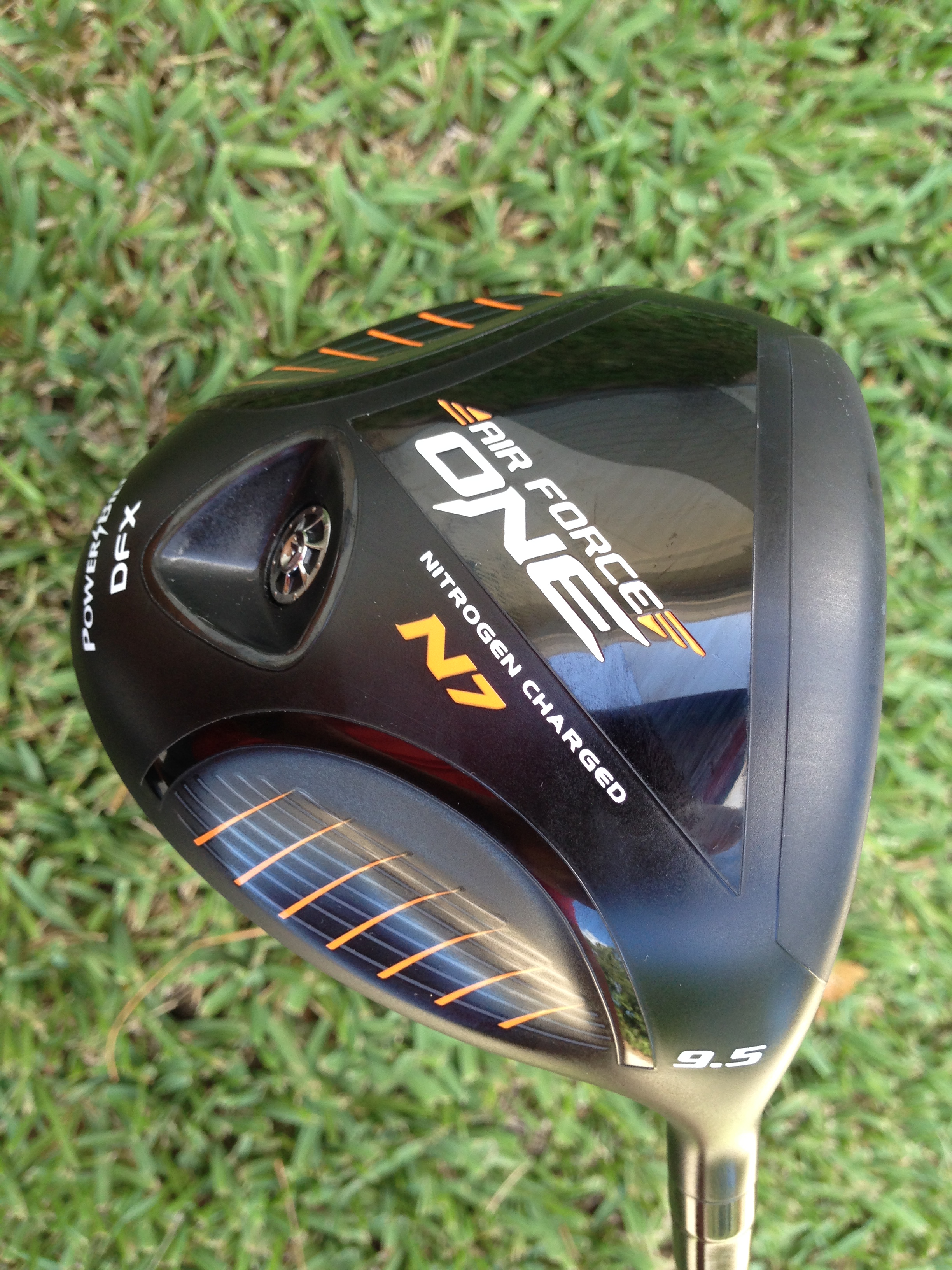
I visited True Spec’s fitting studio at Trump National Golf Club in Jupiter, Florida to get fitted for a three-wood. For years, finding a three-wood that performs the way I want has been like finding my personal golf unicorn. I primarily use a three-wood off the tee, so want one that has low spin and mid-low ball flight for distance, but I also want the club to perform well from the fairway if I want to go for a long par five in two from 250+ yards. Finding the perfect combo has been tough. I came very close last year with the Exotics CB Pro and have had some success with my newest gamer (an Exotics EX10 beta), but after several months of testing both clubs are just too spinny for me.
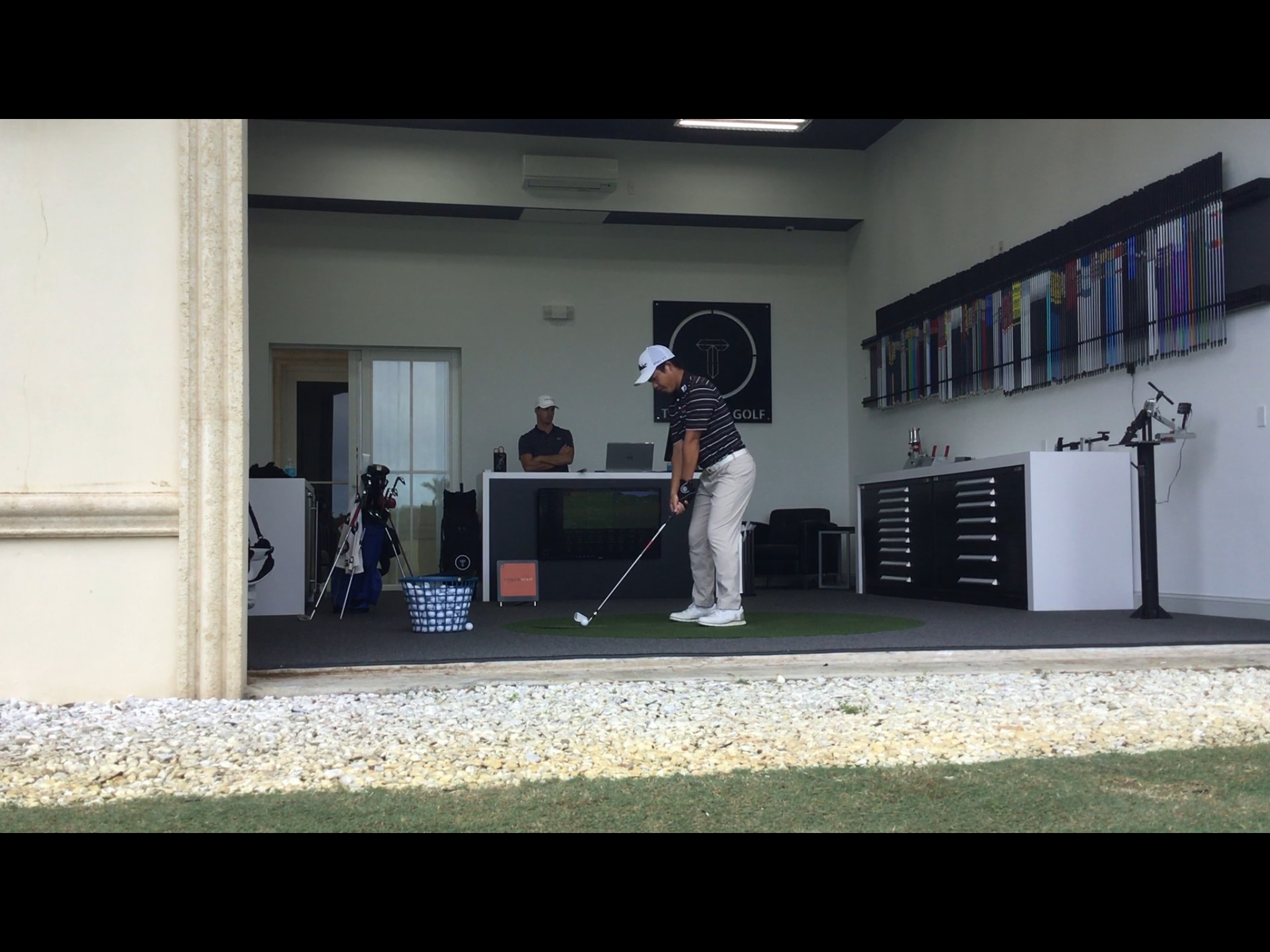
The fitting process takes place in a clean, modern fitting studio that opens into the driving range at Trump National. No indoor hitting bays here! I want to see the actual ball flight, not a computer simulation. My fitter Matthew welcomed me and let me hit some warm-up shots with my own clubs to get loose while he watched and gathered some swing and ball flight data from the Trackman. Watching my swing and Trackman data while I warmed up helped him select a few shafts and heads to get the fitting process started with.
The Process & Results
Even though the True Spec fitting studio has over 30,000 possible shaft/head combinations available, an experienced fitting professional like Matt can use that Trackman data to quickly eliminate the shafts he knows won’t work for me, streamlining the process and saving time. Using True Spec’s Club-Connex system, Matt set up a trio of three-woods for me to hit, each with a different shaft & head combo. I would hit 4 or 5 shots with each and switch back and forth between clubs while he made loft/lie adjustments or changed out shafts and kept handing me different combos to try. All told, I hit fairway woods from Ping, Exotics, Taylor Made, Titleist, PXG, Callaway and a few others.
After hitting about 50 shots, we started to zero in on the best performing head and shaft combinations. When you are using a top of the line TrackMan launch monitor you can be certain that the data you get will be accurate. In my case, the numbers don’t lie. Compared to my gamer three-wood, (Exotics EX10 beta with 13 degrees of loft fitted to a Graphite Design G70x shaft) the club Matt put together for me (Ping G400 14.5, turned down to 13.9 degrees fitted with Fujikura ATMOS Tour Spec Red 80x) was giving me 8.6 yards more carry distance and 10.3 more yards total distance. That’s a huge increase for me!
How’d He Do It?
How did Matt help me gain 10 yards with a new three-wood? Again, it’s all about the numbers. By selecting a club head (Ping G400) with a hot face and low spin, we were able to decrease my spin rate by an average of 678 RPMs! Because of the lower spin, we needed to increase my launch angle to maximize carry distance. By selecting a Fujikira ATMOS Red shaft with a slightly lower kickpoint, he was able to bring my launch angle up from from 9.3 degrees to 11. High launch – Low spin. That, my friends, is the recipe for greater distance.
As I mentioned in another recent article, finding the right shaft & head combination for you can pay off big, with more distance and consistency. In that post I mated a Ping G400 driver with the new shaft from TPT golf to gain 9 yards off the tee over my previous gamer – the Ping G. Was it purely by chance that the G400 three-wood also happened to be the best performing fairway wood for me?
I’m mildly shocked but very pleased about gaining 9+ yards with both my new Ping driver and three-woods, considering both clubs were fitted for me independently of each other. What that says to me is the Ping’s G400 line are very good clubs, especially when fitted with the right shaft by an expert club fitter. Even better, I finally found my golf unicorn – a versatile, consistent performing three-wood!
You Probably Need A Fitting
What is it worth to you to gain distance throughout the bag, while improving the feel and consistency of all your clubs? True Spec’s fitting process works, and it’s guaranteed. For more information, visit https://www.truespecgolf.com/ I’ve been preaching the benefits of club fitting for years, and I’ll continue to champion the cause. It really does make a difference in your game, no matter what your handicap.
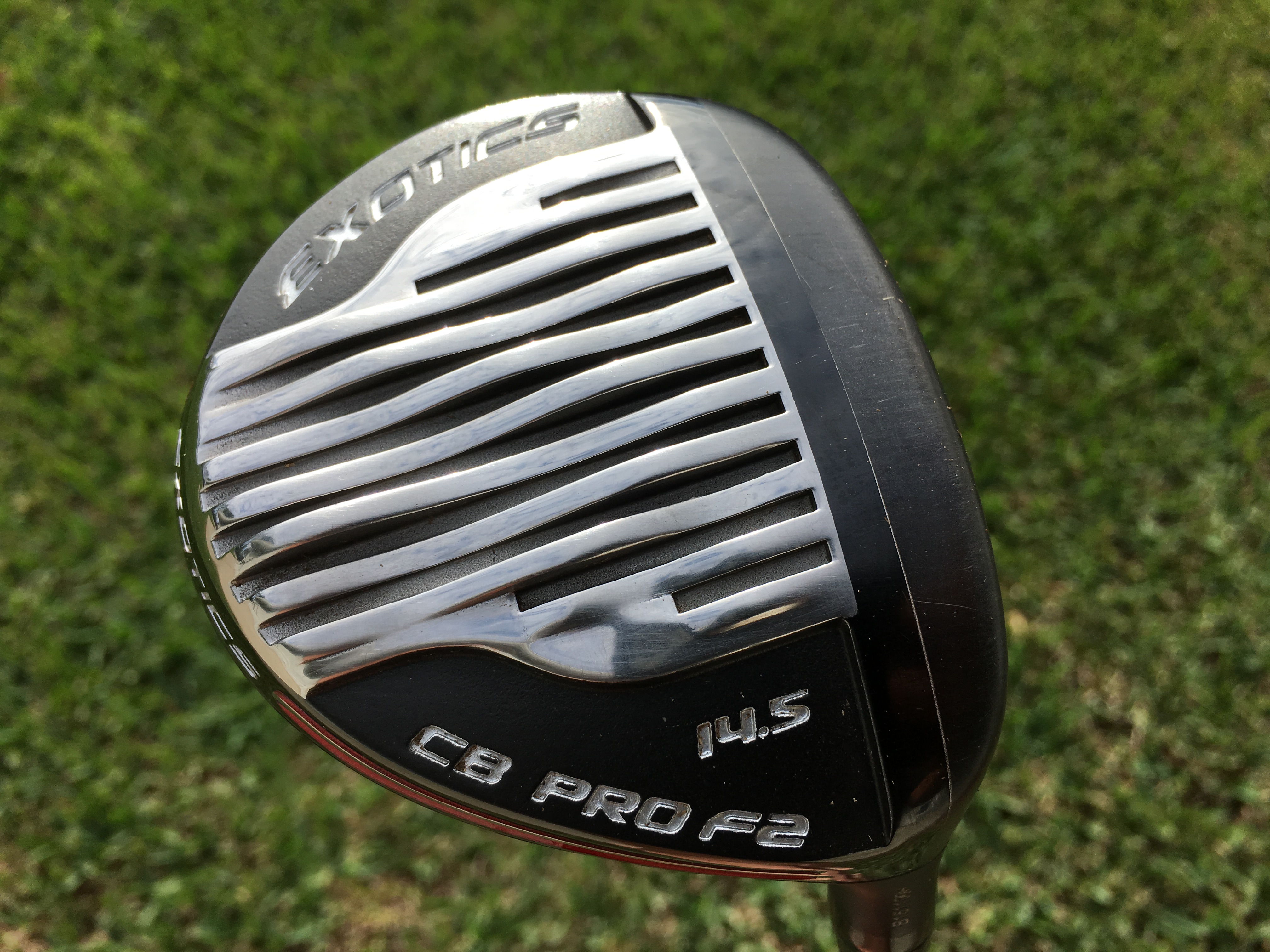
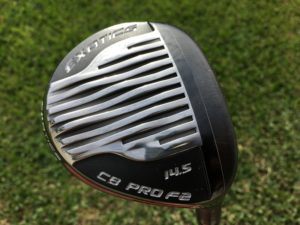 My golf buddies are well aware of my struggle. I’ve had a love-hate relationship with my three wood for a long time. For whatever reason – and there have been many – I have had a terrible time trying to find the right combination of loft, club head and shaft to make a three wood that is good enough for me to count on. For me, a three wood has to be versatile. I need to hit it well off the tee and off the fairway. It has to be forgiving but workable, and the ball flight cannot be too high or too low. Because of my very specific needs for this club, (bordering on obsessive compulsive) it has taken me the better part of a decade to find the perfect three wood, but I think the search is finally over.
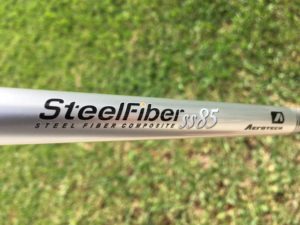 When I arrived at the 2016 PGA Demo Day in Orlando, I wandered by the Aerotech Golf booth and stopped in to see owner Chris Hilleary and catch up. I have been playing the amazing