Tag: Fazio

  • Hilton Head Island’s Golf Gems

    Hilton Head Island’s Golf Gems

    Atlantic Dunes by Davis Love III Hole #15
    Atlantic Dunes by Davis Love III Hole #15 – Photo courtesy of The Sea Pines Resort / Rob Tipton

    All eyes were on “Golf Island” in April as the PGA TOUR came to Hilton Head. The RBC Heritage Presented by Boeing – a Lowcountry tradition and South Carolina’s only PGA TOUR event – was played on the iconic Harbour Town Golf Links at The Sea Pines Resort on April 13 – 16.

    Both on and off-island layouts are experiencing some of the best course conditions in years. Coupled with temperatures in the 70s and more direct flights than ever into Savannah / Hilton Head International Airport, spring is the perfect time to visit Golf Island. Keep reading to learn about some of the golf gems in Hilton Head and the surrounding area.

    On-Island Gems

    Harbour Town Golf Links, designed by the legendary Pete Dye, is a favorite venue among TOUR players, and anchors a stable of championship-caliber tracks across Hilton Head Island. Here’s a sampling of some of the destination’s most challenging and player-friendly layouts appealing to a wide swath of players.

    Hole 4 Heron Point
    Hole #4 Heron Point – Photo courtesy of The Sea Pines Resort / Rob Tipton

    Also designed by Dye, Heron Point was named South Carolina’s 2015 Golf Course of the Year. Dye supervised recent enhancements including softening green surrounds and contours, enlarging several putting surfaces and adding numerous ornamental landscape beds. Additionally, the putting surfaces were transitioned to Tif-Eagle Bermuda.

    Opened in October 2016, Atlantic Dunes by Davis Love III is a complete reconstruction of the historic Ocean Course, Hilton Head Island’s first course. The new layout features entirely rebuilt holes with modern shot values and scenic corridors. The pronounced seaside ambience and Lowcountry feel is accented by coquina shells and seaside grass.

    Palmetto Dunes Oceanfront Resort also showcases a trio of tournament-tier golf courses, designed by three legendary architects: Robert Trent Jones, George Fazio and Arthur Hills. Switch things up by renting a Golf Bike instead of a cart for your round.

    The Robert Trent Jones Course at Palmetto Dunes sports one of only two oceanfront holes on Hilton Head Island. It is widely renowned for its open, inviting layout and challenging yet fair play. It is the most open of the three and breezes roll off the Atlantic Ocean to constantly affect play.  Ranked one of Golfweek’s “Best Resort Courses” for 2017, the Jones Course appeals to novices and experienced players alike.

    Hilton Head Island’s only public par-70 design, the George Fazio Course at Palmetto Dunes has just two par 5s, both offering a good opportunities to score. The layout balances open, tree-lined fairways on the front nine with tighter and more severe routing on the back nine. With new, state-of-the-art Diamond Zoysia greens, the Fazio Course delivers a peak golf experience.

    Palmetto Dunes - Arthur Hills #16
    Palmetto Dunes – Arthur Hills #16

    Measuring 6,651 yards from the tips, the Arthur Hills Course at Palmetto Dunes places a premium on accuracy and precision rather than distance. With an extensive network of lagoons winding through 10 different holes, continuous lines of dunes and thick stands of palmettos, the Hills Course seamlessly integrates the area’s natural beauty into its challenging design.

    Off-Island Gems

    Just over the bridge from Hilton Head Island, Old South Golf Links showcases the natural beauty of the Lowcountry. At this local favorite, golfers play beneath towering live oaks and alongside the Intracoastal marshes of Mackays Creek. Three holes end at picturesque island-like greens. Water and wetland pose a threat on all but three holes. Recognized by Golf Digest as one of the “Top 10 New Public Courses” of 1992, Old South remains one of the area’s finest layouts 25 years later.

    The Pete Dye Signature Golf Course at Hampton Hall is a classic links style with wide fairways and landing areas, unobstructed green approaches and a safe route on every hole. Playing at 7,503 yards from the tips, length is an important factor. Nestled within a private golf community, the course does allow limited outside play. Golfers may call the pro shop up to one week in advance to schedule a tee time.

    Day Tripper

    Less than an hour north of Hilton Head Island, visitors can combine American military history with a round of golf. Situated within Marine Corps Recruit Depot Parris Island, The Legends Golf Course at Parris Island features beautiful marsh views and a challenging – and unique – golf experience. Originally designed by Fred Findley and George Cobb in the 1940s, the par-72 course was redesigned by Clyde Johnston in 2000. Last September it became the first military golf course in the world to earn the Golf Environment Organization’s certification. Parris Island has been training Marines since 1915. Before or after a round of golf, visitors can explore the depot’s many monuments, statues and memorials commemorating generations of Marines.

    A designated Wildlife Sanctuary, Fripp Island’s 3000 acres of natural beauty are home to over 175 species of birds as well as raccoons, gators and an abundance of deer. Its two courses – Ocean Point and Ocean Creek – have at least one thing in common: spectacular scenery. A George Cobb design, Ocean Point boasts dramatic views of the ocean or inlet on 10 of its 18 holes. Both the front and back nine finish against a stunning backdrop of the Atlantic Ocean. The other layout, Ocean Creek, was Davis Love III’s first signature course. Its magnificent panoramic views of the Great Salt marsh and freshwater lakes are ideal for viewing some of the abundant wildlife in their natural habitat.

    Sanctuary Golf Club at Cat Island is a player-friendly layout that rewards good shots. Although a selection of elevated greens appear daunting, overall the course is a fair test. Located on a 400+ acre barrier island, Sanctuary Golf Club is Lowcountry golf at its best with statuesque oak trees draped in Spanish moss and splendid views of Port Royal Sound throughout.

    Grab your clubs and journey to Hilton Head Golf Island. Natural beauty, outstanding golf and a relaxing island vibe await your arrival.
  • Resort Reboot – PGA Village

    PGA-Village

    There is a ton of competition out there for golf resorts in Florida. In order to separate yourself from the competition, you need to offer quality, value and a unique experience. While many resorts claim it, few can deliver. Many can offer the traveling golfer quality and a unique experience, but at a price. Many can offer great value, but the playing conditions are usually disappointing.

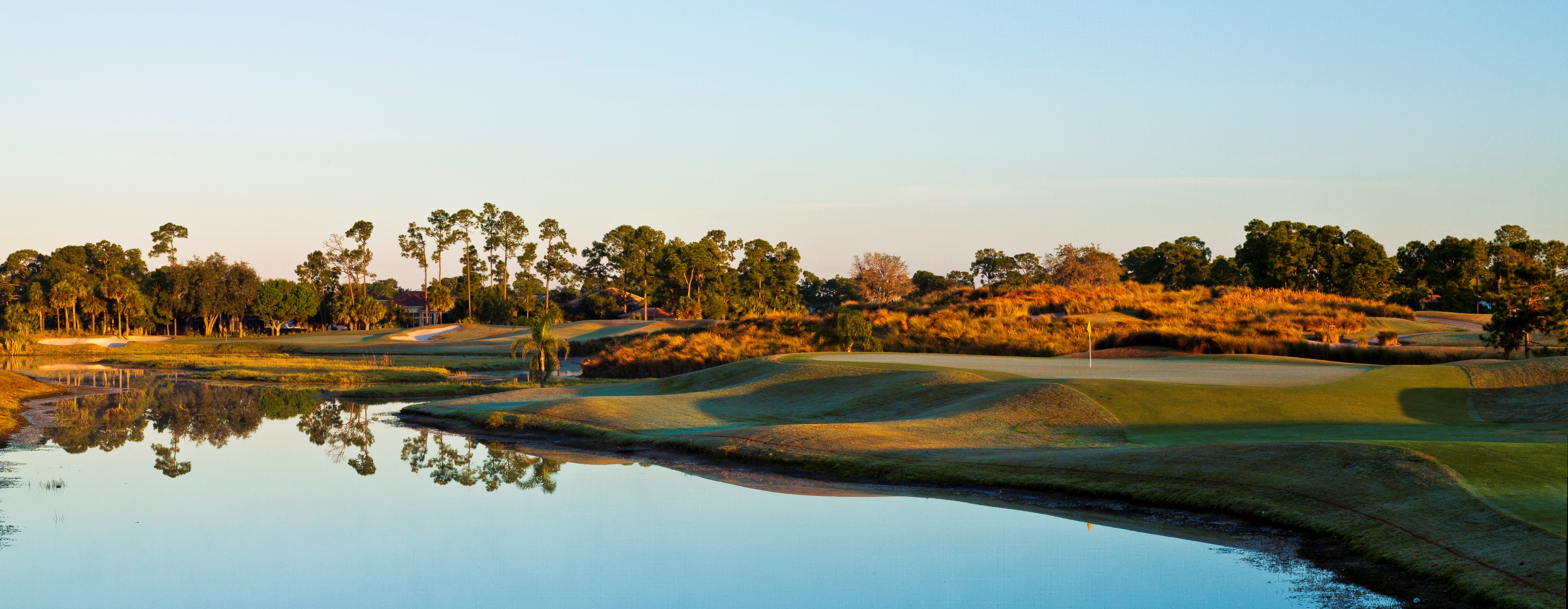
    PGA Village in Port St. Lucie, Florida is one of those few resorts that can deliver value without compromising on quality. Owned by the PGA of America, PGA Village is ranked  as one of Golf Digest’s “75 Best Golf Resorts”. With 54 holes of golf designed by Tom Fazio and Pete Dye, superb playing conditions, a state of the art 35 acre practice facility and the PGA Museum of Golf, PGA Village fulfills the previously mentioned “unique experience” criteria.

    I moved to Florida in 1997, just after Tom Fazio had completed the original North and South courses at PGA Village. A few years later, Pete Dye added the third course. In 2006 all three courses underwent a redesign, and the North and South courses were renamed Ryder and Wanamaker. The Ryder course is named after Samuel Ryder, who founded the Ryder Cup matches. Rodman Wanamaker organized the first group of golf professionals that led to the formation of the PGA in 1916.

    5th green - wanamaker course
    Click to Zoom

    Despite having lived in Florida for over 15 years, I had never been to PGA Village until this past October. I drove past it many times while heading south on I95, and this is a pattern that I came to learn was all too common for golfers. PGA Village was simply overlooked by many when searching for golf resorts in Florida. As a result, the facility suffered from declining morale and sub-standard playing conditions. Late in 2012 the PGA took a hard look at the property and decided to make some changes. A new management team was brought in, along with a new attitude, and they have turned the place around in a dramatic way.

    My visit to PGA Village included rounds on the Ryder and Wanamaker courses, along with a practice session at the PGA Center for Learning and some time on the amazing SAM Putt Lab with PGA Golf Technology Specialist Mark Drenga. After breakfast with GM Jimmy Terry and Head Superintendant Dick Gray to get more familiar with the property, my buddy Dave and I went out on the Ryder course. Fazio designed this course to be generous off the tee, while still being challenging for all abilities. The greens are fast and smooth with just enough slope to keep you on your toes.

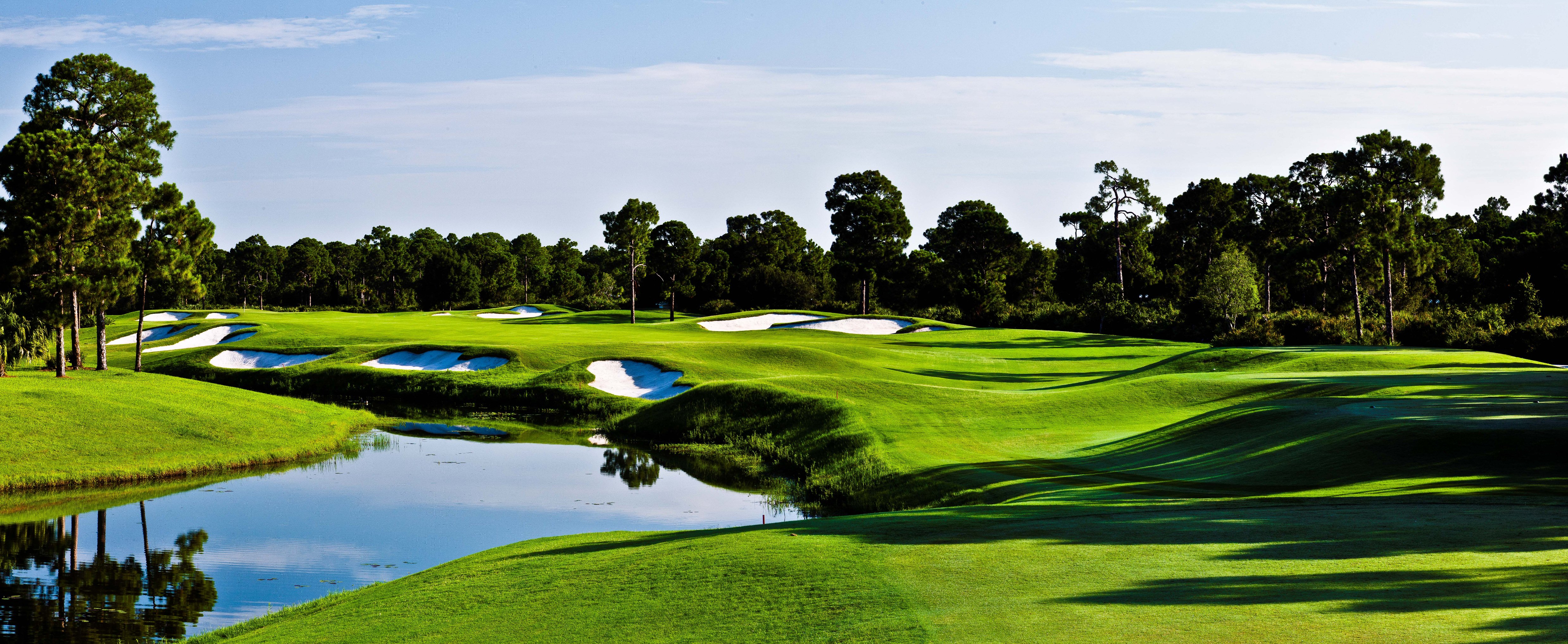
    The Wanamaker course continues where the Ryder course leaves off by adding length, making the fairways a bit tighter and punishing stray shots in deeper and larger bunkers. This course is consistently ranked in the top 25 public courses in the state. It is a classic Florida layout with wetlands and vegetation coming into play more frequently than the Ryder course. Again, the playing conditions were ideal with fast, smooth rolling greens and dramatic white sand bunkers that test your courage on almost every shot.

    BRIAN OAR - FAIRWAYS PHOTOGRAPHY
    Click to Zoom

    I didn’t get to play the Pete Dye course, but I was able to ride around several holes and get a good feel for the layout. It is a classic Dye design with dramatic mounds, steep face bunkers and plenty of nasty surprises for errant shots. More of a link style course, the greens are in great shape and roll true like the other courses. As with most Pete Dye courses, don’t miss on the short side! While there is plenty of water and waste areas around the course, Dye always gives you a bail out area. If I was to recommend an order in which to play the three courses during your stay, I would go with the Ryder, Dye then Wanamaker.

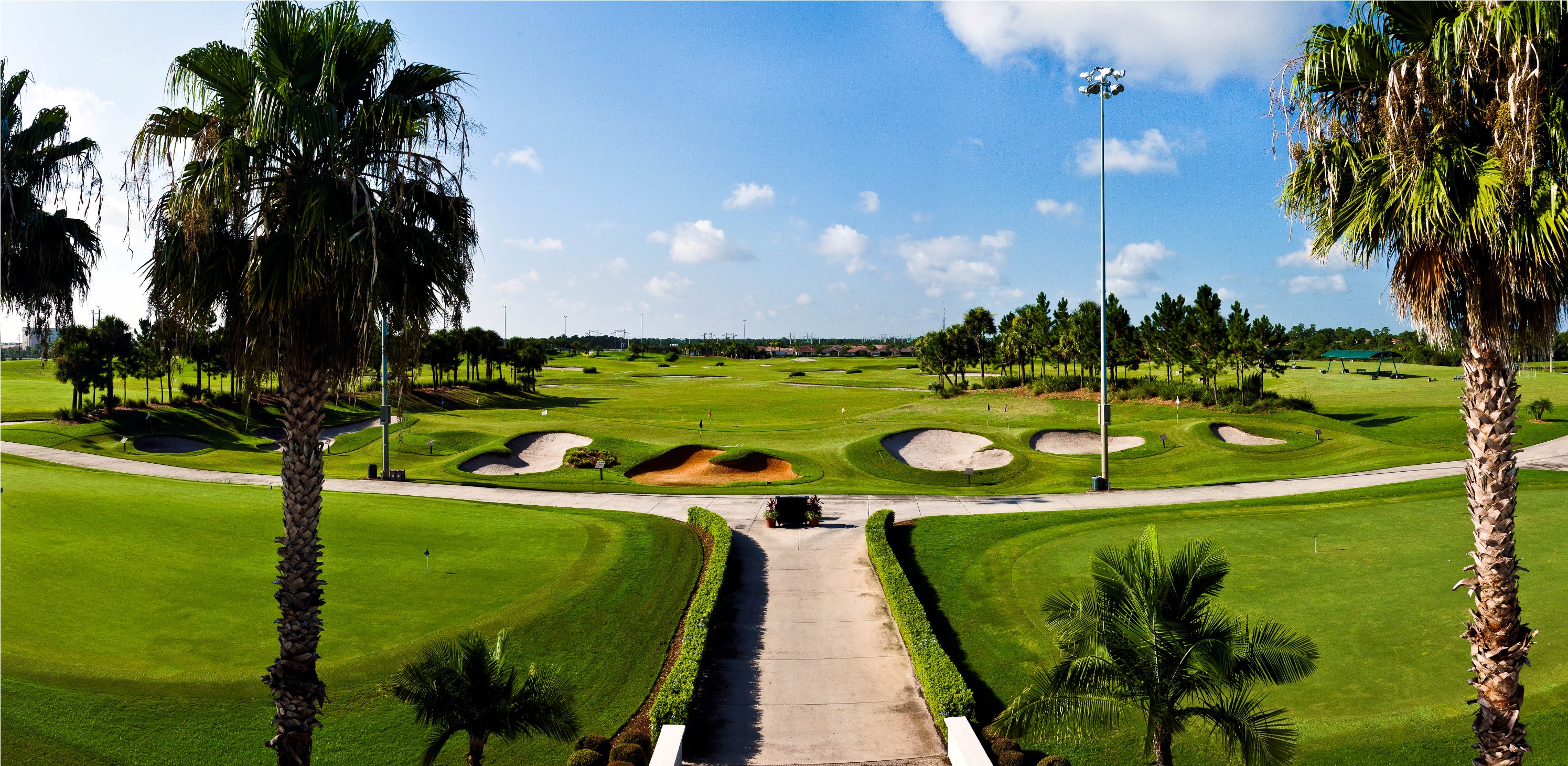
    In the afternoon we stopped by the 35 acre PGA Center for Learning. This amazing practice and teaching facility has a huge circular practice range with chipping and putting greens scattered all over the place, different types of practice bunkers, a three hole discovery course for new players and a staff of PGA Professionals. The learning center boasts one of the most technologically advanced facilities in the nation. They have a ForeGolf Sirgul 180 Simulator, TrackMan Launch Monitor, Sam Putt Lab, Dynamic Balance System, V1 Pro, LinxTracker and more to assist the pros. There is also a world class golf fitness and performance center and a fully stocked club fitting and repair center.

    BRIAN OAR - FAIRWAYS PHOTOGRAPHY
    Click to Zoom

    To round out the experience at PGA Village is the 8000 square foot PGA Professional Hall of Fame and PGA Museum of Golf that houses one of the most complete and diverse golf libraries in existence. Be sure to make some time on your trip to check it out. In fact, to get your trip started I would suggest everyone spend a half day at the museum and library, then head over to the practice facility and work off the rust or get a quick lesson and play the 6 hole PGA Short Course. The next two or three days can be spent playing the big courses. I believe this itinerary will give golfers more than just a resort golf experience, but some historical perspective as well and a way to easy into the trip in a more relaxing way.

    Located two hours down the turnpike from Orlando and only 45 minutes from West Palm Beach, PGA Village is perfectly located for both north and south Florida golfers seeking a place to get away. There are plenty of amenities and restaurants in the area, and choices for accommodations are also diverse. Stay and play packages can be booked right on their website. With a central location, great playing conditions, wonderful facilities, courses from two legendary designers and unique attractions like the PGA Museum and Learning Center, PGA Village should be on everyone’s Florida golf resort short list.

  • Jupiter Hills Club – How The Top One Percent Live – Part 2

    Welcome to part two of my story about the Jupiter Hills Club in Tequesta, Florida. Many people that play golf never get to play at an ultra-exclusive private facility. I am fortunate to have played there on a few occasions and my experience is one that I’ll never forget, so I felt compelled to share the experience with everyone. If you missed part one of the story, you’ll get a lot of background about the courses themselves, and I suggest you go back and read it if you haven’t already.

    jupiter-hills1My experience at the Jupiter Hills Club started in July of 2007 when my partner and I qualified for the Florida State Four-Ball Championship being held there, and continued in June of 2008 when I was fortunate enough to qualify for the Florida State Amateur Championship, also being held at the Jupiter Hills Club. The FSGA has a habit of using the site of the Four-ball Championship as a test run for the Amateur Championship the following year. Having played the Four-Ball Championship there in ’07, I was highly motivated to return in ’08 for the Am. As I described in part one, I arrived a week early to play the Village course because the previous year’s Four-Ball didn’t play there, and I hopped on the Hills course in the afternoon mostly to see if there had been any changes.
    Jupiter Hills is a very traditional club, in that the history of the game and the long standing traditions were kept in play when making policy. Some rules are in place here that I think should be adopted by every club.Members and guests are not permitted to change shoes in the parking lot, and with the incredible locker room available to members, I don’t understand why anyone would want to either. Of course, hats are not permitted in the clubhouse, and a jacket is required to enter the dining room. No tee times are made at Jupiter Hills. Indeed, with an average of 10 to 12 carts per day spread out on the 36 holes during the summer months, it’s not hard to see why they aren’t needed. According to one of the members of the cart staff I spoke to, during the busy winter months when most of the members are in town, the number of rounds played averages somewhere in the 50 to 100 per day. Again, spread over 36 holes this is hardly a busy course. Many muni tracks in Florida will see 200+ rounds daily over 18 holes in the winter. Finally, my favorite regulation that the Jupiter Hills Club has put in place – cell phones are not permitted on the premises at all, and should be left in the car or at home. (cue Handel’s Hallelujah!) Now, if only we could convince all the other golf clubs around the country to make this the rule, not the exception…

    As had been the case in 2007 for the Four-Ball, the club staff treated me, a total stranger off the street, like a long time member and made me feel like this was my club for the brief time I was a guest. After arriving at the club I was greeted by the staff from the Florida State Golf Association. I signed in and collected my hat and hat pin and went inside as the cart staff loaded my bag on the cart. The pro shop staff remembered my name from the week before, and to me that is impressive in today’s disconnected world of customer disservice. As I entered the men’s locker room, the hallway opened to a large lounge complete with leather sofas, poker tables, LCD Televisions and even a private bar. The walls are covered in cherry wood paneling and a dark carpet lines the floor, giving the room the look and feel of a cigar lounge or classy pool hall. The cherry wood theme continues into the locker room, where the floor to ceiling lockers are emblazoned with brass name plates with the owners’ names. The shower and bathroom facilities feature wall to wall marble floors and granite counters. No expense was sparred making the locker room areas comfortable. Indeed, I would have trouble ever going home after a round if I was a member there! For the week of the 2008 FSGA Amateur Championship, I was assigned Bobby Orr’s locker. That’s Hockey Hall of Famer Bobby Orr of the Boston Bruins. The shoe service was also world class. I have not seen my shoes look and smell so good since I unwrapped them for the first time.

    Jupiter Hills Clubhouse
    Jupiter Hills’ Clubhouse

    Being treated like a member at a club like the Jupiter Hills Club, even for only a few days, was a special treat. The 40,000 sq/ft clubhouse that sits on the highest point in South Florida is a work of art in itself, and the amenities are truly world class. Even if the two golf courses are both very high on my list, I would enjoy just hanging at the clubhouse with the boys in the men’s lounge! I am pretty certain I’ll never be a member there. My information puts the initiation fee at or around $275,000 and the yearly dues well into five figures, not including the certainly very lofty restaurant charges. The club has a no tipping policy, and the cart staff are actually salaried. The gentleman I got to know had been on the cart staff there for 17 years. I don’t have any idea what they get paid, but I can imagine the gifts from the members and fringe benefits of working there must make it a rewarding, if not interesting career choice.

    The Jupiter Hills Club is not the most private or exclusive club in the country; It doesn’t have the best golf course and amenities, but it has a very unique and perfectly balanced blend of character and class that makes it among the elite private clubs in the nation. Like most places, the staff makes or breaks the facility. The Jupiter Hills Club shines again, with everyone I encountered being very friendly, helpful and professional. They pride themselves on the fact that members and staff are trusting and respectful of one another and there is no snobbishness or elitism towards anyone. If you ever have a chance to be a guest there, to me it is worth a trip across the country to spend a few days with the folks in Tequesta to see how the other half really live.