Tag: fairways

  • Aerotech Releases New TiFiber Shafts

    Aerotech Releases New TiFiber Shafts

    Aerotech TiFiber ShaftAerotech’s Golf’s president & mad scientist Chris Hilleary is up to his old tricks again, and this time his experience in composites and engineering wizardry has resulted in the new Aerotech TiFiber shaft. Last season, Aerotech Golf’s SteelFiber shafts delivered 20 wins on pro tours around the world as well as won the coveted CME Race for the Globe Trophy and 2016 Money Title on the LPGA Tour. I’ve been playing with and evangelizing the SteelFiber shafts in my irons & hybrids for over 6 years, and for me, there’s no going back to steel.

    Why TiFiber?

    While the original SteelFiber shafts are incredibly consistent and playable, in driver and wood lengths they became too heavy for most golfers to be comfortable with. By replacing steel fibers with much lighter titanium, Aerotech was able to adapt the benefits of their SteelFiber technology to full-length driver and fairway wood shafts.

    What is TiFiber?

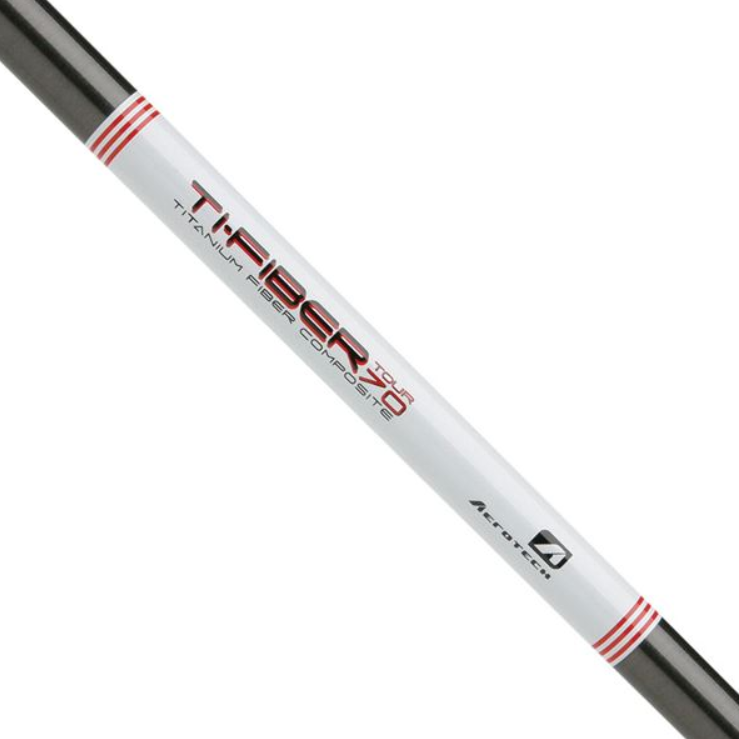
    TiFiber shafts combine a high-modulus graphite core like you would find in almost all driver shafts with 47 miles of micro-thin titanium fiber lacing the entire shaft surface. 47 Miles! The addition of high-strength, lightweight titanium fiber increases stability while allowing the weight to be redistributed to optimize tip stiffness. As a result, TiFiber shafts are a great match for modern oversized titanium/composite driver heads.

    TiFiber shafts are currently available in two models – the TiFiber Tour 70 and Pro 60.

    1. TiFiber Tour 70 shafts feature a “Tour Stiff” tip section to optimize flight by reducing spin and lowering trajectory. The Tour 70 is available in F5 (Stiff) and F6 (X-Stiff) flex options.
    2. The TiFiber Pro 60 has a slightly softer tip section and benefits players who need a bit more launch and spin but still want the added stability of titanium. The TiFiber Pro 60 is available in F4 (Regular) and F5 (Stiff) flexes.

    Success on Tour

    Players with SteelFiber shafts routinely rank high on the PGA Money List, Official World Golf Rankings and the FedEx Cup Season Points. Brandt Snedeker and Matt Kuchar have been in Aerotech’s corner for years. In 2013, Kuchar & Snedeker ranked No. 2 and No. 3 in FedEx Cup points and ended the season as #3 and #5 on the PGA Tour money list. Snedeker also won the FedEx Cup in 2012 using SteelFiber shafts.

    While the adoption of SteelFiber continued to grow on the professional tours, the company was testing the TiFiber shaft on tour in 2017 and introduced them to the public at the 2018 PGA Show in Orlando. It’s only a matter of time before TiFiber also records its first win on tour.

    Performance

    I spent some time on the practice range with the Aerotech TiFiber Tour 70x shaft installed in my Ping G driver. I hit several shots with both the TiFiber shaft and the Ping Tour 80x shaft (custom option from Ping) to compare ball flight and launch monitor data. I used the cool new FlightScope MEVO launch monitor to capture club and ball flight data.

    My initial testing has produced numbers that are very similar to the stock Ping shaft, but the little FlightScope MEVO is limited in the data it can gather. More on that in a minute. Both the stock Ping shaft and the TiFiber were giving me similar numbers for launch angle, swing speed, smash factor and spin rates. Carry distance was about 2 yards less with the TiFiber, which is consistent with the ball speeds which were roughly 1 MPH lower with the TiFiber. Shots hit with the TiFiber shaft stayed in the air a fraction of a second less and flew about 5 feet lower, which may help explain the carry distance number. I only got to hit about 8 or 10 drives with each shaft, but once I gather more data I think the results will be more clear.

    What the numbers don’t tell me is what I’m perhaps most interested in with the TiFiber, and that is shot dispersion. The FlightScope MEVO being a palm-sized personal launch monitor priced at $500, it can’t compete with the big boys that cost $10,000+ and one of the areas where the MEVO is lacking is measuring shot dispersion. Since it doesn’t track the entire ball flight, it can’t tell me what the dispersion is from shot to shot.

    I did notice a difference between the shafts, but without measurable data, it’s hard to be 100% sure. I felt that I was hitting the ball straighter with the TiFiber shaft, with a tighter dispersion from shot to shot. I’ll get more data and play a few rounds with the Aerotech shaft in the coming weeks and will know more. I believe the TiFiber shaft to be straighter based on my observations.

    3/12/2018: I’ll update this post when I get more info about the accuracy of the Aerotech TiFiber shaft.

    Where Can I Get One?

    The best way to get your hands on one for your driver will be to schedule a fitting with a good club fitting specialist like Tour Spec Golf. Aerotech Golf shafts are also widely available as custom options with many club manufacturers such as PXG, Callaway, Titleist, TaylorMade, Ping, Cobra, Bridgestone Golf, Wilson, Cleveland Golf, Miura, Srixon and more.

    For more information on Aerotech Golf and Aerotech shafts, call 888.733.8988 or visit aerotechgolfshafts.com. Also check out the Aerotech page on Facebook: facebook.com/aerotechgolf.
  • Don’t Believe The Hype – TaylorMade’s Driver Alternatives

    2014-10-20 13.34.16The driver is the most popular club in many people’s bag, and the one club that consumers change the most often. This is why you see the massive marketing campaigns for each new driver that golf club manufacturers release. I’ve seen the game evolve in the last 20 years on the professional tours as equipment technology advanced. The predominant course management strategy is the bomb-and-gouge method where distance takes priority over accuracy. The idea is that one would rather hit a wedge from the rough than a 7 iron from the fairway.

    2014-10-20 13.35.25My own game is proof that the bomb-and-gouge approach can work for better players. Using the awesome new golf tracking device from GAME GOLF to track my stats over the last 18 rounds of golf, I am sporting a scoring average of 72.1 despite hitting only 47% of the fairways. While I would love to be more accurate off the tee, I know it hasn’t hurt my game too much to be in the rough, as I still managed to hit 66% of greens in regulation over that span.

    The problem is – Most average golfers can’t create the kind of club head speed to hit the ball out of rough with control like the PGA Tour pros and low handicap amateurs. So how can you improve your driving accuracy? Don’t believe the hype of that new driver that promises more distance, accuracy and forgiveness! The most obvious answer is by using something other than a driver off the tee.

    SLDR Mini Driver

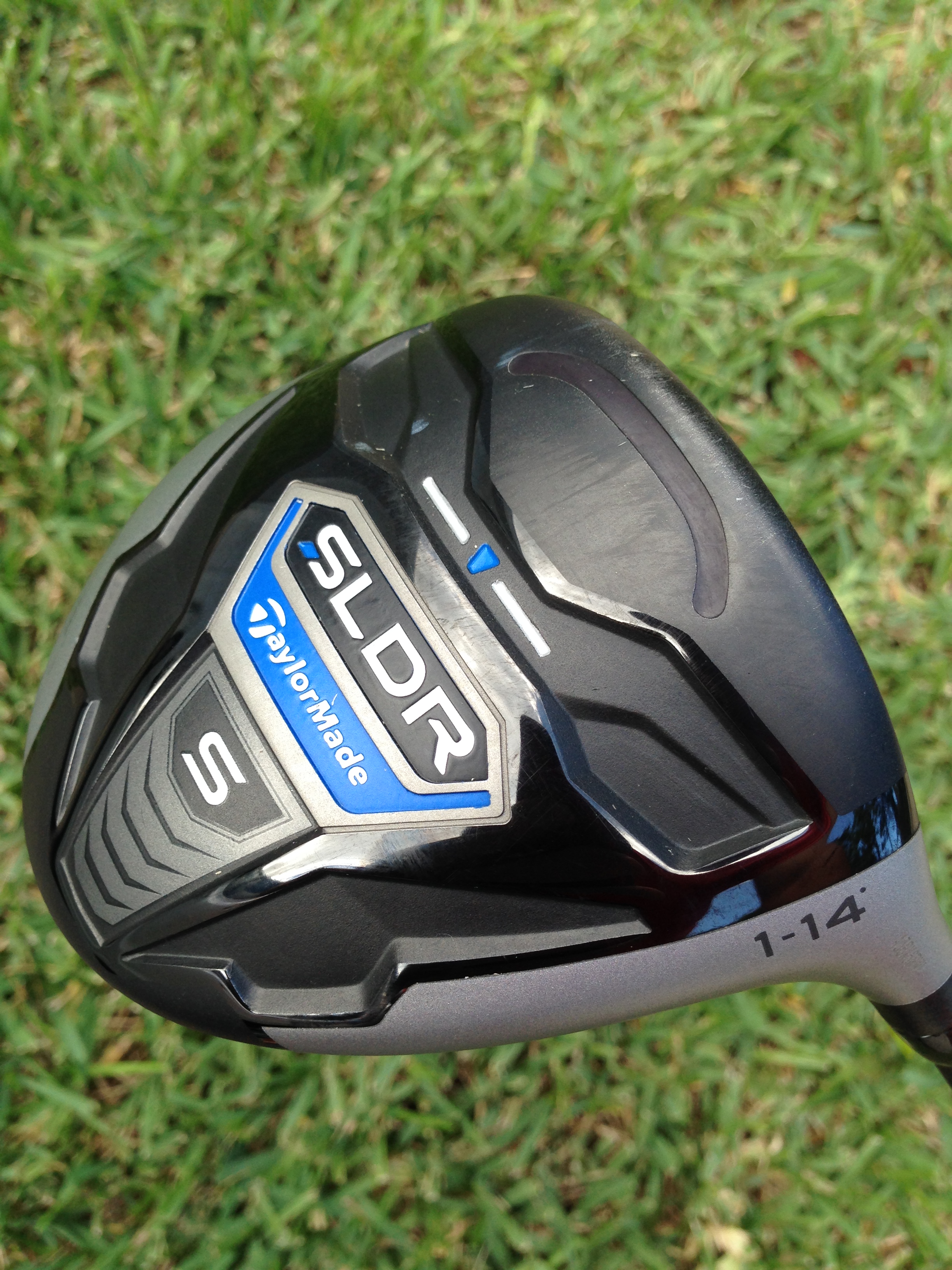
    For the last few months I’ve been experimenting with a couple of clubs from TaylorMade adidas Golf (TMAG) that are designed as alternatives to the driver for those that are seeking more accuracy off the tee. The first is TaylorMade’s SLDR Mini Driver. TMAG noticed that tour pros and low handicap amateurs hit their 3-wood off the tee far more often than in the fairway, so they used that data to create a new club that fits somewhere in between the two. At 260cc, the SLDR Mini Driver is bigger than a typical fairway wood but far smaller than the average 460cc driver. The shaft is also a little bit longer than a 3-wood at 43.5″, compare to a driver’s modern standard at 45″. The SLDR Mini is available in 12, 14 or 16 degree lofts.

    TaylorMade sent me an SLDR Mini with 14 degrees of loft, and I eventually re-shafted it with the awesome new Aldila Tour Green 75TX shaft. (More on that later) The idea for me was that the SLDR Mini could replace my old Adams RPM 3-wood. With its larger head and deeper face, the SLDR mini is easy to hit and more forgiving than a standard 3-wood off the tee. The sole design also makes it easy to hit from the fairway, despite the bigger head size. This club hits bombs. I was easily getting 10-15 yards more carry than my Adams RPM 13 degree 3-wood, and the SLDR Mini was a joy to hit off the deck too. Even though I seldom hit 3-wood off the fairway, I know I can pull off just about any shot with it. For golfers looking for a club they can hit almost as far as a driver with greater accuracy, the SLDR Mini will be a godsend.


    Tour Preferred UDI – Ultimate Driving Iron

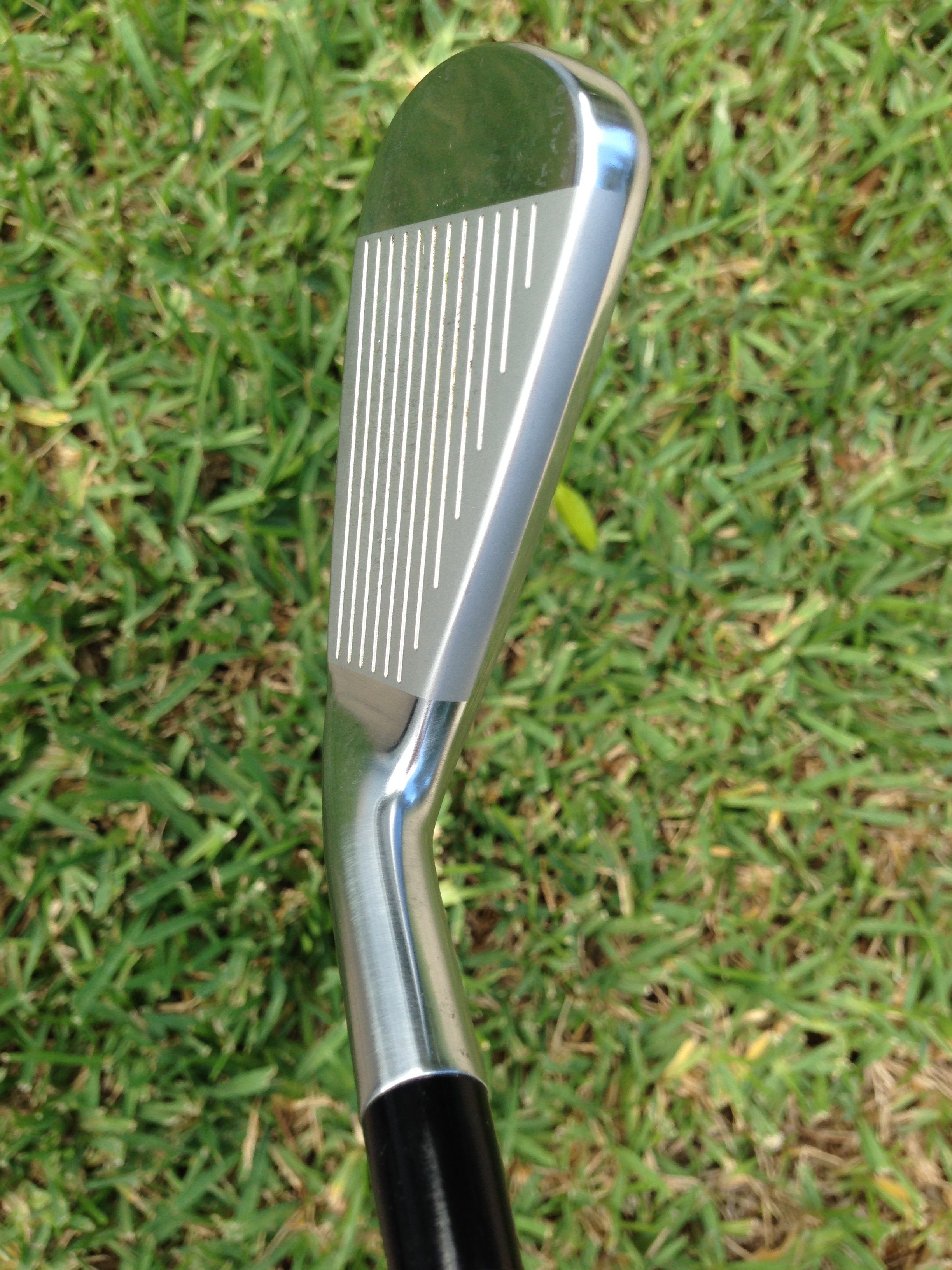
    The second driver alternative I’ve been messing around with is TMAG’s Tour Preferred UDI – Ultimate Driving Iron. The UDI is a hollow construction 450 carpenter steel faced driving iron that was designed to deliver distance and playability of a hybrid with the control and workability of an iron. Many of TaylorMade’s staff pros played the UDI at the British Open to help control ball flight in the wind. The UDI comes in 16, 18 and 20 degree lofts.

    The old saying goes “Only god can hit a 1-iron”, but that isn’t true any more. I’ve always loved hitting long irons, and have never been a fan of hybrid clubs, so I had a feeling I would love the Tour Preferred UDI 1-iron. To make room for the UDI (16 degrees) in my bag I took out the 18 degree Cleveland Launcher DST hybrid I’ve had for a few years. I have been hitting it for a couple of months and my numbers with it have earned it a place in my bag on most days. Over a testing period of 18 rounds, the UDI 16 is averaging 251 yards off the tee with a long of 294 yards and fairway accuracy of 71%. Considering the stock KBS Tour C-Taper Lite shaft is too weak for my swing speeds, I think that accuracy number will go up a bit with a properly fit shaft. As you would expect from a 1-iron, the ball flight stays very low and hot, with very low spin.

    The UDI is a great driver alternative on courses that play firm and fast, especially for the better player who can swing aggressively and find the sweet spot on a consistent basis. While the UDI is pretty easy to hit, the lower ball flight and more traditional iron-like shape and size may be more difficult to hit for mid to high handicap golfers. This is exactly why hybrids were created in the first place. What’s the difference between the UDI and a standard hybrid? As mentioned above, the UDI has the flat face and smaller size of an iron for control and workability with a hollow cavity and low CG for distance and some forgiveness. A typical hybrid club will have a slightly rounded club face like a wood and will offer a higher ball flight and slightly longer shafts for more distance.


    Conclusions

    The SLDR Mini is still a bit of an enigma for me, mostly because I may hit it too far in stock form. I know what you are thinking – what a good problem to have, right? With its longer shaft and higher ball flight compared to my regular 3-wood, I find the distance gap between the 3-wood and 5-wood is too great at about 25 yards. What I did to fix this is re-shaft the club and cut half an inch off the playing length. The new Aldila Tour Green 75TX shaft I installed at 43″ reduced the carry distance by 5-7 yards while increasing accuracy for me. With a little more testing and tweaking, I’m confident that the SLDR Mini Driver may become my new strong 3-wood.

    The Tour Preferred UDI 16 degree 1-iron is an instant favorite for me, but it won’t have a full time spot in my bag due to the specialized nature and lack of versatility of a 1-iron. Simply put, the UDI isn’t useful for me in softer conditions or on a longer golf course. The UDI 1-iron hits the ball very low and straight, so it will be used almost exclusively off the tee. I’ll play it on tighter courses, windy days or in dry conditions when the ball is rolling out. Since most courses in Florida play soft and lush, the UDI will probably be swapped in and out of the bag as needed with the 5-wood or 3/4 iron.

    The bottom line is, if you struggle off the tee, one of these two options could be a game changer. The SLDR Mini Driver is a legitimate driver-replacement option for all golfers, and the Tour Preferred UDI gives better players a deadly long-iron replacement option for tight courses and firm or windy conditions.