Tag: distance

  • First Look: Bushnell’s Advanced Distance Measuring Devices

    First Look: Bushnell’s Advanced Distance Measuring Devices

    Bushnell has been a leader in GPS and laser rangefinders for golf and other outdoor activities like hunting for years. Electronic distance measuring devices have been a part of my golf routine for so long, I can’t even remember the last time I played a round of golf without one. Using a laser rangefinder or GPS speeds up the game so much, especially for low handicap and pro golfers that usually take more time getting yardages, that I still don’t understand why golf’s governing bodies haven’t accepted their use in high-level events. In any case, Bushnell has some new devices to show off this season, and they won’t disappoint! Here’s a sneak peek:
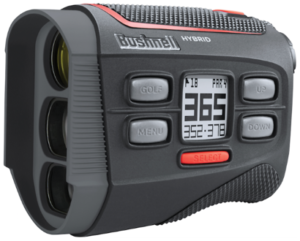
    Bushnell Hybrid
    Bushnell Hybrid: MSRP- $399.99

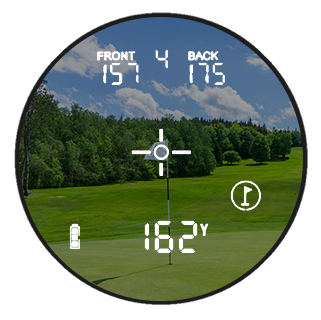
    Description – The Hybrid combines the latest in Laser and GPS technologies to provide better data so golfers of all levels can make better decisions on the course. The new Bushnell Hybrid rangefinders utilize precise laser and GPS yardages allowing the golfer to see distance like never before. The new Bushnell HYBRID takes the guesswork out of the game by displaying the lasered distances to the pin and GPS provided front and back yardage readings within the LCD.  Additionally, Bushnell has incorporated exterior GPS front, center and back yardages to assist with correct club selections when golfers have cart path only or blind shots.
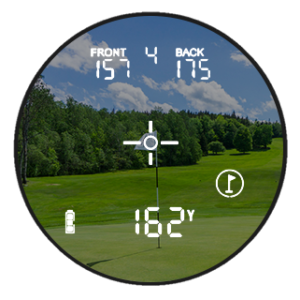
    Bushnell Hybrid - Reticle

    Key Differentiators

    • 1st ever integrated Laser/GPS display
    • Dual Battery source (CR2 for Laser, USB for GPS)

    HYBRID Laser Features

    • PinSeeker w/ JOLT Technology
    • Accurate to 1 yard
    • 5X Magnification
    • Ranges 400 yards to a Flag
    • Fast Focus System
    • Stable-Grip Technology
    • Tournament Legal

    GPS Features

    • Exterior Front/Center/Back Readouts
    • Up to 4 hazard distances per hole
    • Bluetooth for auto course updates
    • Auto course recognition
    • Auto hole advance

    Bushnell Phantom: MSRP- $99.99
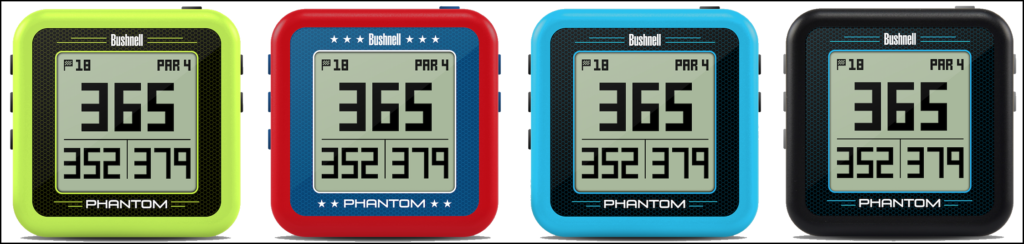
    Bushnell Phantom GPS

    Description – Phantom GPS Rangefinder, rounding out a robust collection of products comes preloaded with more than 36,000 courses and provides simple measurements to the front, center and back distances of the green – along with up to four hazard/layup distances per hole.  The Phantom unveils “Bite Technology.” Equipped with a high powered magnet the Phantom can easily attach to a cart bar or any metal surface, providing quick and easy yardage readings. Additional features include auto course and auto hole recognition, shot distance calculator and long battery life (play up to two rounds before charging).


    Bushnell Pro X2: MSRP- $499.00
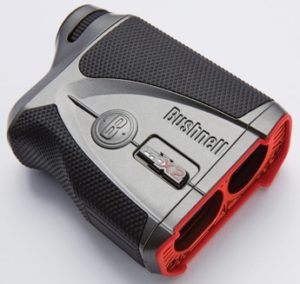
    Bushnell Pro X2

    Description –The Pro X2 has rubber armored metal housing that makes the device fully IPX7 waterproof, incredible range capabilities of up to 1,300 yards (450+ yards to a flag), 2nd Generation E.S.P. (Extreme. Speed. Precision.) and PinSeeker with JOLT Technology.  Dual Display Technology allows users to easily toggle between the bright red display featuring VDT (Vivid Display Technology) or the crisp black display. Bushnell Golf also included JOLT Technology amongst the host of features offered in the new Pro X2. When the golfer aims the Pro X2 at the flag, JOLT Technology will provide short, vibrating bursts to reinforce Bushnell’s advanced PinSeeker Technology has isolated the target and locked onto the flag. The vibrating bursts provided by JOLT Technology will assure golfers have the exact distance to the flag. The Pro X2 is also equipped with 2nd generation E.S.P. technology.  E.S.P. provides yardage five times faster and more accurately than ever before. Not only has the acquisition speed been increased to a lightning fast level, E.S.P. provides 1/2 yard accuracy from five to 125 yards, and the distance is displayed to 1/10th of a yard.  Having more accurate distances creates the confidence the golfer to hit every shot with confidence.

    Pro X2 Features

    ・      Slope-Switch Technology

    ・      Rubber Armored Metal Housing

    ・      IPX& Fully Waterproof

    ・      Dual Display Technology

    ・      PinSeeker W/ Jolt Technology

    ・      Accurate to 1?2 yard

    ・      6X Magnification

    ・      Ranges 5-1,300 yards; 450+ to a Flag

    ・      2nd Generation E.S.P.

    ・      Fast Focus System

    ・       Stable-Grip Technology

    Conclusions

    You really can’t go wrong with any of Bushnell’s offerings. My current rangefinder of choice is the Pro X2, and I’ve been using it for over 8 months as of this writing. It’s fast, accurate, compact, and the display is easy to read. That’s basically everything you’re looking for in a laser rangefinder. I’ve also used the predecessor to the Phantom and loved it’s compact size and simplicity. The new model is magnetic, which addresses the only complaint I had with the old model, which was what to do with it once you broke the flimsy plastic clip it came with. Now you can simply stick it on the roof supports on your golf cart or the handle of your push cart. Easy peasy!
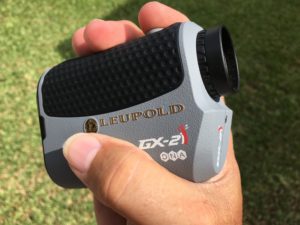
  • Leupold GX-2i2 Rangefinder

    LeupoldGX-2i2 handheldIt wasn’t that long ago that I remember playing golf without any distance measuring devices other than a bush around the 150 yard mark in the fairway. Along came the 100, 150, 200 and 250 yard markers, then sprinkler heads all over the course were marked with yardages. From there, it wasn’t long before laser range finders and GPS devices started showing up. The game hasn’t been the same since.

    Leupold is well known in the hunting and shooting sports world for making some of the best rifle scopes and optics available, so naturally their expertise would lend itself well to golf rangefinders. I’ve used lasers from several different companies over the years, but I’m most impressed with the technology that Leupold has built into their GX line of rangefinders.

    All laser rangefinders can give you accurate distances to most targets, and some also give you yardages adjusted for slope, but Leupold has taken it to the next level with a feature called True Golf Range (TGR) and Club Selector. The Leupold GX-2i2 laser rangefinder has the ability to adjust for slope, elevation and temperature to give you the most accurate adjusted yardage. It can even suggest the right club to hit based on the adjusted yardage. While these features aren’t legal for USGA tournament play, they are very useful for practice rounds and getting to know an unfamiliar golf course. It’s also important to note that you can easily turn off the TGR features to make the device legal to use in tournament play.

    Testing this rangefinder at home in Florida might be tricky since most of the golf courses are flat and the highest point in the entire state is only 345 feet above sea level. So, to put Leupold’s True Golf Range feature to the test, I flew west to the Rocky Mountains! While attending the ING Spring Conference in beautiful Heber City, Utah I found the ideal place to test the Leupold GX-2i2. At close to 6000 feet in altitude, Wasatch Mountain State Park‘s mountain course is a perfect example of alpine golf at its finest. The front nine rises two miles up into the mountains, and the back nine descends back down to the clubhouse.

    WastachMountainStateParkThe dramatic elevation changes of this course and high altitude of the Heber Valley area make club selection very difficult for someone like me who usually plays at sea level. The thinner air means the golf ball travels 10-15% further, and while that can be a huge ego boost for tee shots, the sometimes severe uphill and downhill holes require lots of imagination to get the correct distance with approach shots. Golf blogger extraordinaire and Salt Lake City resident Tony Korologos knows this better than most.
    To set up the True Golf Range and Club Selector features, you simply go through the menu options on the screen while looking through the rangefinder’s reticle. When you turn on TGR, the GX-2i2 will ask you to input the altitude, temperature and how far you hit a typical four, six and eight iron shot. Once equipped with this data, the GX-2i2 will not only give you the actual line-of-sight yardage to your target (accurate to a tenth of a yard), but it will also will give you an adjusted distance based on the temperature, altitude and slope. Not only that, but the GX-2i2 will also suggest which club to hit based on this information.

    I know what you are thinking – That’s cool and all, but how well does it work? Fantastically! For my high altitude testing in the mountains of Utah, the True Golf Range feature worked flawlessly. I remember a few specific situations in which I simply didn’t trust the adjusted distance, but went with it anyway and I’m glad I did.

    The 12th hole at Wasatch Mountain is a straight downhill par 5 that measures 635 yards from the back tees. Now, I’m a pretty long hitter (I average about 290 off the tee according to Game Golf) but 635 yards is no joke! Well, after a drive that measured about 377 yards, I was left with 254 yards to the flag for my second shot. The Leupold GX-2i2 told me the adjusted yardage was 219 and to hit a four iron. I have a hard time wrapping my head around the idea of hitting a four iron over 250 yards, but in the name of science – I hit it anyway! I flushed it, and to my surprise the ball landed on the green and ended up pin high. Mind blown.

    The next situation came up on the 17th hole, a 223 yard downhill par 3. On that day I had 217 yards to the pin, and the GX-2i2 suggested a seven iron. Again, my brain is just not able to process hitting a seven iron 217 yards, but being an obedient test subject I pulled a seven iron and hit it pin high. Mind blown again.

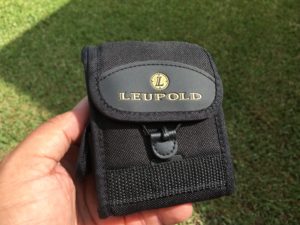
    GX-2i2 carry caseIn my 54 holes of testing the Leupold GX-2i2 rangefinder at high altitudes in the mountains of Utah, I found that the True Golf Range was amazingly accurate and invaluable for me. The Club Selector feature is a very nice addition, but I found that I mostly ignored the club suggestions because not every shot is a stock iron shot in golf. When in doubt however, it proved very useful. This rangefinder is staying in my golf bag for a long time, even if I don’t use TGR for tournament play. It’s accurate, light weight and packs a lot of technology into a nice compact package.
    Perhaps my buddy Tony will want a ruling now because without the GX-2i2 rangefinder and its whiz-bang technology there is no way I could have beaten him 1-up in our tightly contested 36 hole grudge match at the fantastic Soldier Hollow Golf Course. In my defense, I was actually playing with a torn retina in my right eye, but that’s a story for another day…

  • Voice Caddie VC300

    Voice Caddie VC300

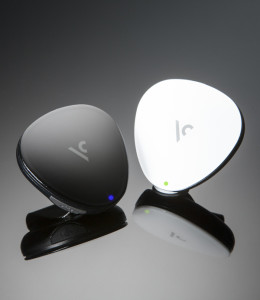
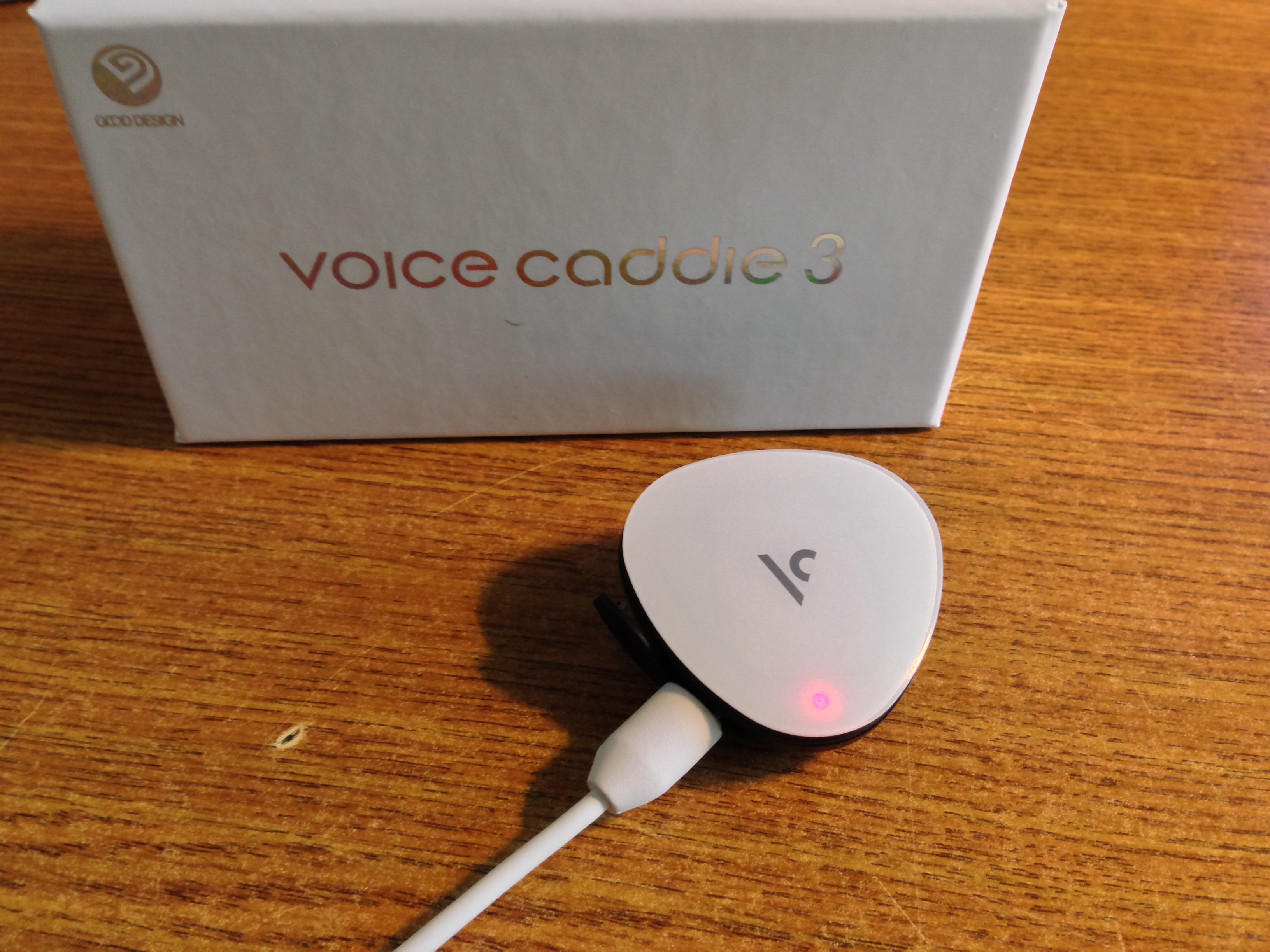
    Voice Caddy VC300When I saw the original concept for the Voice Caddy a few years ago at the PGA Merchandise Show in Orlando, my first thought was “The world doesn’t need another golf GPS device,” but I was wrong. Several years have gone by and UComm Technology, the Korean company behind the Voice Caddy VC300 has improved greatly on their design and I believe this little gem is ready for prime time.

    Simplicity

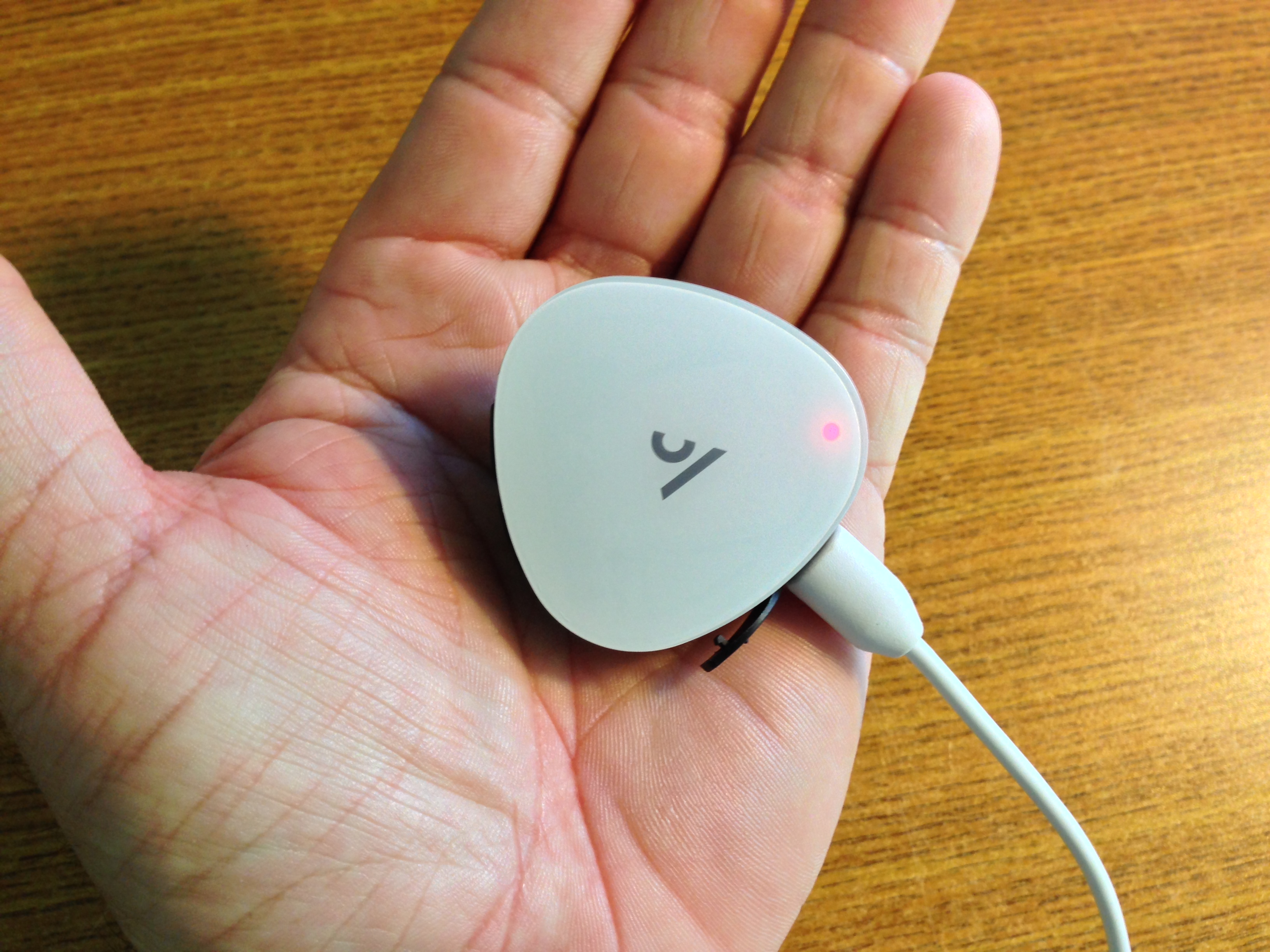
    As more and more golf GPS devices hit the market, they keep adding features that make them more complicated and hard to use. Voice Caddy has gone the other direction with the VC300. They decided to do one thing, and do it well. The Voice Caddy VC300 simply gives you distances to the front, middle and back of the green, along with the ability to measure any shot distance from point A to point B. That’s it. No hard to read maps, useless scorecard features or complicated stat tracking features. The VC300 only weighs 24 grams and easily fits in the palm of your hand, measuring 45 x 45 x 12 mm. (see image below)

    Design

    The VC300 has a very “Apple” feel to it. The packaging and design are very similar to the way Apple presents their electronics and this philosophy appears to be deliberate. The design is slick, smooth and free of clutter. The device has three buttons – power, volume +/- and the main button that makes up the entire face of the device. It is also gesture-enabled like a smartphone. Despite the unit being so small and light, the VC300’s distinguishing feature is instead of showing you yardages on an LCD screen, it tells you the distance audibly, speaking out the yardage when called upon.

    Voice Caddy VC300Function

    Because the VC300 is so simple, operation is easy and straightforward. Turn the unit on and it speaks a welcome message and tells you the battery charge level. From there, in a few moments the unit will find the golf course automatically from a database of over 30,000 courses built in to the device. That course database is also user upgradable through the VC Manager software available on their website, and everything is free. There are no hidden costs, no subscription fees. The unit clips to the brim of your hat or your belt and detects which hole you are on, announcing it when you arrive at the tee box.

    To get yardages one simply pushes the main button, and Voice Caddy will speak the hole and yardage to the middle of the green. “Hole number 6, center, 120 yards.” Swipe your finger towards the front of the unit and you get yardage to the back of the green. Swipe the VC300’s face from front to back and you get the yardage to the front of the green. Double-tap the main button to get distance to the front and back of the green. You can measure the distance between any two points by holding the main button for a few seconds at the starting point, then holding the main button a few seconds at the finish, and Voice Caddy will tell you how far the distance traveled is. This is great for measuring your booming tee shots, or not great, depending how far you actually hit it!

    Details

    The Voice Caddy VC300 is available in three colors: Black, White and Pink. It is also available in seven languages: English, French, Spanish, German, Chinese, Japanese and Korean. The little device charges in only 2 hours and they claim the charge is good for 8 hours. When the VC300 arrived for testing it had a 28% charge out of the box. I managed to play 18 holes with it anyway. In fact, the battery died just as I pulled up to the 18th green, so that 8 hour life is probably a little understated. I bet you could squeeze 36 holes of play out of this thing.

    Shortcomings

    There are a few little issues that I noticed with the Voice Caddy VC300 during my testing. First, the distance measuring feature didn’t work every time I tried. A few times when I arrived at my drive and pushed the button for several seconds, nothing happened. It’s as if the unit forgot about it. Oops. Another small annoyance is the placement and sensitivity of the volume buttons. When installing or taking the VC300 off my hat brim, I instinctually grab it by the bottom for leverage, but that is where the volume buttons are and I always push them by mistake. Not a flaw, but perhaps the next version could move the volume controls to a less obvious place. Finally, on one particular course when arriving at the tee, it announced each hole as a par 4 when they sometimes were par 3s and 5s. Not a big deal because that info is largely irrelevant, but perhaps their course databases are off. Either way, none of these issues affect the accuracy of the yardages, which were always within a yard or two, confirmed by a Bushnell Tour Z6 Jolt laser rangefinder in my testing.

    Voice Caddy VC300Conclusions

    For $149, you get the smallest, lightest golf GPS device on the market that I am aware of. It measures distance, and doesn’t do anything else that golfers aren’t interested in like keep score, show you bad pictures and take up space. I’ve always preferred laser rangefinders over GPS devices because of accuracy and the ability to get a distance from any landmark or tree, whereas a GPS like this only gives you front, middle and back of the green. But what I found when using the Voice Caddy VC300 is that it is so simple and unobtrusive that I enjoyed using it. Because it’s clipped to my hat, I never have to think about it and I know I won’t leave it in the grass somewhere.

    As a blogger I always show up to play golf with new clubs and gadgets to try out, and I can get a good idea of how well they will do by the reactions and interest level of my playing partners. After all, they are my focus group. Plus, they all happen to fall within the target demographic of most golf companies. When I brought out the VC300 for several games, nearly everyone liked the concept and said they would be interested in having one. Considering the large price tags of laser rangefinders and more elaborate GPS devices, the Voice Caddy VC300’s $149 price tag, sleek design and simplicity of use makes it an instant winner.